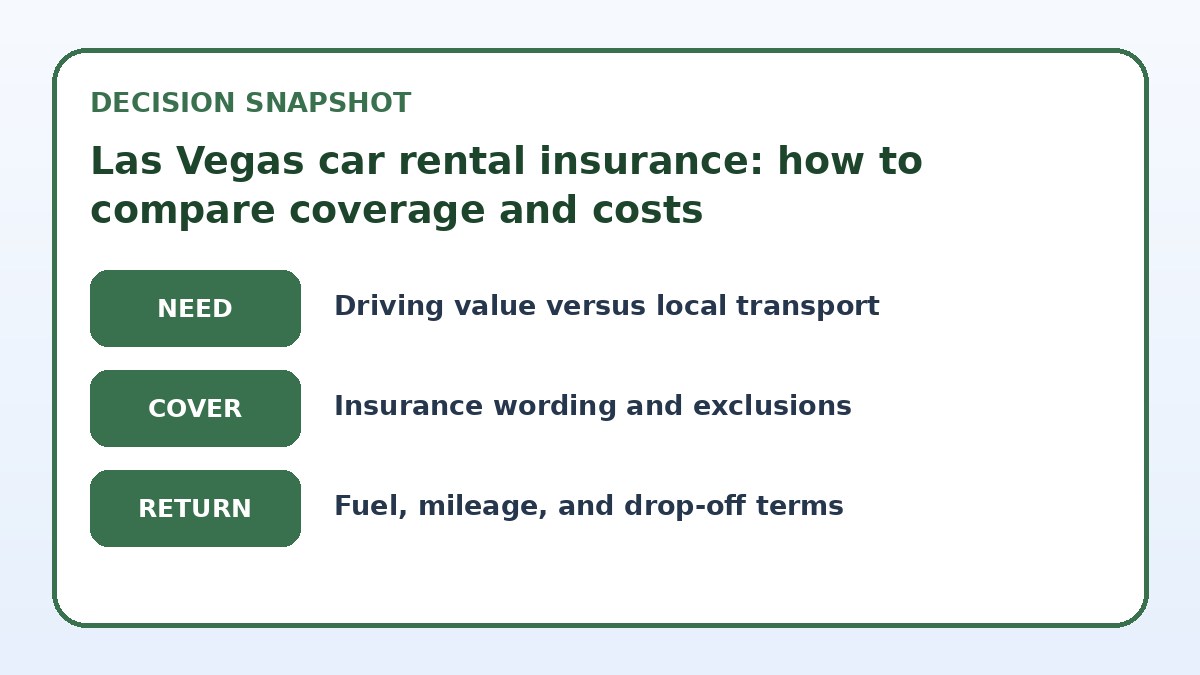
If your family plans to drive in and around Las Vegas, focus first on understanding the wording used in rental insurance options. The practical decision: verify whether your quote includes Loss Damage Waiver (LDW) or Collision Damage Waiver (CDW), Liability coverage limits, and whether personal effects or roadside assistance are included or optional add-ons. These terms determine whether you'll pay a claim excess, handle a damage bill yourself, or have third-party protection for injuries or property damage. Read the rental contract’s insurance summary and the exclusions list carefully before you hit “confirm.” On the provider’s final booking page, check exact excess amounts, whether household auto policies or credit cards are accepted, and whether child seats or additional drivers affect coverage.
Key insurance terms families must understand
Start by identifying three core phrases: Loss Damage Waiver (LDW) or Collision Damage Waiver (CDW), Supplemental Liability Insurance (SLI) or third-party liability, and Personal Effects Coverage (PEC). LDW/CDW refers to the rental company waiving its right to charge you for damage to the car if you meet the contract conditions. That waiver often reduces or removes the excess/deductible but can exclude specific events like off-road driving, windshields, tires, or undercarriage damage—important exclusions for a Vegas road trip that may include desert side excursions.
Supplemental Liability fills the gap between the rental’s basic liability and the level a family might want if there’s injury or damage to others. Many U.S. states set minimum liability requirements that are low for serious crashes, so SLI can provide peace of mind. Personal Effects Coverage addresses theft or damage to items inside the car, a real concern when touring casinos or leaving beach gear in sight. For each term, look for the exact limits, exclusions, claim procedures, and whether coverage applies to additional drivers or long-term rentals.
How to compare your own insurance, credit cards, and rental offers
Before you book, check your household auto policy and the credit cards you’ll use for payment. Many primary auto policies extend coverage to rented vehicles in the U.S., while some credit cards only offer secondary collision coverage that pays after your personal policy’s deductible. Call your auto insurer and the card provider to get written confirmation of what they cover for rental cars and any state-specific restrictions. Ask whether coverage applies to insurance sold by the rental company, whether loss-of-use charges are covered, and how claims are handled.
When comparing the rental company’s insurance, look beyond the daily price. Identify the exact deductible or excess, whether the company charges for loss of use while the car is repaired, and if administrative fees apply to incident processing. If your credit card offers primary rental coverage, confirm whether it excludes certain vehicles, drivers under a specific age, or rentals longer than a set number of days. On the rental provider’s final booking page, verify eligibility rules for card benefits and whether you must decline the rental’s CDW to make card protection active.
| Approach | Best for | Tradeoff to check |
|---|---|---|
| Buy the rental company’s LDW/CDW | Families who want to minimize out-of-pocket bills and avoid dealing with their insurer after damage. | Usually higher daily cost and may still exclude specific damage types or charge administrative fees. |
| Use your personal auto insurance | Families with robust primary auto policies and low deductibles who want seamless primary coverage. | A claim can raise premiums and may not cover all rental-specific charges like loss of use or administrative fees. |
| Rely on credit card rental coverage | Families with premium cards offering primary coverage and straightforward claim processes. | Card coverage can be limited by vehicle type, driver age, rental duration, and often excludes liability and personal effects. |
| Buy only targeted add-ons (SLI, PEC, roadside) | Families who want tailored protection without the full cost of LDW and who already have partial coverage. | Requires careful cross-checking of policy overlaps and exclusions; gaps can remain in serious incidents. |
Deciding what to buy for a family trip to Las Vegas
Families should weigh three practical factors: the value of peace of mind, the age and driving history of drivers, and what you would be able to pay out of pocket if there’s an incident. If you prefer to avoid surprise costs after a collision, a CDW/LDW that reduces or eliminates the excess can be worth the daily fee. For families traveling with young children, a higher liability limit reduces the risk of an underinsured third-party claim; consider SLI if your own liability limits are modest.
If you carry substantial luggage, electronics, or rental baby equipment, consider Personal Effects Coverage or ensure your homeowners’ or travel insurance covers those items. For longer road trips that might include remote routes outside the Las Vegas metro area, prioritize roadside assistance with rapid response and clear service limits. Finally, remember additional drivers, underage driver fees, and child-seat policies can affect coverage—confirm the rental contract’s wording and whether adding a spouse as an additional driver changes the insurance terms.
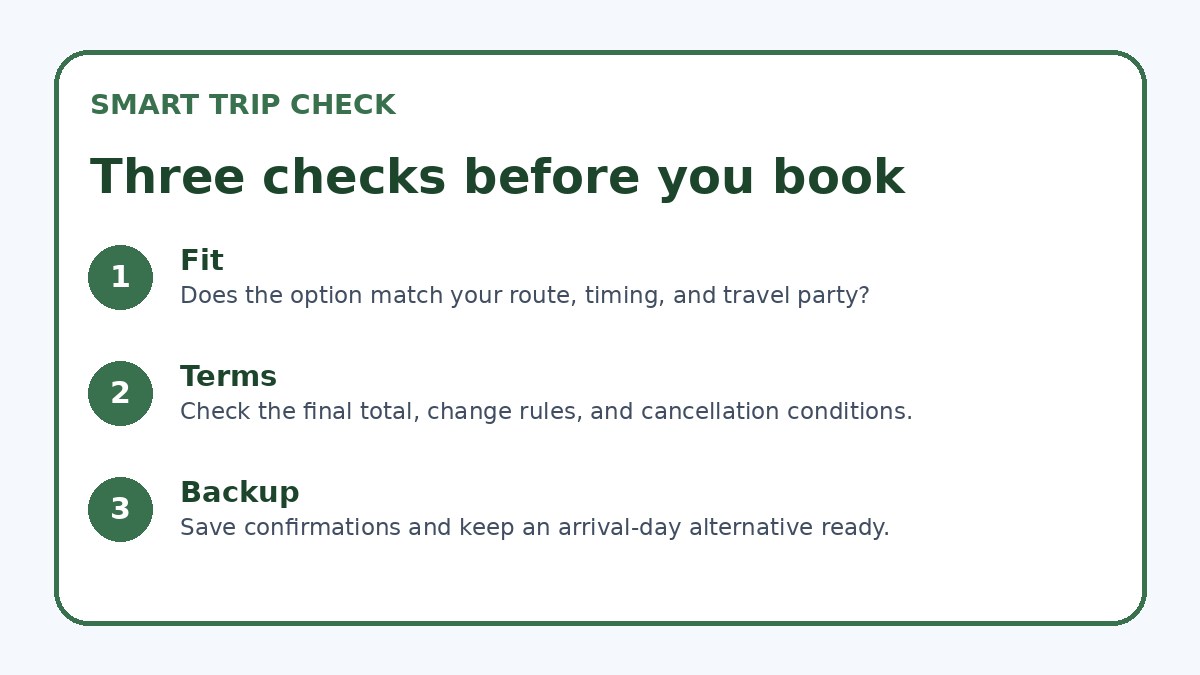
Before you book
- Call your auto insurer and get written confirmation of whether your policy covers rental cars in Nevada and any driver or duration limits.
- Check the credit card benefits guide for the exact rental coverage wording, required payment rules, and any vehicle or age exclusions before using the card.
- On the provider’s booking page, download and save the rental terms PDF showing the LDW/CDW, liability limits, excess amount, and exclusions.
- Confirm whether additional drivers (spouse or grandparents) are automatically covered or need to be added, and whether that affects insurance validity.
- Take time-stamped photos and a short video of the car’s condition before leaving the lot to support any damage claims later.
- Keep emergency contact numbers for roadside assistance and the rental company in your phone and printed with your reservation details.
What to verify on the rental company’s booking page
The rental booking page gives the final, contract-specific details you must verify. Confirm the exact name of the product (LDW, CDW, SLI, PEC), the excess amount, whether theft is covered without negligence, and the list of excluded items or events. Look for a downloadable or on-screen terms and conditions PDF; read the exclusions for windshield, tire, and undercarriage coverage and whether off-road or unpaved use is allowed. Note any required documentation to make a claim, such as police reports for theft or proof of loss for personal effects.
Also verify practical service details: how to report an accident or breakdown, whether the company provides a replacement vehicle, and phone numbers for 24/7 support. If you plan to return the car at night or from an off-site location, check whether that affects insurance acceptance. Finally, if you’re relying on a credit card’s coverage, confirm the rental page’s payment and card-activation requirements, and retain screenshots or a PDF of the confirmation page showing the company’s offered coverage in case of later disputes.
Frequently asked questions
Does my personal auto insurance cover a rental car in Las Vegas?
Many U.S. personal auto policies extend coverage to rental cars for the same drivers and under similar limits as your regular policy, but specifics vary. Call your insurer and ask if coverage is primary for rentals in Nevada, whether loss-of-use or administrative charges are included, and if there are exclusions for vehicle types or off-road use. Get the representative’s name and request written confirmation or a policy excerpt you can show the rental company if needed.
If I use my credit card for the rental, do I still need to buy the rental company’s insurance?
That depends on the card’s level of protection. Some premium cards offer primary collision coverage for rentals, removing the need to file with your auto insurer, while many cards only provide secondary coverage that pays after your policy. Credit cards rarely cover liability or personal effects. Before declining rental insurance, read your card’s protection terms, confirm any exclusions for vehicle category, driver age, or rental length, and verify that the rental payment meets the card’s activation rules.
What should I do immediately after a minor damage incident with children in the car?
First ensure everyone’s safety, move the vehicle if it’s safe, and call emergency services if needed. If damage is minor and no one is injured, photograph the scene, exchange information with any other parties, and report the incident to the rental company and police if required for a theft or vandalism claim. Notify your insurer and credit card benefits line when appropriate, retain all receipts and repair estimates, and follow the rental company’s claim instructions precisely to avoid disputes over responsibility or excess charges.
Final planning note
For families renting in Las Vegas, the smartest move is to translate insurance wording into “what you would pay today” if something happens. Compare LDW/CDW, supplemental liability, personal effects coverage, and roadside assistance against the protection your auto policy and credit cards already provide. Verify exact excess amounts, exclusions, and claim procedures on the rental company’s final booking page and keep written confirmations from insurers and card issuers. With clear documentation and a short pre-drive checklist, you’ll reduce surprises and focus on the trip instead of paperwork if an incident occurs.
Continue planning
Check current options and final conditions
Use the provider page to confirm live availability, the final total, cancellation terms, and every condition that matters to your trip.
This evergreen planning guide was created with AI-assisted drafting and a structured quality review. It does not display live prices, schedules, availability, visa guidance, or provider rankings. Verify current details before booking. Some links are affiliate links; we may earn a commission at no additional cost to you.