If you and your partner are thinking about Kyoto during a shoulder season, focus first on whether a package or separate bookings actually gives the value and flexibility you need. Shoulder seasons (spring before peak cherry blossom crowds, and fall after main foliage weeks) can offer quieter streets and milder weather, but availability and included services vary. Start by comparing the exact dates, number of travelers, and the same inclusions—room type, transfers, experiences, and cancellation terms—before assuming a bundled deal is better than arranging flights, trains, and hotels separately. This guide walks couples through the tradeoffs that matter for a restful, romantic stay: what to expect from typical package inclusions, when flexibility is worth a premium, how traveler-specific needs change the math, and which final terms you must verify on the provider’s booking page.
Test package value fairly
| Booking approach | Best for | Tradeoff to check |
|---|---|---|
| Full package (flight + hotel + transfers + experiences) | Couples seeking convenience and a single point of contact for the whole trip. | Less flexibility and harder to swap individual elements without penalty; check exact change and refund rules. |
| Flight + hotel bundled only | Travelers who want bundled airfare convenience but prefer local flexibility for activities. | May miss out on local inclusions like private transfers or guided experiences, so compare inclusions line-by-line. |
| Separate bookings (book flights, hotel, and activities individually) | Couples who value maximum flexibility and want to curate private experiences or different hotels per night. | More time-consuming to organize and requires careful comparison to avoid paying more overall once fees and add-ons are included. |
| Accommodation-focused package (hotel + experiences, no transport) | Couples already arranging flights or rail independently, who want local experiences bundled with lodging. | Could be cheaper on paper but may exclude transfer or rail baggage services; check how local operators handle late arrivals. |
Check current package and separate options
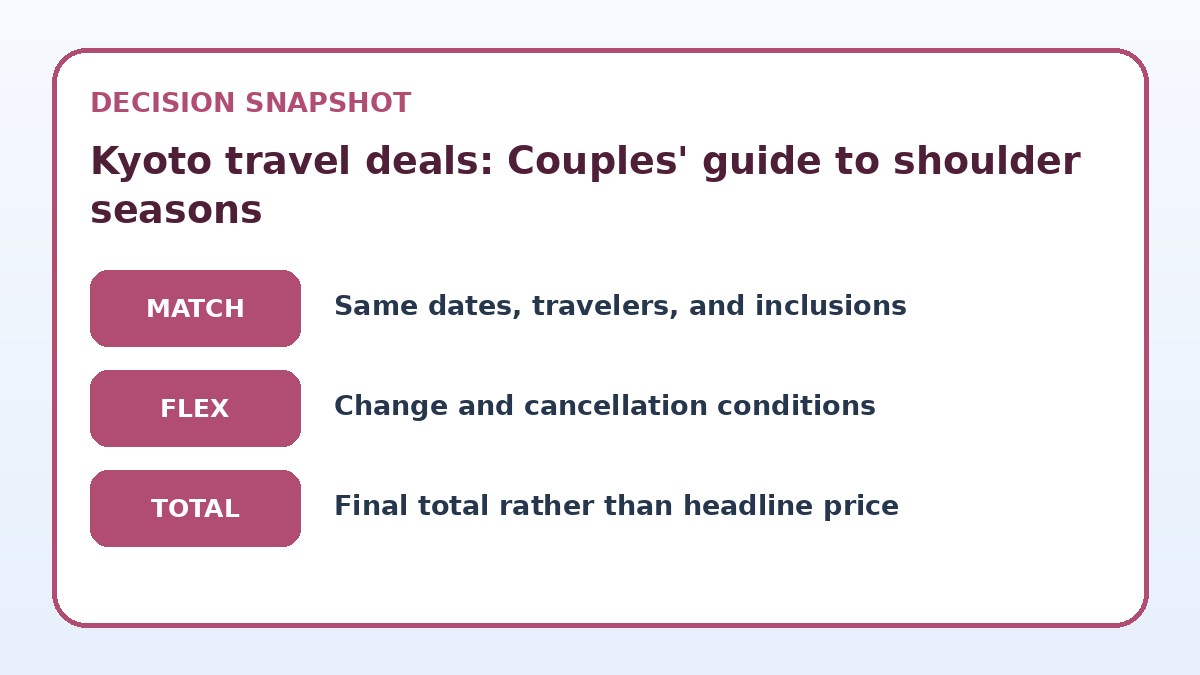
Use identical dates, travelers, room needs, baggage, and flexibility so the comparison stays meaningful.
Inclusions: what to compare in every Kyoto travel deal
When evaluating packages versus separate bookings, list every item included and treat the list as your contract. Include flights or rail segments (and whether they are refundable), airport or station transfers, hotel room category with specific bedding and view, daily breakfast or meal credits, guided tours or entrance tickets, and any local transport passes. For couples, note whether experiences are private or group-based—private tea ceremonies or evening strolls through Gion add value that matters to two travelers who expect privacy. If a package lists “meals included,” verify which meals on which days, because partial meal plans change daily budgeting and dining plans.
Some inclusions that seem small can swing the decision. Transfers that meet you at the station reduce the friction of arrival and are especially valuable after long travel days; conversely, a package that bundles a long, fixed-schedule tour may limit spontaneous romantic wandering. Also check whether local taxes, resort fees, and attraction surcharges are included or billed at check-out. Always write down the inclusions and compare them one-by-one against separate booking options so you don’t overlook a cost or convenience feature that actually matters more than headline savings.
Flexibility: balancing refundable options with couple priorities
Couples often weigh flexibility differently than solo travelers—one partner’s schedule can change, or you may want extra nights after deciding to linger. Refundable or changeable hotel and transport bookings come at a premium but can be worth it for peace of mind. When a deal looks cheaper, check the exact change and cancellation rules: how many days before arrival are changes free, are partial refunds pro-rated, and what fees apply for name or date changes? If you have timed events—seasonal festivals, local exhibits, or a booked ceremony—nonrefundable components carry greater risk and should be scrutinized more closely.
Also think about rebooking logistics: does the provider offer easy online changes or require phone contact during local office hours? For international travel, consider how an included multi-day tour or intercity rail reservation will be adjusted if you want to stay an extra day in Kyoto. Flexibility matters to romantic itineraries that value spontaneity—an extra evening in a quiet temple district can be the highlight of a trip—so quantify the cost of change options when making the decision.
Look past the headline total
Compare inclusions and change conditions before deciding whether a package is genuinely useful for this trip.
Deal comparison checklist
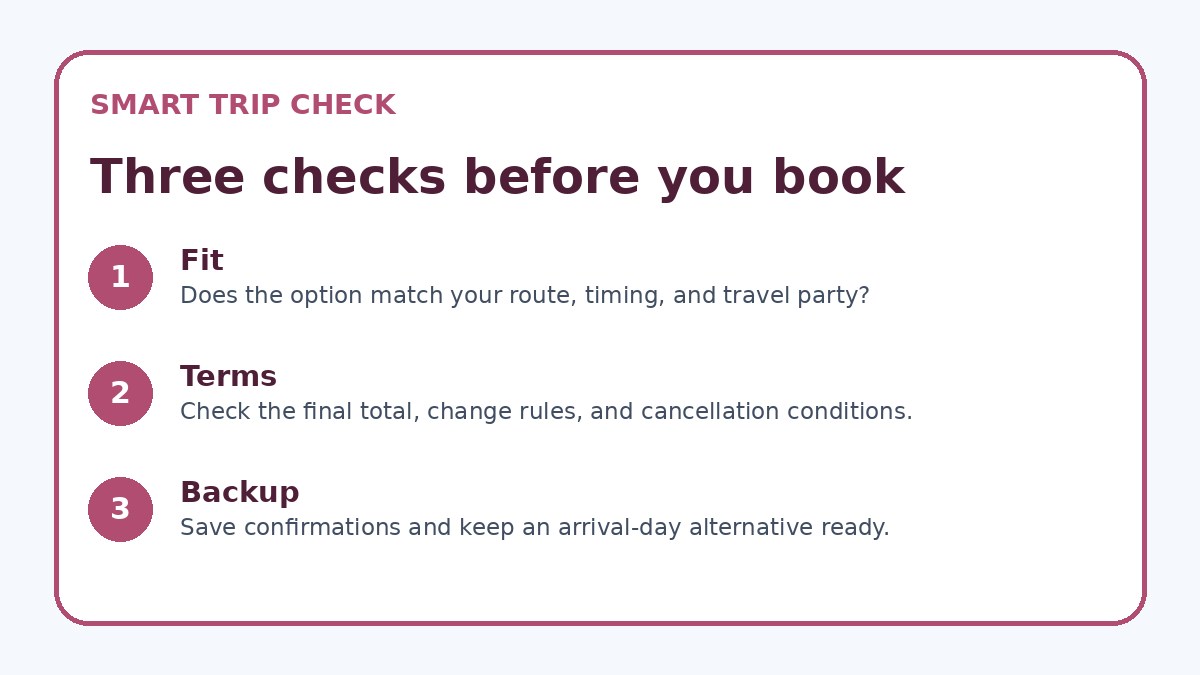
- List every inclusion in the quote (room category, transfer type, meals, experiences) and compare it against separate booking options line-by-line.
- Verify cancellation and change policies for each component on the provider’s final booking page, including deadlines and any per-person fees.
- Confirm bed configuration and room specifics for couples (double, twin, onsen access) rather than assuming standard room names.
- Ask whether transfers meet you at the correct arrival point and clarify where and how vouchers or tickets are redeemed locally.
- Check who pays local taxes, resort fees, or attraction surcharges and whether those costs appear in the final total or at check-out.
- If a package includes timed activities, verify the rescheduling policy for delays and whether private alternatives are available for couples.
Traveler-specific value: what couples should prioritize
Couples often value privacy, pace, and shared experiences. Prioritize room features that support intimacy—size, bedding layout, soundproofing, and whether the room includes a private bath or onsen access. Look for experiences geared to pairs: private guides, couples’ cooking classes, or reserved evening temple illumination visits. Consider how included breakfasts or romantic dinners factor into your daily rhythm—sometimes a slightly more expensive room with breakfast can save time and create calm mornings for exploring Kyoto’s shrines and neighborhoods together.
Accessibility and mobility preferences matter, too. If one partner prefers to minimize walking or avoid many stairs, check transport inclusions and hotel location relative to the neighborhoods you want to explore. Nighttime safety and convenience—proximity to train stations, late-night dining options, and whether transfers are available after late arrivals—are practical considerations that affect the comfort of a couple’s trip. Make a short list of deal features that directly enhance your shared experience and weigh those more heavily than generic savings claims.
Final terms: the contract details to verify before you book
Before you commit, read the provider’s final booking page for exact terms and conditions. Confirm what happens if one traveler’s passport changes, whether names can be corrected without fee, and how third-party vouchers are redeemed at hotels or tour operators. For transport, check ticket delivery method—mobile vs. paper—transfer pick-up points, and whether seat reservations are included or optional. If the deal includes timed activities, verify whether missed segments due to flight delays are refundable or can be rescheduled.
Also verify payment and refund timelines, whether the package price includes foreign transaction fees, and the identity of the local operator who will fulfill tours or transfers. If anything is vague on the booking page, contact the supplier and get written confirmation by email. You can compare current availability and terms on multiple platforms, including Trip.com, but treat the supplier’s own final page as authoritative for cancellation policies, change fees, and redemption procedures.
Travel Deals & Booking Strategy questions travelers ask
Are shoulder-season Kyoto travel deals actually less crowded and better for couples?
Shoulder seasons typically fall outside the absolute peak windows for cherry blossom and autumn foliage, which often means fewer day-trip crowds and quieter neighborhoods—conditions many couples prefer for leisurely walks and intimate meals. That said, specific events and regional school holidays can still create busy pockets, so check local calendars for festivals or long weekends. For a couple’s trip, quieter mornings and early evenings are common benefits, but you should verify event schedules and accommodation availability for your exact dates before booking.
How can couples avoid false savings when comparing packages and separate bookings?
Always compare identical traveler counts, room types, and dates across quotes. Translate vague inclusions into concrete deliverables—if a package lists transfers, confirm whether they are private, shared shuttles, or fixed-times. Include taxes, service fees, and admission tickets in the total comparison. If one option is cheaper, trace where savings come from: less flexible tickets, group tours instead of private experiences, or smaller rooms. Only consider the package a genuine saving when both the tangible inclusions and the cancellation flexibility match your needs.
What final terms should I verify on the booking page before paying for a Kyoto package?
On the seller’s final booking page, check cancellation and change deadlines, refund processing times, name-change policies, payment methods, and whether local taxes or resort fees are included. Confirm redemption methods for vouchers or tickets, pickup points and times for transfers, and the local operator’s contact details. If any timing is essential—late arrival, early departure, or timed activities—ensure the contract explains rescheduling rules. When in doubt, request written confirmation from the provider and save all correspondence before completing payment.
Final decision note
For couples planning Kyoto travel around shoulder seasons, the practical decision comes down to a careful comparison of identical dates, traveler counts, and inclusions. Packages simplify logistics but can hide limits on flexibility and private experiences that make a couple’s trip special. Separate bookings give control and customization but require more work to avoid accidental extra costs. Use the checklists above to translate vague inclusions into concrete items, verify final terms on the supplier’s booking page, and weigh the emotional value of conveniences—private transfers, room layout, and quiet mornings—alongside financial differences. Compare current availability and terms across platforms, including a look on Trip.com if you wish, but treat the supplier’s final page as definitive before you pay.
Continue planning
Check current options and final conditions
Use the provider page to confirm live availability, the final total, cancellation terms, and every condition that matters to your trip.
This evergreen planning guide was created with AI-assisted drafting and a structured quality review. It does not display live prices, schedules, availability, visa guidance, or provider rankings. Verify current details before booking. Some links are affiliate links; we may earn a commission at no additional cost to you.