
If you’re bringing extra luggage to Jeju—oversized bags, sports equipment, or several suitcases—your primary task is to decide how to handle pickup and return so your trip starts smoothly. The quickest safe approach is to confirm luggage allowances, vehicle trunk dimensions, and any declared fees before you book; when you arrive, inspect the trunk with staff and record a photo of any pre-existing damage or stains. At return, factor in time for repacking, a final trunk check with the agent, and the company’s stated fuel and cleanliness policies. This article walks you through the questions to ask on booking pages, the tradeoffs between vehicle size and cost, and practical steps at pickup and drop-off so you can plan time, avoid unexpected charges, and keep your Jeju itinerary on track.
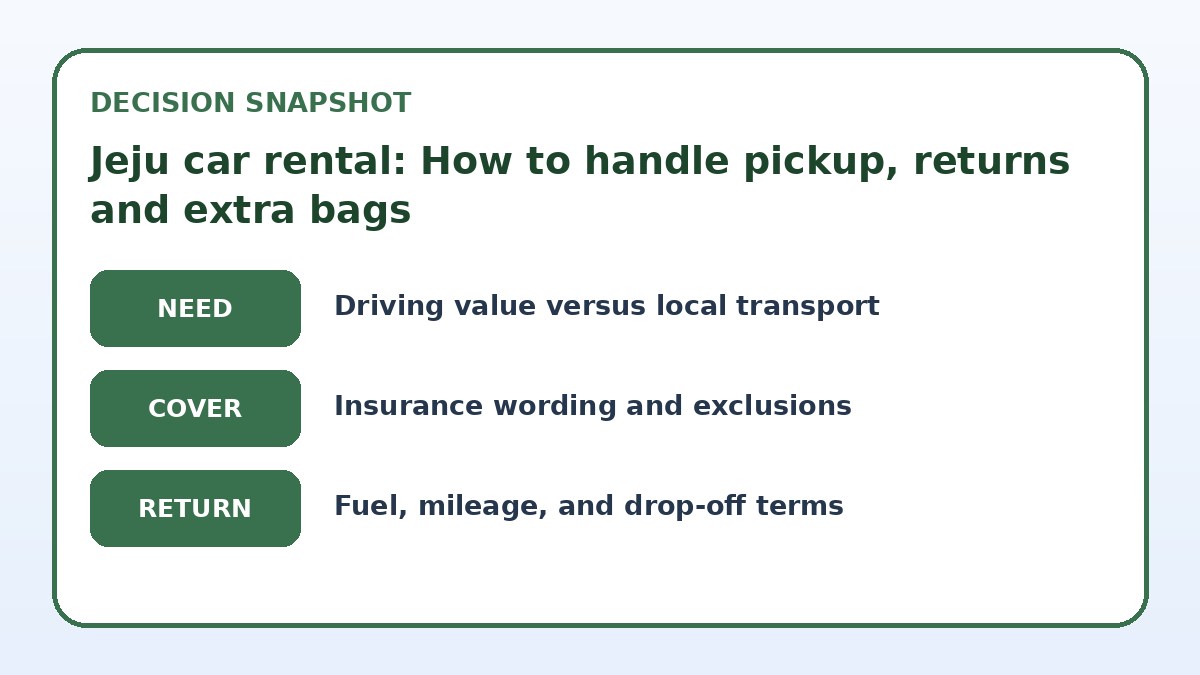
See current options before you compare the details
Availability and final conditions change. Open Trip.com now or keep reading for the practical comparison.
Check the booking page: what to verify before you reserve
On the booking page and the rental agreement, look for three specific details: stated luggage allowance (how many carry-on-sized or full-size suitcases the vehicle is said to hold), trunk dimensions if provided, and any optional equipment such as roof boxes, bike racks, or child seats. Do not assume the generic vehicle category will meet your needs; vehicle models vary. When details are vague, contact the rental company’s customer service or the local branch to request a photo of the exact car you’ll receive or its trunk measurements.
Also confirm pickup and return location rules, hours, and whether a shuttle or curbside handover applies—these affect how easily you can move heavy bags. Verify the company’s policy on excess luggage charges, cleaning fees for muddy or sandy items, and whether staff will help load bulky items. If an extra driver, airport pickup, or equipment rental is needed, check whether those items appear on the final booking page and the exact wording of any disclaimers so you’re not surprised at the counter.
Choosing the right vehicle: space versus cost
Bumping up to a larger vehicle is the simplest way to avoid luggage headaches, but it has tradeoffs: larger cars use more fuel, can be harder to park around Jeju’s popular sites, and sometimes have higher insurance or deposit requirements. When considering upgrades, prioritize usable trunk volume over passenger legroom if your main constraint is bags. Estate/wagon or compact SUVs often offer the best balance between cargo space and drivability on Jeju’s narrower coastal roads. If your luggage includes long or oddly shaped items, measure them and confirm the vehicle’s usable cargo length.
An alternative to a bigger car is renting add-on equipment like a roof box or rear-mounted carrier. These expand capacity without changing vehicle class but require installation time, may affect fuel consumption and wind noise, and could be restricted by height limits in parking structures. If you plan to use a roof box, check the final booking page for maximum permitted load, installation assistance, and whether the rental company will secure and lock the box at pickup. Decide based on the number and size of bags, ease of loading, and your confidence driving with an altered vehicle profile.
| Approach | Best for | Tradeoff to check |
|---|---|---|
| Book larger car class | Travelers with many or bulky suitcases who want a simple trunk-first solution | Higher rental cost, larger vehicle to drive and park, and potentially higher deposit |
| Rent add-on gear (roof box, rack) | Odd-shaped or long items that won’t fit in the trunk | Installation time, altered handling, possible height restrictions and fuel penalty |
| Ship or store excess luggage | Those avoiding larger cars or roof gear for short stays | Extra logistics and cost to ship or find local storage, plus potential wait time |
| Split into two cars | Groups where cost can be shared and different pickups suit itineraries | Higher overall cost, coordination complexity, and extra drivers to manage |
Ready to check the option that fits your plan?
Use your exact dates and traveler details so the provider page can show the current total and conditions.
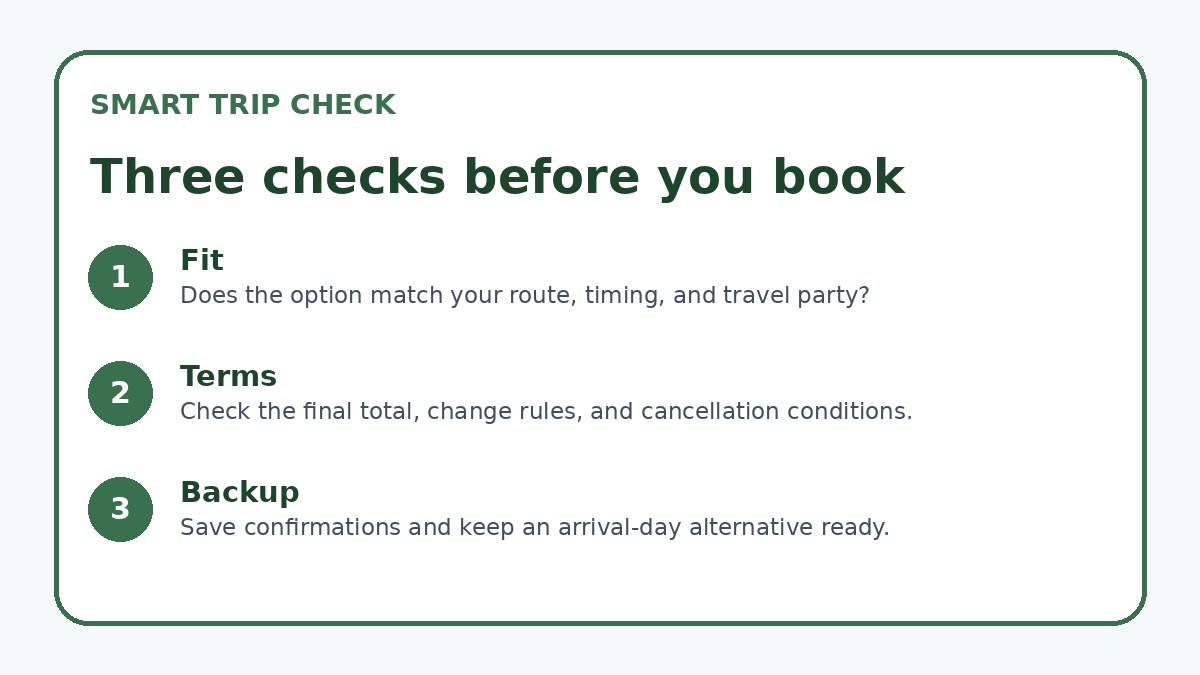
Pickup procedures: practical steps at the counter and lot
Arrive at pickup with realistic time—if you’re at Jeju International Airport, add time for passport control, baggage claim, and any shuttle transfer. At the counter, confirm the allocation (vehicle category and model), extra equipment listed on your booking, and the agent’s checklist for existing vehicle condition. Open and photograph the trunk, cargo area, roof (if applicable), and the glovebox with the agent present. Note any dents, scuffs, or stains and have the agent initial or timestamp your inspection photos on the rental sheet when possible.
If you have heavy or bulky luggage, ask if staff will assist with loading; not all branches offer this. When fitting bags, place heavier items low and forward to maintain balance and visibility. If using rooftop equipment, request a demonstration on how the company secures the load and whether the rental agreement restricts speed or road types. Keep copies of any signed forms and photos until after the vehicle is returned without dispute; they are your primary defense against later damage claims.
Before you book
- Measure your largest bag and list the number of suitcases before comparing vehicle trunk specs.
- Request trunk photos or exact cargo dimensions from the rental branch if the booking page lacks details.
- Confirm rooftop or rack availability and read the final booking page notes on load limits and installation.
- Take timestamped photos of the trunk and cabin with the agent at pickup and keep copies until your deposit clears.
- Allow extra time for loading and return inspections when scheduling airport pickups and departures.
- Photograph trunk and fuel gauge at return and request a signed inspection form to avoid disputed charges.
Return process: avoiding surprises and saving time
Plan to return the vehicle with the trunk empty and interior reasonably clean—sand, wet towels, or excessive dirt often prompt cleaning fees. Read the fuel policy on the final booking page so you know whether to refill before return. When you arrive at the drop-off location, allow time for an agent to inspect the cargo area with you present; request the inspection be done while you remain there. If you’re short on time, check whether the company offers a documented self-return procedure and how it confirms final condition and fuel level.
If the company notes damage or excessive dirt, ask for photographic documentation and a written estimate before accepting a charge. Keep evidence that you returned the vehicle within agreed fuel and cleanliness standards—timestamped photos of the empty trunk and fuel gauge can be decisive. Finally, ensure your deposit hold is released or note the process and timing for refunds; different card issuers and companies handle holds differently, so verify the expected timeline on the final booking page.
Frequently asked questions
How can I be sure my luggage fits before I arrive at the rental counter?
Start by measuring your longest and widest items and compare them to any trunk dimensions listed on the vehicle description. If dimensions aren’t listed, contact the rental company or local branch and request a photo of the exact model you’ll receive or precise cargo measurements. When that’s not possible, prefer a vehicle category known for larger cargo (estate, wagon, compact SUV) or book add-on equipment like a roof box—confirm availability on the final booking page. Arrive at pickup with photos on your phone to guide arrangement and avoid last-minute upgrades.
What steps reduce the risk of being charged for trunk damage or dirt?
Inspect the trunk and cargo area with the agent present and take clear photos showing any existing marks, stains, or dents; ask the agent to note these on the rental condition report and initial it. Use protective liners, blankets, or plastic bags for dirty or wet items to prevent contact with upholstery. At return, clean out sand and debris from the trunk, photograph the empty cargo area and fuel gauge, and obtain a signed drop-off receipt. If a charge is proposed, request photographic evidence and an itemized estimate before authorizing payment.
Is it better to book a roof box or simply upgrade the car?
Choose based on inventory, convenience, and driving comfort. A roof box is a practical option if you don’t need extra passenger space and your vehicle remains the preferred size for driving and parking; it often costs less than upgrading vehicle class but requires installation time and alters handling. Upgrading the car offers immediate indoor storage without affecting vehicle height, which is easier for speeding through tight parking. Always confirm roof box availability, weight limits, and installation terms on the final booking page before deciding.
Final planning note
Travelers with extra luggage on Jeju can avoid most hassles by doing three things: confirm cargo capacity and add-on options before booking, document the vehicle’s condition at pickup with the agent present, and leave time for a careful return inspection. Choosing between a larger vehicle, rooftop equipment, or alternative logistics depends on your luggage dimensions, driving comfort, and willingness to pay for convenience. Before completing any reservation, review the rental company’s final booking page for exact trunk specifications, extra-equipment terms, fuel and cleaning policies, and the deposit/refund timeline. If you want to compare current availability and terms across providers, consider checking Trip.com as one of several comparison tools, then verify details directly with the rental branch.
Continue planning
Check current options and final conditions
Use the provider page to confirm live availability, the final total, cancellation terms, and every condition that matters to your trip.
This evergreen planning guide was created with AI-assisted drafting and a structured quality review. It does not display live prices, schedules, availability, visa guidance, or provider rankings. Verify current details before booking. Some links are affiliate links; we may earn a commission at no additional cost to you.