
Practical answer first: create focused price alerts with explicit trigger rules, limited alert channels, and a short decision checklist so alerts inform rather than push you into impulse bookings. As a busy business traveler, you want timely alerts for flights and hotels near major Istanbul business districts, but you also need a workflow that separates signal from noise. Use a small set of reliable providers to avoid duplicate notifications, set alerts only for workable date ranges and airports, and attach a non-negotiable review step before any booking: confirm meeting schedules, company travel policy, and total landed cost on the supplier’s final booking page. Below I explain tradeoffs, when to act fast, what to check before confirming, and how to keep alerts useful without becoming reactive.
See current options before you compare the details
Availability and final conditions change. Open Trip.com now or keep reading for the practical comparison.
Choose focused alerts that match real business constraints
Start by defining what makes a deal usable for your trip: exact travel dates or a small window around them, preferred airports (Istanbul has more than one), class of service, and whether meetings require morning arrivals or evening departures. Narrow alerts to those parameters; a broad alert catching every cheap fare will create noise and increase the temptation to book outside company rules. If your company requires specific carriers or preferred booking channels, add those filters. Keep alerts active only for the period when you are actually planning and pause them when travel is not imminent.
Decide how many simultaneous alerts you will tolerate—two or three at most. Use distinct labels (for example: ‘Client Meeting — Ataturk-area’ or ‘Conference — European-side hotels’) so you can quickly identify relevance. If you work with a travel manager, coordinate alert settings so their tools and yours do not duplicate notifications. Finally, set realistic thresholds: a target maximum total cost you are willing to pay, factoring in likely extras like checked baggage and changes, which you must verify on the booking page before confirming any purchase.
Manage alert channels and timing to prevent impulse buys
Choose alert delivery channels deliberately. Email alerts are less intrusive and give you time to evaluate; push notifications create urgency. Use push only for alerts that meet your pre-defined threshold and email for exploratory opportunities. Turn off mobile push during meetings or overnight to avoid reactive choices. Some tools let you add a delay or snooze to notifications—use that to force a cooling-off period between the alert and your booking decision.
Schedule a short, regular review slot in your calendar to look over active alerts rather than inspecting them the moment they arrive. A 20-minute daily or twice-weekly session where you apply your decision checklist converts alerts into considered options. This habit reduces the risk of booking based on emotion and keeps the process efficient: you’ll assess flights, connections, and hotel proximity to meeting venues in a controlled context instead of under time pressure.
| Approach | Best for | Tradeoff to check |
|---|---|---|
| Minimal alerts (1–2 specific searches) | Travelers who need low noise and high relevance | May miss marginal but useful deals outside narrow filters |
| Broad alerts (many searches and wide windows) | Those willing to monitor and evaluate many options | High notification volume increases impulse booking risk |
| Push-only urgent alerts | When timing is critical and a fast decision is possible | Higher likelihood of reactive bookings without verification |
| Email + scheduled review | Business travelers needing considered decisions | Requires discipline to maintain review cadence |
Ready to check the option that fits your plan?
Use your exact dates and traveler details so the provider page can show the current total and conditions.
Compare options: direct vs connecting, location vs price
When an alert surfaces a tempting fare, compare it against practical tradeoffs: does the cheaper ticket add a connection that risks meeting times? For Istanbul, check which airport arrival works best for your meetings and what ground-transfer time and cost look like. Don’t assume direct is always preferable—short, reliable connections may make sense if they reduce hotel nights or overnight stays—but always verify routing details on the booking page. If multiple tickets are plausible, run a quick pairing of total door-to-door time, reliability, and cost.
Hotel alerts require the same balance. A lower nightly rate can be offset by long taxi rides or time lost to traffic; weigh proximity to meeting venues and access to public transit against price. For business stays, factor in reliable Wi‑Fi, quiet workspace, and flexible cancellation policies. Always confirm the nightly rate, taxes, and any mandatory fees on the provider’s final page before booking, and check whether breakfasts or business services are included or available at extra cost.
Before you book
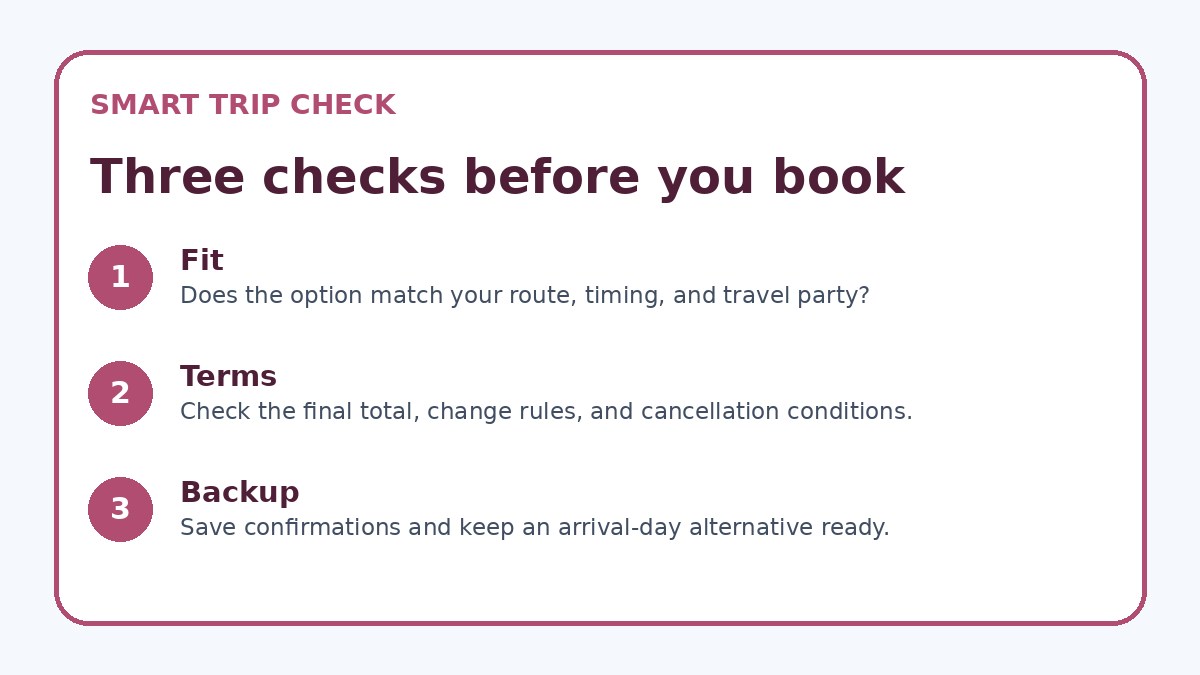
- Confirm trip dates and meeting times on your calendar before considering any alert.
- Verify total landed cost on the final booking page, including taxes, baggage, and transfer fees.
- Check that the option adheres to your company travel policy or get manager approval.
- Compare door-to-door travel time for flights and hotels, including local transfer options.
- Note cancellation and change terms on the provider’s page and assess risk for itinerary changes.
- Record the booking source and keep contact details for customer support in case you need changes.
Practical verification steps before you commit
Before you click ‘buy,’ run through a short verification list: confirm your calendar, ensure the option complies with corporate policy, check the full fare and baggage rules on the supplier’s checkout, and verify change or refund terms. If the booking involves a non-refundable fare, weigh the risk of schedule changes against savings. For group travel or multi-segment corporate trips, coordinate with your travel manager to consolidate bookings where needed so changes don’t incur disproportionate fees.
When provider-specific facts could change—like fare rules, baggage allowances, or cancellation penalties—open the provider’s final booking page and read the fare conditions in full. If anything depends on loyalty status, check the loyalty program terms. For merchants you’re less familiar with, review their customer-service contact options and how refunds or rebookings are handled. Trip.com can be used to compare live availability, but always verify terms on the supplier’s own booking page before purchasing.
Frequently asked questions
How many price alerts should a business traveler set for an Istanbul trip?
Aim for two to three focused alerts: one for the preferred outbound/return window and one for alternative airports or class of service. Too many alerts creates noise and temptation. Keep labels clear so each alert reflects a real, bookable scenario—specific dates or a narrow range, chosen airports, and a maximum acceptable total cost. Coordinate with your corporate booking channel to avoid duplication and consider pausing alerts once you have a confirmed booking to reduce distraction.
When an alert shows a low fare, how quickly do I need to act for business travel?
Activeness depends on how well the fare matches fixed constraints: confirmations for meetings, corporate policy, and transfer logistics. If the alert fits those constraints, move to the verification checklist immediately—confirm calendar, corporate approval, and the full fare rules on the provider’s booking page. If any of those elements are uncertain, use a short cooling-off period and your scheduled review slot; immediate purchase without verifying could create costly changes later. For genuinely time-sensitive windows, use push alerts but still apply the quick checklist.
Can I rely on alert screenshots or summaries, or must I check the supplier page every time?
Always verify on the supplier’s final booking page before completing a purchase. Screenshots or summaries can miss critical details such as baggage allowances, change fees, or mandatory taxes that affect total cost. Provider pages also show routing specifics and cancellation rules that may change between the alert and booking. Use summaries to triage options, but make the final decision only after reading the full terms on the booking page and confirming compliance with any corporate requirements.
Final planning note
Price alerts are a powerful tool for securing favorable Istanbul travel deals, but they work best when structured around the realities of business travel. Limit alerts to focused searches that reflect your meeting schedules and preferred airports; choose delivery channels that match urgency; and always run a short verification checklist before booking. That workflow reduces impulsive purchases while keeping you positioned to act when a truly suitable option appears. Lastly, remember to verify all fare rules, taxes, and fees on the provider’s booking page and, when relevant, coordinate with your corporate travel manager so bookings remain compliant and manageable.
Continue planning
Check current options and final conditions
Use the provider page to confirm live availability, the final total, cancellation terms, and every condition that matters to your trip.
This evergreen planning guide was created with AI-assisted drafting and a structured quality review. It does not display live prices, schedules, availability, visa guidance, or provider rankings. Verify current details before booking. Some links are affiliate links; we may earn a commission at no additional cost to you.