Practical answer first: if you have extra luggage, prioritize routes and schedules that minimize station-to-station walking, elevator changes, and tight connection windows — usually a single-shift from Hakata Station (Fukuoka) to Hiroshima Station by rail or a coach that loads luggage inside the vehicle will be the least fussy option. Decide between rail, coach, ferry, or mixed travel by comparing how each option handles checked luggage, how close terminals sit to transport hubs, and whether transfers require stairs, long concourses, or shuttle buses. This article walks through terminal fit, where friction happens with large bags, how to build schedule flexibility into your plan, and a simple disruption backup you can use. It’s focused on door-to-door practicality: think about the entire transfer chain from your hotel or lodging in Fukuoka to your arrival door in Hiroshima, not only the ride itself.

Choosing between rail, coach, ferry, or combinations
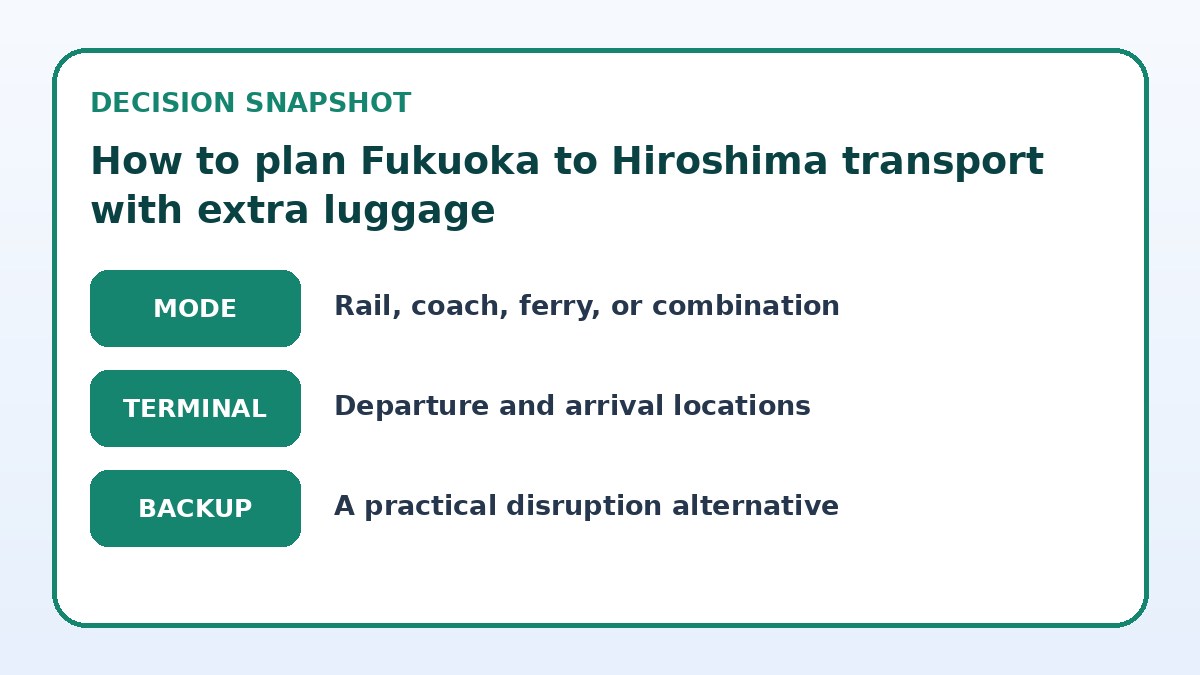
Start by mapping where each terminal sits relative to your origin and destination addresses. Rail typically links city centers with frequent schedules and level platform access; coaches often stop at bus terminals that can be a short taxi ride from central blocks; ferries land at ports which may or may not have onward public transport. For travelers with extra luggage, focus on which option minimizes street-level transfers or stair-heavy stations. Make a simple list of door-to-door steps for each option — for example: hotel to station taxi, elevator to platform, train, platform elevator, station exit, short taxi to Hiroshima accommodation.
Compare the luggage flow: does the operator load suitcases into an underfloor compartment (coach), provide checked baggage on the train (some long-distance services do, others don’t), or require you to carry everything aboard? If you will have bulky suitcases, a coach or a ferry with step-free boarding may be easier than a rail option that forces multiple platform changes. Also weigh frequency and flexibility. More frequent services reduce the need to reserve exact departure times and give room to swap to the next train or coach if a transfer runs late.
Choose the end-to-end journey plan
| Journey approach | Best for | Friction to check |
|---|---|---|
| Direct rail (single-seat or minimal changes) | Travelers who prefer predictable door-to-door city-center access with station amenities. | May require platform changes and elevator navigation; check luggage options and station layout before booking. |
| Long-distance coach with underfloor baggage hold | Passengers with bulky or many suitcases who want minimal walking between stops and easy checked baggage loading. | Terminals might be outside the city center and need short onward transfers by taxi or shuttle. |
| Ferry combined with rail or coach | Those carrying oversized items that are easier to stow aboard ferries and who don’t mind port transfers. | Adds terminal-to-terminal transfer planning and possible extra time compared with overland direct routes. |
| Mixed-mode plan with luggage forwarding | Travelers wanting minimal physical handling of heavy bags while keeping flexible travel timing. | Requires advance arrangement and verification of forwarding pickup/drop rules and timing. |
Check live intercity options
Look beyond the ride itself and compare terminals, transfers, luggage, and arrival fit.
Terminal fit and luggage-transfer friction
Examine each station or terminal’s layout: number of entrances, elevator locations, escalator placement and distance between platforms. Large stations can have long walking distances between Shinkansen platforms and regular lines, and sometimes require changing levels. If you must change platforms, measure the likely walking time and count of stairs or escalators you’ll face. Bring luggage with comfortable wheels and straps; consider soft-sided bags that compress rather than rigid suitcases that are harder to lift into overheads or taxis.
Ask whether terminals offer short-term luggage storage or porter services and verify those details on the provider’s booking page before you travel. If a terminal forces you to move bags between unconnected buildings or across wide plazas, it might be worth paying for a short taxi to avoid multiple carries. Also evaluate taxi ranks and ride-hailing access at each terminal — a direct taxi from station to accommodation often beats several public-transfer steps when you have heavy baggage.
Timing flexibility and building useful buffers
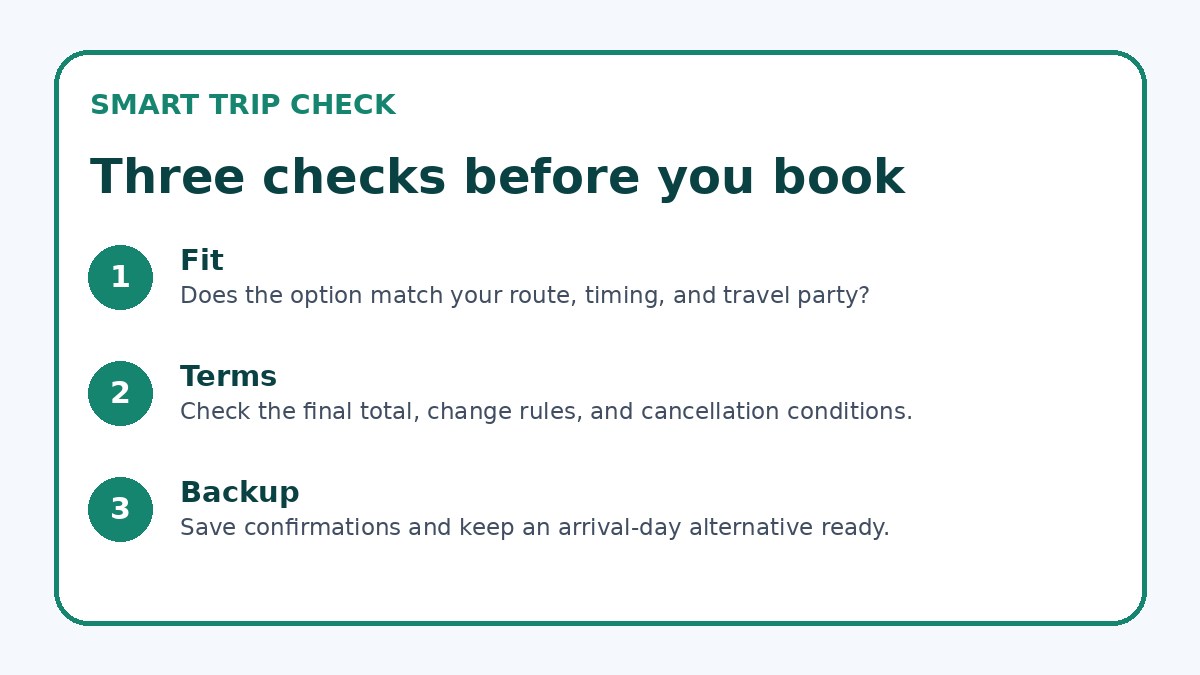
When handling extra luggage, schedule buffer time around every transfer. Don’t plan back-to-back connections that assume a brisk sprint between platforms or across terminals. Instead, allow time for unexpected elevator waits, crowded ticket barriers, or slow luggage maneuvers. If you must connect to a different service type (for example, train to ferry), pad your schedule further because boarding procedures and terminal security may lengthen the transfer.
If you have a fixed appointment at your destination, plan earlier departures or a conservative arrival window. For flexible trips, choose later departures when trains and coaches are less peak-crowded; off-peak services often mean more space for bags and easier elevator use. Finally, check whether reservations are required for specific services; if they are, confirm your seat assignment and any luggage allowances on the provider’s booking page so you can adjust timing with confidence.
Compare the practical alternatives
Use the final page to confirm what is actually offered on your dates and save a workable fallback.
Intercity travel checklist
- Map every door-to-door step from your Fukuoka lodging to your Hiroshima arrival point and note elevator/escalator locations.
- Confirm luggage allowances and loading procedures on the provider’s final booking page before purchasing tickets or reservations.
- Allow at least 45–90 minutes buffer for each transfer stage when moving multiple or heavy bags between terminals.
- Identify one alternate service within two hours and the nearest taxi rank at both origin and destination as a backup.
- If needed, pre-book a luggage-forwarding service and verify pickup and delivery windows on the courier’s website.
- Pack essential documents and valuables in a small daypack you will carry while larger suitcases are checked or forwarded.
Simple disruption backup and day-of tactics
Make a short disruption plan before you travel: identify one alternate departure within 1–2 hours, the nearest taxi ranks at both ends, and a local luggage-storage option near your arrival terminal. If a missed connection leaves you stranded with several heavy bags, a taxi or a luggage-forwarding service can save time. Note that using a luggage-forwarding or courier service requires pickup time, so arrange it at least a day ahead where possible and check the provider’s final terms on their website.
On the day, use digital station maps, real-time departure boards, and platform announcements to reduce surprises. If a station is crowded, ask station staff where the nearest elevator or barrier-free route is — they often provide step-free guidance and assistance. Keep essential items in a small daypack so you can move quickly if you need to carry one lighter bag while a second item is managed by a porter, luggage service, or the coach’s hold.
Rail & Intercity Transport questions travelers ask
Can I check large suitcases on trains between Fukuoka and Hiroshima?
Some long-distance train services accept checked luggage or have ample overhead and vestibule space, but policies can differ by operator and service type. Before you book, check the train operator’s baggage rules on their official booking page for any size or weight limits and whether reservations or large-item charges apply. If the train doesn’t offer checked baggage, consider a coach with an underfloor hold, hiring a porter at the station if available, or using a luggage-forwarding service to avoid carrying heavy bags through stations.
How should I plan transfers if my accommodation is far from the main station?
If your lodging is not within an easy walk, include a local taxi or shuttle in your door-to-door plan rather than relying solely on public transport. Taxis reduce multiple handlings of heavy luggage and can often pull up right at station exits, which is useful after a long intercity journey. Check where taxi ranks and rideshare pickup points are located at both your origin and destination stations, and budget time for traffic or short local transfers to avoid rushed connections.
Is luggage forwarding worth it for the Fukuoka–Hiroshima route?
Luggage forwarding can be worthwhile if you want to travel light between terminals, avoid carrying multiple bulky items, or ensure bags arrive at your accommodation while you travel. It requires arranging pickup in advance and confirming delivery windows, so verify those details on the forwarding provider’s site and allow buffer time. For same-day tight itineraries, forwarding might be slower; for overnight or flexible plans it reduces physical strain and simplifies transfers.
Final decision note
When traveling from Fukuoka to Hiroshima with extra luggage, focus on the whole chain: how you’ll move from your lodging to the departure terminal, through the transfer, and finally to your arrival door. Choose the transport mode that minimizes stairs, long concourses, and repeated handlings — coaches and luggage-forwarding services often reduce physical effort, while rail moves you center-to-center but can require careful platform planning. Always verify luggage rules, terminal layouts, and available assistance on providers’ booking pages before confirming plans. With a clear door-to-door breakdown, sensible buffers, and a simple disruption backup, you’ll reduce stress and reach Hiroshima without wrestling your bags at every step.
Continue planning
Check current options and final conditions
Use the provider page to confirm live availability, the final total, cancellation terms, and every condition that matters to your trip.
This evergreen planning guide was created with AI-assisted drafting and a structured quality review. It does not display live prices, schedules, availability, visa guidance, or provider rankings. Verify current details before booking. Some links are affiliate links; we may earn a commission at no additional cost to you.