If you want to hit the beach, see downtown sites, and minimize taxi or rideshare hassle, choose your Honolulu hotel by the practical transport you’ll use every day. For most first-time visitors that means deciding between Waikiki for frequent bus and shuttle options plus walkable beaches; Ala Moana for quick access to the mall, TheBus routes and ferries; the Honolulu waterfront or Chinatown for business-leaning stays with transit connections; or quieter East Oahu neighborhoods if you’ll rent a car. Start by listing the two or three places you plan to visit each day — beaches, museums, hikes, or restaurants — then map which hotel neighborhoods put you closest to the most frequent, low-friction legs of those plans. Later sections explain neighborhood fit, daily-route friction, room and party needs, and the booking terms to confirm before you finalize a reservation.

Check live stays in the areas that fit
Use your dates and party size to compare current rooms after you narrow the neighborhood fit.
Neighborhood fit: match your itinerary to a stay area
Start by grouping likely activities into clusters: Waikiki beaches and nightlife; Ala Moana shopping and Ala Moana Beach Park; downtown Honolulu, Iolani Palace and Chinatown; or eastern and windward Oahu attractions like Hanauma Bay and North Shore day trips. A neighborhood is a good fit when most of your daily plans fall within a single cluster or on a direct public-transit route from that area. For example, if your top interests are Waikiki beaches, sunset strolls and frequent dining options, Waikiki gives the simplest walking and short-bus connections even if it’s busier and more tourist-oriented.
Also think about arrival and departure logistics: how you will get from the airport to your hotel and back. Choosing a hotel near frequent shuttle stops or TheBus routes reduces waiting and rideshare surge uncertainty. If you plan many guided tours or want easy ferry access to nearby islands, prefer a location with direct shuttle or ferry terminals. Finally, consider time of day: a neighborhood might be pleasant for daytime sightseeing but limited in late-night transport options; map typical evening transit frequency before committing.
Choose an area-selection strategy
| Area approach | Best for | Tradeoff to check |
|---|---|---|
| Stay in Waikiki for walkability and frequent visitor services | Travelers who want daily beach access, restaurants and frequent short rides without a car | Higher foot traffic, busier streets and potentially longer rides to non-Waikiki attractions |
| Choose Ala Moana for mall access and diverse bus links | Shoppers and those who want central bus connections and a short ferry or park visit | Less beach atmosphere than Waikiki and a wider spread of services requiring local transit |
| Book in downtown/Chinatown for cultural sites and business access | Visitors prioritizing museums, historic sites and closer airport transfer options | Fewer beachfront options and potentially limited nighttime leisure compared with Waikiki |
| Pick East Oahu or Windward areas if you’ll rent a car | Travelers planning day trips to Hanauma Bay, North Shore and more scenic drives | Longer distances to central Honolulu services and fewer public-transit choices |
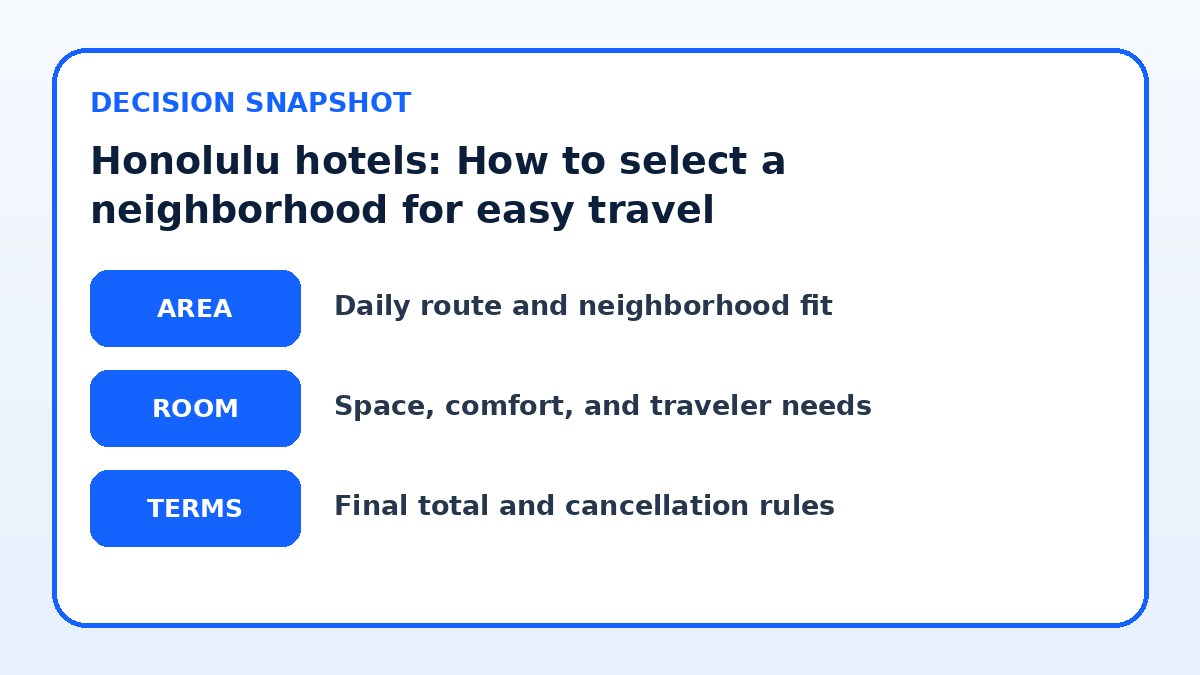
Daily-route friction: count transfers, waits and last-mile walks
Minimize friction by counting every segment of a typical day: walk from hotel to transit, wait times, any transfers, and the walk from the final stop to your destination. A single-seat bus ride across town often beats a short bus plus rideshare combination because one transfer multiplies uncertainty. Look for hotels advertised as a short walk to frequent TheBus routes (routes with 15–30 minute headways) or shuttle pickups; those reduce wasted time. If you plan many beach days, a hotel within a few minutes’ walk of the shoreline prevents repeated short rides and saves energy.
For travelers relying on rideshares, check how easy it is for drivers to reach your hotel curbside—some dense streets in Waikiki have limited loading zones, while hotel porte-cochères are more predictable pickup points. If you’ll rent a car, factor in hotel parking availability, whether parking is on-site, and typical walking distance from the lot to the lobby. For active travelers who’ll bike or use scooters, verify secure bike storage and legal scooter policies with the hotel before booking.
Now compare like with like
Keep the same dates, guests, room needs, and cancellation preferences while you compare the final choices.
Room and party needs: choose the layout that reduces hassle
Your party size and mobility needs change what hotel makes sense. Solo travelers and couples often prioritize compact, centrally located rooms to be near transit or attractions. Families or groups benefit from suites, multiple beds, kitchen facilities, or adjoining rooms to avoid repeated restaurant trips and to manage luggage more easily. If your plan includes early morning tours, ask for a quiet room away from elevators and street noise so transfers and early departures don’t wake everyone.
Mobility considerations are crucial: request ground-floor rooms or ones near elevators when walking or stairs are difficult. Confirm accessibility details on the hotel’s booking page — elevator availability, step-free routes from drop-off points, shower and restroom adaptations — and call the property if details are ambiguous. For long stays, a room with a small refrigerator and microwave can reduce the number of short trips you need to make for snacks or breakfast, cutting friction in day-to-day movement.
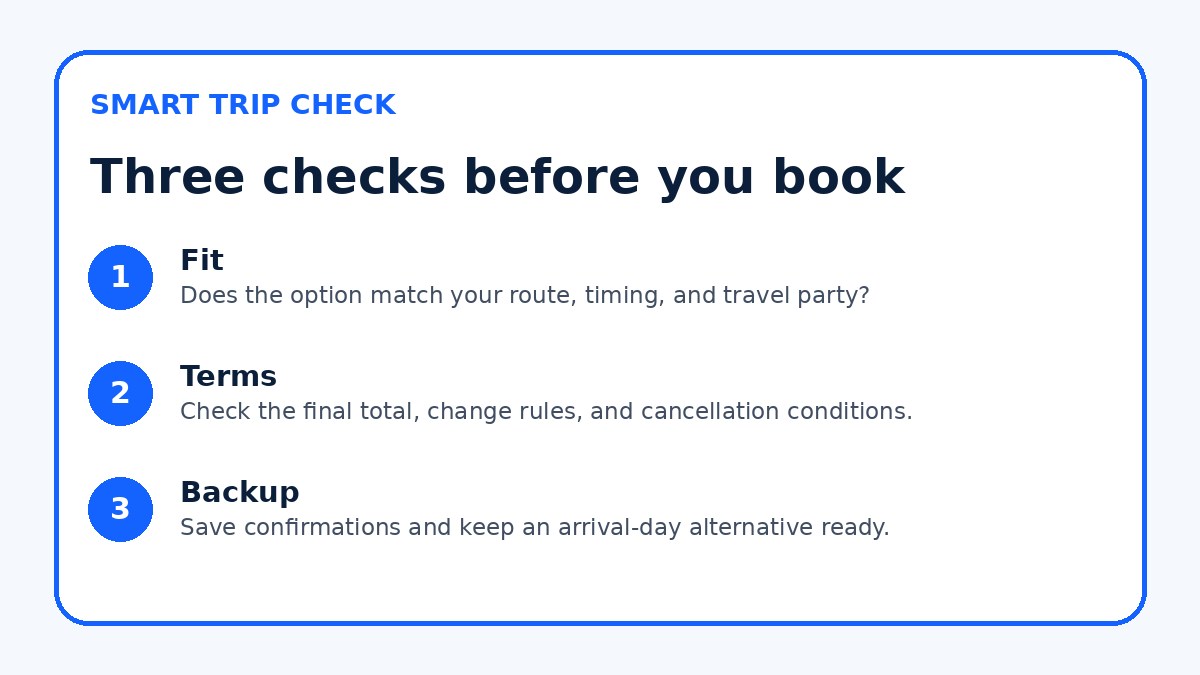
Hotel booking check before payment
- Map your three highest-priority daily destinations and draw walking/transit rings of 10 and 30 minutes around shortlisted hotels.
- Confirm the nearest bus route numbers, approximate headways, and whether the hotel lists an official shuttle or designated rideshare pickup point.
- Request the specific room type, floor and bed configuration you need when booking, and note any accessibility requests in writing.
- Check the property page for parking options, resort or facility fees, and whether those charges are paid at the hotel or during booking.
- Ask the hotel to describe early-morning check-in or luggage storage policies if you have an early arrival or late departure.
- Compare cancellation and prepayment terms across two or three hotels and re-check these details on the property’s final booking page.
Final booking terms: what to verify on the property page
Before you book, check the reservation policy for cancellation windows, prepayment requirements, and whether any resort fees, parking charges, or additional guest fees apply. These items change the effective cost and can affect flexibility if your flight or tour schedules shift. Pay particular attention to whether the rate includes meals, free Wi‑Fi, or shuttle services, and confirm the exact pickup location for any advertised shuttle; providers sometimes list a general area rather than a specific meeting point.
Also verify transportation-related details that are easy to miss: exact distance to the nearest bus stop, whether the hotel provides shuttle service to the airport or ferry terminal and whether they offer luggage storage for late departures. If you plan to rent a car, confirm where on-site or nearby parking is located and whether you must reserve a space. When in doubt, call the hotel’s front desk or reservations line and ask for exact transit connections and any on-property rules that could affect your arrival or daily movements.
Hotel Guide questions travelers ask
How close should a Honolulu hotel be to public transit for first-time visitors?
For a first-time visit, a hotel within a five to fifteen minute walk of a frequent bus route is usually ideal. That walk keeps you flexible while avoiding long waits or expensive rideshares. If walking short distances is difficult for you, prioritize hotels with shuttle services or clear curbside pickup points. Also check the actual bus route frequency for the times you’ll travel — morning and evening schedules can differ — and confirm the hotel’s exact walking route to the stop, since some streets are more pedestrian-friendly than others.
Should I book in Waikiki or near Ala Moana if I want beaches and shopping?
If beaches and nightlife are top priorities, Waikiki puts you closest to iconic shoreline and a concentration of restaurants and activity. If shopping and slightly quieter beaches or parks matter more, Ala Moana sits between the mall and public beach park and offers strong bus connections to other parts of Oahu. Consider which you’ll use most often: day-after-day beach time favors Waikiki’s proximity to sand, while a mixed plan of shopping and island logistics may be smoother from Ala Moana.
Is renting a car necessary for seeing Honolulu from a hotel near transit?
You can see many popular Honolulu sights using buses, shuttles and organized tours, so renting a car is not strictly necessary if you stay near good transit lines. A car becomes more useful for flexible day trips to windward Oahu or the North Shore, where public transit is less frequent and sites are spread out. If you plan multiple island excursions or scenic drives, factor parking and vehicle pickup/drop-off convenience into your hotel choice before committing to a rental.
Final decision note
First-time visitors can make confident hotel choices in Honolulu by centering the decision on where they’ll spend most of their time and which transport modes they prefer. Shortlist neighborhoods that reduce transfers and walking distance for daily plans, then narrow options by room layout and accessibility needs. Before you click confirm, verify the hotel’s transit connections, parking and pickup logistics, cancellation and payment terms, and any fees that affect your budget or flexibility. Once those practical checks are done you’ll be ready to open live inventory — Trip.com or another booking site can show current rooms and exact policies, but always confirm vital transport and fee details on the property’s final booking page.
Continue planning
Check current options and final conditions
Use the provider page to confirm live availability, the final total, cancellation terms, and every condition that matters to your trip.
This evergreen planning guide was created with AI-assisted drafting and a structured quality review. It does not display live prices, schedules, availability, visa guidance, or provider rankings. Verify current details before booking. Some links are affiliate links; we may earn a commission at no additional cost to you.