If you're traveling solo in Hong Kong and thinking about renting a car, the practical question is where to pick up and where to return it. The fastest choice is often an airport or city center pickup, but each option changes your time, cost, paperwork, and flexibility. For a solo traveler, prioritize simple pickup logistics, a clear fuel and mileage policy, and return procedures that match your departure plan. Before booking, confirm exactly which documents the rental office will require, what ID or license translations are accepted, any one-way fees, and the firm closing time for returns. Verify those items on the rental company's booking page or confirmation email — providers and terms can change — and compare current availability through Trip.com or the company's official site if you need a quick cross-check.
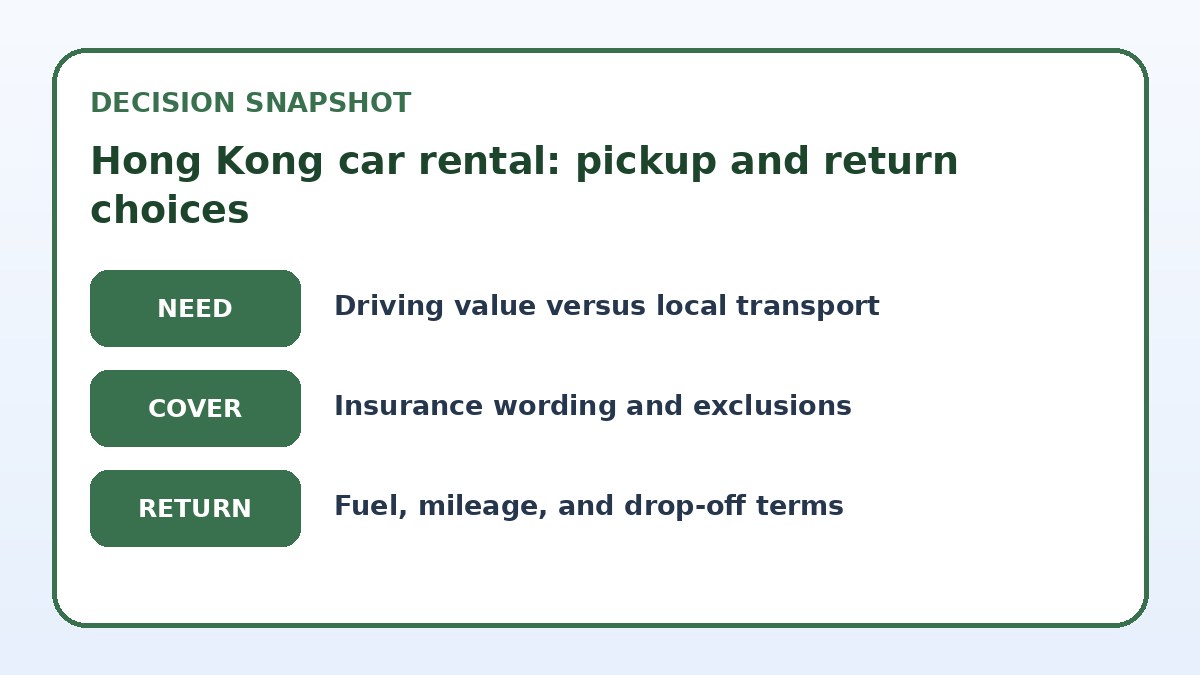
See current options before you compare the details
Availability and final conditions change. Open Trip.com now or keep reading for the practical comparison.
Pickup locations: airport, city, or ferry terminal — what to weigh
Picking up a car in Hong Kong depends on your arrival method and how much you want to simplify transfers. Airport desks are convenient if you fly into Hong Kong International Airport: they consolidate paperwork and usually have extended hours, though lines and airport-specific surcharges sometimes apply. City-center offices (Kowloon or Hong Kong Island) can be quicker if you arrive by ferry, train, or plan to stay centrally first. For solo travelers, reducing transfers with luggage is a major benefit of airport pickup, but you should confirm counter hours and whether the office opens for delayed or late-night arrivals.
Ferry-terminal pick-ups or smaller neighborhood outlets can suit localized itineraries but often have limited opening hours and limited vehicle choices. When you pick a location, verify whether the rental company requires you to collect at a specific terminal or office building and whether they provide shuttle service from the airport or station. Confirm what ID and driving license formats the office accepts and whether you need an International Driving Permit (IDP) or a verified translation — check the provider’s booking page for the exact document list before you finalize the reservation.
Return options: same location, one-way, and late returns
Returning the car to the same location where you picked it up is usually the simplest option for solo travelers: there are fewer administrative steps, no one-way charges, and fewer chances to miss a different office’s closing time. If your itinerary ends near the airport or another transit hub, a same-location return still requires you to confirm the final drop-off procedures — some offices insist on returning during staffed hours, while others accept a key drop but still need a signed final inspection. Solos should plan extra time for the final inspection and keep a photo record of the vehicle at drop-off.
One-way returns offer route flexibility but typically come with an additional fee and often stricter administrative checks; not every company accepts one-way drop-offs to or from some Hong Kong locations. If choosing a one-way return, verify the allowed drop-off sites, how the fee is calculated, and whether the company requires prior written approval for inter-office transfers. Late returns can trigger large penalties; confirm the precise grace period, how overtime is billed, and whether the provider expects you to notify them if your inbound flight or ferry is delayed.
| Approach | Best for | Tradeoff to check |
|---|---|---|
| Airport pickup / Airport return | Minimal transfers and straightforward post-flight handover | May have longer lines, airport fees, and slightly higher charges |
| City-center pickup / City return | Quick access to urban hotels and immediate sightseeing | Smaller offices may have limited hours and vehicle choices |
| Airport pickup / City return (one-way) | Flexible route ending in town without backtracking | Often incurs one-way fees and stricter drop-off checks |
| Neighborhood pickup / Airport return (one-way) | Start locally and finish near departure gate for easy last-leg travel | Requires confirming allowed drop-off locations and possible extra paperwork |
Ready to check the option that fits your plan?
Use your exact dates and traveler details so the provider page can show the current total and conditions.
Paperwork, ID, and solo-traveler specifics to confirm
Solo travelers must be meticulous with documentation. Rental firms commonly require a valid driving license, passport, a credit card in the driver’s name, and sometimes an International Driving Permit or certified translation. Requirements can vary by company and vehicle class; for example, larger vans or premium cars may need additional verification. Always check the rental company’s booking page for the exact list and ask how long they will hold a reservation without immediate confirmation. If you plan to cross boundaries (for example, into Shenzhen or mainland China), confirm cross-border permissions well before booking — many Hong Kong rentals restrict or require special paperwork for cross-border travel.
Also verify age thresholds, additional driver rules, and whether any insurance options are mandatory for certain drivers or cars. Solo travelers frequently rely on credit-card insurance or third-party cover, but the rental firm’s terms may require their own damage-waiver products to accept the booking. Ask what the security deposit holds cover, how reserves are applied to incidentals, and how to request a refund of the hold after an incident-free return. You should get these confirmations in writing on the booking page or confirmation email.
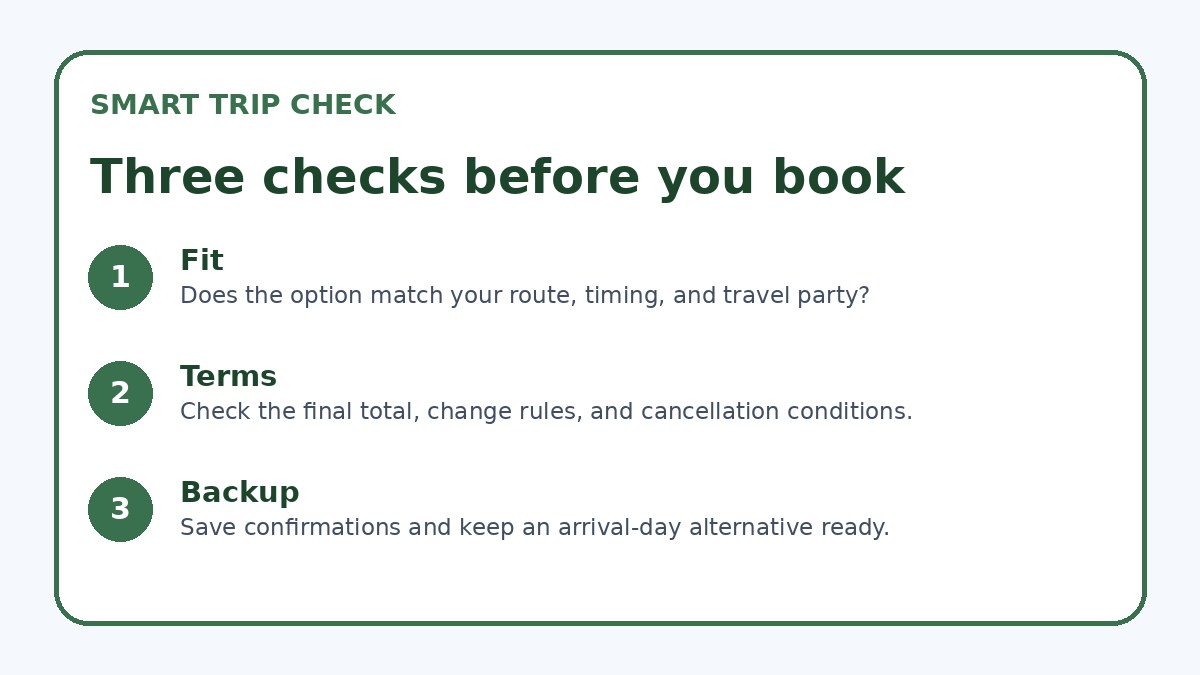
Before you book
- Confirm accepted ID and driving license formats on the rental company’s booking page before finalizing the reservation.
- Verify pickup and return office hours, and ask how late or after-hours returns are handled in writing.
- Request a written summary of fuel and mileage policies (for example, full-to-full or capped kilometers).
- Photograph the vehicle (exterior, interior, odometer, and fuel gauge) with timestamps at pickup and return.
- Check whether your chosen rental allows one-way returns and exactly how any fee is calculated and applied.
- Make sure your credit card has sufficient available limit for the security deposit and understand refund timelines.
Vehicle handover and return inspection: reduce disputes
To avoid disputes, walk around the vehicle with the agent at pickup and take time-stamped photos of all exterior panels, the odometer reading, fuel level, and any interior blemishes. Ask the agent to note pre-existing damage on the rental agreement and request a copy. Solo travelers should insist on a fuel policy written in plain terms — full-to-full is easiest — and clarify if partial refuel penalties apply. If you receive a mobile inspection checklist or app, ensure it’s completed and you keep screenshots of the final submission.
At return, arrive with time to spare so the agent can inspect the car in daylight when possible; if you must return after hours, follow the company’s documented key-drop and photo-evidence process and keep confirmation emails or photos showing the vehicle’s condition and location. If any damage is raised after drop-off, request the inspection report and the timeline for disputes. Confirm on the provider’s final booking page how long they will hold your deposit and the procedure to contest post-return charges — those timelines and processes do change between suppliers.
Frequently asked questions
Do I need an International Driving Permit to rent a car in Hong Kong as a solo traveler?
Whether you need an International Driving Permit (IDP) depends on the issuing country of your driving license and the rental company’s policy. Many companies accept a full, valid foreign license in English; others ask for an IDP or a certified translation. The safe approach is to check the rental provider’s official booking page for acceptable document lists and, if necessary, bring an IDP to avoid last-minute refusal. If you’re unsure, contact the rental office directly before travel to get a clear, written confirmation.
What if my flight is delayed and I arrive after the rental office closes?
If arrival after closing is possible, confirm the rental company’s late-arrival policy in advance and obtain written instructions for after-hours pickup. Many offices offer a key-drop or a documented self-service handover that requires pre-authorization and ID verification. Without a confirmed late-arrival arrangement, you risk losing the reservation or incurring a no-show charge. Always get clear instructions on where to find the vehicle, how to complete an inspection, and how to contact the company if the listed after-hours procedure fails.
How do I protect myself from unexpected charges at return?
To minimize surprise charges, document the vehicle condition thoroughly at pickup with photos and ensure all pre-existing damage is recorded on the rental agreement. Keep fuel level proof and a copy of the odometer reading. Before returning, recheck the company’s damage reporting and key-drop procedures and save email confirmations or timestamps of any submitted photos. If a charge appears after return, request the inspection report and dispute it through the provider’s documented process; check their booking page for the exact timeline and method for raising disputes.
Final planning note
For solo travelers in Hong Kong, the right pickup and return choices are about reducing complexity and matching the rental terms to your arrival and departure plan. Airport pickup streamlines transfers but can come with airport-specific constraints; city pickups are convenient for urban starts but may have shorter hours. One-way returns add flexibility at a likely cost and require advance confirmation of eligible drop sites. Always verify ID requirements, fuel and mileage rules, deposit hold policies, and exact return procedures on the rental company’s booking page. Keep thorough photo evidence at hand and retain written confirmations to make the process smooth and dispute-ready if anything goes wrong.
Continue planning
Check current options and final conditions
Use the provider page to confirm live availability, the final total, cancellation terms, and every condition that matters to your trip.
This evergreen planning guide was created with AI-assisted drafting and a structured quality review. It does not display live prices, schedules, availability, visa guidance, or provider rankings. Verify current details before booking. Some links are affiliate links; we may earn a commission at no additional cost to you.