Practical answer first: before booking any Ho Chi Minh City travel deal, add together four buckets — transport to/from Vietnam, in-city transfers, accommodation, and realistic daily spending — then compare the result across a few package and DIY options. Solo travelers often miss one-off costs like airport transfers, visa fees if applicable, travel insurance, luggage surcharges, or mandatory hotel taxes; these can flip a deal from good to costly. Start with a baseline itinerary (arrival airport, nights, and a preferred neighborhood) and build a simple spreadsheet or notes app entry listing each cost line. Use provider booking pages to verify final totals and cancellation policies, and check third-party marketplaces such as Trip.com only as a comparison snapshot — always confirm the final price and rules on the vendor’s own checkout page.
See current options before you compare the details
Availability and final conditions change. Open Trip.com now or keep reading for the practical comparison.
Build a simple total-cost worksheet
Start with a one-page worksheet that lists every predictable expense. Create rows for international or regional flights, arrival transfer (taxi, ride-hail, shared shuttle), accommodation nights, a per-day food estimate, local transport, and essential attractions you plan to enter. Add a buffer line for travel insurance and an emergency fund equal to one day’s budget. Use conservative estimates rather than optimistic ones — it’s better to overestimate than be surprised at checkout.
Next, tag each line as refundable, changeable, or fixed. Refundable items let you pay a premium for flexibility; fixed costs are commitments you must accept. For items sold together on a single booking page (for example, a package with flights and hotels), record both the bundled total and the unit breakdown if available. When data is missing, contact the provider or check the final booking page to confirm fees, baggage rules, and cancellation terms before you commit.
Compare package deals versus DIY bookings
Packages can simplify logistics—one checkout, consolidated support, and occasionally included transfers or tours—but they can hide fees or rigid change policies. When assessing a package, ask for an itemized breakdown and calculate what you would pay assembling the same trip yourself: separate flights, a chosen hotel, and independent transfers. Compare both the total price and the flexibility you get for that price. Consider your tolerance for handling problems solo: if you prefer a single point of contact, packages might be worth a modest premium.
DIY bookings give you control over carrier choice, accommodation style, and schedule, which can be especially valuable for solo travelers who want to mix budget and comfort. DIY requires time to compare availability and verify each provider’s terms — confirm baggage limits on the airline page, verify airport transfer options, and check the hotel’s cancellation policy on its official site. Use Trip.com or similar marketplaces for quick comparisons, but always verify final totals and conditions on the actual provider’s booking page.
| Approach | Best for | Tradeoff to check |
|---|---|---|
| All-in-one package | Travelers who want one checkout and consolidated support | May be less flexible and hide per-item costs compared with separate bookings |
| DIY flights + hotel | People who want control over carriers and accommodation choices | Requires more time to compare and confirm each provider’s rules |
| Flight-centric deal with add-on transfers | Solo travelers prioritizing convenient arrival logistics | Transfer fees and single-person surcharges can increase the total cost |
| Flexible refundable bookings | Uncertain plans or higher change/cancellation risk | Typically carries a premium that raises the upfront price |
Ready to check the option that fits your plan?
Use your exact dates and traveler details so the provider page can show the current total and conditions.
Hidden and one-off costs solo travelers often miss
Solo travelers frequently underestimate per-person penalties: single supplements at hotels, minimum spend requirements for private transfers, or higher fares on third-party bus and tour bookings that assume multiple travelers. Currency conversion fees on credit cards, ATM withdrawal limits, and dynamic exchange rates can raise local spending. Also consider the cost of time: late arrivals that force extra nights, or long layovers that require a hotel and transfer, can change the arithmetic when you’re traveling alone.
Plan for practical extras like a local SIM or portable Wi-Fi, tipping you might choose to give, and the cost of safety or convenience upgrades (private transfers versus public buses). If you rely on public transport late at night, add ride-hail trips home. For each potential add-on, note whether it’s optional or effectively mandatory given your safety or comfort needs. When in doubt, estimate higher and then optimize if you secure discounts or free upgrades.
Before you book
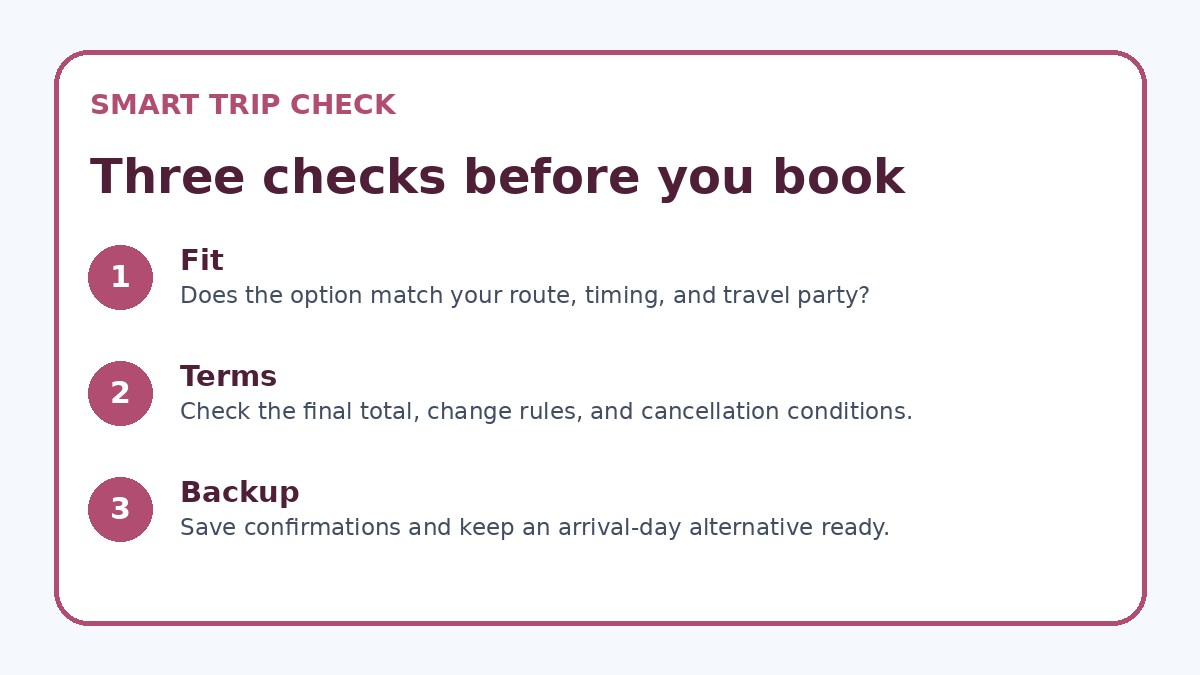
- Confirm the final payable total on the provider’s checkout page, including taxes, service charges, and mandatory fees.
- Verify baggage allowances and any seat or meal fees on the airline’s official page before trusting quote totals.
- Ask the hotel or booking page whether a single-traveler supplement or local tax applies and how it’s collected.
- Compare airport transfer options and prices for solo travelers: public transport, shared shuttles, private taxis, and ride-hail.
- Buy travel insurance that explicitly covers your cancellation risk and medical evacuation needs for Vietnam.
- Record contact details for your airline, hotel, and transfer provider and save screenshots of confirmation pages.
Decision criteria: which deal to book and when
To choose between offers, prioritize the criteria that matter most to you: lowest total cost, simplest booking with support, maximum flexibility, or a particular neighborhood or property. Create a short ranked list of must-haves (for example, flight times that avoid overnight transfers, hotel near District 1, or included airport pickup). Score each option against those criteria and the total cost from your worksheet. A slight premium may be worth it if the vendor’s cancellation policy reduces risk for your situation.
Timing also influences your choice: if your dates are fixed, locking in a refundable or partially refundable option could protect you from sudden changes. If you have flexibility, compare multiple departure dates and open-jaw routes that could save time or money, always checking for extra transfer needs. Before hitting Confirm, re-open the provider’s final booking page and verify the total payable, baggage rules, included services, cancellation terms, and specific contact details for support in Vietnam.
Frequently asked questions
How do I estimate daily expenses in Ho Chi Minh City as a solo traveler?
Estimate daily expenses by splitting them into food, local transport, and activities. Choose conservative mid-range amounts: basic meals, occasional mid-priced restaurants, a mix of buses, ride-hails, and one or two paid attractions per day. Add funds for coffee breaks, tips, and small purchases. Check current exchange rates and your card fees to see how much local currency you’ll actually receive. Build a per-day low and high estimate, then multiply by your nights and add a contingency day for unexpected expenses.
Should I book airport transfers as part of a Ho Chi Minh City travel deal?
Booking transfers can remove post-flight stress—particularly for late arrivals or if you carry lots of luggage—but it’s not always necessary. Compare the cost of a booked private transfer to the expected taxi or ride-hail fare and the convenience factor. If you accept public buses or metro options, verify schedules and first/last service times. For packages that include pickups, confirm pickup windows and how late flight or arrival changes are handled. Always verify the supplier’s cancellation or no-show policy before confirming.
Can I rely on package descriptions, or should I confirm details elsewhere?
Treat package descriptions as a starting point and always confirm key details on the provider’s final booking page or official sites. Important items to verify include exact cancellation rules, the inclusion and limits of baggage, the timing and provider of transfers, and whether taxes or resort fees are added at checkout. If a third-party site shows a price, cross-check with the vendor to ensure availability and identical terms. Use marketplaces for quick comparisons, but rely on the provider’s final page for contract terms and definitive totals.
Final planning note
For solo travelers planning a trip to Ho Chi Minh City, the best booking decision comes from thinking in totals rather than headline prices. Build a clear cost worksheet, compare package versus DIY options, and factor in the single-person realities of transfers, single supplements, and flexibility needs. Verify every material detail on the provider’s final booking page — especially baggage rules, cancellation terms, and included services — and keep contact information and screenshots handy. With that approach you’ll make a confident choice that fits your budget and travel style, avoiding surprises that often arrive after checkout.
Continue planning
Check current options and final conditions
Use the provider page to confirm live availability, the final total, cancellation terms, and every condition that matters to your trip.
This evergreen planning guide was created with AI-assisted drafting and a structured quality review. It does not display live prices, schedules, availability, visa guidance, or provider rankings. Verify current details before booking. Some links are affiliate links; we may earn a commission at no additional cost to you.