
If you’re planning a solo trip to Hanoi, don’t let a cheap headline fare or a low nightly rate decide your booking. The practical first move is to total the full door-to-door cost, including airfare, airport transfer or taxi, visa/entry fees, travel insurance, luggage and seat fees, the neighborhood’s nightly rate difference, and likely daily costs for food and transport. That number is the only basis for a fair comparison between ‘deals.’ Once you have it, you can weigh convenience (late arrivals, baggage handling), safety (airport transfer reliability), and flexibility (free cancellation, change fees). Below you’ll find a step-by-step approach to assembling that total, the common tradeoffs you’ll face as a solo traveler, decision criteria to pick the right booking, and a checklist to use before you click confirm.
See current options before you compare the details
Availability and final conditions change. Open Trip.com now or keep reading for the practical comparison.
Build a realistic total before comparing Hanoi travel deals
Start with a simple spreadsheet or note where you list each cost category. Enter the headline flight or hotel rate, then add predictable extras: checked-baggage fees, seat-selection charges, domestic transfer or taxi fares from Noi Bai Airport to central Hanoi, arrival SIM or eSIM costs, and a visa or e-visa fee if required for your nationality. For hotels, include city taxes, mandatory resort fees, or required deposits. If a hotel quote includes breakfast, mark it; cooking fewer meals out can reduce your daily food budget. For experiences such as a Halong Bay day trip or a street food tour, record cancellation policies and any required deposits.
Include soft costs that change trip value for a solo traveler: arrival time (a late-night arrival often means paying extra for a reliable transfer), hotel location premium for safety and convenience, and whether a property offers 24-hour front desk service. Estimate daily transport and food costs conservatively — locals eat cheaply, but western-style or tourist-targeted options cost more. Finally, set aside an emergency buffer and travel insurance premium. Having one consolidated total helps you see which ‘deal’ actually saves money versus one that adds hidden friction or costs.
How to compare flights and transfers realistically
When comparing airfares, compare door-to-door travel time and the likely cost of getting to and from Hanoi’s airports, not just the ticket price. Look at arrivals after dark versus daytime arrivals, as solo travelers often value a reliable pre-booked airport transfer when arriving late. If an itinerary includes long layovers, add the expected extra meal or lounge cost and the fatigue tradeoff — long cheap layovers can be more costly in time and energy than a slightly pricier direct or shorter-connection flight. For multiple connection options, note whether you’d need to collect and re-check baggage or clear immigration during transit, which adds time and stress.
On transfers, compare a pre-booked shuttle or private transfer cost to public bus and taxi estimates. Public transport in Hanoi can be inexpensive but may not serve late-night arrivals or hotel door-to-door needs; taxis or app-based ride services offer convenience but factor surge fares or airport pickup fees. If you plan to use rideshare apps, confirm whether your phone plan or an eSIM will work. Always verify the final transfer provider’s pickup instructions, cancellation window, and any meet-and-greet fees on the booking page before payment.
| Approach | Best for | Tradeoff to check |
|---|---|---|
| Cheapest headline airfare or hotel rate | Travelers who prioritize lower upfront spend and accept longer transit or stricter cancellation terms | May add fees for baggage, transfers, or time costs that erode the savings and reduce flexibility |
| Pay more for convenient arrival and central location | Solo travelers valuing safety, easy access to attractions, and less stress on arrival or late nights | Higher nightly cost but saves time, taxi fares, and sometimes food costs due to included breakfast |
| Book refundable or flexible options | People who need itinerary flexibility or are booking during uncertain plans | Often higher upfront cost but lowers financial risk if plans change |
| Bundle flight, hotel, and transfers | Travelers who prefer one-stop booking and straightforward customer service handling | Bundles can hide individual item costs; compare the bundle total against separate bookings to be sure |
Ready to check the option that fits your plan?
Use your exact dates and traveler details so the provider page can show the current total and conditions.
Choosing accommodation: neighborhood, amenities, and real cost
Neighborhood matters for solo travelers. The Old Quarter is convenient for nightlife and food but can be noisier and pricier; Tay Ho (West Lake) offers quieter guesthouses and expat amenities but requires more travel time to central attractions. When comparing nightly rates, check whether a quoted rate includes breakfast, wi-fi quality, daily housekeeping, and any additional tourism or service fees. Think about safety and ease of arriving with luggage: narrow streets can mean extra cost for porters or longer walks. Use your full trip total to weigh spending more to save time and reduce stress.
Also check practical amenities that affect solo travel costs: 24-hour reception, secure luggage storage for late check-out or early arrival, laundry services (or nearby laundromats), and in-room lockers or safes. If you plan to work or need reliable internet, confirm download/upload speeds on the property page or in recent guest comments. For longer stays, a serviced apartment or guesthouse with a kitchenette can lower daily food costs. Always verify final cancellation and change policies on the provider’s booking page — some low rates are non-refundable and can overwrite the perceived savings.
Before you book
- Create a single spreadsheet totaling flight price, baggage fees, transfers, visa, insurance, and daily budget before comparing deals.
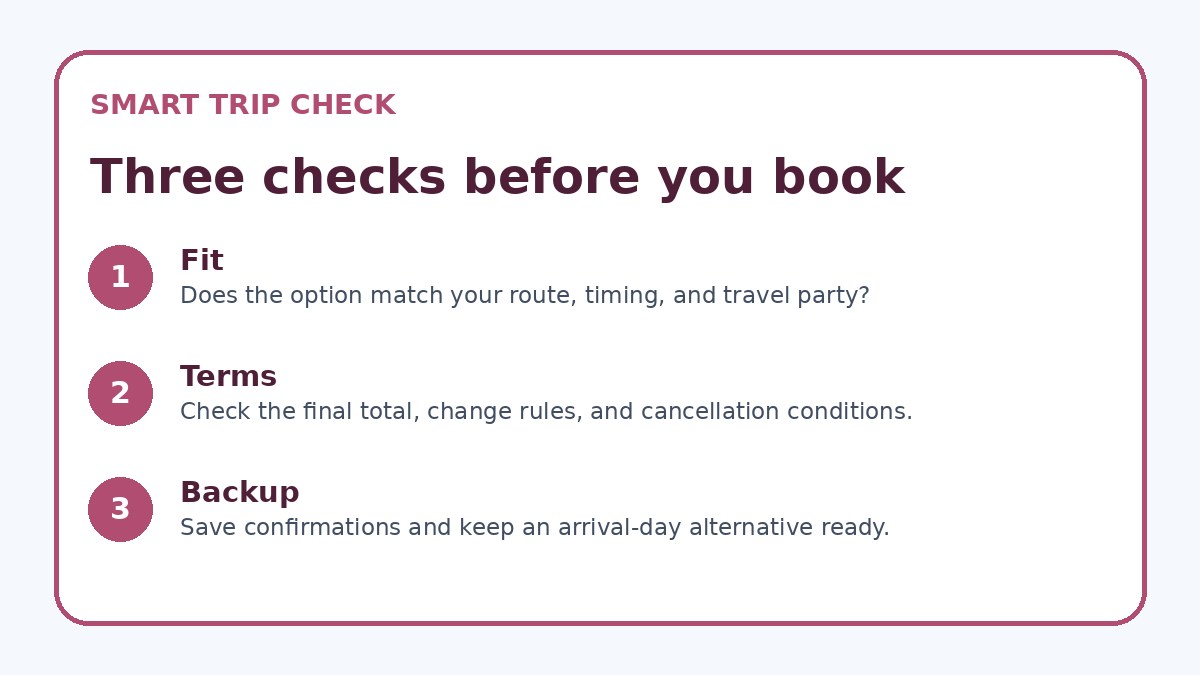
- Verify the provider’s final booking page for cancellation, change fees, and what exactly is included (meals, taxes, transfer details).
- Estimate door-to-door travel time for each flight itinerary and add likely costs for layovers, taxis, or extra nights if needed.
- Compare hotel neighborhood pros and cons for safety, noise, and evening transport options rather than only nightly rates.
- Confirm tour meeting points, included extras (entrance fees, meals), and minimum-participant policies before booking activities.
- Buy appropriate travel insurance and check the policy covers medical evacuation, trip interruption, and tour cancellations.
Assess activities, tours, and hidden extras before committing
For paid activities — cooking classes, guided city walks, day trips outside Hanoi — check exactly what is included: transfers, entrance fees, meals, guides, and gratuities. Some tours bundle transport from central hotels; others expect you to meet a city pickup point, which adds taxi costs. For multi-day excursions, ask whether luggage handling or overnight transport is included. Read cancellation and refund terms closely; some cheaper tour rates are non-refundable but may appear attractive until you consider the risk of schedule changes.
Solo travelers often benefit from joining small-group tours for safety and company, but compare the convenience against private tours’ higher cost. When you see a deal, verify the provider’s final page for meeting point details, age or health restrictions, and whether a minimum number of participants is needed to run the tour. If you use a third-party aggregator, confirm the operator’s contact details and local emergency procedures. Trip.com can be a place to compare availability, but always cross-check the operator’s final booking conditions and contact information.
Frequently asked questions
How should a solo traveler estimate daily expenses in Hanoi before booking?
Start by listing typical categories: street food, sit-down meals, local buses or rideshares, entrance fees, and incidentals like coffee or sim cards. Use conservative estimates for each category and multiply by your planned days, adding a daily buffer for unexpected costs. Account for any days with higher spend — for example, a day trip outside the city — separately. Don’t forget one-off costs like visa fees, travel insurance, and arrival transport. This gives a realistic per-day and trip total to compare against any headline deal.
Is it safer for solo travelers to pre-book airport transfers in Hanoi?
Pre-booked transfers offer predictability, especially for late arrivals or when you arrive tired, and can reduce the stress of negotiating a fair taxi. They often come with a meet-and-greet and clear pickup instructions, which is helpful solo. However, public buses and app-based rides can be cheaper and practical during daytime. If you choose a transfer, verify pickup details, operator contact information, and cancellation policy on the provider’s final booking page. That confirmation is essential before you finalize payment.
How do I compare bundled deals versus booking components separately?
List the components a bundle includes — flights, hotel nights, transfers, and any extras — and price each separately through the provider’s checkout pages. Include taxes, baggage fees, and cancellation terms in your comparison. Bundles simplify logistics and customer support, but they can hide higher individual costs or stricter change policies. If time savings and single-point support matter more than marginal savings, a bundle can be worth it. Always confirm the final terms on the booking page and check the operator’s local contact details.
Final planning note
For a solo trip to Hanoi, the single most helpful habit is adding every predictable cost to the headline fare or nightly rate before you compare deals. That true total — including transfers, baggage, visa or e-visa costs, insurance, neighborhood tradeoffs, and likely daily spending — lets you see which option delivers the best value for comfort, safety, and flexibility. Make decisions based on door-to-door time, cancellation rules, and what conveniences you value most. Before you pay, confirm the provider’s final booking page details for inclusions, cancellation policies, and contact instructions; only then can you treat a ‘deal’ as a reliable booking.
Continue planning
Check current options and final conditions
Use the provider page to confirm live availability, the final total, cancellation terms, and every condition that matters to your trip.
This evergreen planning guide was created with AI-assisted drafting and a structured quality review. It does not display live prices, schedules, availability, visa guidance, or provider rankings. Verify current details before booking. Some links are affiliate links; we may earn a commission at no additional cost to you.