
If you’re traveling from Hanoi to Da Nang with oversized bags or a lot of gear, the practical decision you need first is: where will you board and where will you arrive, and how will you move between those points with your luggage? Focus on the transfer legs—getting to the departure station or terminal in Hanoi, and from the arrival point in Da Nang to your final stop—because these are the places extra luggage makes a trip much harder or surprisingly simple. This guide lays out what to compare (station locations, parking or drop-off options, vehicle size for transfers, and luggage policies), explains tradeoffs between train, plane and bus in the context of bulky baggage, and gives a checklist to use while booking. Verify terminal names, available baggage services, and vehicle sizes directly with the carrier or booking site such as Trip.com before you commit.
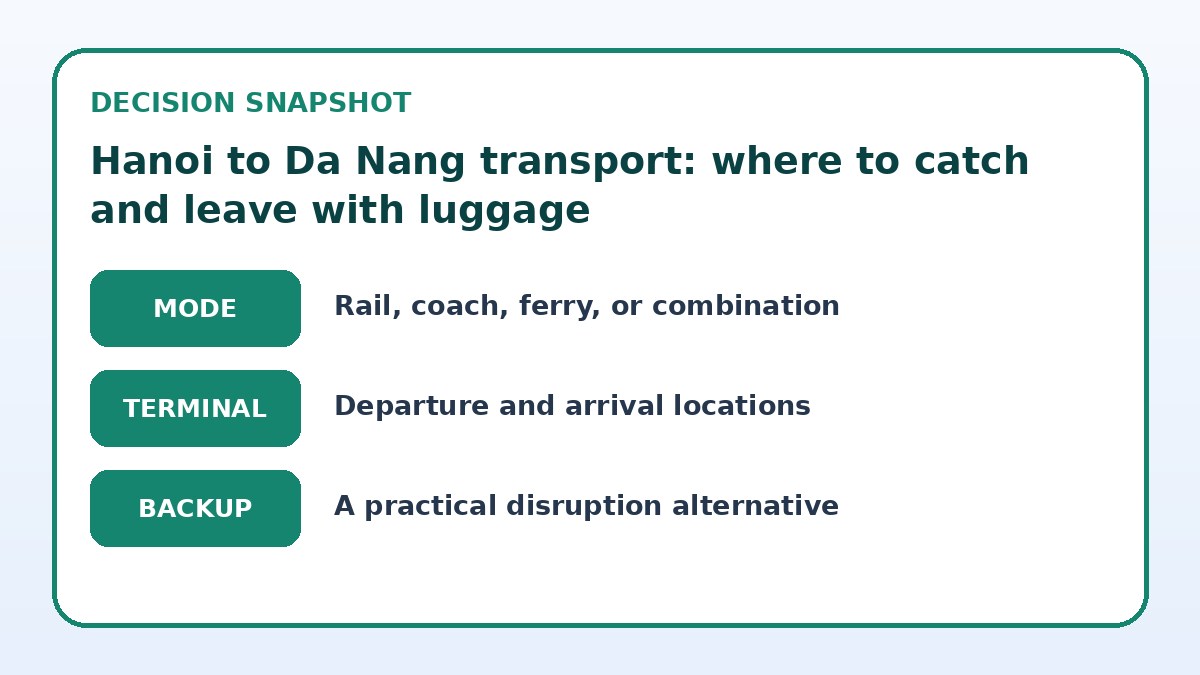
See current options before you compare the details
Availability and final conditions change. Open Trip.com now or keep reading for the practical comparison.
Pick the right transport mode for your luggage
Trains, planes and coaches all serve the Hanoi–Da Nang corridor, but their real differences emerge in station-to-station transfers. Trains often allow larger soft luggage in sleeping compartments and put dedicated luggage space in carriages or storage at platforms, but you may need to haul bags over long platforms or stairs at smaller stations. Flights shrink travel time but add airport transfer distance and stricter carry-on rules, with oversized items usually checked and loaded in hold. Long-distance buses can be the simplest for curbside loading, though bus stations vary—some have lifts or porters while others are basic terminals where you handle your own bags.
When you’re carrying extra luggage, think of the trip as three segments: origin city transfer to departure hub, the intercity leg, and arrival transfer to your final destination. The mode that looks fastest on paper may lose its advantage if station access is poor or if multiple short transfers are needed with heavy bags. Compare how many hand-offs your luggage will face and how each provider handles large items. For any option, check baggage size and weight policies, confirm whether platform stairs or long walks are required at specific stations, and ask if the operator provides trolleys, porters, or luggage room.
Plan your Hanoi departure: station and terminal choices
Hanoi has multiple departure points depending on transport type—mainline rail stations and the city’s airports or coach terminals. For travelers with substantial luggage, the practical questions are proximity to where you’re staying, availability of curbside loading, and easy vehicle access that can accommodate private transfers or taxis with large trunks. Evaluate whether your lodging can provide a load-up spot close to a taxi or van, whether the station has elevators/escalators, and if the departure point manages baggage for passengers. If stairs or long walks are unavoidable, factor in the need for extra hands or porters.
At booking time, look up the precise station or terminal name the carrier uses and exactly where pick-ups and drop-offs happen—these can be different parts of a complex. Contact the operator to confirm whether there is covered loading, a designated taxi rank, or luggage handling for bulky items. If you need a private transfer, ask the transfer provider about vehicle dimensions and whether rear door or tailgate loading is possible. If relying on local taxis, plan for at least one backup option in case the first has insufficient cargo space.
| Approach | Best for | Tradeoff to check |
|---|---|---|
| Private transfer (van or minivan) | Large groups or very heavy/awkward luggage | Higher cost but single hand-off and direct door-to-door service |
| Train with station pickup | Comfortable bedding and more spacious compartment storage | May require longer walks, stairs, or platform handling at stations |
| Flight with airport transfers | Shortest airborne time for long-distance travel | Airport distance and stricter oversized luggage procedures |
| Intercity coach with station-side loading | Straightforward curbside loading and budget-conscious travelers | Variable terminal facilities and potentially smaller cargo space |
Ready to check the option that fits your plan?
Use your exact dates and traveler details so the provider page can show the current total and conditions.
Arrival in Da Nang: final-leg logistics with heavy bags
Da Nang’s arrival points differ in how easily they connect to the city and beaches. Some terminals are closer to the center, others are positioned near major roads where private vans and taxis can park right at the curb. Consider where you need to go next—hotel, beach, or onward transport—and choose arrival points that minimize the distance you must move your luggage. If your destination has narrow access roads or limited parking, inform them of expected arrival time and luggage volume so they can help arrange a suitable vehicle or meet-and-greet service.
Check whether the arrival facility offers ramps, elevators, luggage trolleys, or porter services. If not, plan for a transfer with a van or taxi that allows rear loading. For self-driving travelers or those hiring a driver, double-check local parking rules and whether you’ll be able to stop curbside for an extended time while loading. When in doubt, reserve a transfer that explicitly lists ample cargo capacity and confirm pickup details directly with the operator to avoid waiting at the terminal with heavy suitcases.
Before you book
- Confirm the exact departure and arrival terminal or station names and the precise curbside pickup/drop-off points with the operator.
- Measure your largest bags and verify the transfer vehicle’s cargo space or the carrier’s baggage size limits in writing.
- Reserve a private transfer if you need guaranteed rear loading, and ask the driver for vehicle dimensions and luggage handling assistance.
- Ask both departure and arrival facilities whether elevators, ramps, trolleys, or porter services are available and whether they require advance booking.
- Pack a day bag with essentials and valuables to keep with you, in case checked luggage is delayed or inaccessible during transfers.
- Confirm pickup time windows and a backup contact method or meeting point in case of terminal congestion or last-minute changes.
How to choose transfers and what to verify before booking
When comparing transfer options, assess door-to-door time, number of baggage hand-offs, vehicle cargo volume, and any extra handling services. Private transfers cost more but reduce luggage handling because the driver loads and unloads for you and goes directly between points. Shared shuttles or public taxis are cheaper but may require multiple stops or involve smaller trunks. If you plan to use train services, ask about platform access, whether staff can help move luggage to sleeping berths, and if there are secure luggage rooms at the destination.
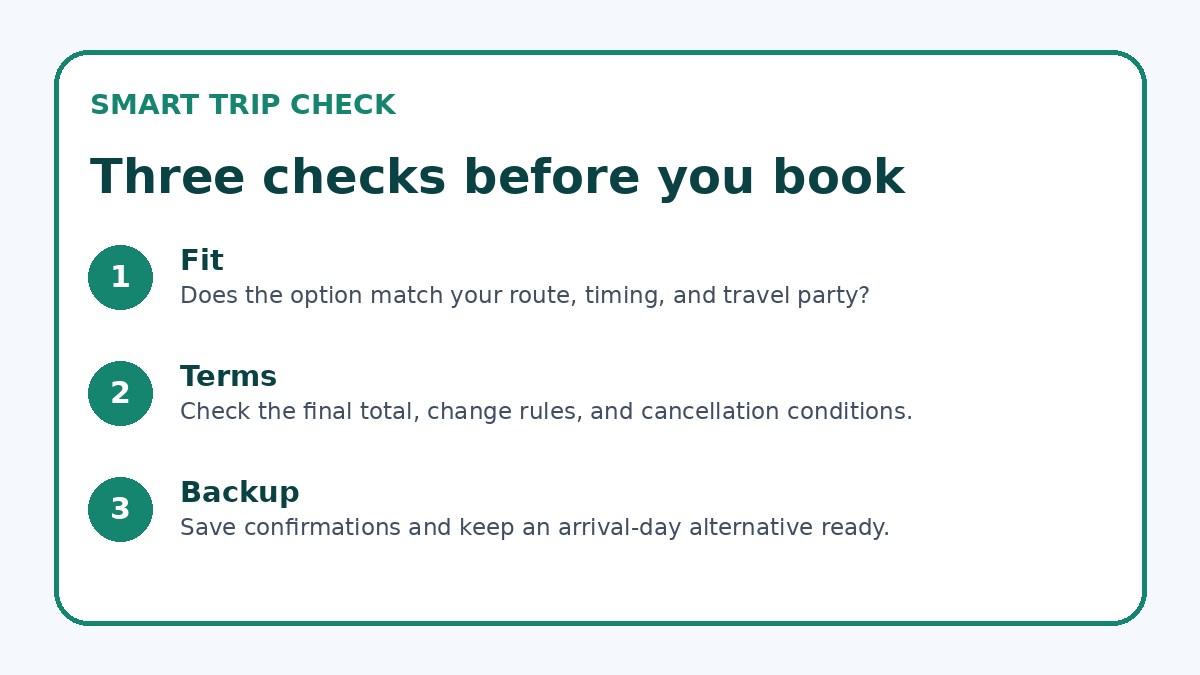
Before you book: confirm the exact pickup/drop-off address and whether the vehicle can park curbside; verify baggage allowance and whether oversized items require advance notice; ask about elevator or ramp access at both ends; and request the vehicle type or cargo volume. Always check the carrier’s site or booking confirmation for up-to-date terms, and if you compare offers on aggregator sites like Trip.com, follow up with the operator to confirm transfer specs and final pickup details. Carry a spare set of essentials in a carry-on in case checked luggage is delayed or requires an extra hand-off.
Frequently asked questions
Can I bring oversized sports equipment or musical instruments on Hanoi to Da Nang transport?
Many operators allow oversized items but handling policies differ. Airlines typically require advance notice and check items into the hold; trains may fit long soft cases in luggage racks or require station handling; coaches vary by compartment size. Before booking, measure your item, contact the carrier to confirm acceptance and any required packaging or fees, and ask about how it will be handled at both departure and arrival points. If the item is fragile, request specific handling instructions and consider a private transfer for direct loading.
What is the safest way to move high-value items during transfers?
Keep valuables and important documents in a carry-on or a small lockable bag that you personally supervise. For checked luggage, use sturdy locks and tamper-evident seals, but avoid putting irreplaceable items in hold baggage. If you must transport high-value goods, choose services with limited hand-offs—private transfers or direct connections—and ask about secure storage options at stations. Make note of contact details for the carrier and the transfer driver, and photograph tags, condition, and serial numbers before departure for insurance or claims if anything goes wrong.
How do I estimate the real travel time door-to-door for Hanoi to Da Nang transport?
Add the scheduled intercity journey time to realistic transfer times at both ends: time to get from your lodging to the departure hub (including traffic), baggage check or platform access time, and time from arrival terminal to your final destination. Allow extra time when heavy luggage requires elevator waits, porter services, or longer boarding. For flights, include recommended check-in and security buffer; for trains and coaches, include potential platform transfers. Ask providers for typical pickup-to-drop-off estimates and compare door-to-door scenarios rather than headline travel durations.
Final planning note
For travelers with extra luggage, the most important planning choice on the Hanoi to Da Nang route is how your bags move between doorways—pick the option that minimizes hand-offs, matches vehicle cargo capacity, and places boarding and alighting points close to your lodging. Private transfers reduce handling and uncertainty; trains and buses can be comfortable and economical if you verify platform access and luggage space; flights save time in the air but add airport transfer considerations. Before you book, confirm terminal names, baggage rules, vehicle size, and exact pickup/drop-off locations with the carrier. Use the checklist above and double-check any transfer details shown on booking sites like Trip.com by contacting the operator directly to finalize arrangements.
Continue planning
Check current options and final conditions
Use the provider page to confirm live availability, the final total, cancellation terms, and every condition that matters to your trip.
This evergreen planning guide was created with AI-assisted drafting and a structured quality review. It does not display live prices, schedules, availability, visa guidance, or provider rankings. Verify current details before booking. Some links are affiliate links; we may earn a commission at no additional cost to you.