If you’re a solo traveler deciding how to get from Hanoi to Da Nang with luggage, the practical choice depends on how much you’re carrying, how mobile you want to be, and how much time you can spend en route. Trains and planes are the two most common choices; trains handle larger, heavier bags more comfortably inside a carriage but require transfers to and from stations, while planes save time but add airport check-in and potential carry-on limits. Buses and private cars can work when you have awkward or excess baggage but may be less comfortable for long journeys. The quickest way to decide is to list your luggage (pieces, weight, hard vs soft), accept how hands-on you want to be with transfers, and then compare door-to-door time instead of only travel duration.
See current options before you compare the details
Availability and final conditions change. Open Trip.com now or keep reading for the practical comparison.
Choose by luggage profile, not just travel time
Start by inventorying your luggage: number of pieces, estimated weight, and whether items are fragile or awkward. Solo travelers often misjudge the effort of moving multiple suitcases through stations, up stairs, and onto platforms. A single 40–45L backpack is portable and usually fits overheads or under seats; several medium suitcases are heavier to lift and harder to manage alone. Consider whether you can carry bags for 200–400 metres between a station and a taxi, or if you need a porter or lift access. That simple checklist will quickly narrow your practical options.
Next, use those details to compare transport types realistically. A daytime train might take longer than a flight but offers more space to keep a bag with you and fewer size restrictions, which can simplify boarding and reduce overall stress. Air travel shortens in-transit hours but adds check-in, security, and waiting time; those processes can be more cumbersome with large checked pieces. If your luggage is oversized, a private car or specially booked van could save you repeated lifts and transfers and is worth the extra planning.
Trains: convenience, storage, and station logistics
Trains between Hanoi and Da Nang appeal to solo travelers who value space and the ability to keep bags near them. Carriages often have overhead racks and luggage areas at carriage ends, but those spaces vary by train type and can fill up. If you need to stow several large suitcases, plan to board early to access communal storage and check where the crew stores bulkier items. Also check whether the station has level access or many stairs; some smaller platforms require lifting bags up steps, which matters if you’re alone with heavy cases.
When comparing trains, verify the station names, transfer options, and whether sleeper berths are available if you want to rest and reduce handling. Remember that sleeper compartments let you keep essential items close overnight, but they may limit space for bulkier gear. On arrival, think about transport from the station to your accommodation: confirm taxi ranks, rideshare pickup points, or the availability of station luggage services. Always read the provider’s final booking page for exact baggage policies and any carriage-specific storage rules before you finalize a ticket.
| Approach | Best for | Tradeoff to check |
|---|---|---|
| Fly with carry-on only | Solo travellers traveling light who prioritize speed | Strict carry-on size limits and time at airports |
| Overnight or day train | Those with heavier or multiple bags who want to keep items nearby | Station access and transfers can add time and effort |
| Private car or hired van | Oversized, fragile, or many-piece luggage requiring door-to-door service | Typically higher cost and variable road travel time |
| Long-distance bus with hold luggage | Budget-conscious travellers with bulky items who need a direct route | Less comfort on long rides and potential handling at stops |
Ready to check the option that fits your plan?
Use your exact dates and traveler details so the provider page can show the current total and conditions.
Flights: speed with transfer and baggage tradeoffs
Flying is the fastest door-to-door option for many solo travelers, but it introduces fixed rules for carry-on and checked baggage that can complicate moving multiple or heavy items. If you can condense to a carry-on and a personal item, airborne travel often wins on total journey time. For larger suitcases, check the airline’s permitted dimensions, weight limits, and whether standard fares include checked bags. If you’re booking a connecting flight, review transfer times carefully and confirm whether checked luggage will be rechecked automatically or whether you must collect and re-check it at the connecting airport.
Also factor in airport transfers: airports sit outside both city centers, so your choice of taxi, shuttle, or rideshare affects convenience and cost. Arrive early if you need to check oversize or multiple bags; lines and extra screening add time. If minimizing handling is essential, look for carriers that allow priority boarding or baggage services — and verify those options on the airline’s final booking page. Trip.com can be useful to compare current availability and baggage rules but always confirm final details with the airline before payment.
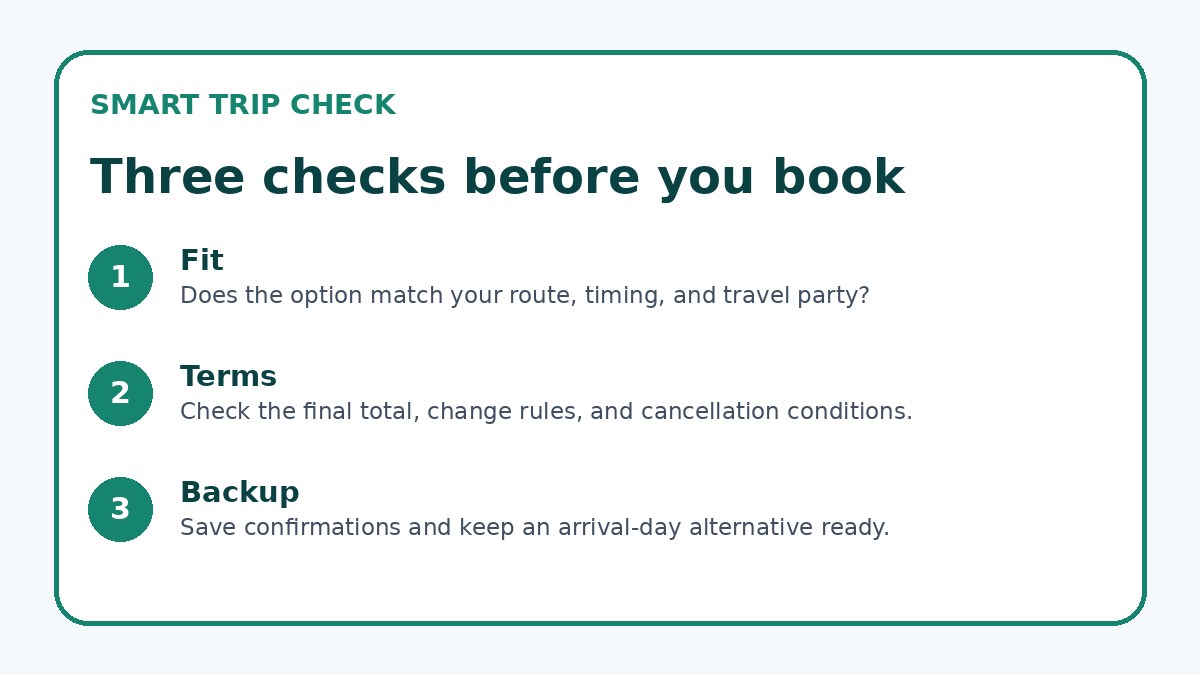
Before you book
- Weigh and measure every bag so you know how many pieces exceed airline or carrier limits before comparing options.
- Check station and airport transfer distances from your accommodation and estimate door-to-door time, not just transit time.
- Confirm baggage allowances and any extra fees on the carrier’s final booking page before paying.
- Book a vehicle with confirmed luggage capacity or request images of the trunk/van space from the provider.
- Plan for help: pre-book a porter, ask your hotel for assistance, or choose pickup spots with curbside assistance.
- Pack a small daypack with essentials (documents, charger, medication) so you can set larger bags aside quickly if needed.
Buses and private cars: when door-to-door matters most
Long-distance buses and private hires give clear door-to-door advantage for oversized or unusually shaped luggage because you load and unload directly at pickup and drop-off points. If you’re carrying equipment, boxes, or extra-large suitcases, a private car or van saves the repeated stair carries that train stations and airports might require. Consider the road comfort and the likely travel time: road journeys can be longer and bumpier, so ensure your belongings are secured and padded if fragile. Book a vehicle with confirmed luggage capacity and ask the driver or vendor to describe the loading process in advance.
For solo travelers, private transport can be a confidence boost: you control the schedule and transfers, and drivers can help with heavy lifting. However, verify the pickup location precisely, confirm whether tolls or parking add costs, and read the provider’s final terms on cancellations and luggage limits. Also think about safety and licensing: prefer registered operators and get a written agreement about vehicle type and luggage allowances. If you plan multi-leg travel, compare total door-to-door time, not just driving hours.
Frequently asked questions
Can I bring large suitcases on trains from Hanoi to Da Nang?
Many trains allow large suitcases, but carriage storage varies and communal areas may fill up. If you rely on train travel with big bags, board early to secure space, label your luggage clearly, and ask staff where they recommend stowing oversized items. Confirm any size or weight limits on the provider’s final booking page and check whether porter services or luggage storage at stations are available if you need to leave a bag temporarily.
Is flying better than taking the train when I’m traveling alone with luggage?
Flying can be faster if you travel light, but checked baggage procedures, security, and transfers add time and handling. Choose flights when your luggage fits airline limits and you prefer shorter transit hours. If you have multiple heavy pieces or want to avoid strict size rules, trains let you keep bags nearby and may reduce stress. Always compare door-to-door travel time, and verify baggage rules and transfer requirements on the airline’s final booking page.
How can I minimize lifting and carrying when I travel solo between Hanoi and Da Nang?
Plan door-to-door transfers that minimize walking with bags: book taxis that pick up at station or terminal curbs, arrange hotel pick-up, or hire a private car with confirmed luggage space. Use luggage covers, wheeled suitcases, and a comfortable daypack for essentials. Where available, ask for porter service at stations or book trains with attendants who can help. If you expect stairs or long walks, consider sending nonessential items ahead via a reputable courier or using station storage services, confirming policies on the provider pages first.
Final planning note
For solo travelers moving between Hanoi and Da Nang, the right choice depends on luggage size, how much handling you can manage, and whether you value speed or simplicity. Flying is best for minimal hands-on luggage and fast transfers, while trains suit those carrying heavier or multiple bags who want to keep belongings close. Private cars and buses solve oversized or awkward luggage problems with door-to-door convenience but may cost more or take longer. Whatever you choose, measure and weigh your bags, check the carrier’s exact baggage policies on their booking page, and plan transfers at both ends to make the journey as smooth as possible.
Continue planning
Check current options and final conditions
Use the provider page to confirm live availability, the final total, cancellation terms, and every condition that matters to your trip.
This evergreen planning guide was created with AI-assisted drafting and a structured quality review. It does not display live prices, schedules, availability, visa guidance, or provider rankings. Verify current details before booking. Some links are affiliate links; we may earn a commission at no additional cost to you.