If you’re solo and planning to spend a few days in Gyeongju, the practical question is simple: does renting a car genuinely improve your trip? For many solo travelers the answer depends on your route priorities, comfort with Korean driving conditions, and how you value flexibility versus convenience. Gyeongju’s main historical sites cluster near the city center, but several worthwhile spots sit outside the compact area—mountain temples, coastal viewpoints, and smaller archaeological sites. Driving can shave waiting time and let you reach scattered sites on your own schedule, but it adds planning for insurance, pick-up/return logistics, parking, and navigation. This guide gives a direct recommendation up front, then walks through tradeoffs—route value, insurance wording to check, pickup/return friction, and a clear fallback plan if you decide not to drive.
Route value: where driving really helps
Think about the exact places you want to visit. Central Gyeongju—Daereungwon tombs, Cheomseongdae, Bulguksa via standard routes reachable by bus—can be seen with little need for a car. Driving becomes valuable when your itinerary includes scattered sites such as remote temples, seaside overlooks, or early-morning and late-evening photo ops that public transport serves infrequently. A car lets you chain stops efficiently and adjust your timing; that can convert a long transit day into several short, flexible hops. Consider distances between attractions and whether you prefer to maximize daylight or relax between stops—those preferences determine the marginal benefit of a rental.
Also factor seasonal effects. Busy festival periods or holiday weekends can make local buses crowded and taxi waits longer, increasing the appeal of a private car. Conversely, if you’re visiting during a low season when bus schedules are reduced, plan alternate legs now so you don’t depend on a single, infrequent service. Use maps to sketch a plausible day’s route and time windows; if transit connections create repeated waits or force you to skip sites, the car adds clear value. If your planned route is compact and you enjoy walking or cycling, public transport likely covers it more simply.
Decide whether driving earns its place
| Mobility strategy | Best for | Cost or friction to check |
|---|---|---|
| Rent a compact car for solo driving | Travelers who want full schedule control and plan multiple off-center stops. | Higher planning overhead for insurance, parking, and pickup/return logistics. |
| Rely on public buses and trains | Visitors staying near central Gyeongju who want low-stress, lower-cost travel. | Limited flexibility and possible waits for infrequent services to remote sites. |
| Base in town and use taxis or day hires | Solo travelers who want flexible day trips without full rental responsibility. | Can get expensive for many long legs; availability may vary during peak times. |
| Hybrid: short rental for a day, transit for the rest | Those wanting a specific remote excursion without committing to a full trip rental. | Requires careful scheduling and may still incur pickup/return friction and fees. |
Check live rental choices only after the route test
Use the exact driver, dates, pickup point, and return plan to compare current conditions.
Insurance wording: what to read before you sign
Insurance pages contain critical distinctions that change the real cost and risk of driving in Korea. Don’t trust summary labels—open the rental provider’s full policy and confirm the damage excess (the amount you pay after insurance), exclusions for certain roads or drivers, and whether roadside assistance is included. If the provider uses third-party CDW (collision damage waiver) or TP (theft protection) options, note if they reduce your liability to zero or only partially. Also confirm what documentation they require after an incident; some companies want police reports, others require local language forms.
Watch for age-related surcharges, permitted driver lists, and cross-border restrictions if you plan to travel outside Korea. If you’ll add an additional driver during the trip, verify whether that person must appear at pickup and present a separate license and ID. Where terms are ambiguous, take screenshots of the booking page and the policy, and save the rental supplier’s contact details. For extra peace of mind, ask your credit card issuer or insurer whether rental protection overlaps with or duplicates the vendor’s coverage, and read each provider’s final booking page to confirm the exact coverages and limits.
Compare the full rental conditions
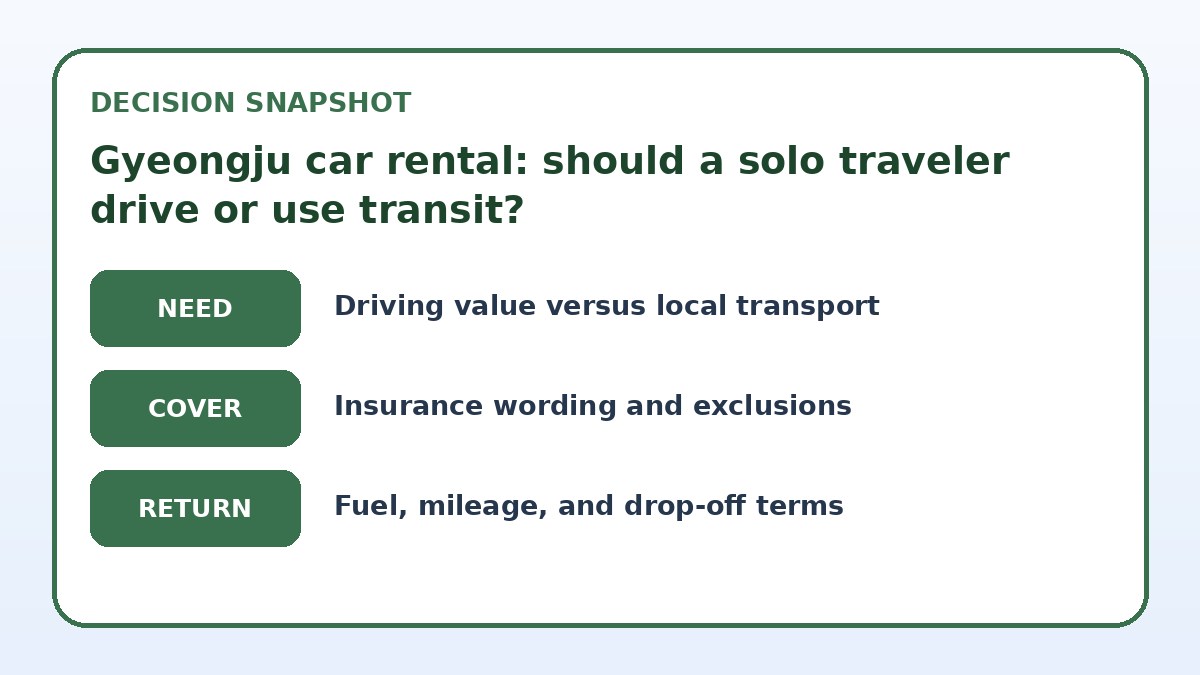
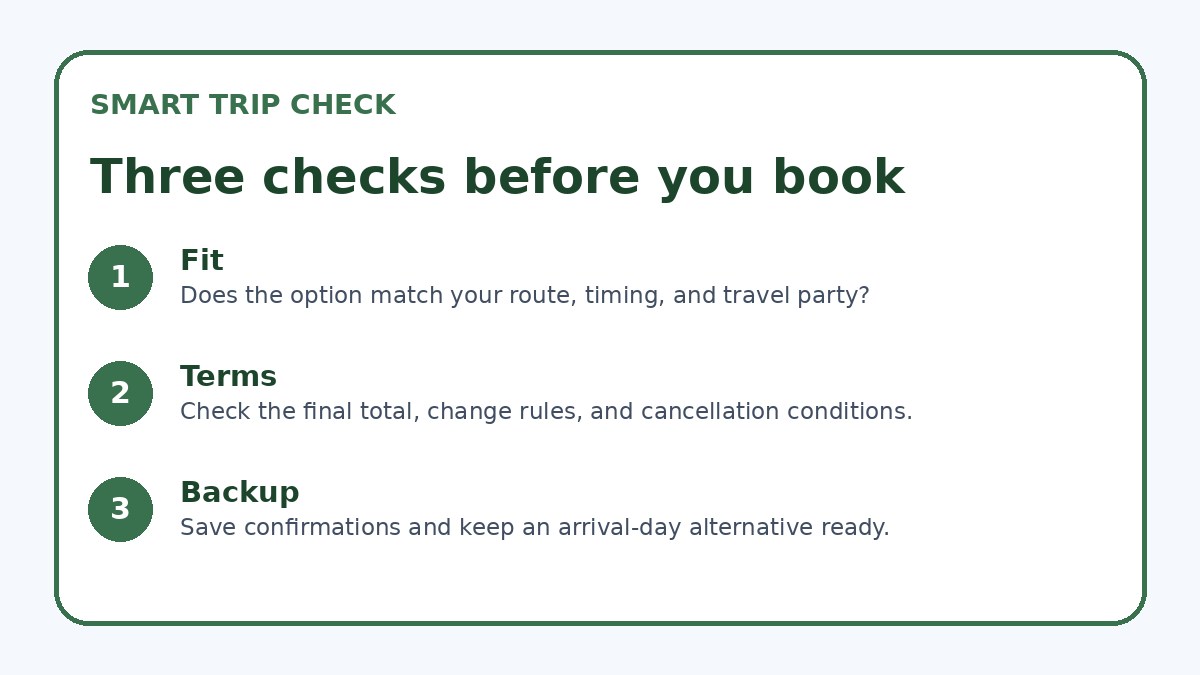
Confirm insurance wording, exclusions, deposit, fuel, mileage, and return terms on the final page.
Pickup and return friction: logistics that eat time
Pickup and drop-off are more than a handshake; they can add hours to a short trip. Check where the rental desk actually is—airport counters may be straightforward, but downtown branches sometimes require shuttle pickups or a walk to a satellite lot. Confirm whether the supplier offers one-way returns, the branch hours for late drops, and whether early/late returns incur fees. Solo travelers should also consider luggage handling: will you be able to load bulky items without assistance, or does the location have staff who can help?
Inspect fuel rules, refueling receipts, and the procedure for reporting pre-existing damage. Some rentals require returning the car with a full tank, others charge premium refuel rates. Document the vehicle condition with photos at pickup and return and get a signed handover sheet or an emailed confirmation. If document handling is in Korean, request an English version or have the vendor explain key points before you sign. These frictions affect how much time you really have on the road, which is especially important on short solo trips.
Car rental terms to verify
- Map each day’s route and mark public transport connections and estimated travel windows
- Read the rental’s full insurance and damage-excess wording on the provider’s booking page
- Verify pickup/return locations, branch hours, and one-way return policies before booking
- Take timestamped photos of the car’s condition at pickup and again at return
- Confirm whether your credit card or personal insurer covers rentals and what documents are needed
- Save contact details for local taxi services, visitor centers, and your rental provider’s emergency line
Non-driving fallback: a practical plan if you decide not to rent
Create a fallback transport plan before you arrive so you can switch without stress. Identify the nearest intercity coach stop or train station and check bus frequencies between the towns you want to link. Note the main taxi ranks—taxis in Korea are generally available in cities and at transit hubs, and app-based booking can make solo travel easier. For a hybrid approach, plan a base in central Gyeongju and use day taxis or short local bus rides for farther attractions, keeping one flexible night in the itinerary to adapt based on weather or fatigue.
Also prepare for occasional taxi costs by understanding typical fare structures—confirm meter use and whether there are night surcharges on the provider’s final booking or local transport pages. Use a mapping app that shows public transit options to time your day, and have a backup list of English-friendly visitor centers or hotel desks that can call a taxi or advise on the best route. If you want to compare availability quickly, Trip.com can show rental and transit options side-by-side, but always verify operating hours, pickup policies, and insurance wording on each provider’s final booking page.
Car Rental & Road Trip questions travelers ask
Is driving in Gyeongju difficult for a solo traveler unfamiliar with Korean roads?
Driving difficulty depends on your comfort with unfamiliar traffic and signage. Main roads around Gyeongju are straightforward, but narrower rural roads to temples or viewpoints can be tight and may lack English signage. If you plan to drive, ensure your navigation app supports Korean names and that you’re comfortable driving on the left or right as applicable to the country you’re visiting. Always check the rental agreement for language about roadside assistance and confirm whether the supplier offers an English-speaking support line.
How do I choose between a local taxi and renting a car for a specific day trip from Gyeongju?
Compare the door-to-door time, cost, and convenience for your exact route. A taxi can be quicker to arrange for a single round-trip day when parking and route complexity are low, and it avoids pickup paperwork. Renting makes more sense if you plan multiple stops, want to control pace, or expect to start before public transport begins. To choose, estimate total taxi costs for all legs, then weigh those against the cumulative overheads of a rental day (pickup time, fuel, parking, insurance excess).
What specific terms should I verify on the rental provider’s final booking page?
On the provider’s final page, look for these items: the excess amount for damage claims, coverages included and excluded (theft, windshield, tires), requirements for additional drivers, fuel-return rules, branch opening hours, late-return penalties, and cross-border or road restrictions. Also confirm the documentation required at pickup (driver’s license, ID, credit card hold) and the process for making claims. If anything is unclear, contact the provider and get written confirmation before you finalize the booking.
Final decision note
For most solo travelers focused on central Gyeongju’s historic core, public transport plus occasional taxis will be the simplest, lowest-stress choice. If your plan includes multiple distant sites, early starts, or photography at unusual hours, renting a car can transform the itinerary—provided you accept the extra steps for insurance, pickup/return, and parking. Whatever you choose, prepare by mapping routes, reading the rental insurer’s exact wording on the booking page, and creating a fallback plan that mixes buses and taxis. That way you preserve flexibility without paying for unnecessary hassle, and you can adapt if weather or schedules change mid-trip.
Continue planning
Check current options and final conditions
Use the provider page to confirm live availability, the final total, cancellation terms, and every condition that matters to your trip.
This evergreen planning guide was created with AI-assisted drafting and a structured quality review. It does not display live prices, schedules, availability, visa guidance, or provider rankings. Verify current details before booking. Some links are affiliate links; we may earn a commission at no additional cost to you.