If you’re traveling from Florence to Milan with children, the practical choice is a ticket type that balances flexibility, seat assurance, and a predictable family budget. Families often trade off lower advance fares for the right to change plans without steep penalties, a reserved row of seats, or entry to family-friendly carriages. This piece explains how to compare flexible and restricted tickets, which family needs push you toward one option over another, and what to verify on the provider’s booking page before you commit. Use the guidance to pick a sensible default for your household and to prepare a short verification checklist for the moment you buy — whether booking directly from the operator or checking availability on comparison sites such as Trip.com.
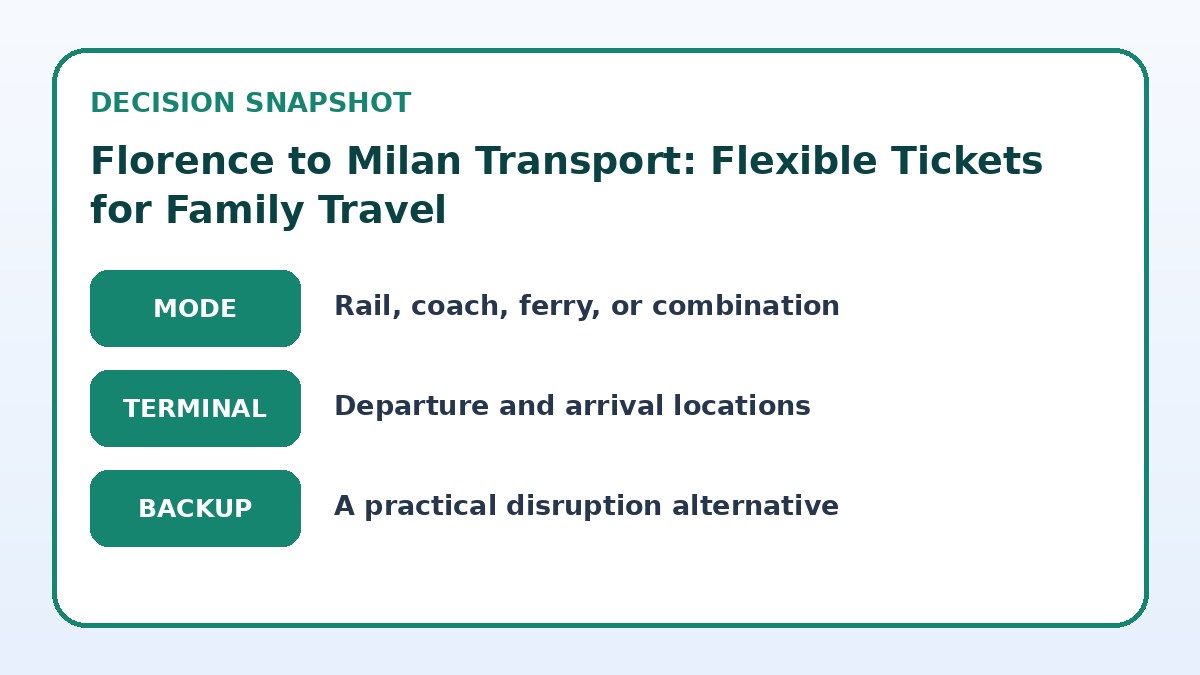
See current options before you compare the details
Availability and final conditions change. Open Trip.com now or keep reading for the practical comparison.
Which flexibility features matter most for families
Families have different priorities than solo travelers. The most practical flexibility features are change windows (how late before departure you can change), whether changes are free or fee-based, and whether the ticket is refundable at all. Also important are the ability to reserve seats together, buy or include additional baggage, and options for travelling with a stroller or car seat. Think about the ages of your children — toddlers versus teenagers — and whether predictable seating and luggage space are more valuable than saving some money on the ticket itself.
When comparing options, isolate the features that would cause the biggest disruption to your trip: a non-refundable ticket that can’t be swapped if a child is sick, or no seat reservation on a crowded departure when standing is not acceptable. Translate those worries into a financial threshold: what would a change fee or last-minute rebooking cost you compared with the higher fare for a flexible ticket? That threshold helps decide whether flexibility is worth buying upfront or purchased later as a travel insurance add-on or upgrade.
How to compare direct and connection options for families
On the Florence–Milan corridor there may be direct trains and connecting itineraries. A direct train reduces the number of transfers and the chance of losing time, luggage, or patience, which is often worth a higher fare if you travel with small children or lots of baggage. Conversely, connections can open more departure times or lower prices; for some families the savings justify the extra coordination. When assessing connections, check transfer station layouts and whether you must change platforms, climb stairs, or rely on elevators — these practicalities matter when pushing a stroller or supervising young children.
Compare the flexibility terms for both direct and connecting options separately. Some operators sell flexible policies only for direct services, or treat each leg of a connection as a separate ticket — which can complicate refunds and changes. If you choose a connecting itinerary, verify whether the provider offers through-ticketing that protects you in case of a missed connection, or if each leg must be rebooked independently. Always confirm on the final booking page how changes and cancellations are handled for multi-leg journeys and whether a single flexible product covers the entire trip.
| Approach | Best for | Tradeoff to check |
|---|---|---|
| Flexible refundable fare with seat reservation | Families who need the ability to change plans and want guaranteed seats together. | Higher upfront cost and sometimes stricter advance purchase requirements. |
| Semi-flexible fare with paid seat reservations | Families balancing moderate flexibility with some cost savings. | Lower price than fully flexible fares but change fees or date limits still apply. |
| Lowest-restriction budget fare without seat reservation | Families traveling light with fixed plans and low risk of change. | Risk of fees for any changes and potential inability to sit together on busy services. |
| Separate legs booked individually | Families seeking the cheapest or most numerous departure choices with willing coordination. | Adds complexity for missed connections and may lack through-ticket protections. |
Ready to check the option that fits your plan?
Use your exact dates and traveler details so the provider page can show the current total and conditions.
Ticket classes, seat reservations, and family amenities
Ticket class can influence both comfort and flexibility. Higher classes often include the right to change travel times with lower fees, more generous luggage allowances, and more spacious seating — useful when you need room for a stroller, several bags, or to spread out with snacks and toys. Seat reservations that lock in a family cluster reduce the stress of finding adjacent seats at the station. If a fare type does not include reservations, check the cost and availability of adding them; on peak days, seats together may sell out and force families to split up.
Also consider onboard family amenities that some operators label specifically for children and parents: accessible toilets, changing tables, or play spaces. These may not be guaranteed and can change, so confirm their existence and location on a current operator map or the provider’s customer service pages. For any amenity that matters to you, note the exact wording the provider uses on the booking flow so you can confirm the benefit is included with your chosen ticket type before purchasing.
Before you book
- Open the final booking page and copy the exact wording of the change and cancellation policy into your notes.
- Confirm whether the ticket includes a seat reservation and, if needed, book adjacent seats before payment.
- Check whether your itinerary is a single through-ticket or separate leg bookings for connections.
- Verify luggage, stroller, and infant seat rules listed at checkout and how to request assistance if required.
- Record the provider’s customer service contact and station assistance options in case plans change on travel day.
- If buying travel insurance, confirm the policy covers your chosen ticket type and the refund/change conditions.
Practical verification steps before you complete booking
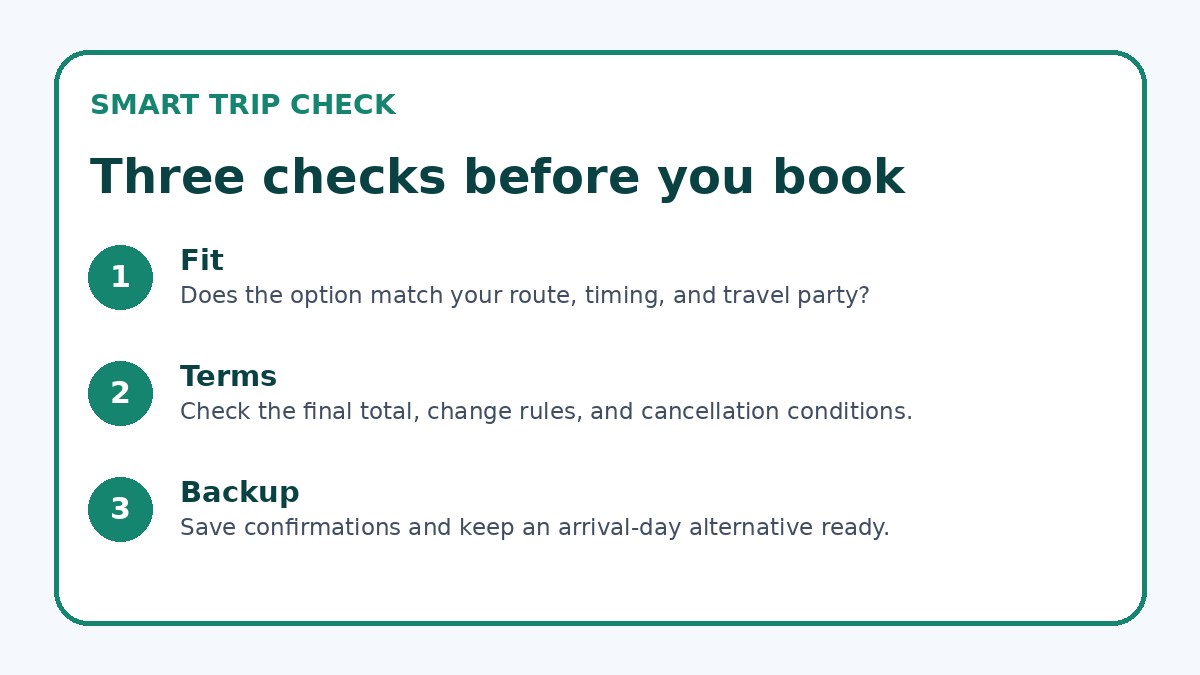
Before you click buy, verify the ticket’s change and cancellation policy on the provider’s final booking page: note the deadlines for free changes, the fixed fees for changes after that window, and whether refunds are processed as credit or money back. Don’t rely on summary pages; the full conditions are often in the terms linked at checkout. Confirm whether your ticket guarantees seat reservations and whether there is an extra charge to reserve seats together; if you need a stroller space or assistance, check how to request that service and whether it is documented on the confirmation.
Also confirm whether the fare is sold as a single through-ticket or as separate legs if connections are involved. If you intend to use travel insurance, verify that the ticket type and provider are compatible with the policy you buy. Finally, double-check identity or age requirements for child fares and whether any documentation is required at the station. If you prefer to compare options before booking, a site like Trip.com can show availability, but always validate the final terms on the operator’s site before payment.
Frequently asked questions
Should I buy the most flexible ticket for a family of four?
Buying the most flexible ticket is worth considering if your family faces a high chance of schedule changes — for example, if traveling with very young children, elderly relatives, or tight connecting plans. Flexible tickets reduce stress by allowing changes or cancellations with smaller penalties, and they often include seat reservations. To decide, compare the extra fare against a plausible set of change scenarios: add up likely change fees or rebooking costs and see if they exceed the price difference. Also verify the exact change rules on the provider’s booking page to ensure the flexibility you expect is actually offered.
Can I reserve seats together after buying a low-cost ticket?
Some operators allow seat reservations after purchase for a fee; others do not offer reservations for the lowest fares. If seat reservation is essential, check whether it can be added during or after booking and whether there are restrictions on which seats you can choose. If the checkout flow doesn’t clearly state reservation availability, call customer service or check the provider’s seating policy. Don’t assume availability — confirm the cost and the process on the final booking page before relying on after-sale reservations.
How do I handle a missed connection when legs are on separate tickets?
When legs are sold separately, most operators treat each booking independently, so a missed connection may not be covered and you may need to purchase a new ticket for the missed leg. To mitigate this risk, plan longer transfer times, purchase protective upgrades where available, or consider buying a through-ticket that covers connections under a single policy. If you must use separate tickets, note the provider contact details and be prepared to pay for an earlier or later train; verify cancellation and change rules for both tickets at the time of booking.
Final planning note
Choosing the right ticket from Florence to Milan for a family comes down to matching flexibility to your risk tolerance and travel habits. If unpredictable changes are likely, prioritize flexible fares with seat reservations and clear change terms; if plans are firm and you’re comfortable with more coordination, lower-restriction fares or connected legs may save money. Whatever you choose, follow the verification steps above: copy the exact change and refund wording from the booking page, confirm seat reservations, and check whether connections are protected. These habits turn a ticket purchase into a reliable part of your family trip plan rather than a last-minute emergency.
Continue planning
Check current options and final conditions
Use the provider page to confirm live availability, the final total, cancellation terms, and every condition that matters to your trip.
This evergreen planning guide was created with AI-assisted drafting and a structured quality review. It does not display live prices, schedules, availability, visa guidance, or provider rankings. Verify current details before booking. Some links are affiliate links; we may earn a commission at no additional cost to you.