If you’re planning Dubai to Sydney flights with kids, the practical answer is: choose the option that balances total travel time, number of transfers, and how well your family copes with long flights. Direct flights save time and simplify logistics — fewer chances to miss a connection, less juggling of boarding passes and bags, and a single airport experience for tired children. Connecting itineraries can lower per-passenger fares and let you break the journey into manageable segments, which helps families who prefer daytime travel or want a stopover to reset. Before you book, decide which matters most for your children’s age, sleep patterns, and the family’s tolerance for airport waits. Use the rest of this guide to compare tradeoffs, practical checks to run on booking pages, and a checklist so you leave nothing important to chance.

See current options before you compare the details
Availability and final conditions change. Open Trip.com now or keep reading for the practical comparison.
Time, sleep and the young traveller
For many families the single biggest factor is how a flight affects children's sleep. Direct flights cut the overall journey time and can let older children and teenagers sleep for longer continuous periods on board, reducing jetlag and meltdowns on arrival. If your family includes infants who sleep best in a predictable routine, a direct option minimizes the disruptions of airport transfers and creates a single longer rest opportunity during the flight.
Connecting flights offer a different control: they allow you to split travel into shorter stints and schedule travel around family sleep patterns — for example, taking a daytime flight then an evening segment after local rest. That can be especially useful for families who prefer to avoid non-stop overnight flying with very young children. When comparing itineraries, estimate likely sleep windows, factor in local time on arrival, and imagine the experience of sleeping on a plane versus sleeping in an airport lounge or transit hotel during a layover.
Logistics: transfers, luggage and mobility
Direct flights simplify logistics — you deal with one departure and one arrival airport, one round of security and immigration formalities, and fewer opportunities for misconnected luggage. For families carrying strollers, car seats, or extra baggage for children, fewer transfers mean less physical handling and stress. If any family member needs mobility assistance, a single carrier or nonstop routing reduces the number of request points where an assistance plan can break down.
With connecting flights you must assess whether bags transfer automatically or need re-checking, which can differ by carrier and ticket type. Look closely at minimum connection times listed by the airline and be realistic about how long it takes to move between gates with children in tow. If you have a long layover, factor in access to family-friendly facilities: children's play areas, nursing rooms, rest zones, or nearby transit hotels. Always verify baggage transfer rules and assistance services on the final booking page, because such provider-specific details change frequently.
| Approach | Best for | Tradeoff to check |
|---|---|---|
| Direct flights | Families prioritizing shorter overall travel time and minimal handling of luggage or mobility needs. | Usually fewer schedule options and sometimes higher fares; limited flexibility if disruption occurs mid-journey. |
| Single-stop connecting flights | Families seeking lower fares or the chance to split travel into more manageable segments for young children. | Adds a transfer with potential re-checking of bags and extra ground time; requires realistic connection planning. |
| Long layovers or planned stopovers | Families wanting a rest day en route or to break jetlag and explore an intermediate city safely. | Extends total travel time and may incur extra costs for accommodation or transit; increases itinerary complexity. |
| Mixed-carrier connections | Families looking to combine pricing and timing advantages from different airlines. | Responsibility for missed connections and baggage transfers can be less clear, requiring careful verification before booking. |
Ready to check the option that fits your plan?
Use your exact dates and traveler details so the provider page can show the current total and conditions.
Cost, flexibility and family seating
Families often consider cost a deciding factor. Connecting itineraries can be priced lower per ticket than direct options, but the difference must be judged against added costs: airport transfers during layovers, meals, transit visas (if any), and the mental toll of longer travel days. Also check whether the fare allows free seat selection or if an additional fee applies; keeping your family together in adjacent seats is worth extra to many parents.
Flexibility matters too. Look at luggage allowances, change and cancellation policies, and how credits or rebooking work for multi-carrier itineraries. A single ticket on one carrier usually provides clearer recourse if delays force rebookings; mixed-carrier itineraries can complicate responsibility for missed connections. Confirm on the airline or online travel agent’s final booking page whether infant fares, child meal requests, and seat guarantees are confirmed at purchase or require later action.
Before you book
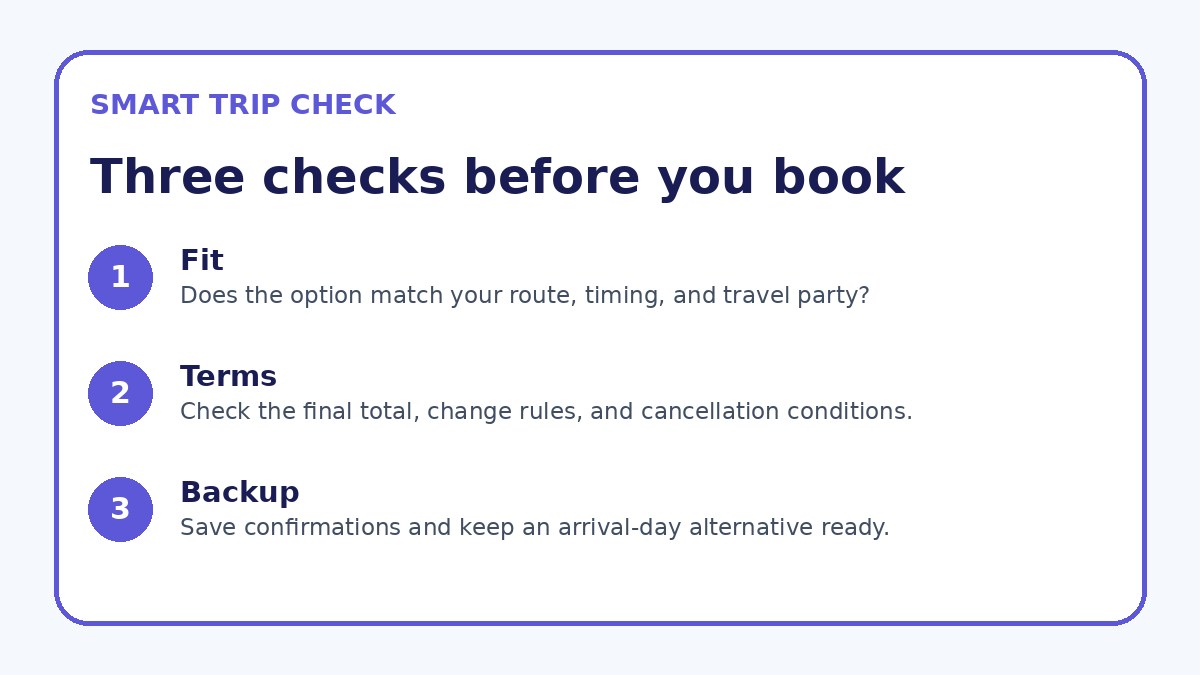
- Estimate total door-to-door travel time including airport transfers and likely connection wait times before comparing fares.
- Confirm infant/child meal, bassinet, and seat assignment policies on the airline’s final booking page for each proposed itinerary.
- Check whether checked luggage will be transferred between flights automatically or needs re-checking during layovers.
- Measure realistic minimum connection time between arrival and departure gates, especially when changing terminals.
- Pack a dedicated family carry-on with snacks, medication, chargers, and comfort items to cover at least one extended delay.
- Verify assistance services and stroller/ car-seat handling policies with the airline well before departure and keep documentation handy.
Emotional and safety considerations for families
Travel with kids isn’t just about logistics; it’s about keeping children calm, entertained, and secure. Direct flights reduce the number of unfamiliar spaces your child must navigate, which can lower anxiety for younger travellers. For older children, nonstop flying can feel efficient and adult-friendly, allowing families to get to their destination and recover quickly.
Connections add the potential benefit of a healthy break from cabin confinement — time to stretch legs, run off energy, and reset before the next flight. But every additional stop introduces more people, more announcements, and more transitions, which can be stressful for children who thrive on routine. When planning, think about each family member’s temperament and neurodiversity needs; sometimes a slightly longer journey with predictable breaks is the safest, least stressful choice for everyone.
Frequently asked questions
Are direct flights always better for families travelling Dubai to Sydney?
Not always. Direct flights reduce handling, transfers and total travel time, which benefits many families, but they may also be longer airborne stretches that some children cannot tolerate. Connecting itineraries let you split the journey into shorter flights and offer potential savings or daytime travel options. The best choice depends on your children’s ages, sleep habits, and whether you value speed over breaks. Compare door-to-door timings, likely sleep windows, and what in-flight facilities (bassinet, family seating) each option confirms on its booking page.
What should I verify on the booking page before I buy tickets for a family?
On the provider’s final booking page confirm seat assignments, checked baggage rules and automatic transfers, infant or child meal availability, and whether bassinets or extra legroom seats can be reserved. Check change and cancellation terms for the specific fare class and whether assistance or stroller services are included. If your itinerary uses different carriers, verify which airline assumes responsibility for missed connections and baggage. Trip.com can be used to compare current availability, but always read the final airline or ticketing agent page for provider-specific details.
How much connection time should I allow when travelling with kids?
Allow more than the minimum official connection time — plan for extra minutes to move between gates, use restrooms, feed or soothe children, and handle unexpected delays. If you must change terminals or re-clear security, add a buffer for walking, shuttle transfers, and queuing. For families with infants, toddlers, or mobility needs, aim for a generous layover that lets you leave sterile transit areas if necessary. Exact minimums vary by airport and carrier, so verify recommended connection times on the airline’s booking information and be realistic about what your family can manage in that window.
Final planning note
Choosing between direct and connecting Dubai to Sydney flights for your family comes down to priorities: speed and simplicity, or lower out-of-pocket cost and the chance to break the trip into friendlier segments. Assess the ages and sleep routines of your children, how much luggage and equipment you’ll handle, and whether you need guaranteed contiguous seats. Run through the checklist items and double-check provider-specific details on the airline’s final booking page — seat maps, baggage transfer rules, and assistance services matter more than headline fares. When in doubt, pick the itinerary that reduces stress on travel day; a smoother journey often makes for a better holiday start.
Continue planning
Check current options and final conditions
Use the provider page to confirm live availability, the final total, cancellation terms, and every condition that matters to your trip.
This evergreen planning guide was created with AI-assisted drafting and a structured quality review. It does not display live prices, schedules, availability, visa guidance, or provider rankings. Verify current details before booking. Some links are affiliate links; we may earn a commission at no additional cost to you.