If you’re renting a car in Da Nang for a family trip, start by choosing the cover that removes surprise financial risk if something goes wrong. The practical choice for most families is a combination of collision/theft waiver with clearly defined excess (deductible) limits, plus third-party liability that matches the rental company’s minimums or better. Add personal accident cover for passengers if your household health plan or travel policy doesn’t already pay. Before you accept any offer, get the insurer’s or rental company’s full wording in writing, note what exclusions apply for island driving, unpaved roads, and driver age limits, and confirm whether GPS, child seats, or additional drivers affect premiums or liability.
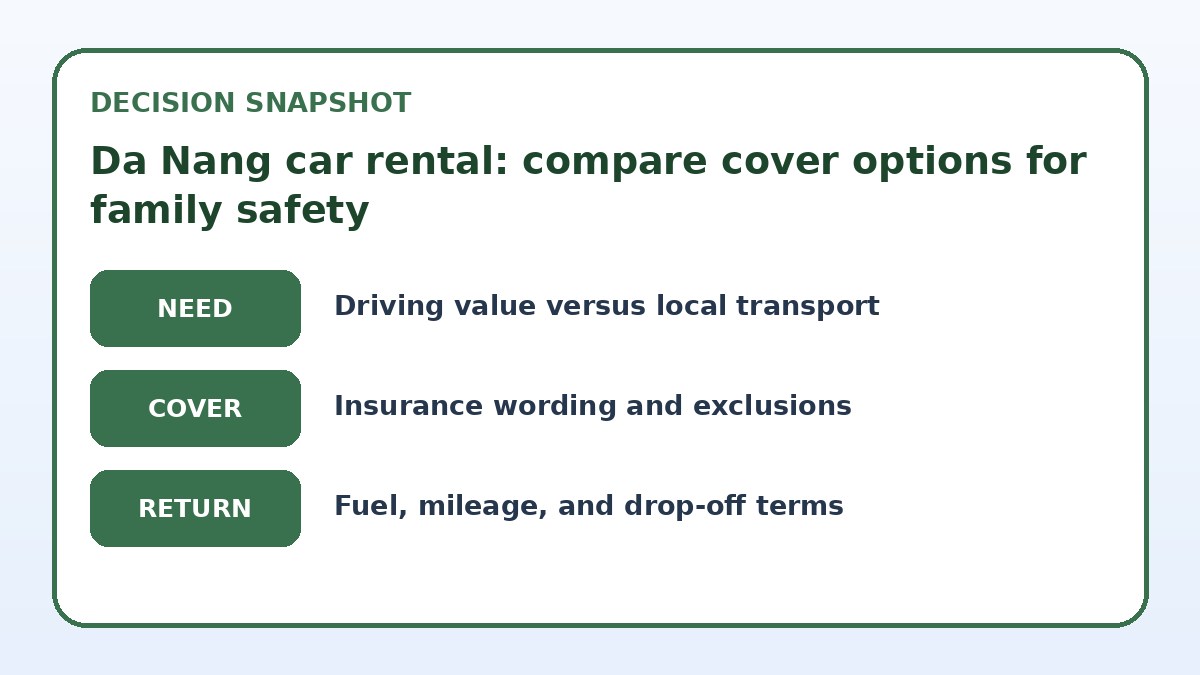
See current options before you compare the details
Availability and final conditions change. Open Trip.com now or keep reading for the practical comparison.
Key insurance terms families should understand
Collision Damage Waiver (CDW) and Loss Damage Waiver (LDW) are commonly used to limit your liability for damage or theft of the rental vehicle. These waivers do not always remove all responsibility: most include an excess (also called a deductible) that the renter pays before the insurer or rental company covers the remainder. Know the numerical value of the excess and whether it’s per incident, per claim, or per rental period. Also check whether common items — tyres, mirrors, and windscreens — are included or excluded, because exclusions shift the cost of smaller but frequent claims back to you.
Third-party liability covers damage or injury you cause to others while driving the rental car, and the statutory minimum offered by local providers may be low for a serious collision. Look for policies that state a monetary limit for bodily injury and property damage; if those limits are modest, consider buying supplemental liability or an independent policy. Finally, personal accident insurance or passenger cover pays medical costs for occupants and can be useful for families, especially where your home health insurance or travel policy doesn’t provide sufficient protection for overseas incidents.
Common exclusions and how they affect family plans
Rental contracts often exclude damage resulting from off-road driving, using unpaved mountain tracks, or driving on beaches — activities families might plan for when exploring rural Vietnam. If you intend to drive outside paved main roads, explicitly ask whether the CDW or LDW covers those routes; if not, either avoid those roads or accept increased risk. Other frequent exclusions include driving under the influence, allowing an unauthorized driver behind the wheel, or leaving keys inside an unattended vehicle. For families, giving every permitted driver a clear briefing about the rules prevents voided claims.
Additional equipment like child seats, roof racks, or GPS units may be excluded from insurance coverage or treated separately if they are damaged or stolen. Verify whether the rental’s standard insurance covers these items or if the company offers a specific protection package. If you’re traveling with infants or toddlers, insist that child seats meet legal standards and that their presence doesn’t change the car’s insurance terms. Finally, check whether cross-border travel is permitted; taking a Da Nang rental into another province or country can breach policy terms.
| Approach | Best for | Tradeoff to check |
|---|---|---|
| Accept rental company’s excess reduction | Families wanting low hassle and minimal upfront claim exposure | Higher daily charge versus possible lower out-of-pocket if damage occurs |
| Use an independent travel insurance policy | Families seeking broader coverage for people and possessions | Potential reimbursement process and claim documentation burden |
| Rely on credit-card rental insurance | Cardholders with existing primary or secondary rental coverage | Coverage limits and exclusions vary; must verify exact card terms |
| Buy only mandatory local liability | Budget-focused families planning minimal driving on safe roads | Lower cost now but greater financial risk from significant claims |
Ready to check the option that fits your plan?
Use your exact dates and traveler details so the provider page can show the current total and conditions.
Choosing between excess reduction and third-party top-up
An excess reduction (or zero-excess option) lowers or removes your out-of-pocket payment after a claim, often for a separate daily fee. For families, this reduces financial stress if a minor scrape or parking ding happens during a busy holiday. However, excess reduction is priced by rental companies to reflect risk and administrative convenience; compare the daily fee against what an independent travel insurance policy or credit card coverage would refund. When deciding, factor in how likely minor damage is in your planned driving (city traffic versus long coastal highways) and whether multiple drivers will increase exposure.
Supplemental third-party liability increases the amount the insurer will pay to others if you’re at fault, which protects your personal assets and family savings. If your objective is legal and financial protection against serious claims, prioritize liability limits over zero excess. A balanced approach for families often combines a low excess with a decent supplemental liability, plus passenger personal accident cover. Always ask the agent for exact wording or sample claim scenarios so you can see how both products respond in practice.
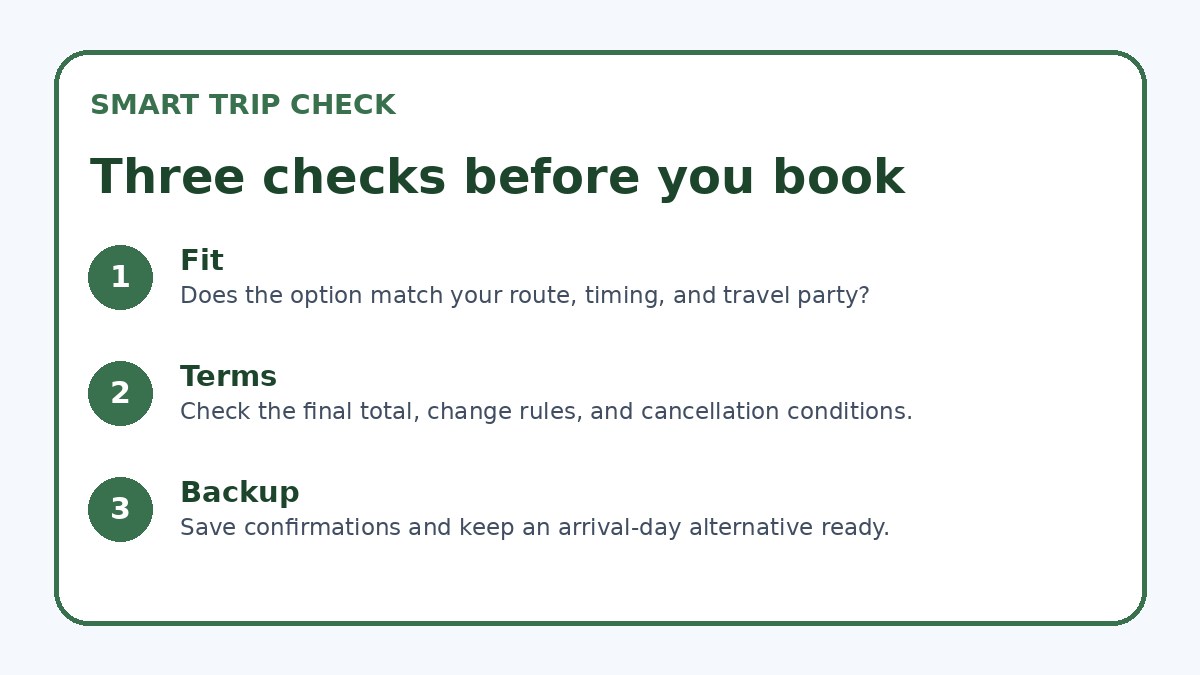
Before you book
- Download and save the full rental insurance wording from the booking page before payment.
- Note the exact excess amount and whether it’s refundable, per incident, or per rental period.
- Confirm the list of named drivers and have photocopies of every driver’s license and passport.
- Verify child seat provision and whether its damage or theft is covered under the policy.
- Ask the rental agent to record pre-existing vehicle damage on the inspection form and take time-stamped photos.
- Clarify claim steps: who to call, whether a police report is required, and how long a refund typically takes.
What to verify on the booking page and at pickup
Before completing a booking, download and save the full insurance wording that applies to the quoted rate; don’t rely on short summaries or marketing blurbs. On the booking page, confirm the precise excess amount, the list of named exclusions, rules about additional drivers, and any regional limitations such as prohibited roads or interprovincial travel. If an online quote references ‘supplemental liability’ or ‘waiver,’ click through to read the policy document and look for phrases that would void coverage, such as prohibited uses or intoxication.
At the rental desk, compare the vehicle inspection report to the car’s condition and request the agent to note any pre-existing damage in writing. Verify that the contract explicitly names the drivers you expect to use the vehicle and that child seats are recorded if provided. Ask what documents are required to make a claim and whether the company requires a police report for theft or significant collisions; if so, clarify local procedures and typical timelines to avoid surprises during a stressful event.
Frequently asked questions
Does renting a car in Da Nang require extra passenger cover for kids?
Not always — some personal health policies and comprehensive travel insurance plans already include overseas medical cover for family members. However, rental companies sometimes offer passenger accident insurance that pays directly to passengers or their families, and this can be helpful where existing plans have high deductibles or exclusions abroad. Check your household health policy and any travel insurance you’re buying to see whether it covers medical treatment for occupants of hired vehicles in Vietnam. If coverage is unclear or limited, consider adding passenger accident cover through the rental or a travel insurer for peace of mind.
Will a child seat affect my car insurance excess or liability?
Child seats themselves are typically treated as optional equipment; damage or theft of the seat might not be covered under the vehicle’s CDW unless the contract explicitly includes accessories. More importantly, supplying an approved child seat can be a legal requirement depending on local rules and protects children in a crash. Ask the rental company whether providing a child seat changes any terms — some require it to be listed on the contract — and whether a dedicated equipment protection option exists that covers damage or replacement costs for child seats and similar items.
If multiple family members will drive, what insurance checks are essential?
Make sure every planned driver is named on the rental contract; unnamed drivers often invalidate claims. Verify driver age restrictions and whether the insurance excludes drivers under a certain age or with a short license history. Ask if additional drivers incur a fee and how that affects cover limits or excess amounts. Finally, check whether your credit card or external insurance will cover multiple drivers; some cards only cover the primary renter. Confirm these details in writing to prevent a denied claim if an incident happens while a different family member is driving.
Final planning note
For families renting a car in Da Nang, the safest route is to match the insurance wording to your real plans: know the excess, confirm third-party liability limits, and ensure passengers and child seats are clearly addressed. Balance the convenience of rental-company add-ons against independent travel or credit-card coverage by reading exact policy language and asking specific, scenario-based questions. At pickup, document the vehicle’s condition, list every driver, and keep copies of the insurance wording and claim procedures. With those steps you reduce the chances of an unwelcome financial surprise and can focus on exploring Da Nang and nearby coastlines with more confidence.
Continue planning
Check current options and final conditions
Use the provider page to confirm live availability, the final total, cancellation terms, and every condition that matters to your trip.
This evergreen planning guide was created with AI-assisted drafting and a structured quality review. It does not display live prices, schedules, availability, visa guidance, or provider rankings. Verify current details before booking. Some links are affiliate links; we may earn a commission at no additional cost to you.