
If you're booking a business trip to Busan, don’t stop at the headline fare. The practical decision is to compare total trip cost — flights plus transit, lodging, daily expenses, meeting needs and flexibility fees — before you click confirm. That saves time, reduces stress and helps your finance approver see the full picture. Start by listing mandatory items (airfare, airport transfer, hotel nights) and optional but likely costs (local transport, meals, co-working or meeting rooms, late check-out or early check-in fees). For supplier-specific details and current availability you can cross-check on provider booking pages or a comparison site like Trip.com, but verify every fee and cancellation or change term on the provider’s final booking screen.
See current options before you compare the details
Availability and final conditions change. Open Trip.com now or keep reading for the practical comparison.
Flights and timing: comparing options beyond ticket price
When evaluating flights to Busan for business, focus on timing and predictability as much as base fare. Compare direct and connecting itineraries for total door-to-door time, likely transfer hassles, and how each option fits your meeting schedule. A cheaper connecting flight that arrives late in the evening or requires a tight transfer can create added hotel nights or missed meetings; conversely, an early direct flight might require an expensive overnight the day before if connections are unreliable. List the workday hours you need in Busan and prioritize itineraries that preserve them.
Next, check the airline’s baggage and carry-on rules, change fees, and rebooking processes on the carrier’s booking page before you finalize. For corporate travelers, consider fare classes that include flexibility even if they cost more upfront; what looks cheaper can become costly if plans shift. If you use loyalty or corporate accounts, verify seat availability and how upgrades or refunds are handled. Finally, note airport choices: Busan is served by more than one airport or regional gateway depending on origin, so confirm which airport is on the ticket and how that affects transfers to downtown or meeting locations.
Ground transport and transfers: calculate realistic door-to-door costs
Airport transfer options in Busan range from express rail and buses to taxis and ride-apps; for business trips, the choice depends on time of day, luggage and meeting locations. Estimate the full door-to-door time and cost of each option, and include likely waiting times during peak or late hours. If your schedule includes a morning meeting, prioritize transfers that reliably get you there on time. Also consider whether the hotel offers a shuttle, or whether booking a car service or arranging reimbursement through your company policy makes more sense.
Don’t forget intra-city travel between hotels, client offices, and venues. Metro and buses are cost-efficient but may add walking and transfer time; taxis or ride-hailing can be more reliable for tight itineraries but add variable cost. If you plan several short trips a day, a per-day estimate for taxis or ride-app rides will often show that staying slightly closer to meeting clusters saves both time and money. Itemize typical journeys you expect to take so you can compare hotel locations and associated commute costs accurately.
| Approach | Best for | Tradeoff to check |
|---|---|---|
| Cheaper non-refundable fares | Fixed schedules and short trips with low change risk | Lower upfront price but higher cost if plans change; cancellation may be impossible or costly |
| Flexible refundable fares | High-uncertainty itineraries and senior executives | Higher initial cost, but reduces risk and avoids rebooking penalties |
| Central hotel near meeting cluster | Maximizing work time and minimizing daily transport | Nightly rate may be higher, though local savings and convenience often offset it |
| Cheaper hotel farther out | Lower lodging budgets and long-stay arrangements | Longer commutes cost time and add taxi or transit expenses that reduce savings |
Ready to check the option that fits your plan?
Use your exact dates and traveler details so the provider page can show the current total and conditions.
Accommodation and business needs: more than room rate
A hotel’s nightly rate is only the starting point. For business travelers, include meeting-room rental, printing and copying fees, internet speed and reliability, cost of breakfasts or business lounges, and any mandatory tourism taxes or resort fees the property may collect. Confirm whether your company’s rate or negotiated corporate program applies and whether that rate includes breakfast or Wi-Fi. If you require early check-in, late check-out, or a quiet workspace, ask the hotel to confirm any extra charges on the booking page so you can add them to the total cost.
Location matters: staying within walking distance of client offices or the conference center can greatly reduce local transport and taxi bills, and buy back hours for work or rest. If you expect hybrid meetings, check if the room setup supports A/V needs or whether the hotel charges for meeting technology and technical support. For multi-night stays, also consider laundry, minibar, and incidental charges that accumulate over a business trip. Have the hotel spell out business-related fees in writing or on the booking confirmation before approval.
Before you book
- List every mandatory cost (airfare, hotel nights, airport transfer) and estimate amounts before requesting approval.
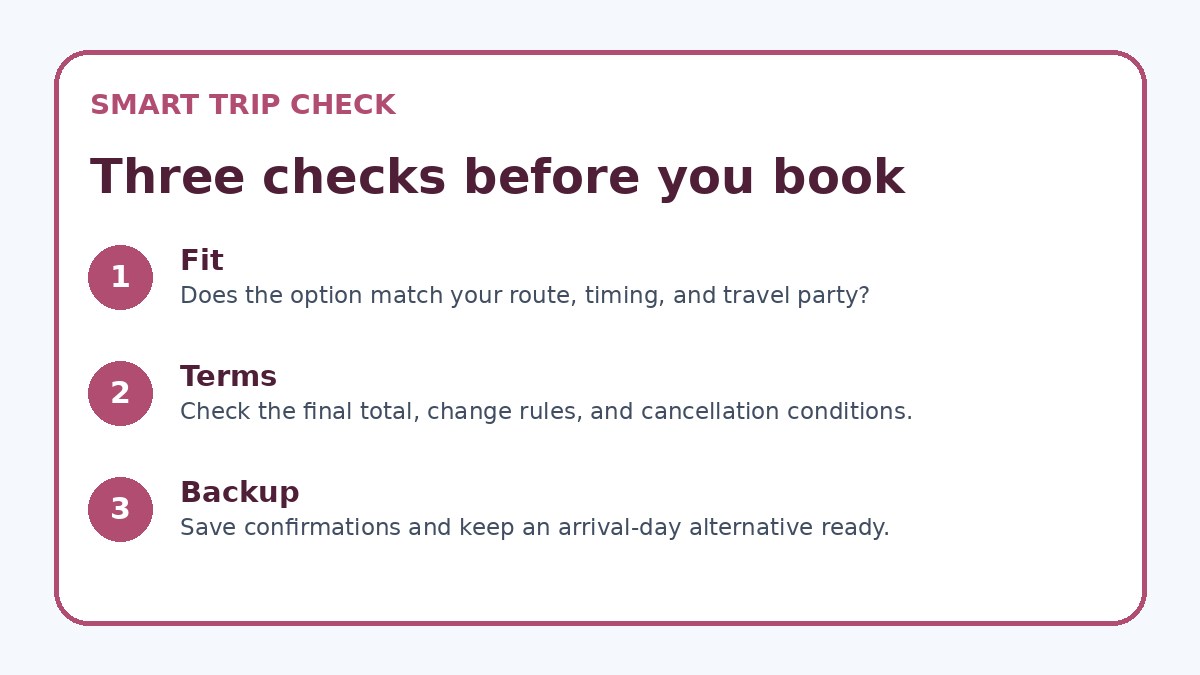
- Verify baggage, seat selection, change and cancellation policies on the airline’s final booking page.
- Confirm hotel business amenities and any meeting-room or printer charges on the hotel’s confirmation.
- Estimate local transport for expected daily routes and compare commute times from candidate hotels.
- Match the itinerary to company travel policy and obtain pre-approval for any out-of-policy choices.
- Save screenshots of final provider terms and cancellation policies to attach to the expense request.
Policy, flexibility and reimbursements: align bookings with company rules
Before booking, check your company’s travel policy for allowable classes, per-diem caps, preferred suppliers, and approval workflows. Some organizations require advance notice or manager sign-off for higher class fares or non-preferred hotels; others have explicit rules for taxis versus public transit. Match the booking to policy to avoid out-of-pocket disputes and to ensure your expense report will be approved smoothly. If you must deviate for operational reasons, document the business rationale and get pre-approval if possible.
Flexibility is often a cost decision: refundable or change-permitted fares, flexible hotel rates, and third-party cancellation protections reduce risk but cost more upfront. Evaluate the likelihood of schedule changes and weigh that against the premium for flexibility. When using an aggregator or corporate booking tool, verify the final cancellation and change terms on the provider’s confirmation page and keep screenshots for finance. Make sure reimbursements for local expenses are clear so you can choose the option that minimizes both risk and total expected cost.
Frequently asked questions
How should I decide between a cheaper flight with a tight connection and a slightly pricier direct or well-timed option?
Start by mapping impact: how would a missed connection affect your meeting schedule and whether a backup flight adds time or cost? If the meeting is critical and has little slack, prioritize an itinerary with more buffer even if it costs more. For less critical appointments, a cheap connection might be acceptable if you build contingency time. Always check the airline’s rebooking policy and your company’s tolerance for disruptions — those policies often determine the real cost of a tight connection.
Is it better to stay close to a conference venue or near client offices when both are in different parts of Busan?
Quantify the number and timing of visits to each location and estimate commute time and cost for each pairing of hotel and site. If meetings are clustered at one location, proximity there usually wins. If you’ll split days between both sites, choose a central spot that minimizes total transit time. Also consider evening networking or client dinners; staying near where most after-hours activity occurs can reduce taxi costs and preserve rest.
What documentation should I keep to ensure reimbursements cover the full trip cost?
Keep original receipts and digital confirmations for flights, hotels, transfers, and any meeting-room or printing charges. Capture screenshots of provider cancellation and change policies from the booking page at time of purchase. Itemize incidental expenses daily and retain taxi or ride-app receipts tied to meetings. If you obtained pre-approval for out-of-policy items, attach that authorization to your expense report to prevent delays or denials.
Final planning note
Business travel to Busan becomes simpler when you stop treating the ticket price as the total cost. Compare door-to-door options, factor in transfer and intra-city spending, and verify supplier terms on the provider’s booking confirmation before approval. Align choices with your company’s travel policy and choose the right balance of flexibility versus upfront savings based on the likelihood of schedule changes. A short checklist and a habit of saving final booking screenshots will speed approvals and reduce surprise outlays, letting you focus on the meeting rather than the logistics.
Continue planning
Check current options and final conditions
Use the provider page to confirm live availability, the final total, cancellation terms, and every condition that matters to your trip.
This evergreen planning guide was created with AI-assisted drafting and a structured quality review. It does not display live prices, schedules, availability, visa guidance, or provider rankings. Verify current details before booking. Some links are affiliate links; we may earn a commission at no additional cost to you.