Practical answer first: before you open the booking site, collect exact travel dates, number and ages of travelers, preferred departure window, and how much checked and carry-on baggage you need. With those details in hand, compare direct and connecting options, flexible versus nonrefundable fares, and whether your schedule tolerates missed-connection risk. The main tradeoff is route versus fare: a shorter flight or direct routing usually costs more but reduces connection and baggage-transfer risk; a cheaper ticket often comes with stricter change rules and less protection. Below you’ll find decision criteria focused on routing, baggage and connection risk, schedule fit, and fare conditions so you can assemble a targeted set of options to check on the carrier or booking page.
See live routes for your exact travel day
Compare direct and connecting choices with the same baggage and traveler details.
Routing: direct versus connecting options
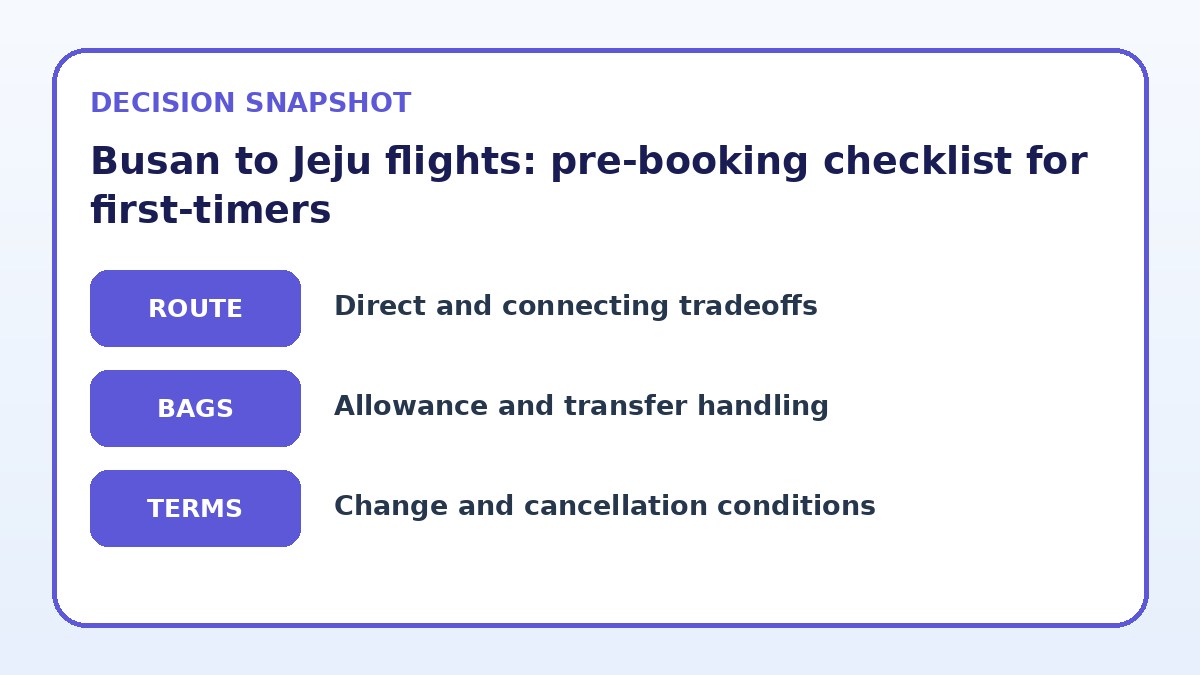
When planning Busan to Jeju flights, start by determining whether direct service is available on your chosen date and how many daily options there are. Direct routing reduces the number of things that can go wrong: missed connections, extra bag handling, and coordination between carriers. For a first-time visitor prioritizing simplicity, a direct flight is often the easiest path from terminal to destination. If direct options are sparse or more expensive, build a short list of acceptable connecting itineraries and note where connections occur so you can assess airport layout and minimum connection time.
If you consider a connecting itinerary, verify each connection separately: how long is the layover, will you need to change terminals, and do both flights appear on the same booking or as separate tickets? Single-ticket itineraries normally protect you for missed connections, while separate tickets may leave you strained to rebook at your own cost. Don’t assume published schedules are fixed—confirm on the carrier’s final booking page whether the flights are operated by a partner and what protection or rebooking policy applies if a connection is missed.
Baggage and connection risk
Before comparing fares, list exactly what baggage you will bring: number of carry-on bags, checked bags, and any special items like surfboards or ski gear. Different fare types and carriers have different allowances and fees; some low-fare options exclude checked baggage entirely. For connecting itineraries, confirm whether your checked bags will be transferred automatically or if you must claim and recheck them—this matters when connections are tight or when flying on separate tickets. Verify baggage weight limits and excess fees on the airline’s booking page so you can compare total door-to-door cost rather than headline fare alone.
Connection risk ties directly to how your luggage is handled. If a transfer requires you to recheck bags, add buffer time and consider allowing extra hours between flights. Also check whether the airline publishes a minimum connection time and whether the booking keeps both segments under one confirmation number. When possible, pick flights with the same carrier or clearly partnered carriers that show through-checked baggage on the booking screen. If you decide to split tickets to save money, weigh the baggage handling burden against potential savings before confirming.
Compare flight-selection strategies
| Flight strategy | Best for | Risk to check |
|---|---|---|
| Choose direct flights only | Travelers who value simplicity and lowest connection risk | Often fewer time choices and potentially higher fares compared with itineraries that allow connections |
| Pick the cheapest available itinerary | Budget-focused travelers willing to accept stricter rules | Lower headline price may come with baggage fees, limited flexibility, and higher rebooking costs if plans change |
| Select flexible or refundable fares | Travelers with uncertain schedules or who need refundable options | Higher upfront cost but lower financial risk for changes or cancellations |
| Mix-and-match separate tickets to save money | Experienced planners who can absorb connection risk and recheck baggage | Saves money but increases the chance of missed connections and requires extra time for baggage handling |
Recheck the complete itinerary
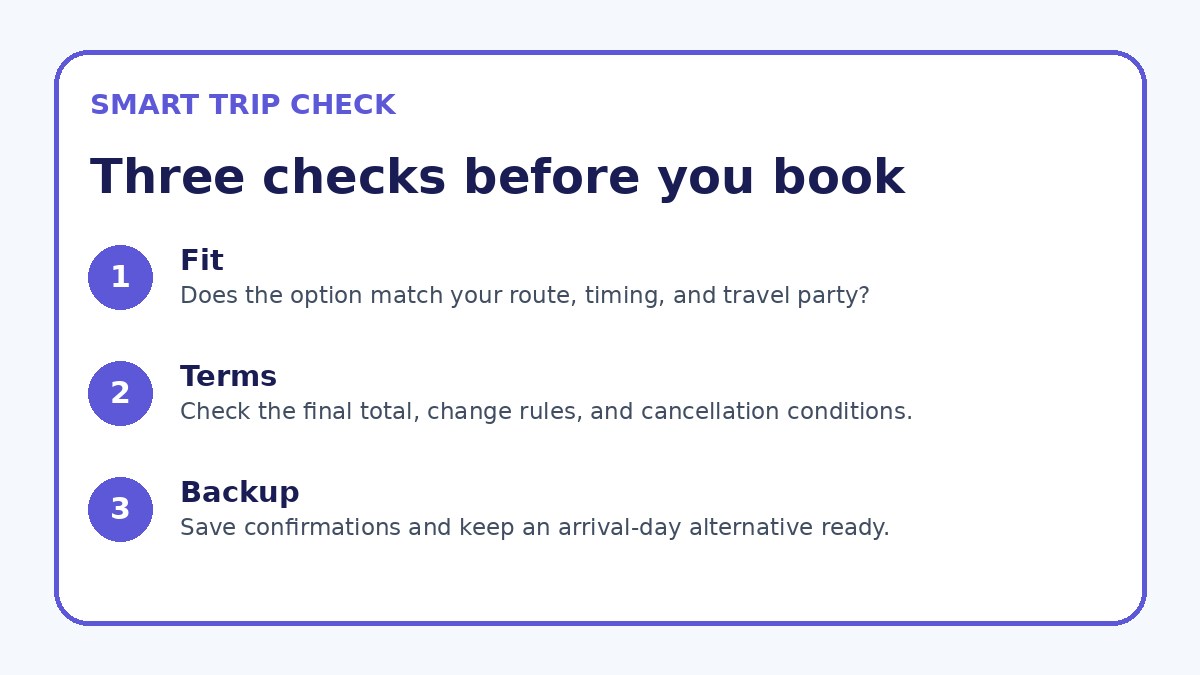
Confirm airports, connection handling, baggage, and change conditions before deciding.
Schedule fit and daily logistics
Match flight times to your wider itinerary: arrival time in Jeju relative to hotel check-in, daylight hours for easier transfers, and public transport or rental car office hours. Early-morning departures can maximize time on the island but may require an overnight in Busan or an early ferry/airport transfer. Late arrivals could mean limited transport options and additional taxi costs. For first-time visitors, plan arrival windows that leave time for basic orientation and a relaxed first evening rather than a tight rush from airport to a booked late activity.
Consider how flight timing affects contingencies: if weather or seasonal demand often delays flights between Busan and Jeju, avoid tight same-day connections to ferries or onward flights. If you need to be in Jeju for a fixed event, prioritize schedules with built-in cushion. Also check the operating hours and location of Jeju’s transport options on the carrier’s final booking page or the airport website, and consider booking a refundable or flexible fare if timing is critical and plans might change.
Flight details to verify
- Write down exact travel dates, preferred departure and arrival time windows, and the total number of travelers with ages before searching fares.
- List your baggage needs precisely: number and size of carry-on items, number of checked bags, and any oversized items to compare fare inclusions.
- Decide whether you prefer direct routing or are willing to accept connections; if accepting connections, note the minimum layover time you consider safe.
- Open the fare rules on the airline’s final booking page and copy the change, cancellation, and refund conditions into your notes before selecting a fare.
- Check whether checked baggage is through-checked on connections or must be rechecked and allow extra transfer time accordingly.
- If timing is critical, choose a refundable or flexible fare or purchase travel insurance that covers schedule changes and missed connections.
Fare conditions and change/cancellation rules
Fares come with different conditions that matter more than headline price: change fees, refundability, baggage inclusion, and seat assignment policies. Low-cost or basic economy fares often restrict changes and exclude seat selection; flexible fares cost more but let you adjust plans with less penalty. Before you book, open the fare rules on the airline’s final booking page and read the sections on changes, cancellations, and what happens if the carrier cancels or significantly changes your flight. Knowing this will help you decide whether to pay extra for flexibility or accept stricter rules for a lower fare.
Also check how refunds or travel credits are issued, and whether any booking protections are included when booking through third-party sites. If you use a travel agency or comparison engine such as Trip.com to view availability, click through to the airline’s own booking page to verify the exact fare code, allowed changes, and baggage terms. This step ensures you don’t rely solely on summary information that can omit restrictions or conditions critical to first-time travelers.
Flight Guide questions travelers ask
How do I compare direct and connecting Busan to Jeju flights when booking?
Compare total journey time, the number of flight segments, and whether the booking is issued on a single confirmation number. Direct flights remove connection and baggage transfer risk, while connecting options can offer more times and lower fares. On each booking page verify the layover duration, whether both flights are on the same ticket, and how baggage is handled. If a connection is on separate tickets, plan longer layovers and confirm how you will transfer between terminals or recheck luggage—details that must be checked on the airline or provider’s final booking page.
What baggage rules should first-time travelers check before buying a Busan–Jeju ticket?
Before purchase, identify the included baggage allowance for each fare: carry-on count and size, checked bag weight and number, and any extra item charges. Low-fare tickets may exclude checked bags or restrict carry-on sizes. Also verify whether transfers include through-checked baggage or require claim-and-recheck, especially for connecting itineraries. Confirm these specifics on the airline’s fare rules section during checkout, and factor any baggage fees into the total trip cost rather than relying on headline fares alone.
When is it worth paying more for a flexible or refundable fare on this route?
Paying extra for flexibility is worthwhile if your dates are uncertain, you’re traveling with groups whose plans may change, or you must be present for time-sensitive events in Jeju. Flexible fares reduce the financial risk of schedule changes and allow easier rebooking if flights are canceled or significantly altered. If your arrival time has to align with a ferry, tour, or hotel check-in, the value of being able to change flights without heavy penalties often outweighs the higher initial fare. Always check the exact change and refund policy on the booking page before choosing a pricier option.
Final decision note
Booking Busan to Jeju flights as a first-time visitor becomes much easier when you prepare a short, focused checklist: firm dates and traveler details, precise baggage requirements, routing preference, and the level of fare flexibility you need. Start with direct options if you want low risk, but don’t dismiss connecting itineraries if you verify baggage handling and connection protection. Always open the airline’s final booking page to read exact fare rules, baggage allowances, and any partner-carrier notes before payment. With these steps, you’ll compare true total costs and choose the option that balances schedule certainty, baggage needs, and acceptable financial risk.
Continue planning
Check current options and final conditions
Use the provider page to confirm live availability, the final total, cancellation terms, and every condition that matters to your trip.
This evergreen planning guide was created with AI-assisted drafting and a structured quality review. It does not display live prices, schedules, availability, visa guidance, or provider rankings. Verify current details before booking. Some links are affiliate links; we may earn a commission at no additional cost to you.