
If you’re flying from Busan to Jeju for the first time, choose Gimhae (PUS) unless you have a specific reason to use another airport. Gimhae is the city’s main commercial airport with the most frequent passenger flights to Jeju and the most ground-transport options into Busan and neighboring cities. That usually means simpler logistics for first-time visitors: fewer connections, clearer schedules, and easier transfers to hotels or ferries if your plans change. Still, exceptions exist—if you’re staying near a different regional terminal, traveling with oversized luggage, or prioritizing a particular carrier’s timetable, another departure point could make more sense. This guide gives the practical answer first, then walks through tradeoffs, how to compare direct and connecting options, and the specific checks to make on booking pages before you buy a ticket.
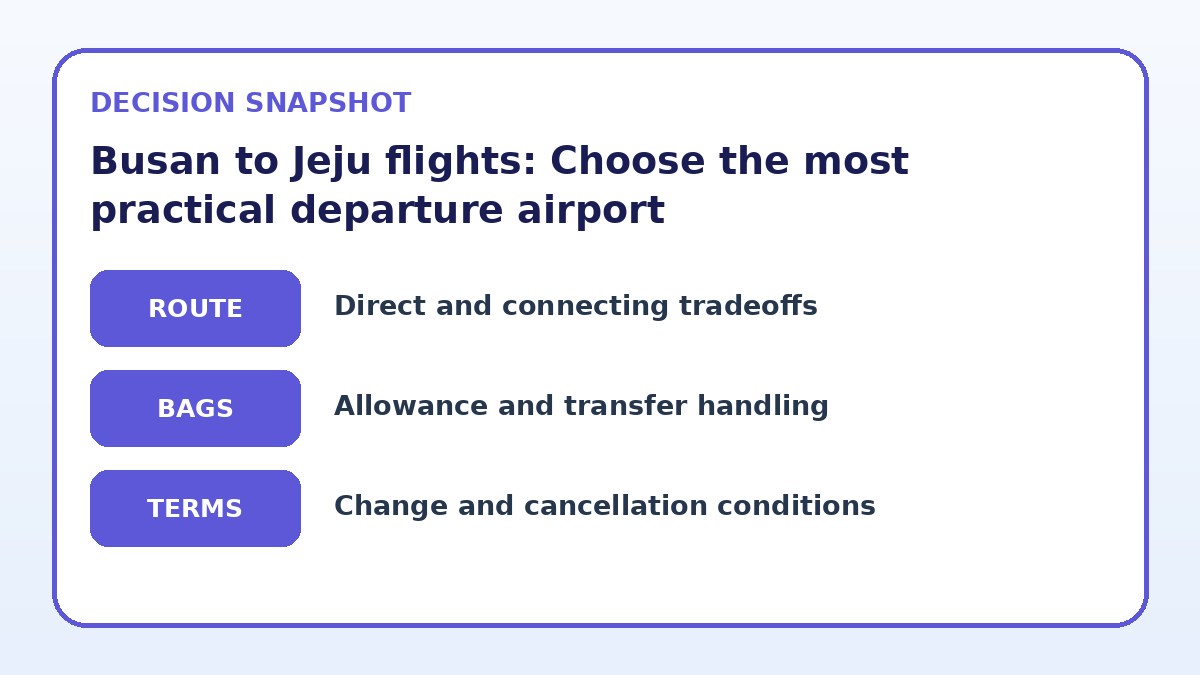
See current options before you compare the details
Availability and final conditions change. Open Trip.com now or keep reading for the practical comparison.
Why Gimhae is usually the practical default
Gimhae International Airport serves most scheduled passenger flights out of Busan and typically provides the largest selection of departure times to Jeju. For first-time visitors, a single airport with frequent services simplifies planning: it reduces the chance of missing a particular carrier’s limited departures and makes day-of-travel transfers—taxis, buses, or airport shuttles—more predictable. Ground-transport choices from central Busan and surrounding districts commonly target Gimhae, which helps when estimating travel time and arranging pickup or drop-off.
Frequent flights also mean more flexibility if you need to change plans. With multiple carriers operating similar routes you can often rebook the same day on another flight if there’s availability, though you must always check the fare conditions. For travelers who prefer minimizing coordination and potential surprises, flying from Gimhae tends to be the simplest option; just remember to verify the flight’s directness and baggage allowance before booking.
When a different departure airport could make sense
Some travelers benefit from using an alternate departure point. If your lodging or meetings lie well outside central Busan—near a different regional airport or a city served by a nearby domestic terminal—your total door-to-door time might be shorter by choosing that nearby option. Also, if a specific airline offers a schedule that fits your day better from another terminal, or if you need particular aircraft or baggage handling that that airline provides, those are valid reasons to pick an alternate departure.
That said, alternate airports often have fewer flights and possibly more limited ground-transport links, increasing the risk of long waits or fewer recovery options if a flight is delayed. A realistic comparison includes transfer time to the airport, check-in and security time, and how a missed connection would affect the rest of your itinerary. Factor in convenience items like nearby parking, luggage facilities, and the ease of returning to the city after arrival in Jeju.
| Approach | Best for | Tradeoff to check |
|---|---|---|
| Fly from Gimhae (main Busan airport) | Travelers wanting the most frequent schedules and simplest ground connections | May be farther from outlying accommodation compared with local terminals |
| Leave from a regional or secondary airport | Those staying much closer to an alternate terminal or with special airline needs | Often fewer flights and less recovery flexibility if schedules change |
| Choose a direct flight only | Maximizing simplicity and minimizing total travel time | May limit departure times and carrier choice compared with connecting options |
| Consider a connecting itinerary | Travelers prioritizing a specific schedule or lower fare despite added complexity | Higher chance of delays, rechecking luggage, and missed connections without protections |
Ready to check the option that fits your plan?
Use your exact dates and traveler details so the provider page can show the current total and conditions.

How to compare direct and connecting flight options
For the Busan–Jeju route, direct flights are usually quickest and least complex, but some booking results may show one-stop itineraries through other Korean airports. When you see a connecting option, compare the total travel time from your door to your Jeju arrival, not just airborne minutes. Add scheduled transfer times, the risk of tight layovers, and the need to recheck luggage if carrier rules require it. If a connection saves very little time or requires an awkward overnight, it’s usually not worth the extra hassle for a short island hop.
Also check whether a listed connecting option is operated by partners or separate tickets; through-ticketing with protected connections is preferable. On the provider’s final booking page confirm whether your bags transfer automatically, whether you must claim and recheck them, and what minimum connection time the airline recommends. If the connection gives access to a substantially better price or fits your schedule perfectly, weigh that benefit against the increased potential for travel stress.
Before you book
- Confirm on the airline’s booking page whether the flight is direct or requires a separate connection and note total door-to-door time.
- Check checked-baggage allowances, fees, and size limits on the final booking page to avoid surprises at the airport.
- Verify airport terminal and the best ground-transport options from your accommodation to that terminal.
- If an itinerary shows a connection, confirm it’s a single ticket with automatic baggage transfer; otherwise plan extra layover time.
- Compare total travel time and convenience, not only airborne minutes—include transfers, security, and local transport.
- If you plan to change flights, review fare-change terms and same-day rebooking policies before buying your ticket.
Practical checks to make before you book
Always verify three things on the carrier’s or booking platform’s final page: whether the flight is direct, the checked baggage allowance and fees, and whether the itinerary is on a single ticket or needs separate bookings. These points change frequently and can make or break a smooth transfer to Jeju—especially during busy travel periods. Also confirm the terminal at Gimhae or any alternate airport so you can plan your ground transportation accurately.
Finally, look up recent ground-transport options to and from the airport near your accommodation and confirm the opening hours of any airport counters you plan to use. If using a third-party booking site like Trip.com to compare availability, double-check the same details on the airline’s official page before purchase. For first-time visitors, a little extra verification on these specifics avoids last-minute surprises and keeps your trip on track.
Frequently asked questions
Which Busan airport has the most flights to Jeju and is easiest for first-time visitors?
Gimhae is typically the primary commercial airport serving Busan with the largest number of scheduled passenger flights to Jeju, which generally makes it the easiest pick for first-time visitors. It offers the broadest range of departure times and more predictable ground-transport links into Busan and surrounding areas. However, always check the specific flight’s details on the airline’s final booking page—confirm whether the flight is direct, review baggage allowances, and note the terminal so you can plan transportation from your accommodation.
How do I compare direct flights versus connecting options for Busan to Jeju?
When comparing direct and connecting itineraries, add up the entire door-to-door journey time rather than focusing solely on airborne time. Include travel time to the departure airport, recommended check-in and security windows, the scheduled connection layover, and transport after arrival in Jeju. Check whether connections are on a single ticket with through-checked baggage and protected connections; separate tickets increase risk and complexity. If a connection only saves a small amount of time or creates tight layovers, a direct flight is usually the safer choice.
What booking details should I always verify before purchasing a ticket?
On the final booking page verify whether the flight is direct or connected, the checked baggage allowance and any fees, and whether the itinerary is on one ticket or requires separate bookings. Also confirm the departure terminal and the airline’s minimum recommended arrival time at the airport. If using a third-party site like Trip.com to compare options, cross-check these specifics on the airline’s official page to ensure information hasn’t changed and that baggage transfer and connection protections meet your needs.
Final planning note
For most first-time visitors traveling Busan to Jeju, departing from Gimhae Airport is the practical default: it simplifies choices, reduces transfer uncertainty, and offers the most scheduling flexibility. Still, don’t treat the airport decision in isolation—measure total door-to-door time from where you’re staying, check whether a specific airline’s timetable or baggage policy makes an alternate terminal attractive, and compare direct versus connecting itineraries by adding all transfer and layover time. Before you book, verify directness, baggage rules, and ticketing protections on the airline’s final booking page (or confirm on Trip.com and then the carrier’s site). With those checks done, you’ll pick the departure that best balances convenience and risk for your first Jeju visit.
Continue planning
Check current options and final conditions
Use the provider page to confirm live availability, the final total, cancellation terms, and every condition that matters to your trip.
This evergreen planning guide was created with AI-assisted drafting and a structured quality review. It does not display live prices, schedules, availability, visa guidance, or provider rankings. Verify current details before booking. Some links are affiliate links; we may earn a commission at no additional cost to you.