If you’re planning a family trip from Busan to Gyeongju, the practical question is not which mode is “best” in the abstract but which fits your family’s priorities: door-to-door convenience, luggage and stroller handling, schedule flexibility, or cost control. Trains, intercity coaches, ferries and driving each deliver different balances of terminal fit, transfer hassle, and reliability. Start by listing what matters most for this trip—minimizing transfers with young children, keeping luggage simple, or having a flexible schedule—and then compare the realistic end-to-end journey rather than just in-vehicle time. Below you’ll find clear tradeoffs, transfer points to watch, and simple backups so you can pick a plan you can execute smoothly with kids and a carry-on or two.
Terminal fit and first/last-mile practicality
Choosing the right transport means matching terminals to where you actually start and finish. In Busan, consider which terminal is nearest your accommodation: some families find city-center stations or coach terminals easier than a distant ferry pier. In Gyeongju, popular historical sites are spread out, and hotels or guesthouses may be closer to one transit hub than another. Evaluate the walking distance, elevator availability for strollers and luggage, and whether a taxi or rideshare from the arrival point is quick and affordable. These door-to-door details often determine whether a journey feels easy or exhausting for children.
When you compare options, map the actual route from your front door in Busan to the exact address in Gyeongju. Train stations and larger coach terminals usually have taxis and bus connections, while ferry landings might require an additional transfer. If your family travels with a lot of gear—car seats, suitcases, daypacks—prioritize fewer transfers and guaranteed elevator access. For short stays with tight schedules, a slightly longer but simpler door-to-door plan can save time and stress once you’re on the ground in Gyeongju.
Choose the end-to-end journey plan
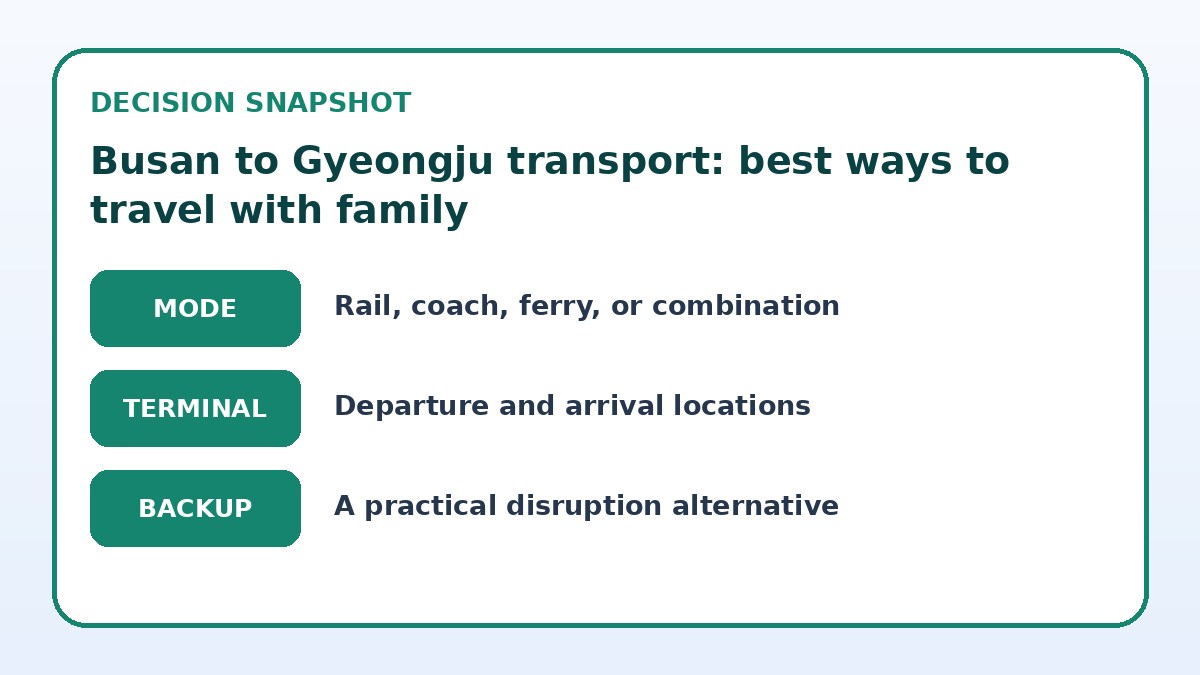
| Journey approach | Best for | Friction to check |
|---|---|---|
| Rail-focused plan (train to station + short taxi) | Families wanting predictable schedules and comfortable onboard space | May require a taxi or shuttle at either end and verifying elevator/platform access |
| Coach-first plan (intercity coach to near tourist area) | Groups seeking fewer transfers between terminal and attractions | Luggage and stroller storage varies; cabin space may be tight during busy times |
| Ferry-combination plan (ferry plus local transit or car) | Families wanting a scenic leg and willing to handle extra transfers | Less frequent sailings and extra first/last-mile arrangements can add uncertainty |
| Drive or private transfer plan (door-to-door by car) | Those prioritizing maximum control, luggage space, and flexible stops | You’ll manage parking, navigation, and possible tolls—more hands-on planning required |
Check live intercity options
Look beyond the ride itself and compare terminals, transfers, luggage, and arrival fit.
Luggage, stroller access, and transfer friction
Families need to plan for bulky items: checked suitcases, a stroller, and possibly a car seat. Trains generally have dedicated luggage areas and level boarding on many services, but check station platform access and whether elevators are functioning. Coaches can vary widely by operator; some have generous underfloor storage but limited cabin space for strollers during peak times. Ferries offer space but require carrying luggage on and off at piers and across gangways. Whatever you choose, include the time and physical effort to move bags between modes in your schedule—an overlooked ten-minute transfer can be exhausting with tired children.
Think about how many hands you’ll have for loading and unloading. If one adult will handle children while another manages bags, a transfer with stairs or long ramps is doable. If you’re solo parenting, prefer options with step-free access, secure luggage storage at seats, or transport that allows you to keep bags with you. Confirm elevator and ramp availability at key stations or piers before you travel and, where possible, reserve seats or boarding passes that guarantee space for carry-on items or strollers.
Timing flexibility and family-friendly scheduling
Children are more predictable when travel fits their routine. Trains often run on fixed schedules that are easy to plan around naps and meals, while coaches may offer more departure times but can be subject to traffic variability. Driving gives the most flexibility to stop as you need, but long stretches behind the wheel can be hard on small children. Ferries run on their own timetables and can be pleasant if they match your family’s rhythm; however, infrequent sailings reduce flexibility if a delay occurs. Choose an option that allows buffer time for diaper changes, snacks, and spontaneous breaks.
When building an itinerary, avoid tight connections between modes—leave at least 45–60 minutes for transfers if you have luggage or children. For same-day round trips, pick departure times that align with your child’s peak energy hours. If you value reliability for scheduled activities in Gyeongju (museum entry times, guided tours, or restaurant bookings), prioritize transport with predictable running times. Always check the operator’s real-time status on the day of travel and plan a buffer for traffic or slow boarding.
Compare the practical alternatives
Use the final page to confirm what is actually offered on your dates and save a workable fallback.
Intercity travel checklist
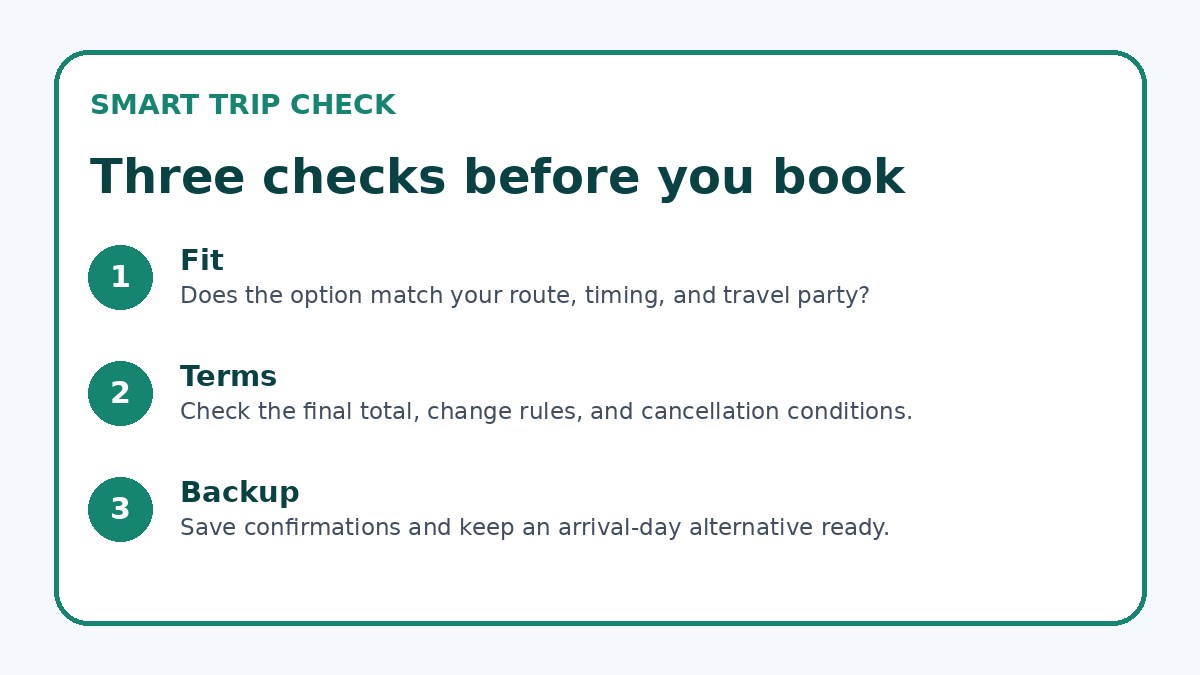
- Map the exact door-to-door route and estimate walking/elevator time at both ends before choosing a mode.
- Confirm stroller and large-luggage policies and reserve space or seats that accommodate them if possible.
- Build at least 45–60 minutes of transfer buffer time into your itinerary for unexpected delays.
- Save screenshots of tickets, station addresses, and local taxi app details for offline use.
- Find one reliable backup option (next train, coach, or local taxi service) and note its contact details.
- Verify accessibility features—elevators, ramps, and step-free boarding—on official operator pages before travel.
Disruption backup plans and what to verify before booking
Disruptions happen—equipment problems, road congestion, or weather affecting ferries. Build a simple backup: know the next train or coach times, where to catch a replacement bus, and which taxi rank or rideshare service covers your route. If you’re driving, have at least two possible parking areas in Gyeongju and a navigation plan that includes alternate routes. For any ticketed option, verify refund or change rules and how to get customer service quickly if your timing changes unexpectedly.
Before you finalize bookings, check current schedules, accessibility details, and luggage rules on the provider’s official page or a booking platform like Trip.com for comparison. Confirm station and pier addresses, whether you need to print tickets or can use mobile boarding, and local taxi or shuttle options at your arrival point. Keep contact numbers and simple phrases ready in Korean for taxi drivers or station staff, and save a screenshot of confirmations so you can show them offline if needed.
Rail & Intercity Transport questions travelers ask
Is taking the train from Busan to Gyeongju easier with young children than a coach?
Trains are often easier for families because they typically have more room to move, stable schedules, and clearer luggage areas. However, the ease depends on station access: if either station involves long stairs or difficult transfers, the coach might be closer to your arrival neighborhood and therefore simpler. Compare the time and physical effort required to get from your accommodation to each terminal and whether elevators and ramps are working on your travel day. Also check how many transfers are needed at each end—fewer transfers usually equal less stress with young children.
Can a ferry be a practical part of a Busan–Gyeongju family trip?
A ferry can be a pleasant, scenic choice but is practical only if its timetable and piers align with your broader plan. Ferries often require extra transfers between city terminals and historical areas, which adds handling of luggage and strollers. Use a ferry when the sailing schedule gives you comfortable arrival times and when you’re prepared for the additional first- or last-mile connection—either by local bus, taxi, or a parked car. Always check the pier access for step-free boarding if you have limited mobility or a stroller.
What should I do if my scheduled coach or train is delayed and I’m traveling with children?
First, contact the operator or check their online updates to confirm expected delay length and alternative services. If the delay threatens a key booking in Gyeongju, look for the next departures for trains and coaches and know taxi or rideshare options to reach your accommodation directly. Keep snacks, water, and basic comfort items handy; a short activity or tablet can help children remain calm. If refunds or rebooking are options, verify the operator’s change policy on their booking page and save proof of any communications or electronic tickets in case you need to claim costs later.
Final decision note
For families traveling between Busan and Gyeongju, the best choice balances door-to-door ease, luggage handling, and schedule predictability against your tolerance for transfers. Trains give a predictable onboard experience but may require an extra taxi; coaches can land you closer to attractions but vary in cabin space; ferries add a scenic element but introduce transfer complexity; driving gives control at the cost of parking and navigation. Map your exact start and end addresses, prioritize what matters for your children’s comfort, and always confirm accessibility, luggage policies, and real-time schedules on provider pages before you book. Keep one backup plan handy so a delay doesn’t derail the whole day.
Continue planning
Check current options and final conditions
Use the provider page to confirm live availability, the final total, cancellation terms, and every condition that matters to your trip.
This evergreen planning guide was created with AI-assisted drafting and a structured quality review. It does not display live prices, schedules, availability, visa guidance, or provider rankings. Verify current details before booking. Some links are affiliate links; we may earn a commission at no additional cost to you.