If you need to decide where to stay in Busan for business, start by choosing which matters more: proximity to meetings or reliable in-room comfort. Practical short answer: if your agenda is back-to-back meetings in one neighborhood, pick a hotel within walking distance of your primary venue or nearest metro station; if meetings are scattered or you expect late-night work, favor a quieter room with a dependable workspace, good lighting, and international power outlets. Many business travelers split the difference—choose a centrally located hotel but book a larger room or executive floor to secure a productive environment. Below I’ll walk through the tradeoffs—time, cost, sleep quality, commuting stress—and give concrete decision criteria, comparison rows, a checklist of what to verify on booking pages, and answers to common booking questions so you can pick the right Busan hotel with confidence.
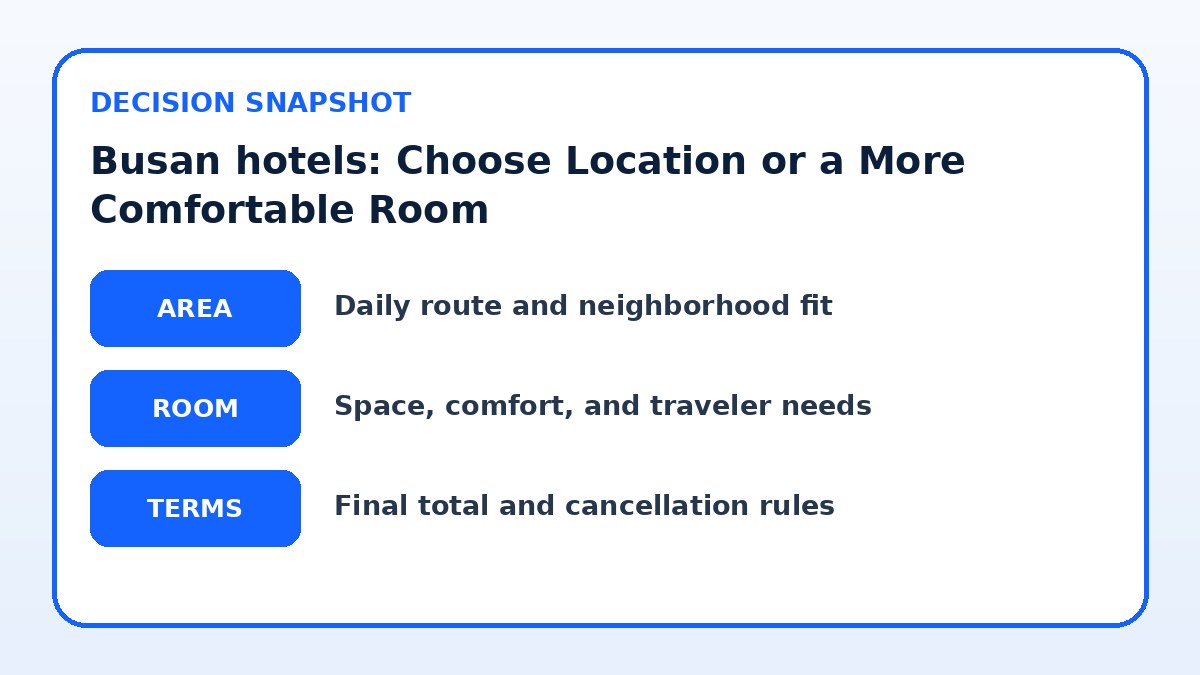
See current options before you compare the details
Availability and final conditions change. Open Trip.com now or keep reading for the practical comparison.
Decide by schedule: single area vs multi-district trips
Start by mapping your calendar. If most appointments are clustered—say in Haeundae, Seomyeon, or near Busan Station—book a hotel within a 10–20 minute walk or one transfer on the metro. Walking proximity reduces reliance on taxis during peak traffic and gives you more buffer for overruns and last-minute changes. A slightly smaller room may be acceptable when you save significant commuting time. When comparing hotels, check how many transfers are needed, whether you’ll cross busy intersections with long signal waits, and whether the hotel offers late check-in or flexible check-out, which can matter when schedules shift.
When meetings scatter across neighborhoods, prioritize access to a major transit hub or lines that run frequently and late. A central location near a metro interchange can cut total daily travel time even if it’s not the closest to any single meeting. For multi-district trips, also consider hotels that offer easy taxi access and clear instructions for drivers in Korean—this reduces confusion for late runs. Verify transit schedules, first/last train times, and the walk from the station to the hotel on the provider’s booking page or official transit sites; don’t assume direct trains or continuous service late at night.
Room comfort essentials for productivity and sleep
A room’s productivity features matter more than star rating. Focus on a genuine workspace: a dedicated desk of reasonable height, a comfortable chair, accessible outlets including universal or USB-C sockets, and reliable Wi‑Fi with clear speed details on the hotel page. Lighting is just as important—task lighting at the desk and dimmable overheads help during late work sessions. Ask the hotel about their business center or meeting rooms if you need a quieter space for calls or client presentations; confirm availability directly on the booking page.
Sleep quality affects performance. Look for room descriptions that mention blackout curtains, soundproofing, or higher floors to avoid street noise. If you are sensitive to snoring or corridor noise, request a room away from elevators and service areas when you reserve. Check whether rooms have temperature controls and an uncluttered layout that separates the bed from the workspace. Verify refundable policies or the option to change rooms upon arrival in case the assigned room doesn’t meet your needs.
| Approach | Best for | Tradeoff to check |
|---|---|---|
| Stay in the neighborhood of your main meetings | Back-to-back appointments in one district | Smaller rooms, less in-room workspace; saves commuting time and taxi costs |
| Stay near a major metro interchange | Meetings across Busan or late-night travel | May require longer walks to specific venues; transit still consumes time |
| Choose a quieter, larger room outside central hubs | Heavy in-room work, long video calls, better sleep | Longer commutes and potential taxi expense for distant meetings |
| Split your stay between two hotels | Mixed agendas with concentrated and dispersed meetings | Extra check-ins and logistical hassle; prevents optimal packing efficiency |
Ready to check the option that fits your plan?
Use your exact dates and traveler details so the provider page can show the current total and conditions.

Location features that matter for business travelers
Proximity to business hubs is obvious, but the finer points decide daily convenience. Hotels within a short walk of conference centers, convention halls, or corporate offices save taxi costs and time. If your day includes client dinners, check nearby dining options that fit the client’s expectations. Also consider the hotel’s neighborhood safety, 24-hour convenience stores, and availability of printing or courier services—these small conveniences prevent last-minute scrambles.
Transport connectivity is critical for flexible schedules. Confirm the distance to the nearest metro entrance, frequency of buses, and whether the area is easily accessible from Gimhae Airport or major coach terminals. For meetings that start very early, confirm taxi availability at night or the hotel’s shuttle options; if you rely on ride-hail apps, ensure the neighborhood is well-covered. When in doubt, check current availability and connection routes on your chosen booking site—Trip.com is one option to compare—but always verify claims directly with the hotel.
Before you book
- Map your meeting addresses and measure walking time to candidate hotels using a map app before booking.
- Confirm room photos and floor plans show a dedicated desk, chair, and visible power outlets; ask the hotel if unclear.
- Verify Wi‑Fi speed or business center access on the hotel’s booking page, and ask for confirmation of in-room Ethernet if needed.
- Request a quiet room placement away from elevators and service areas during booking notes or by contacting the hotel directly.
- Check transport links: nearest metro line, taxi stand locations, and estimated taxi fares (verify with the hotel if you need a driver note in Korean).
- Confirm flexible booking options and the hotel’s change/cancellation policy so you can adjust if your meeting schedule shifts.
Cost tradeoffs and booking tactics
Deciding between location and room comfort often comes down to budget and marginal value. A centrally located small room can save commuting time but may increase fatigue; a quieter, larger room further from meetings costs time in transit. Think about the total cost of a slower commute—lost work hours, extra taxi rides, and stress—when comparing nightly rates. Consider whether upgrading to an executive room or flexible booking option improves productivity enough to justify the extra spend.
Use booking features strategically: refundable rates for uncertain schedules, room photos and floor plans to confirm desk size, and explicit cancellation or change policies. If you plan multiple nights with varied agendas, splitting stays (two nights centrally, two nights quieter) can balance costs and comfort. Before finalizing, always verify room details, photos, Wi‑Fi specs, and any extras (shuttle, breakfast hours, business center access) on the hotel’s official page; booking listings sometimes lag behind current hotel policies.
Frequently asked questions
How should I factor airport transfers when choosing a Busan hotel?
Factor airport transfer convenience into your location choice by looking at two parts: travel time and transfer complexity. If you have early or late flights, a hotel closer to Gimhae Airport or with an airport shuttle reduces risk and stress even if the room is smaller. If you rely on public transit, check whether your hotel is near a direct bus route or a metro line with a straightforward transfer to the airport; some routes require multiple transfers, which can add time with luggage. Always confirm shuttle schedules, pick-up points, or recommended taxi instructions on the hotel’s official booking page before you finalize plans.
Is paying for an ‘executive’ or ‘business’ room worth it for short business trips?
It depends on your priorities and schedule. An executive room or access to an executive lounge often provides a larger workspace, quieter environment, and complimentary amenities like coffee or printing that can save time. For a one- or two-night trip with tightly packed meetings, the marginal time saved—no need to find third‑party meeting space, independent cafés, or printing services—can justify the cost. If your work requires extensive calls or presentations from the room, prioritize room functionality rather than label; verify the actual desk size, chair quality, and business services on the hotel page before paying extra.
How do I ensure reliable Wi‑Fi and quiet for video calls from my hotel room?
Start by checking the hotel’s official description for business-friendly claims and any explicit Wi‑Fi speed or dedicated network options. If the listing lacks specifics, contact the hotel before booking to ask about bandwidth, peak-time performance, and whether they can provide a wired Ethernet connection for critical calls. For quiet, request a room on a higher floor away from street-facing sides, elevators, and service kitchens; ask if the hotel offers soundproofed rooms or quiet floors. If video calls are mission-critical, identify a backup option—hotel meeting rooms or business centers—and confirm availability and booking requirements on the hotel site.
Final planning note
Balancing location and room comfort in Busan comes down to matching your schedule to concrete hotel features. If meetings are concentrated, prioritize walking distance or minimal transfers; if you need to work from the room or need reliable rest, prioritize a larger, quieter room with a real workspace. Use the checklist items above to verify essentials—desk setup, noise mitigation, transit links, and flexible policies—on the hotel’s official booking page before you confirm. Consider splitting stays for mixed agendas or upgrading selectively when productivity gains outweigh commute savings. With a clear map of meetings and a short list of must-have room features, you’ll make a choice that minimizes travel friction and maximizes work output in Busan.
Continue planning
Check current options and final conditions
Use the provider page to confirm live availability, the final total, cancellation terms, and every condition that matters to your trip.
This evergreen planning guide was created with AI-assisted drafting and a structured quality review. It does not display live prices, schedules, availability, visa guidance, or provider rankings. Verify current details before booking. Some links are affiliate links; we may earn a commission at no additional cost to you.