If you're renting a car in Budapest with family in tow, the single most useful rule is this: clarify what each insurance term actually covers and who it protects before you accept the keys. Ask the rental agent, check the final booking page, and get written confirmation for collision damage, theft protection, liability, and whether the policy applies to additional drivers and minors. These items determine whether a small fender-bender becomes a large bill, whether a child seat is covered in a claim, and whether roadside assistance will come if you break down on the outskirts of the city or on the M0. Practical decisions—accepting a CDW with a low excess, adding third-party liability where limits are low, or using your credit card’s coverage—depend on those clear, specific definitions. Read the wording, compare tradeoffs, and prepare the documents you’ll need at pickup.
See current options before you compare the details
Availability and final conditions change. Open Trip.com now or keep reading for the practical comparison.
Key insurance terms families must understand
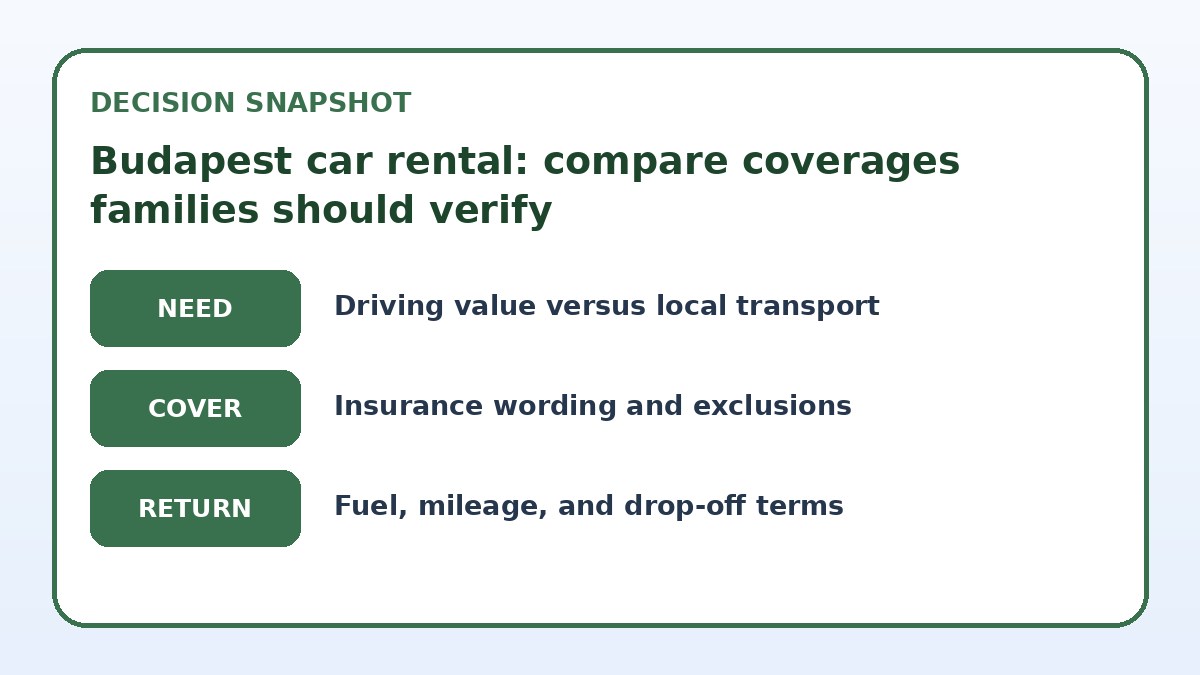
Rental contracts use a tangle of similar-sounding terms—Collision Damage Waiver (CDW), Loss Damage Waiver (LDW), Super CDW, Theft Protection, Third Party Liability, Personal Accident Insurance (PAI), and Supplemental Liability Insurance (SLI). Families should prioritize knowing which coverages remove financial responsibility for damage to the rental car (CDW/LDW and Super CDW) and which protect against claims from other people (third-party liability). CDW often reduces your financial exposure but usually does not eliminate it entirely; the 'excess' or 'deductible' is the amount you must pay before the waiver applies.
A separate theft protection may cover vehicle loss due to theft, but it might not cover belongings inside the car—important for families who leave strollers or bags in the trunk. Personal Accident Insurance pays medical costs for driver and passengers in an accident, but many families are better covered through existing travel or health insurance policies. For every term the rental company uses, ask two clarifying questions: 'Who is covered?' and 'What situations are excluded?' Write the answers down and keep them with your reservation.
How to compare the main options and tradeoffs
You’ll typically face three main choices: accept the rental company's offered waivers and extras, rely on your own credit-card or travel insurance cover, or buy a third-party policy from an independent provider. Accepting the onsite waivers is convenient and clearly handles immediate claims with the rental company, but it often costs more and may still leave an excess. Using credit-card coverage can save money but requires following strict claim rules—such as paying in full with the card, refusing the rental company’s damage waiver at pickup, and filing timely documentation if something happens.
Third-party insurers can offer lower excesses or zero-excess options for families, but they may require an upfront deposit to the rental firm and then refund after claim settlement, creating cash-flow issues while you travel. Consider how much hassle you want: families with young children often value the lowest-stress option at pickup—even if it costs more—because quick resolution matters after a long day of travel. Balance price against clarity, excess amount, response times for roadside assistance, and paperwork burden on parents.
| Approach | Best for | Tradeoff to check |
|---|---|---|
| Accept rental company's standard CDW/LDW | Families wanting immediate simple coverage and fast local handling | Usually higher daily cost and may still include a substantial excess |
| Use credit-card rental insurance | Families with strong card benefits who prefer no extra rental charges | Strict claim rules and possible exclusions for additional drivers or children |
| Buy third-party zero-excess cover | Cost-conscious families who tolerate upfront deposit and paperwork | You may pay then wait for reimbursement, which can be inconvenient on holiday |
| Add supplemental liability and roadside assistance | Families traveling with many passengers or driving outside Budapest | Extra protection reduces risk but increases total rental price and complexity |
Ready to check the option that fits your plan?
Use your exact dates and traveler details so the provider page can show the current total and conditions.
Practical checks to make at pickup in Budapest
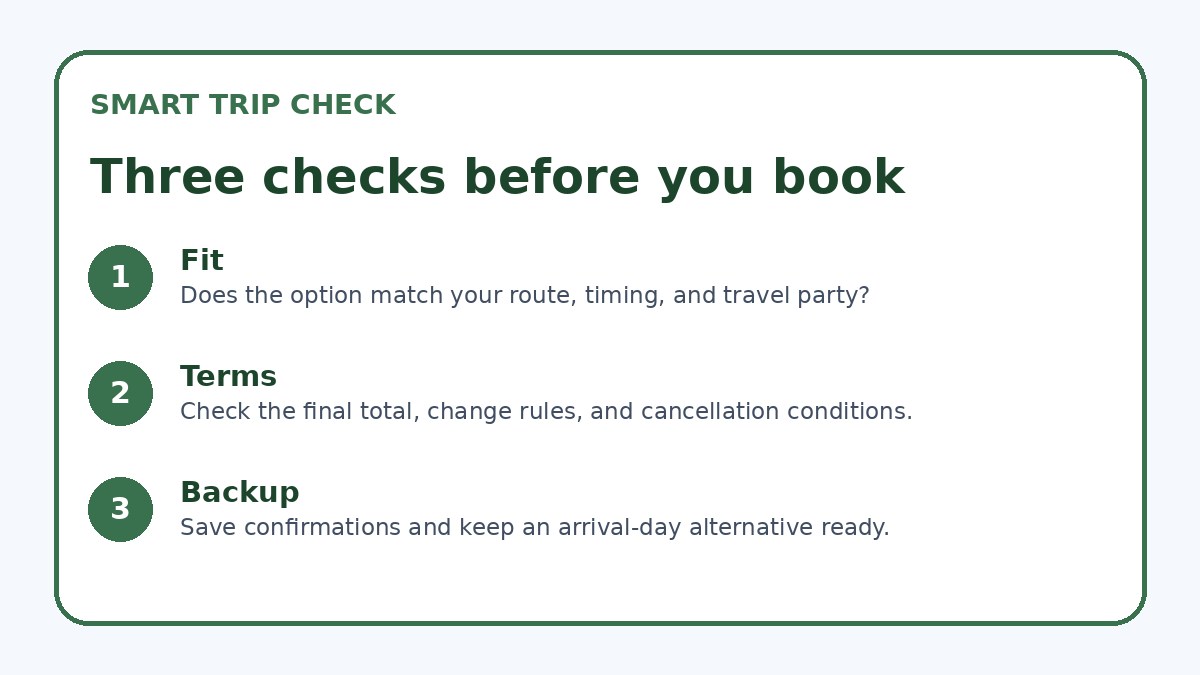
Do a thorough walk-around of the car with the agent and use your phone to photograph every angle, focusing on scratches, dents, and interior wear—note the fuel level and any warning lights. Make sure the rental agreement lists all pre-existing damage; if it doesn’t, ask the agent to add it or write a note on your copy. Confirm the name and policy number of any insurance products added at the desk and get a receipt. If a child seat was arranged, inspect it for proper installation and a clear label of recent safety checks.
Ask directly whether roadside assistance is included, how to contact it from a Hungarian mobile number, and whether there are charges for towing or overnight replacement vehicles. If the policy limits third-party liability to a low statutory amount, ask about supplemental liability options and whether your travel or home insurance will top up those limits. Verify in writing whether additional drivers—especially grandparents or visiting family members—are automatically covered and whether any age-related conditions apply, such as minimum or maximum driver ages.
Before you book
- Photograph the vehicle thoroughly at pickup, noting existing damage and fuel level; keep images with your reservation.
- Confirm in writing the exact excess amount for CDW/LDW and whether any parts (windows, tires, underside) are excluded.
- Verify whether additional drivers and minors are covered by each chosen insurance product and add them in writing if needed.
- Ask for the roadside-assistance phone number and expected response procedures and get a receipt for any roadside service used.
- Check your credit-card issuer’s rental coverage policy for Hungary and save the claim instructions and required documents.
- Save or print the rental agreement, insurance policy PDFs, receipts, and agent initials before you sign and drive away.
What to verify on the booking page and after signing
Before finalizing a reservation, inspect the booking page for the exact insurance labels used and any links to policy documents. When provider-specific facts could change, you must verify the final coverage terms on the rental confirmation: the exact amount of the excess, comprehensive versus theft coverage, who is an authorized driver, and whether roadside assistance is immediate or subject to a waiting period. If the site references 'CDW included' but links to a policy with exclusions, print or save the policy PDF and highlight family-relevant exclusions like off-road use or driving on unpaved roads.
If you opt to rely on credit-card insurance, confirm with your card issuer the eligibility rules for family members, required documentation for claims, and whether the card covers rentals in Hungary specifically. For third-party insurers, confirm reimbursement procedures and typical timing for refunds of the excess to avoid surprises while traveling. Finally, when you sign at the desk, ask the agent to initial any handwritten changes and keep copies of everything—the rental agreement, insurance receipts, and photos—so you can file a claim quickly if needed.
Frequently asked questions
Does Hungarian law force rental companies to include third-party liability in Budapest?
Rental companies operating in Hungary typically provide the minimum legally required third-party liability as part of the rental, but that statutory limit may be low relative to potential claims. For families, that means you should not assume it’s sufficient—confirm the limit on the booking page and consider supplemental liability insurance if you feel the exposure is significant. Always request the precise liability limit in writing and verify whether your own travel insurance or credit card will cover amounts above the rental company’s base limit.
Can I rely on my home-country car insurance or credit card for Budapest rentals?
You can often rely on credit-card or home car insurance for a Budapest rental, but coverage differs widely: card policies may exclude certain vehicle categories, drivers under a given age, or long rental durations, and they commonly require you to decline the rental company's CDW. Before you travel, call the card issuer and your auto insurer to confirm coverage details, get any required confirmation in writing, and check the exact documentation you'll need to file a claim—such as police reports, repair invoices, and the rental agreement—to avoid surprises if an incident occurs.
What should families do if the rental agent says a child seat is 'covered' under insurance?
If an agent says a child seat is 'covered,' ask for clarification in writing: does that mean the seat is included at no charge, is inspected and certified, or will it be reimbursed if damaged in an accident? Coverage for child seats in insurance policies is uncommon; more often the seat is provided as equipment. Inspect the seat for proper fit and safety labels, photograph it installed, and keep the agent’s confirmation on your rental contract. If you rely on a third-party insurer, confirm whether seat damage or replacement is an eligible claim.
Final planning note
Renting a car in Budapest for your family opens flexibility but brings insurance-language pitfalls that can turn a minor incident into a major hassle. Treat insurance wording as part of your travel checklist: read policy PDFs, ask who and what is explicitly covered, get agent confirmations in writing, and weigh convenience against potential out-of-pocket exposure. Decide early whether you want the simplicity of the rental company’s waivers, the cost savings of card or third-party cover, or a hybrid approach—then follow the verification steps above at pickup. With clear coverage, written proof, and photos, you’ll be ready to enjoy Budapest while keeping financial surprises small.
Continue planning
Check current options and final conditions
Use the provider page to confirm live availability, the final total, cancellation terms, and every condition that matters to your trip.
This evergreen planning guide was created with AI-assisted drafting and a structured quality review. It does not display live prices, schedules, availability, visa guidance, or provider rankings. Verify current details before booking. Some links are affiliate links; we may earn a commission at no additional cost to you.