If you’re traveling to London alone and looking at deals, don’t judge an offer by its headline fare. The practical step before you click “book” is to build a single trip total that includes all likely expenses—round-trip travel, one-way transfers from airport to city, local transit passes or pay-as-you-go fares, baggage and seat fees if applicable, the first night’s accommodation cost, travel insurance, and a modest daily budget for food and attractions. For solo travelers the per-person math is simple but unforgiving: there’s no cost-splitting. When comparing options, place each line item on a single table so you see which package genuinely saves money and where a cheap headline price hides extra fees. Verify every provider detail on the final booking page—cancellation rules, baggage allowances, and refund windows—because these change more often than advertised perks.
See current options before you compare the details
Availability and final conditions change. Open Trip.com now or keep reading for the practical comparison.
Tallying transport: flights, trains, and transfers
Start by breaking transport into three checks: how you get to London (air or rail), how you reach central London from the arrival point, and how you’ll move around during your stay. Headline air or rail fares often omit checked-bag fees, seat selections, and checked transfer inclusions. For trains from Europe and domestic UK journeys, verify whether ticket prices allow seat reservations or require flexible change fees. For flights, note whether the fare includes carry-on only or a checked bag; for low-cost airlines that split bundles, the cheapest fare may not be the most economical once bags are added.
Next, map the arrival-transfer options and costs. London’s airports and rail stations offer a mix of express trains, regular rail, metro lines, and shared or private transfers; transfer time, frequency, and the likelihood of extra charges for luggage or late arrivals matter. Solo travelers should compare the door-to-door time and cost of a public transfer versus a taxi or ride-hail when arriving late or with heavy bags. Always open the supplier’s final booking page to confirm whether a transfer is included in a deal or sold separately, and note the payment terms for on-the-day services.
Understanding accommodation choices and nightly value
Hotels, hostels, and short-term rentals each shift the way costs accumulate for solo travelers. A low nightly rate may exclude city taxes or mandatory service charges; self-catering rentals can save on food but may add cleaning or key-collection fees. Location determines both convenience and hidden transit costs: a cheaper room far from central transport hubs can increase daily expenses and reduce time available for sightseeing. Consider whether a slightly higher rate closer to a Tube line, DLR or major bus route reduces daily transit spending and fatigue.
When evaluating deals that bundle a stay, check which room type is quoted and whether single occupancy is treated as a surcharge. Look at check-in and cancellation rules shown on the provider’s final page, and whether the quoted rate is prepaid or payable at the property. For hostels and budget hotels, inspect whether privacy upgrades (private room, private bathroom) are offered and what they cost. Solo travelers should weigh comfort and safety for late arrivals against the marginal savings of the cheapest bed.
| Approach | Best for | Tradeoff to check |
|---|---|---|
| Lowest headline fare | Travelers prioritizing upfront savings and willing to accept restrictions | Often adds baggage, seat, and change fees that raise the final cost |
| Refundable/flexible ticket | Solo travelers who may change plans or value peace of mind | Starts higher but can prevent expensive change or cancellation penalties |
| Bundle deals (flight + hotel) | Those who prefer one checkout and potential logistics convenience | May hide separate transfer or local transit costs not included in the bundle |
| Pay-as-you-go planning | Independent travelers who want control over each expense | Requires more time to compare and can miss savings from legitimate bundled offers |
Ready to check the option that fits your plan?
Use your exact dates and traveler details so the provider page can show the current total and conditions.
Daily costs, transit passes, and museum entry strategies
Estimate a realistic daily budget for food, local transport, and entry fees before you book to avoid unpleasant surprises. London’s pay-as-you-go Oyster/contactless system may be best for short stays, while multi-day travel cards or Visitor Oyster bundles can be worthwhile if you plan multiple journeys; check the difference between daily caps using the transport zone map for your likely hotels and activities. Solo travelers can save by planning routes so fewer Tube or rail zones are crossed each day and by combining attractions that are close to one another.
For attractions, decide which paid sites are essential and whether any combination tickets, city passes, or timed-entry options fit your pace. Many museums are free, but special exhibitions are ticketed and can add up. When a deal claims “tickets included,” verify on the provider’s final booking page whether timed entry, priority lines, or specific showtimes are actually covered. Also check whether refunds or exchanges are allowed if you change dates, and whether mobile tickets vs printed vouchers have any restrictions.
Before you book
- Create a single spreadsheet line for each cost: arrival transport, in-city transit, accommodation, activities, insurance, and contingency funds.
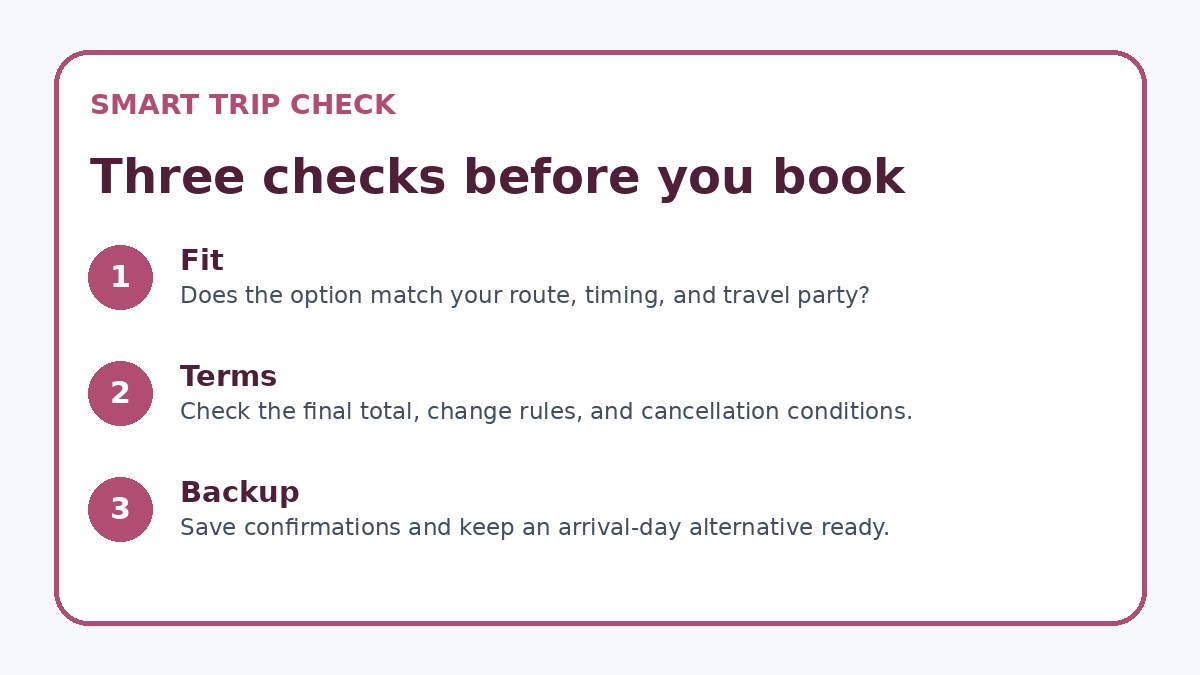
- Open the final booking page for each provider and copy cancellation terms, baggage allowances, seat-selection rules, and any nonrefundable fees.
- Compare door-to-door transfer times and costs for your arrival window, not just advertised airport transfer options.
- Estimate realistic daily food and transport spending based on the neighborhood you plan to stay in, then add a 10–20% buffer.
- Decide whether refundable tickets or travel insurance save you money given your flexibility, and calculate break-even points.
- Confirm check-in times and late-arrival policies for accommodation, and note any mandatory local taxes or service charges displayed at checkout.
Insurance, flexibility, and the solo-traveler premium
Insurance and change flexibility are more important for solo travelers because there isn’t a travel companion to absorb last-minute costs or help navigate delays. Look beyond the headline fare to see whether refundable tickets or refundable hotels cost more but save money if plans shift. Travel insurance can cover cancellation, medical care, and baggage—decide what level you need and whether a credit-card benefit earns you similar protections. When comparing policies, check the provider’s final policy wording for covered reasons, excesses, and claim processes.
Flexibility also includes the cost of contingency days, backup transport, and late-check-in fees. Solo travelers often rely on taxis or rideshares more than small groups, so estimate a buffer and add it to your baseline budget. Confirm cancellation and change fees on the booking page before you commit, and note whether third-party deal providers pass on supplier rules verbatim or impose their own fees. If you want to compare current availability and terms, you can check Trip.com as one of several sources, but always verify critical details on the supplier’s final page.
Frequently asked questions
How do I choose between a cheaper hotel farther out and a pricier central stay?
Balance nightly savings against daily transit costs and time. Map your likely activities and check Tube, rail, or bus connections from a candidate hotel to those places; if the cheaper option adds long or frequent cross-zone journeys, the extra transit expense and lost time can erase the savings. Also factor in arrival logistics: a late arrival may make a central location preferable despite a higher rate. Verify the hotel’s final booking page for nightly taxes, required deposits, and check-in rules before deciding.
Should I buy a London travel pass or use pay-as-you-go transit?
It depends on how many journeys and which zones you’ll use. If your itinerary stays mostly in central zones with moderate trips each day, pay-as-you-go with contactless or Oyster can be efficient due to daily caps. If you plan extensive travel across multiple zones or museum/attraction bundles that include transport, a multi-day pass may be simpler. Compare typical daily trip counts to pass costs and check the provider’s final terms for refunds or exchanges before purchasing.
What must I verify on a deal’s final booking page before paying?
Confirm cancellation and change penalties, baggage and seat inclusions, exact room type and occupancy rules, whether transfers or attraction tickets are truly included, and any mandatory local taxes or service charges added at checkout. Check exactly what refund conditions apply and whether any supplier or third-party fees are nonrefundable. If travel insurance or flexible fare options are important to you, read the full policy and claim process language on the booking page rather than relying on summary statements.
Final planning note
For solo travelers, the cheapest headline London travel deal is only useful if you’ve added every likely cost and confirmed supplier rules on the final booking page. Build a straightforward comparison that lists transport to and from arrival points, local transit needs, the true cost of the room you’ll occupy, likely daily spending, and the price of flexibility through refunds or insurance. A small premium for convenience, a refundable ticket, or a better-located hotel can be worthwhile when you’re carrying costs alone. Take five extra minutes to verify cancellation policies, baggage rules, and exactly what is—or isn’t—included; that action often prevents the biggest expense surprises on a solo trip.
Continue planning
Check current options and final conditions
Use the provider page to confirm live availability, the final total, cancellation terms, and every condition that matters to your trip.
This evergreen planning guide was created with AI-assisted drafting and a structured quality review. It does not display live prices, schedules, availability, visa guidance, or provider rankings. Verify current details before booking. Some links are affiliate links; we may earn a commission at no additional cost to you.