If your Auckland itinerary is mostly meetings inside the CBD and near public-transport hubs, you may not need a rental car. But if you have meetings in suburbs, cross-harbour appointments, or anything beyond the city centre timetable, driving can save time and give flexibility. This article gives the direct answer up front: choose a rental only if route value (time saved or access to dispersed client sites) outweighs pickup and return friction, and if the insurer wording on the booking page matches your coverage needs. Below I walk through how to judge route value, decode insurance and excess language, anticipate pickup and return friction at Auckland locations, and plan a reliable non-driving fallback. Use the checklists to confirm the final booking page terms and make a choice that fits a tight business schedule.

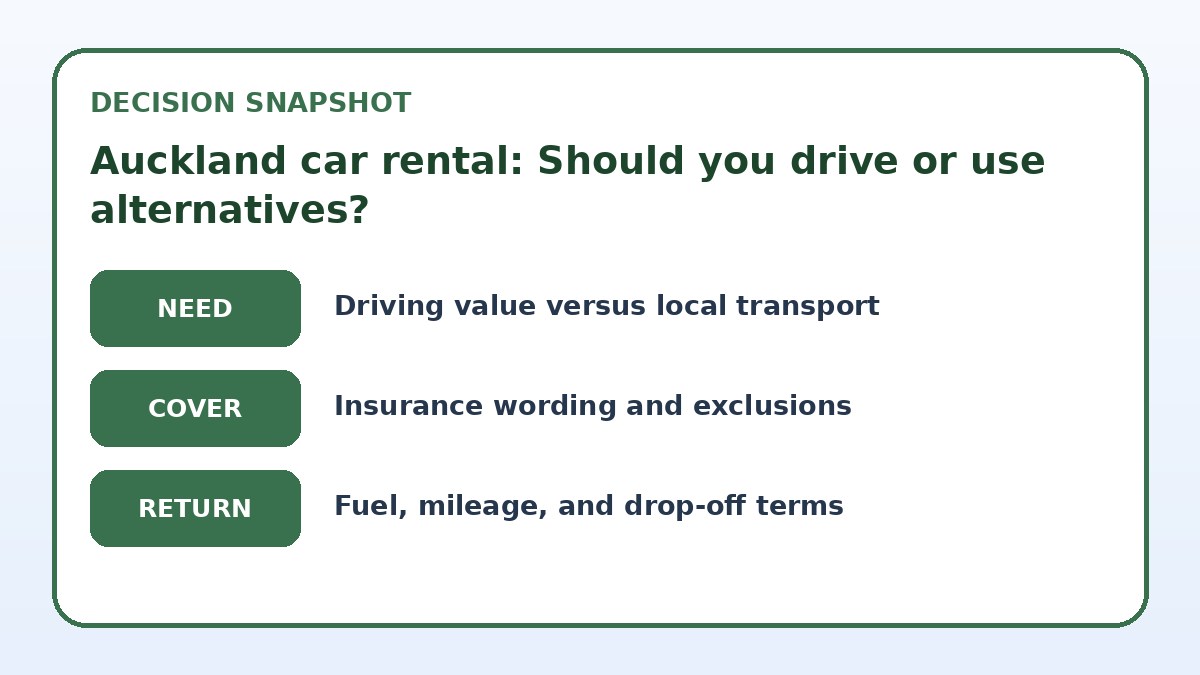
Route value: when driving truly helps your business day
Start by mapping your appointments and lodging against Auckland's geography. Driving adds the most value when meetings are scattered across West, South or North Shore suburbs, when you must carry materials or equipment, or when you have tight transfer windows between appointments. If driving reduces walking and transfer time significantly—enough to preserve a client slot or avoid evening travel in unfamiliar neighborhoods—then the car earns its place in your plan.
Opposite situations often favor not driving: a compact schedule in the CBD or Viaduct, predictable public transport connections, or meetings near frequent rideshare options. Also weigh parking availability and likely parking fees at each stop. For each major leg, write down estimated door-to-door times by car versus transit or rideshare; small per-leg savings add up, but only if they outweigh the added administrative friction of pickup and return.
Decide whether driving earns its place
| Mobility strategy | Best for | Cost or friction to check |
|---|---|---|
| Self-rental (standard hire) | Travelers needing full route control and flexible multi-stop schedules. | You bear insurance excess, pickup/return friction, parking fees and admin; verify final booking-page coverage and return procedures. |
| Rideshare and taxis | Short city hops, CBD meetings, or single-direction trips where you don’t want parking hassles. | Potential surge pricing and variability in wait times; less control over luggage and equipment transport compared with a rental. |
| Public transport (rail, bus, ferries) | Predictable routes inside central Auckland or between high-frequency hubs with no parking concerns. | Schedules and connections may add transfer time; not practical for dispersed suburbs, late-night returns, or carrying bulky materials. |
| Chauffeur or hourly car service | High-value meetings where punctuality, no parking responsibility, and a professional impression matter. | Higher cost and less route autonomy; availability and cancellation terms should be confirmed on the provider’s booking page. |
Check live rental choices only after the route test
Use the exact driver, dates, pickup point, and return plan to compare current conditions.
Insurance wording: what to read on the booking page
Insurance wording controls both your liability and how quickly you can get back on the road after an incident. On the final booking page, verify the amount of excess (the maximum you would pay for an approved claim) and whether the excess is refundable with an additional collision damage waiver (CDW) or super CDW. Also check whether third-party liability limits, theft protection, and windscreen policies are included or optional add-ons that must be purchased at pickup.
Pay special attention to permitted driver rules and business-use clauses. Some corporate rates restrict drivers or exclude certain professional uses; others require additional documentation for business hires. If your company policy supplies insurance, confirm whether it covers overseas rentals and whether the booker must decline CDW at the counter. Any provider-specific limits or exclusions you see on the booking page should be validated directly with the supplier before finalizing a reservation.
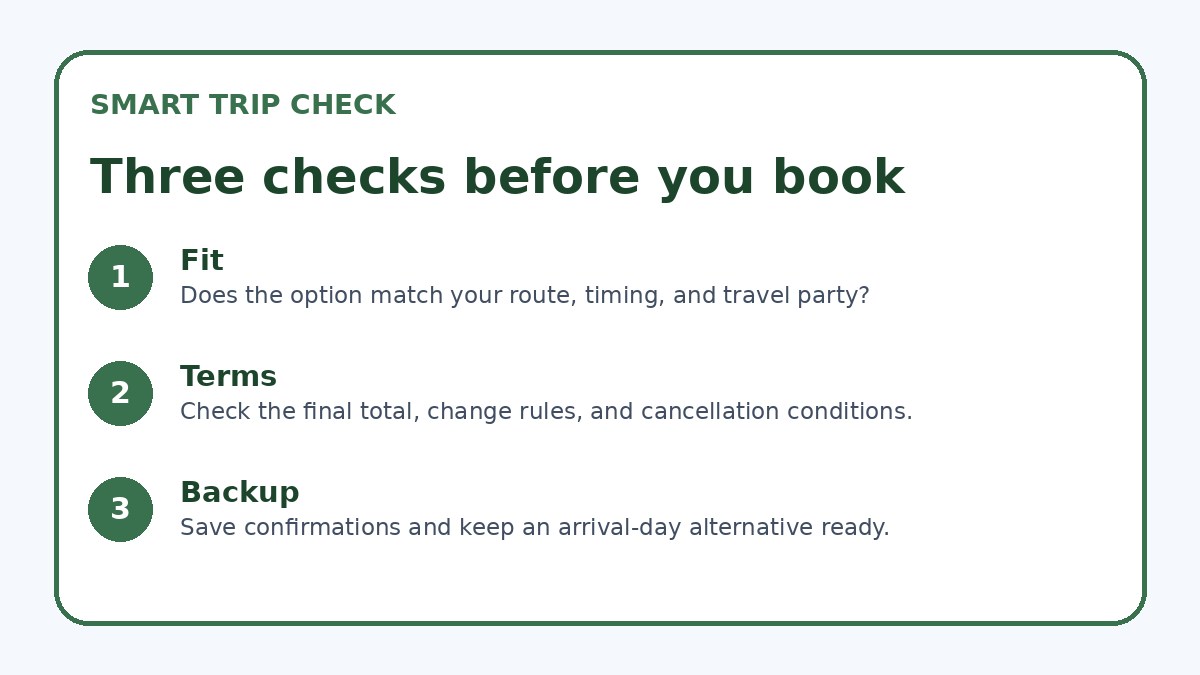
Compare the full rental conditions
Confirm insurance wording, exclusions, deposit, fuel, mileage, and return terms on the final page.
Pickup and return friction: timing, locations, and small delays
Pickup friction is often the real cost of a rental day for business travelers. At Auckland Airport and some city locations, desks may be consolidated or located offsite with shuttle transfers. On the booking page, verify the pickup location, whether a shuttle is required, and any mandatory appointment or out-of-hours fee. Also confirm the document list and payment requirements—some counters insist on the primary cardholder being present or require a post-authorisation on a credit card for the excess.
Return friction matters as much: check the exact drop-off instructions, after-hours return process, and whether you must return with a full tank or pay a fuel premium. For airport returns, ask whether shuttle wait times are typical and if there’s a reclaim point for receipts. If your return falls outside counter hours, confirm the steps to leave keys securely and the timing for the vehicle inspection; unresolved disputes about damage discovered after you leave can be hard to settle during business travel.
Car rental terms to verify
- Confirm the pickup location and any required shuttle transfer details listed on the booking page before you depart for Auckland airport or city desk.
- Verify insurance excess amount, what CDW or super CDW covers, and whether your corporate policy accepts or requires specific documentation.
- Check permitted driver rules, age restrictions, and whether additional drivers or business-use clauses add fees or paperwork.
- Note the vehicle return instructions, after-hours drop-off steps, and whether fuel must be returned full to avoid penalties.
- Ask the booking page or supplier how damage disputes are handled and get the insurer or rental contact for post-return claims.
- Compare door-to-door time estimates for driving versus rideshare or public transit for each major appointment to confirm route value.
Non-driving fallback: a reliable plan if you skip the rental
Build a clear non-driving backup to keep your schedule on track. Identify the quickest rideshare or taxi options for each meeting cluster and estimate average pickup times in those neighborhoods. For airport transfers, know which express services or shuttle options connect your hotel and the airport; keep a list of local taxi company numbers and the rideshare app downloaded and linked to an international payment method to avoid delays at critical times.
Also consider short-term chauffeur or car-and-driver services for high-stakes meetings where punctuality matters and you want to avoid parking or return hassles. For multi-site days, pre-booking an hourly car can reduce uncertainty. Finally, confirm public transport timetables for essential legs and buy digital tickets in advance when possible so you can pivot instantly between modes without losing productive time.
Car Rental & Road Trip questions travelers ask
Is my corporate insurance likely to cover an Auckland car rental?
Corporate insurance policies vary widely. Before relying on it, locate the policy wording and look for explicit coverage of international hires, the maximum excess the insurer will reimburse, and any required declarations at booking. On the rental booking page check whether the provider requires you to decline CDW or purchase extra waivers; if the rental counter insists on a debit/credit card pre-authorisation you might have to pay the excess up front and claim later. Always validate with your company’s risk manager and the rental supplier’s final terms.
What should I do if my meeting runs late and I need to change the return time?
If a delay affects your return, contact the rental provider as soon as possible to report the late return and learn penalty or extension procedures shown on the booking page. Many suppliers charge hourly or daily fees for late returns and may require you to rebook or extend the contract. If you anticipate potential overruns, it can be cheaper to book an extra day up front or arrange a one-way drop with confirmed availability. Document communications and keep receipts if you incur additional charges that your company must reimburse.
How do I choose between renting and hiring a driver for important client meetings?
Decide by comparing total cost and operational risk. Renting yourself gives autonomy and may be cheaper for many stops, but adds liability, parking, and administrative tasks. Hiring a driver costs more but reduces return/pickup friction and guarantees professional handling of navigation and parking, which can save time and stress. Check the provider’s cancellation and waiting-time rules on the booking page, and confirm the driver’s credentials and invoicing process so your finance team can reconcile business expenses promptly.
Final decision note
For business travelers in Auckland, the right choice hinges on route value and how much pickup/return friction you can absorb without jeopardizing appointments. If your day requires multiple outer-suburb visits, equipment transport, or flexible timing, a rental often pays for itself—provided you confirm insurance excesses, permitted driver rules, and after-hours procedures on the final booking page. If most activity is central, consider rideshare, taxis or a chauffeur for predictable timing without parking worries. Before you book, compare door-to-door times for each major leg, verify exact insurance and return language, and keep a non-driving fallback so your agenda stays on track. Trip.com can be used to compare current availability and terms, but always validate the supplier’s final terms directly on their booking page.
Continue planning
Check current options and final conditions
Use the provider page to confirm live availability, the final total, cancellation terms, and every condition that matters to your trip.
This evergreen planning guide was created with AI-assisted drafting and a structured quality review. It does not display live prices, schedules, availability, visa guidance, or provider rankings. Verify current details before booking. Some links are affiliate links; we may earn a commission at no additional cost to you.