If you’re a solo traveler hunting Amsterdam travel deals, the practical move is to compare the total expected trip cost before you hit book. That means adding flights or trains, airport transfers, the nightly rate plus taxes and fees, a realistic daily budget for food and attractions, public transport or bike rental, travel insurance, and any prepaid experiences you plan to use. Doing this math up front shows whether an attractively low fare or hotel rate is truly a deal once you include the rest. It also helps you choose where to save and where to splurge — for example on central accommodation to cut transit time or on a museum pass if you plan heavy sightseeing. Below you’ll find what to check, how to estimate variable costs, and the key tradeoffs solo travelers commonly face when planning an Amsterdam trip.
See current options before you compare the details
Availability and final conditions change. Open Trip.com now or keep reading for the practical comparison.
Map the full transport picture
Solo travelers often focus on the lowest flight or train fare and then discover extra transport costs that erase the savings. To avoid that, break the journey into legs: your home to the airport, the main flight or train, and the transfer from Amsterdam Schiphol or a regional station into the city center. Look for official transfer options and their fares on the provider’s pages, and compare those to taxis, ride-shares, and local trains — but don’t assume a single option is available on every schedule. Where possible, estimate door-to-door time and cost for each choice so you can value faster but pricier transfers against slower, cheaper ones.
If you plan to move around Amsterdam, add the expected cost of public transport passes or bike rental for the days you’ll be sightseeing. Decide whether a multi-day public transport pass, pay-as-you-go card, or short-term bike hire fits your itinerary better by calculating typical daily journeys. Remember that carrying heavy luggage on local transit or cycling increases hassle; sometimes a centrally located room costs more but saves time and expensive transfers. When in doubt, check the operator’s final booking pages for confirmed transfer prices and ticket types so the numbers you use for budgeting are exact.
Count accommodation extras and location tradeoffs
The headline nightly rate is only the starting point. Always expand the booking summary to show taxes, city or tourism levies, cleaning fees for private rentals, and any mandatory service charges. For short stays a cleaning fee can disproportionately increase your per-night cost; for longer trips the same fixed fee dilutes across nights. Consider refundable versus non-refundable rates and how that aligns with your risk tolerance — refundable rooms trade a higher listed rate for flexibility, while lower non-refundable rates reduce upfront cost but increase potential loss if plans change.
Location matters for solo travelers beyond price: central stays reduce transfer costs and save time, which may be worth a higher nightly rate depending on how you value convenience and safety, especially at night. Less central neighborhoods will be cheaper on paper but require additional daily or one-off transport spending. When comparing properties, check what each final booking page says about included amenities — breakfast, luggage storage, late-check options — because those conveniences can change both your budget and the ease of a solo trip.
| Approach | Best for | Tradeoff to check |
|---|---|---|
| Book lowest headline fare and add costs later | Travelers with flexible schedules and time to research every add-on | May save on base price but risks missing non-refundable fees or higher cumulative costs. |
| Choose a mid-range bundled option (transfer + hotel included) | Solo travelers valuing convenience and fewer booking steps | Higher upfront cost but often less time spent comparing separate services. |
| Prioritize central accommodation over cheaper outskirts | Those who value short transit times and evening safety | Higher nightly rate, but lower daily transport spend and less transit hassle. |
| Buy a city pass vs. pay-as-you-go entry | Visitors planning many paid attractions in a short time | Passes save if you use many included sites; otherwise pay-as-you-go is cheaper. |
Ready to check the option that fits your plan?
Use your exact dates and traveler details so the provider page can show the current total and conditions.
Build a realistic daily budget for activities
Decide how you want to spend your days and then price those activities realistically. Include entry fees for your must-see museums and attractions, the cost of a canal cruise if you want one, and any guided tours. If you plan to use a city pass, compare the pass’s list of included attractions and the pass price against pay-as-you-go entry costs for the exact sites you expect to visit. Passes can be economical for heavy museum days but a waste if you prefer wandering neighborhoods, markets, and free sights.
Food and drink vary widely depending on style: coffee and sandwiches will be far cheaper than dining at mid-range restaurants every night. Factor in occasional splurges, snacks, and a buffer for emergencies or opportunistic experiences like a concert or special exhibition. For prebooked experiences or performances, verify the booking terms and cancellation policy on the provider’s confirmation page so you understand refund rules and ticket transferability before you commit.
Before you book
- Calculate door-to-door transport cost including transfers to and from airports or major stations before comparing base fares.
- Open the accommodation booking summary to confirm taxes, mandatory fees, and whether cleaning or service charges are added.
- Estimate a realistic daily budget for meals, local transport, entry fees, and a modest emergency buffer.
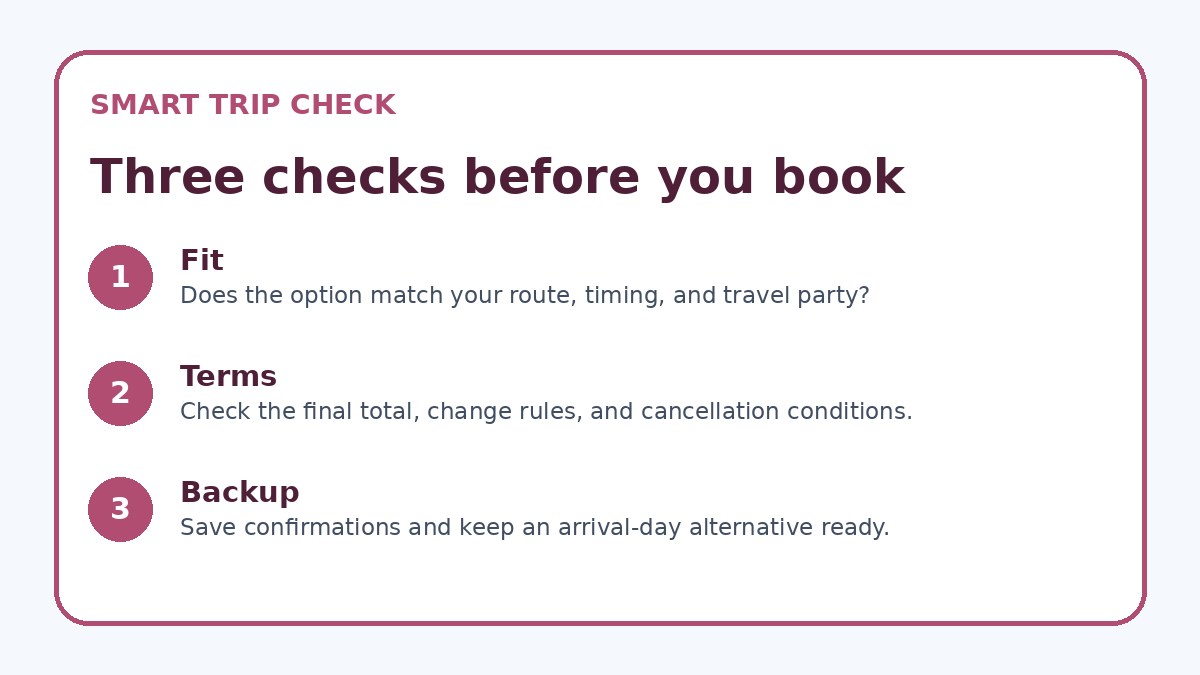
- Check cancellation and refund terms on the provider’s final booking page for flights, trains, hotels, and prepaid experiences.
- Decide on travel insurance and verify what it covers for cancellations, medical emergencies, and lost baggage.
- Compare the cost and coverage of a city pass against the sum of individual attraction tickets you plan to use.
Protect against common hidden costs
Travel insurance, baggage fees, and connectivity are repeat sources of surprise expense for solo travelers. Decide whether a trip insurance policy that covers cancellations, medical emergencies, and baggage loss is worth the premium for your itinerary and personal risk. If you’re bringing checked luggage or expect to buy items during the trip, add possible airline baggage fees. For connectivity, compare the cost of local SIM cards, eSIM plans, or international roaming packages so you aren’t surprised by a big data bill.
Also check practical, non-ticket items that add up: coin-operated lockers or luggage storage near stations, restroom fees in certain venues, or charges for printing boarding passes. If you’ll use shared mobility — scooter or bike-share — estimate the typical short-ride costs and any deposit requirements. For any provider-specific condition or fee, always verify the exact terms on the provider’s final booking or service page before completing payment, and consider leaving a small buffer in the trip budget for the unexpected.
Frequently asked questions
How do I quickly compare total trip cost when sites show different fee formats?
Build a single spreadsheet or note where you list each element: main transport, transfers, accommodation net rate and all fees, daily food and activity estimates, local transport, and insurance. Use the provider’s booking summary to copy exact taxes and service charges so you’re not relying on the headline price alone. Convert all costs to one currency and add a contingency (for example 10–15%) to cover small items not shown until checkout. Updating this single view helps you compare offers as true total-cost numbers.
Should I prioritize a refundable booking even if it costs more?
Choose refundable options if your travel plans could change or if flights and connections are tight and rebooking penalties would be high. Refundable rates provide flexibility but raise the upfront price; weigh that against the potential loss if you must cancel. If your dates are fixed and you’ve budgeted an emergency buffer, a non-refundable rate can reduce cost. Always read the cancellation terms on the provider’s final booking page to know timing, fees, and refund mechanics before you commit.
Are city passes worth it for a short solo trip to Amsterdam?
City passes can be worthwhile if your itinerary includes several paid museums or attractions that the pass covers within its validity window. Tally the entry prices for your must-see sites and compare that sum to the pass price; include any skip-the-line benefits and whether the pass includes public transport. If you prefer wandering neighborhoods, cafes, and one or two paid attractions, pay-as-you-go is usually cheaper. Remember to verify exact inclusions and redemption instructions on the pass provider’s site before purchasing.
Final planning note
For solo travelers, the best Amsterdam travel deal isn’t the lowest headline fare but the option with the clearest, least surprising total cost that matches your priorities. Map every expense — transfers, taxes and fees, daily spending, insurance, and prepaid activities — and compare door-to-door times as well as money. Decide where convenience is worth a premium (central lodging, included transfers) and where to economize (selective attractions, local cafés). Before you finalize, verify provider-specific fees, cancellation rules, and baggage terms on the final booking pages and consider checking consolidated availability on platforms like Trip.com as one comparison point. With the full-cost view, you’ll book confidently and travel with fewer surprises.
Continue planning
Check current options and final conditions
Use the provider page to confirm live availability, the final total, cancellation terms, and every condition that matters to your trip.
This evergreen planning guide was created with AI-assisted drafting and a structured quality review. It does not display live prices, schedules, availability, visa guidance, or provider rankings. Verify current details before booking. Some links are affiliate links; we may earn a commission at no additional cost to you.