If your family is weighing comfort, cost, and the worry of sudden plan changes, prioritize ticket flexibility when booking Bangkok to Chiang Mai transport. For many families the practical choice balances the option to change or cancel without heavy penalty against paying a modest premium for that certainty. Start by deciding whether you value fixed departure times or the ability to move between services; trains and mixed-mode options (train plus bus) both offer fares with varying change and refund rules. Before you finish any booking, compare the exact change and refund rules, baggage allowances for children, seat assignment policies, and whether a ticket allows free reissue at the station. Below I explain the trade-offs so you can pick the ticket type that fits your family's tolerance for risk, budget, and travel style.
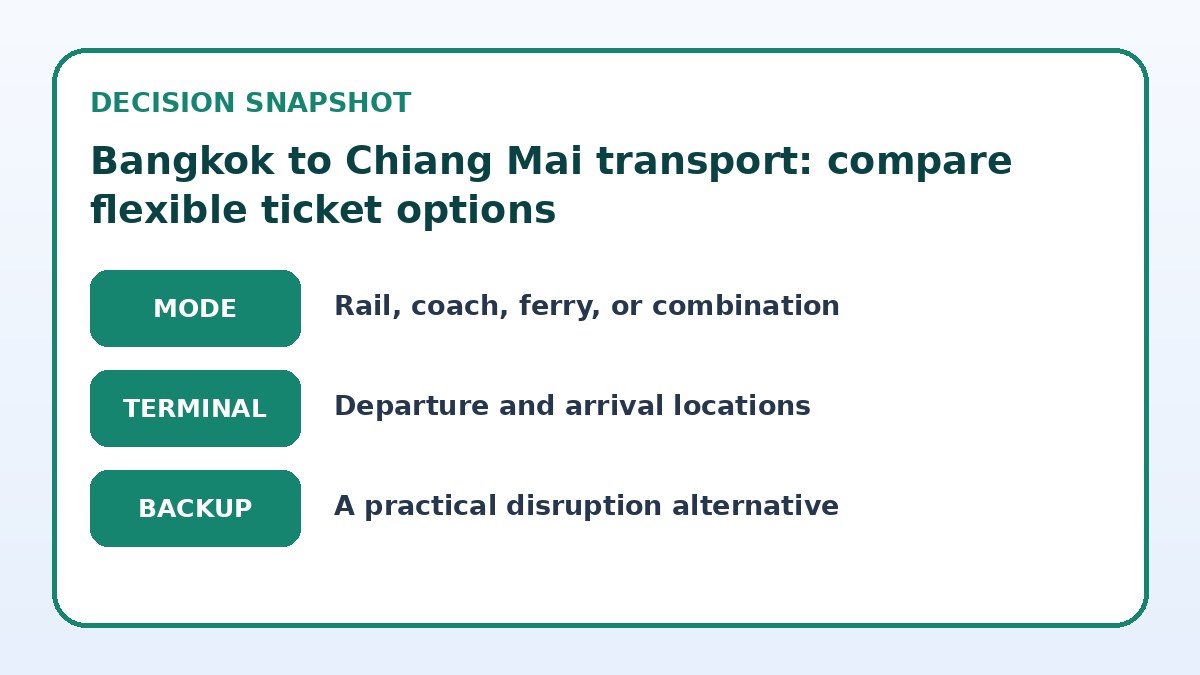
See current options before you compare the details
Availability and final conditions change. Open Trip.com now or keep reading for the practical comparison.
Understanding ticket flexibility types
Ticket flexibility usually falls into three broad types: non‑refundable/non‑changeable, refundable/changeable with a fee, and fully flexible (free changes and cancellations within policy). Non‑refundable fares are often the cheapest but carry the highest risk; you might lose the fare if plans change. Refundable or changeable tickets typically allow date or time changes for a fee or permit refunds minus a penalty. Fully flexible tickets are rare and cost more but provide peace of mind when traveling with children, since they allow last‑minute adjustments without financial consequence.
When comparing options for Bangkok to Chiang Mai transport, look beyond the headline label. Check exactly what triggers penalties — whether changes must be made a certain number of hours before departure, whether partial refunds are processed back to the original payment method, and if changes are allowed online, by phone, or only at a station office. Verify how child discounts (if any) apply to each fare type, whether infants occupy a seat, and whether seat reservations are included. These details determine real flexibility, not just the fare category.
How families should evaluate refund and change policies
Start by listing your family’s risk tolerance: will a missed day cost more than a flexible-ticket premium? If a sudden illness or an unexpected event would force you to change plans, allocate more budget to tickets that permit low-cost or free changes. Look for policies that specify refunds to your original payment method, as vouchers or travel credits may be inconvenient for future planning. Also confirm the time window for permitted changes — some tickets allow changes up to departure, others only days in advance.
Practical checks matter: find out whether changes for group bookings require all passengers to change together, or whether you can alter a single passenger’s ticket. For multi-leg itineraries, confirm whether a flexible ticket covers all segments or only one leg, and whether changes break any connections that would then need rebooking. If you expect to mix modes (for example, train one way and bus the other), compare flexibility across providers so that one rigid segment doesn’t trap the entire trip.
| Approach | Best for | Tradeoff to check |
|---|---|---|
| Fully flexible ticket (free changes/cancellations) | Families who need maximum peace of mind against unpredictable changes. | Highest fare cost and often limited discounted availability. |
| Refundable/changeable with fee | Families who want balance between cost savings and ability to adjust plans. | Moderate premiums and change fees still apply; must check exact penalties. |
| Non-refundable with seat reservation | Families with fixed plans who prioritize guaranteed seating and lower fares. | Little to no refund if plans change; may be strict on name changes and reissues. |
| Non-refundable unreserved fare | Budget-conscious families accepting risk and flexible timing on travel day. | No guaranteed seats and minimal flexibility; higher day-of travel stress with children. |
Ready to check the option that fits your plan?
Use your exact dates and traveler details so the provider page can show the current total and conditions.
Seat choices, comfort and family-friendly options
Families often trade a higher fare for seats that keep everyone together. When reviewing tickets, check whether seat assignments are automatic or optional and whether private compartments or adjacent seats can be reserved for children. Some low‑flex fares may sell only unreserved seats, which can be stressful with small kids. If you need guaranteed space for a stroller or extra luggage, verify baggage policies and whether certain tickets include more generous allowances.
Consider time-of-day and departure options as part of flexibility. A refundable ticket on an inconvenient late-night departure may be less useful than a semi-flexible ticket on a daytime train with easier station access and better facilities for children. Ask whether family-friendly amenities — such as onboard toilets, dining options, or power outlets — are tied to specific carriage classes or ticket types. These service details influence which ticket family groups will find most practical, not only the change and refund rules.
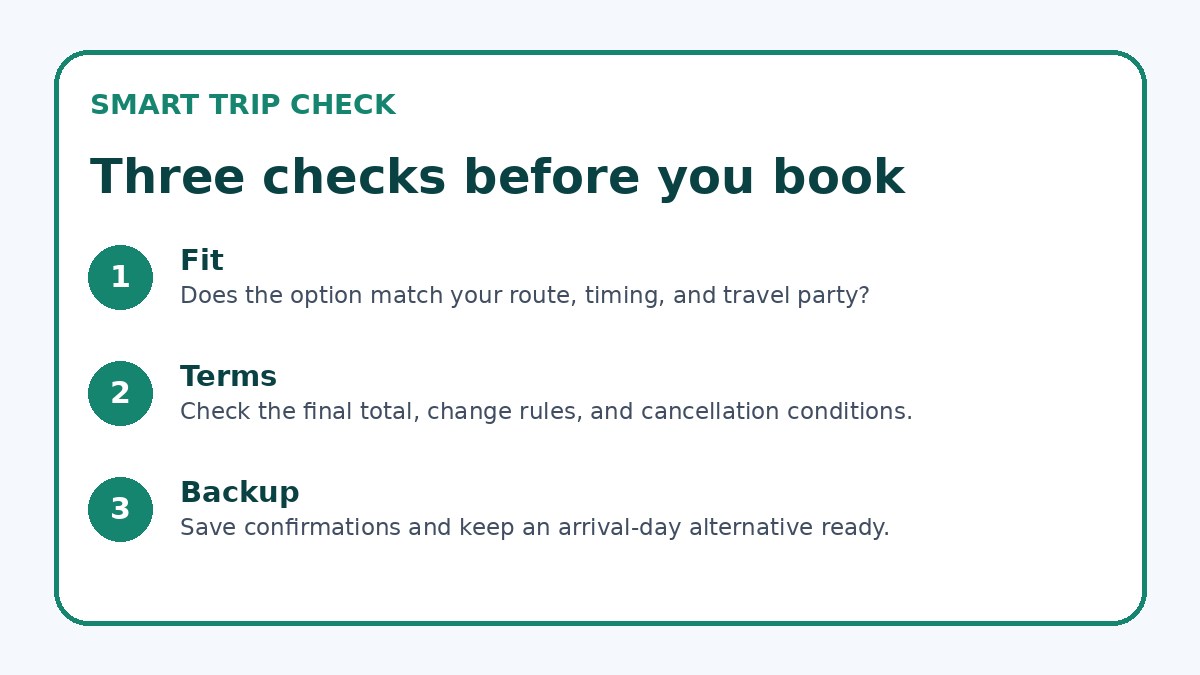
Before you book
- Confirm whether a ticket allows free date/time changes and exactly how many hours before departure changes are permitted.
- Verify if seat reservations or compartments are included and whether you can reserve adjacent seats for all family members.
- Check whether refunds are returned to your original payment method or issued as vouchers and how to request a refund.
- Determine baggage and stroller policies for your ticket class and whether extra items require a separate fee or advance notice.
- For group bookings, check whether changes require altering every passenger’s ticket or can be made per person.
- Save booking confirmations and a screenshot of the fare rules from the provider’s final booking page for reference at the station.
Booking strategies to maximize both savings and flexibility
A common approach is to mix ticket flexibilities: buy flexible outbound tickets so the start of the holiday is protected, and choose a lower-cost return if your schedule is firmer. Another tactic is to hold refundable seats while you finalize plans, then cancel them before the penalty window closes and rebook cheaper non‑refundable fares if needed. Always confirm how long an open ticket hold lasts and whether seat availability tends to change quickly on your planned dates.
When comparing fares, use the provider’s final booking page to verify the exact penalty amounts, permitted change windows, and whether processing fees apply for refunds. You can compare current availability on Trip.com or directly on railway provider pages, but treat the final seller page as authoritative. Keep printed or saved screenshots of ticket terms and booking references until travel is complete; that record can be critical if you need to request a refund or change at a counter.
Frequently asked questions
Should I book fully flexible train tickets for a young family traveling Bangkok to Chiang Mai?
Fully flexible tickets reduce stress because you can change or cancel with little or no penalty, which is useful for illness or sudden plan shifts. However, they are typically more expensive and may not be necessary if your dates are firm. Evaluate how likely a change is and whether that risk justifies the premium. If you choose a cheaper, semi-flexible fare, check the exact fees and time windows to make sure you can realistically manage a change when needed.
Can I change only one passenger’s date on a family booking, or do all tickets need to change together?
Policies vary: some providers allow individual passenger changes while others require the whole booking to be adjusted. Before booking, confirm whether single-passenger changes are permitted and whether different penalty levels apply to each ticket type. If the system forces group changes, you could consider separate bookings to keep flexibility for at least one or two travelers while keeping the rest on fixed fares.
Is it safer to book a reserved seat on a cheaper non-refundable fare or an unreserved flexible fare?
Reserved seats guarantee your family sits together, reducing day-of stress, which can be especially important with small children. Unreserved flexible fares give booking flexibility but risk not finding adjacent seats, particularly on busy services. Match your priorities: if guaranteed seating is essential, prioritize reserved tickets; if date flexibility is the dominant concern and your family can adapt seating arrangements, an unreserved flexible fare may be acceptable.
Final planning note
Choosing the right ticket for Bangkok to Chiang Mai transport comes down to balancing risk tolerance, comfort needs, and budget. Families who value certainty for the trip’s start should lean toward refundable or fully flexible tickets and verify how seat reservations, child policies, and baggage rules are handled. If your itinerary is more set, non‑refundable reserved fares save money but carry higher change penalties. Always read the provider’s final booking page for precise change and refund rules, keep documentation, and consider mixing flexible and lower-cost tickets to protect key legs while managing overall cost.
Continue planning
Check current options and final conditions
Use the provider page to confirm live availability, the final total, cancellation terms, and every condition that matters to your trip.
This evergreen planning guide was created with AI-assisted drafting and a structured quality review. It does not display live prices, schedules, availability, visa guidance, or provider rankings. Verify current details before booking. Some links are affiliate links; we may earn a commission at no additional cost to you.