
If you’re traveling Seoul to Bali for the first time, the practical move is to compare nonstop versus one-stop itineraries and choose the schedule that balances total journey time with the comfort of each flight segment. Many travelers prioritize fewer connections to reduce transfer stress, while others accept a longer door-to-door time in exchange for a daytime transfer or a better airline experience. Start by filtering search results for total trip duration, number of transfers, and aircraft type, and then cross-check baggage rules and seat pitch on the booking page. Decide whether a longer layover gives you rest options or simply adds fatigue; that decision will guide which flights you shortlist and what seat or cabin upgrades make sense.
See current options before you compare the details
Availability and final conditions change. Open Trip.com now or keep reading for the practical comparison.
Deciding between nonstop and connecting itineraries
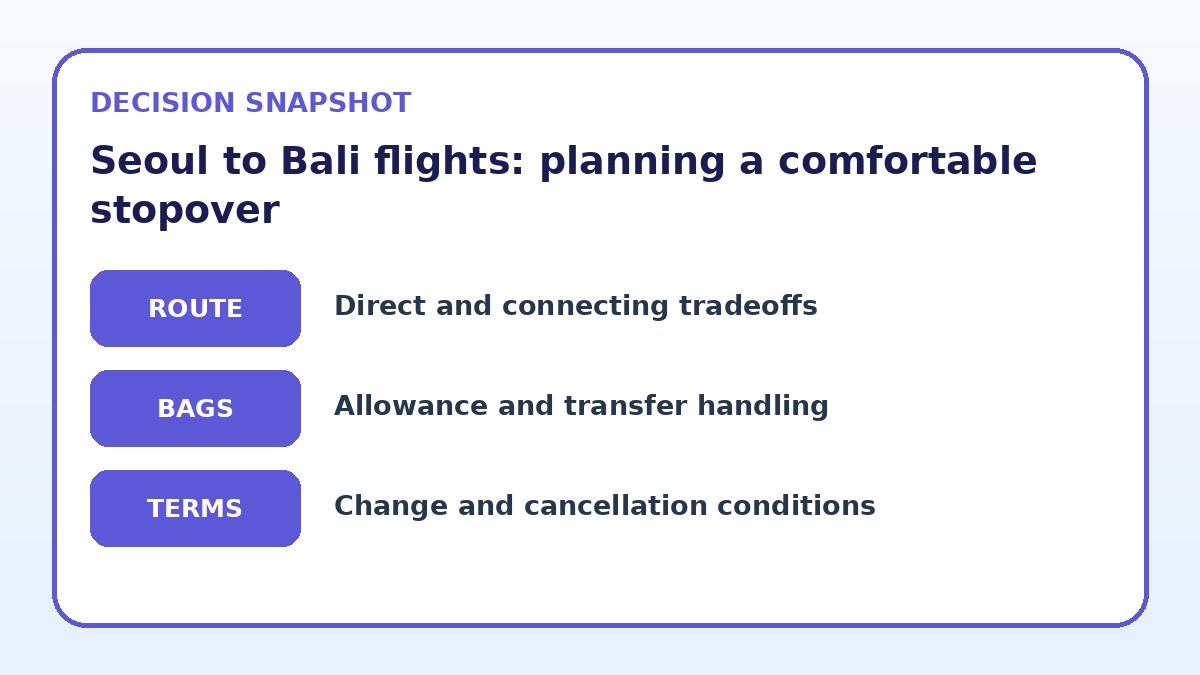
Direct flights (if offered on the route or nearby hubs) shorten travel time and reduce the stress of transfers: fewer boarding procedures, less chance of missed connections, and simpler baggage handling. However, a direct option may depart at inconvenient times or use a smaller aircraft with tighter seating. For many first-time visitors, the key question is whether saving a few hours justifies potentially arriving exhausted in Bali. Consider your tolerance for long flights and your arrival plans—early-morning arrivals give more same-day options while late-night arrivals may be better for sleeping through initial transit.
Connecting itineraries can offer better departure times, more competitive fares, and the chance to travel on a more comfortable long-haul aircraft for one leg of the journey. They also allow you to break the trip with a planned layover, which can be useful if you want to rest in a hotel or explore a transit city briefly. The critical trade-off is the added complexity: you must watch minimum connection times, allow for immigration and recheck procedures if needed, and accept the possibility of delays. When comparing connections, prioritize airports with efficient transfer procedures and readable terminal maps.
Choosing layover length and where to stop
A short layover keeps total travel time low but raises stress if delays occur. For airlines that offer through-checked bags and protected connections, a 60–90 minute domestic transfer or 90–120 minute international transfer can be workable; confirm the carrier’s minimum connection time on the booking page. If you must self-transfer between terminals or collect and recheck luggage, add more buffer—allow at least two to three hours and factor in immigration and security lines. Also note the practical effect of overnight versus daytime connections: an overnight stop can let you rest in a hotel, while a daytime stop lets you avoid sleeping through local arrival hours.
Choosing the stopover city matters: major hubs generally provide more frequent onward flights and better passenger services—lounges, transit hotels, clear signage, and reliable ground transport. Smaller connecting airports can be quicker to navigate but may have fewer mitigation options if a delay disrupts your journey. Decide whether you want a short, efficient transfer or a longer planned layover that gives you time to rest. If you’re likely to disembark the airport during long layovers, check visa requirements and opening hours for immigration desks before booking.
| Approach | Best for | Tradeoff to check |
|---|---|---|
| Nonstop or single-segment longest leg | Travelers who want fewer transfers and simpler baggage handling | May mean less favorable departure times or higher fares; seat comfort varies by aircraft |
| One planned long layover with hotel rest | Passengers who prefer to break the trip and arrive rested | Adds overall travel time and possible extra hotel cost, plus visa considerations for the stopover country |
| Short tight connection to minimize travel time | Those who prioritize quick door-to-door travel | Higher risk if flights are delayed; may require running between terminals and no guaranteed rebook on separate tickets |
| Split-ticketing to mix carriers | Travelers seeking better schedules or cheaper segments | Connections usually not protected; you must allow much larger buffers and manage separate baggage claims |
Ready to check the option that fits your plan?
Use your exact dates and traveler details so the provider page can show the current total and conditions.
Comfort factors to compare before booking
Seat pitch, seat type, and cabin layout influence comfort more than airline brand alone. On the long-haul leg, prioritize aisle seats if you expect to move frequently, or window seats if you plan to sleep. Check the aircraft model listed in the booking details and then confirm seat pitch and recline on the airline’s seating chart—these specifications can change, so verify on the provider’s final booking page. Look for aircraft with modern cabins and fewer tight 3–3–3 single-aisle blocks on long legs. If the flight is overnight, a bassinet, extra legroom, or premium economy may be worth the cost for improved rest.
Other comfort considerations include meal service timing, inflight entertainment options, and the availability of USB or power outlets to keep devices charged. If you have medical or mobility needs, contact the airline for assistance options and reserve appropriate seating early. For long layovers, research lounge access or pay-per-use rest areas; many airports list these services online. Trip.com can be used to compare current availability and conditions, but always recheck specifics on the airline or airport’s own site before finalizing a booking.
Before you book
- Filter search results for total travel time, number of stops, and aircraft type before shortlisting flights.
- Confirm seat pitch and layout on the airline’s seat map page and pick seats that match your comfort needs.
- Check baggage allowances, including carry-on rules and fees, on the final booking page for each carrier.
- Verify minimum connection times and whether your itinerary is on a single ticket or separate tickets.
- Reserve lounge access or an airport hotel in advance if your layover exceeds three hours and you need rest.
- Buy travel insurance that explicitly covers missed connections, delays, and medical evacuation if needed.
Practical booking checks and managing risks
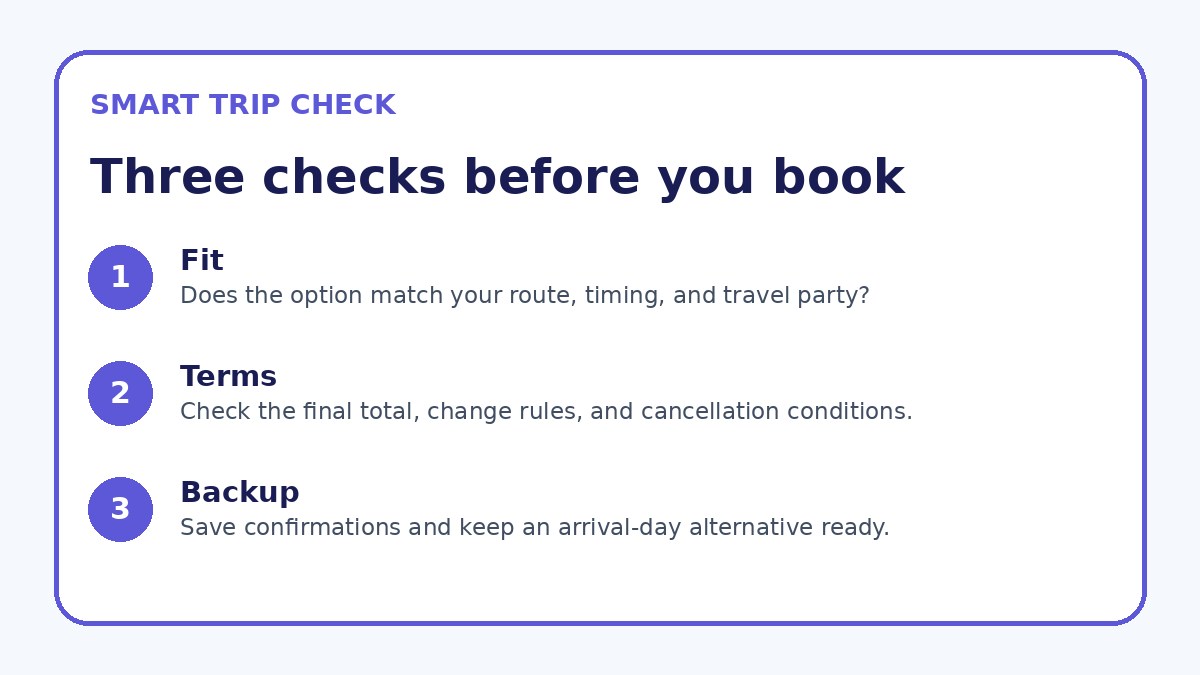
Before you finalize a fare, verify the ticket’s change and cancellation terms, baggage allowance including weight and piece limits, and seat-selection fees. If your trip includes separate tickets (different carriers not on the same ticket), understand you may not have protected connections—the second carrier might not rebook you if an earlier delay causes you to miss the onward flight. For protected itineraries, confirm the airline’s missed-connection policy and whether they provide hotel accommodation or alternative routings. Read the final booking page carefully for seating, carry-on limits, and any required documents for transfer airports.
Consider travel insurance that covers missed connections and medical needs, especially on multi-carrier itineraries. Build realistic buffers into your schedule for immigration, customs, and local transport after arrival in Bali. Before departure, download maps of arrival terminals, save confirmation emails and digital boarding passes, and note emergency contact numbers. If you have tight onward plans in Bali—tours, ferries, or check-in windows—leave additional time between your flight arrival and ground reservations to avoid stress.
Frequently asked questions
Are there direct Seoul to Bali flights I should prefer as a first-time traveler?
Direct flights reduce transfer complexity and are often less stressful for first-time visitors because you avoid immigration, rechecking luggage, and the uncertainty of tight connections. Whether a direct flight is available depends on seasonal schedules and the carriers serving the route—check your search tool and the airline’s site for current non-stop options. If a direct isn’t available or departs at an awkward hour, a single well-timed connection at a major hub that offers good passenger services can be a comfortable alternative.
How long should my layover be to stay comfortable between Seoul and Bali?
Aim for at least 90–120 minutes for international-to-international transfers when you remain airside and your bags are checked through. If you must clear immigration, collect and recheck luggage, or transfer between terminals, plan for two to three hours. For planned rest in a hotel during a layover, allow a minimum of six to eight hours to get through arrival formalities, rest, and return through departure procedures comfortably. Always confirm transfer requirements and terminal maps on the carrier or airport website before booking.
What cabin or seat upgrades are most worth it on a long Seoul to Bali trip?
Upgrades that increase personal space—premium economy or an extra-legroom economy seat—offer the most consistent comfort gain for long-haul travelers without the cost of business class. A true business-class seat makes sleeping and privacy easiest, but if budget is a concern, prioritize an aisle or window with extra legroom and a seat with good recline. Also weigh amenities such as power outlets, improved meal service, and baggage allowance; confirm upgrade availability and exact cabin features on the airline’s booking page before purchasing.
Final planning note
Planning a comfortable Seoul to Bali connection means choosing the balance that suits your tolerance for transfers, desired arrival time, and need for rest. Start by filtering options for total travel time and number of stops, then check aircraft type and seat details on the carrier’s seat maps. Decide whether a planned layover with rest is better for you than a tight single-day transfer, and verify baggage rules and connection protections on the final booking page. Build sensible buffers, consider lounge or hotel options for long waits, and purchase insurance that covers missed connections so you can arrive in Bali relaxed and ready to enjoy your trip.
Continue planning
Check current options and final conditions
Use the provider page to confirm live availability, the final total, cancellation terms, and every condition that matters to your trip.
This evergreen planning guide was created with AI-assisted drafting and a structured quality review. It does not display live prices, schedules, availability, visa guidance, or provider rankings. Verify current details before booking. Some links are affiliate links; we may earn a commission at no additional cost to you.