If you want a fast, low-stress start to a first trip to San Francisco, packages can simplify booking flights, hotel and a few activities in one purchase. If you need flexibility, loyalty points, or want to shop for specific neighborhoods and boutique hotels, booking each component separately usually gives more control and often makes it easier to customize longer stays. Start by listing non-negotiables—dates, neighborhood, must-see attractions—and compare a package that matches that list against the time and effort you'd spend assembling the same itinerary yourself. Keep receipts, understand cancellation rules, and verify final details on each provider’s booking page before you commit. This guide walks through the main tradeoffs, practical criteria to compare, and a short checklist to use while you decide.
See current options before you compare the details
Availability and final conditions change. Open Trip.com now or keep reading for the practical comparison.
Who benefits most from a San Francisco travel package
A package best suits travelers who value convenience and want one-stop planning: flights, a centrally located hotel, and a few guided tours booked together. First-time visitors who prefer to hand over the details and reduce the number of confirmations to manage will find packages appealing. Packages are handy when you want to lock an entire trip quickly and have a single customer-service contact for changes. They can also be useful if you dislike coordinating ground transfers or want a guided introduction to neighborhoods such as Fisherman’s Wharf or Union Square.
Packages are less attractive when you have specific lodging preferences, strict loyalty program needs, or an appetite for exploring neighborhoods beyond the main tourist corridors. If you plan to spend most nights in distinct neighborhoods — for example, North Beach for nightlife and the Richmond District for quieter streets — a one-hotel package may not fit. Also, if your itinerary depends on flexible dates, refundable fares, or multi-stop routing, a package might add constraints that increase change fees or complicate refunds.
When booking components separately makes sense
Booking flights, hotels, and activities separately puts you in control of each part of the trip. You can pick flight schedules that optimize sleep and sightseeing, choose a hotel in a neighborhood that matches your travel style, and select exactly which tours or attractions to include. This approach is best when you want to leverage airline or hotel loyalty programs, upgrade selectively with points, or take advantage of flash sales from different suppliers. It also allows you to layer short-term rentals, day trips, or unique local experiences that a standard package might not offer.
Separate booking requires more time and careful comparison. You’ll need to track multiple confirmation numbers, align cancellation windows, and make sure times—like flight arrival and hotel check-in—coordinate to avoid long waits or extra costs. For first-time visitors, that means paying attention to practical details such as transport from San Francisco International (SFO) or Oakland (OAK), transit vs rideshare costs, and whether the hotel charges a mandatory local fee. Always verify each supplier’s final booking page for exact policies, taxes, and any optional extras that could change the out-the-door price.
| Approach | Best for | Tradeoff to check |
|---|---|---|
| All-in-one package | Travelers who want convenience, single-point support, and faster booking of standard itineraries. | Less flexibility on hotel neighborhoods, loyalty benefits, and sometimes stricter change or cancellation rules. |
| Separate bookings | Travelers who prioritize choice, loyalty points, and customizing each part of the trip. | Requires more time to coordinate confirmations, timings, and multiple supplier policies. |
| Hybrid approach (package + add-ons) | Those who like the convenience of a core package but want to add specific nights, tours, or neighborhood stays. | Can complicate refunds and change processes because different components may follow different rules. |
| Book with a trusted agent | Travelers who want expert help tailoring complex itineraries or multi-destination trips without managing all details. | Service convenience may come with extra fees and you still must verify supplier terms directly on booking pages. |
Ready to check the option that fits your plan?
Use your exact dates and traveler details so the provider page can show the current total and conditions.
How to compare total cost and flexibility
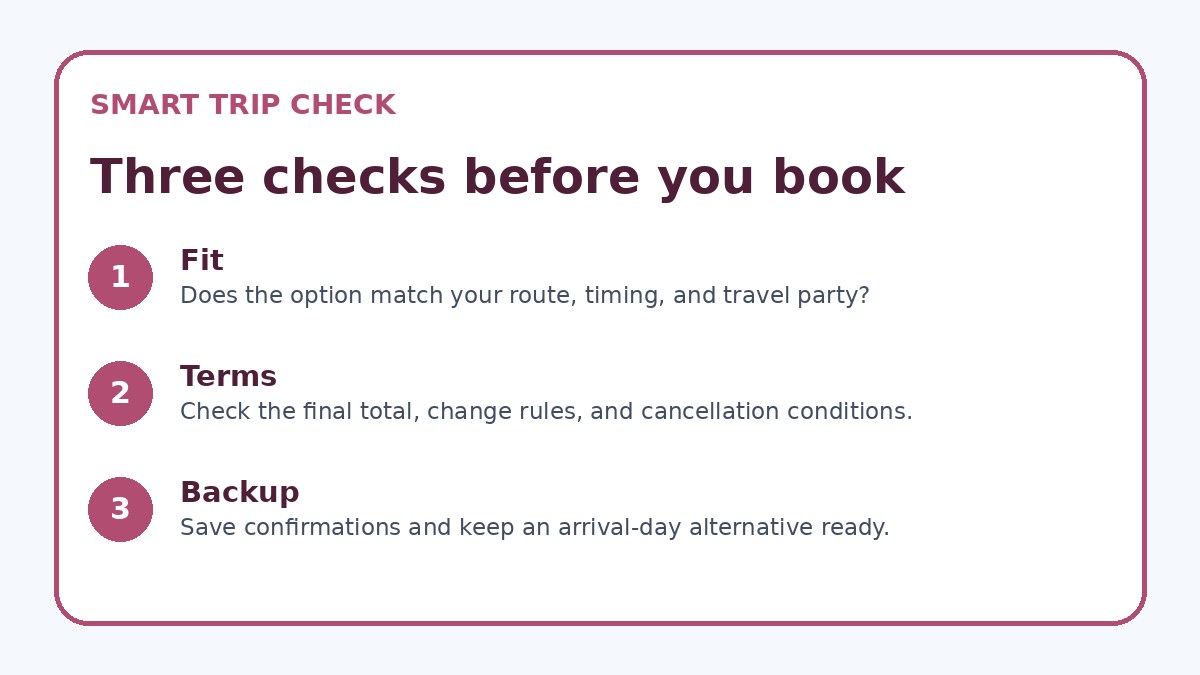
Compare true total cost, not just headline numbers. For packages, add taxes, any resort or city fees the package doesn’t include, and optional add-ons. For separate bookings, add baggage, seat selection, and ground transfers. Put the same itinerary—same arrival and departure dates, the same number of nights, and comparable hotel category—into both scenarios and create a simple spreadsheet. Include likely incidental costs such as transit cards, parking, or early check-in fees to get an apples-to-apples view of what you’ll actually pay.
Evaluate flexibility by comparing cancellation and change policies side by side. How many days before travel can you change flights without a fee? Does the package lock hotel nights or allow substitutions? If refundable rates are essential, check whether refunds are processed by the package provider or the original supplier: you may need to contact multiple parties. Verify each provider’s final booking page for exact change fees, refund timelines, and the process to make a claim or get credit toward a future trip.
Before you book
- List non-negotiables (dates, neighborhoods, must-see attractions) before comparing package and separate options.
- Run a side-by-side cost comparison including taxes, local fees, baggage, transfers, and likely incidental expenses.
- Check and save exact change and cancellation rules on the provider’s final booking page for every component.
- Confirm hotel address, neighborhood walkability, and proximity to transit or planned activities.
- Compare airport transfer options and whether transfers are included or must be booked separately.
- If using loyalty programs, verify points earning and redemption rules for the hotel and airline before booking.
Practical decision criteria and booking-day checks
Use practical criteria: neighborhood fit, transfer convenience, loyalty benefits, cancellation flexibility, and total cost including fees. If you want walkable access to cable cars, museums, and diverse dining, prioritize hotel location over small nightly savings. If guided tours that sell out quickly—like Alcatraz visits or specialty food tours—are important, check availability before choosing a package that might not include those exact time slots. For multi-stop or longer itineraries, separate bookings often scale better and let you add day trips to Napa, Muir Woods, or the Peninsula.
On booking day, do these checks: confirm exact hotel address and neighborhood, verify airport transfer options and whether they’re included, make sure flights list baggage and seat rules, and confirm cancellation windows. If you use a package, read the provider’s help and refund process so you know who to contact. If booking separately, save all confirmation emails and screenshot the provider’s final booking pages showing fees and policies. Optionally compare availability on sites such as Trip.com to see live options, but always rely on the supplier’s official booking page for final terms.
Frequently asked questions
Will a package usually be cheaper than booking San Francisco components separately?
Not always. Packages can show lower headline prices because they bundle services, but you must compare the total out-the-door cost. Add taxes, city or resort fees, baggage and seat selection, and transfers for both options. Separate bookings let you mix low-cost carriers, boutique hotels, and loyalty benefits that can reduce net cost for some travelers. The only reliable way to know is to assemble the same itinerary in both formats and compare final confirmation pages and cancellation rules.
How should I choose a neighborhood for my first visit to San Francisco?
Choose based on what you want to do: Union Square is central for shopping and transit; Fisherman’s Wharf puts you close to piers and bay cruises; the Embarcadero suits waterfront walks; Hayes Valley and the Mission offer local dining and boutiques. Consider transit access—BART, Muni light rail and buses—and your tolerance for hills. If you value a quieter, more residential feel with easier parking, neighborhoods farther from downtown may be better but check transit times. Confirm hotel location and nearby transit options on the provider’s detailed page.
If I pick a package, what specific provider details should I verify before paying?
Verify who issues refunds and change credits, whether transfers are included or optional, exact hotel name and address, and flight baggage and seat rules. Confirm deadlines for changes or cancellations and whether any third-party suppliers are involved. Check whether tours included require advance reservations or have restricted time slots. Always capture screenshots or save the provider’s final booking pages showing terms so you have precise documentation if you need to request changes or refunds.
Final planning note
For many first-time visitors to San Francisco, the right choice hinges on how much control you want versus how much time you’re willing to spend planning. Packages reduce planning friction and consolidate support, which suits travelers who want a straightforward arrival and a hotel in a central area. Booking components separately rewards those who need neighborhood choice, loyalty benefits, or specific flight times. A hybrid approach—buying a core package and adding select nights or tours yourself—often balances convenience and customization. Whatever you decide, do a thorough side-by-side cost and policy comparison, verify exact terms on each supplier’s booking page, and save all confirmations before you travel.
Continue planning
Check current options and final conditions
Use the provider page to confirm live availability, the final total, cancellation terms, and every condition that matters to your trip.
This evergreen planning guide was created with AI-assisted drafting and a structured quality review. It does not display live prices, schedules, availability, visa guidance, or provider rankings. Verify current details before booking. Some links are affiliate links; we may earn a commission at no additional cost to you.