If you’re a solo traveler deciding between a central Toronto location and a more comfortable room, start by clarifying what you’ll actually spend most of your time doing. Prioritize proximity if you plan to use the city like a hub—museums, theaters, transit and nightlife are easier to reach from downtown neighborhoods (Financial District, Entertainment District, Queen West, and near Union Station). Prioritize room comfort—larger bed, quieter orientation, workspace, or better washroom—if you expect long work or rest periods in the room, late-night arrivals, or need reliable in-room privacy. Think in terms of tradeoffs: a central small room saves commuting time but may mean more noise and less personal space; an outlying hotel can offer larger rooms and quieter nights but add complexity to daily travel. This guide walks you through how to weigh those tradeoffs and lists precise things to check on the booking page before you commit.
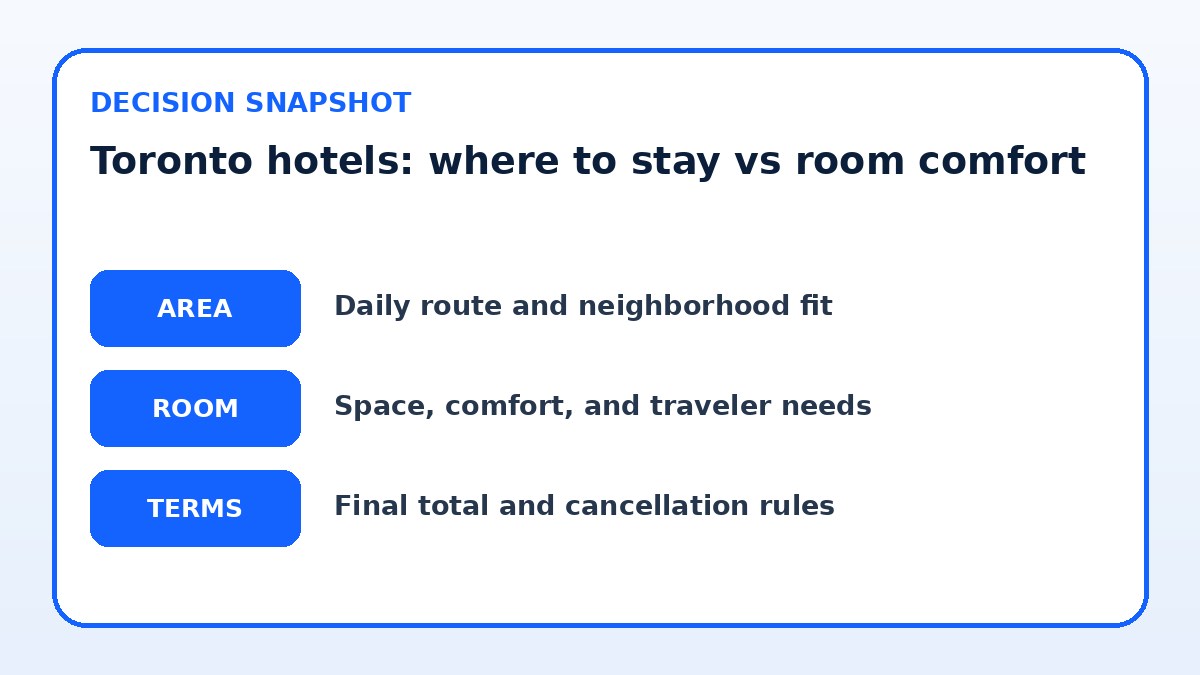
See current options before you compare the details
Availability and final conditions change. Open Trip.com now or keep reading for the practical comparison.
Map where you’ll spend time, then place priority
Start by mapping the activities you value: museums, concerts, conferences, coworking spaces, restaurants, or day trips. If more than half of your planned activities fall within a compact area like Downtown, King Street West, or the Waterfront, prioritize location — shorter walks and easier transit connections will cut wasted travel time. For example, staying near Union Station reduces friction for airport trains and regional rail; a hotel by Queen Street or King Street gives quick access to theaters and nightlife. On the other hand, if your days are flexible or centered on one neighborhood, you can choose comfort without paying a big transit penalty.
Next, assign a simple priority score for each day: mobility-heavy days get a location weight; rest- or work-heavy days get a room-comfort weight. Add practical constraints such as budget and luggage: carrying a heavy bag across cobbled streets or long subway stairs makes a closer location more attractive. Solo travelers often undervalue afternoon naps, quiet evenings, and a good working desk — if these are essential, tilt toward room quality even if it means a longer daily commute.
What room comforts really matter for solo stays
Not all room features are equally valuable. For solo travelers, prioritize a comfortable bed, effective blackout options, a quiet orientation (avoid rooms facing busy streets or mechanical rooms), and a private bathroom. If you work on the road, a stable desk, easily accessible power outlets, and reliable Wi-Fi are non-negotiable. Small additions like a kettle, good lighting, and secure in-room storage improve comfort disproportionately for one person. If you plan to cook light meals, check whether rooms include a minibar, kitchenette, or refrigerator, and confirm any extra cleaning policies.
Pay attention to how hotels describe noise control, windows, and floor level options; a higher floor can reduce street noise but may be less convenient if elevators are slow. Requesting a room away from elevators and vending machines reduces footfall outside your door. For longer stays, laundry availability and daily or weekly housekeeping are important; for short stays, streamlined check-in and flexible late arrivals matter more. Review room photos critically and compare the advertised amenities to your non-negotiables before choosing comfort over location.
| Approach | Best for | Tradeoff to check |
|---|---|---|
| Central small room near transit | Maximizing daytime exploration and saving transit time | Smaller personal space and likely more street noise at night |
| Spacious room outside downtown | Long stays, remote work, quieter nights and better in-room amenities | Longer door-to-door travel and fewer immediate attractions |
| Mid-distance hotel with excellent transit links | Balanced travel times with larger rooms at a moderate price | Still depends on transit schedules and potential transfers |
| Boutique hotel in a neighborhood hub | Local character, walkable cafes, and unique atmospheres | Variable room sizes and sometimes limited hotel services |
Ready to check the option that fits your plan?
Use your exact dates and traveler details so the provider page can show the current total and conditions.
Practical location tradeoffs and transit realities
Toronto’s core neighborhoods are compact but diverse. Staying in the Financial District or near Union Station gives you fast access to the airport rail link, regional trains, ferries, and many downtown attractions—ideal when your time is limited or you value doorstep transit connections. Entertainment District or King West locations place you closer to theatres and nightlife, which is convenient but often noisier at night. Kensington Market, Queen West, or the Annex offer character and cafés but may require more transit to reach the central cluster of museums and conference venues. Consider where you want to be at 10 p.m. as much as at noon.
If you choose a hotel further from downtown to get more space or a quieter stay, measure the actual door-to-door time to your main activities rather than straight-line distance. Compare local transit frequency and directness: frequent streetcars or subways with minimal transfers are far more valuable than a short taxi ride at peak times when cabs are scarce. When comparing options, check whether the hotel lists the nearest transit stops and typical journey times, and verify those on the transit operator’s site or a live map before booking.
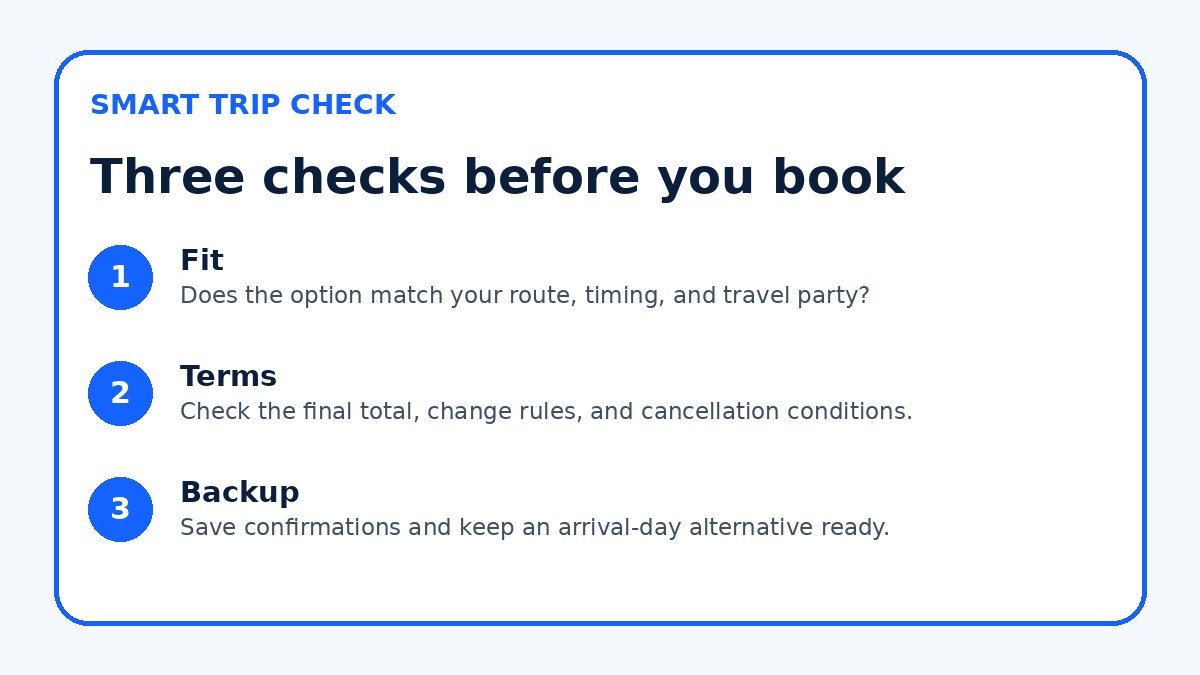
Before you book
- Confirm the exact room type, bed size, and square footage on the booking page before selecting a rate.
- Verify which amenities are included (Wi‑Fi speed if shown, private bathroom, kettle, fridge) and note any additional fees.
- Check the hotel’s cancellation and change policy and whether flex dates or refundable rates are available if plans shift.
- Look up the nearest transit stops and estimate door-to-door travel time to your main destinations during real trip hours.
- Request or note room preferences (high floor, away from elevators, courtyard-facing) and confirm these can be accommodated.
- Read recent guest reviews for mentions of noise, cleanliness, and Wi‑Fi reliability, and cross-check any consistent complaints.
How to check and what to confirm before booking
On the booking page, treat four items as essential: exact room size and bed type, which amenities are included, the cancellation and change policy, and how the hotel handles check-in for late arrivals. Don’t assume photos show the room type you are booking—many sites display premium rooms by default. Look for an explicit floor plan or square footage, bed dimensions (double, queen, king), and whether the bathroom is private or shared. If quiet sleep is important, check for terms like “soundproof windows” or request a room facing a courtyard.
If a provider-specific fact could change—such as shuttle schedules, on-site dining hours, parking availability, or included breakfast—note those items and verify them on the hotel’s official booking page or by calling the property. Trip.com is one optional place to compare current availability and conditions; if you use it, still confirm final details on the hotel’s page. Finally, read recent guest reviews for insights on cleanliness, noise, and reliability of Wi-Fi, and cross-check any reported recurring issues against other platforms.
Frequently asked questions
Is it safer to stay downtown in Toronto as a solo traveler?
Safety depends on the neighborhood and circumstances rather than simple downtown proximity. Many central areas are well-policed and busy, which can feel safer at night; however, pockets with late-night nightlife may increase noise and occasional rowdiness. Look for hotels on well-lit streets with visible foot traffic, easy access to taxis or transit, and clear arrival instructions. Check recent guest reviews for safety-related comments and verify entrance security details (front-desk hours, key card access) on the hotel’s booking page.
How much should I value hotel Wi‑Fi when choosing between location and comfort?
If you need to work, stream, or video-call, Wi‑Fi reliability is critical and can outweigh a marginally better location. Look for hotels that specify upload and download speeds or advertise business-class Wi‑Fi; otherwise, recent reviews are the best signal of consistency. If the booking page doesn’t provide clear Wi‑Fi details, contact the property to confirm. Consider a room with a solid desk and plug access too—comfort and workspace can make remote work feasible even if the hotel is slightly further from downtown.
What’s the smartest way to minimize noise in a central Toronto hotel?
Ask for a room on a higher floor and request one that faces away from the street and any mechanical equipment or service areas. Specify a preference for a quiet room at booking and reconfirm at check-in; staff can often place you in a less trafficked corridor. Check recent reviews for mentions of street noise or nightlife disturbance. If sound is a top priority, look for terms like “soundproof windows” in the room description and consider hotels with double-glazed windows or a courtyard layout.
Final planning note
Choosing between a central Toronto hotel and a more comfortable room comes down to how you’ll spend your time and what you can’t easily replace: extra sleep, a reliable workspace, or minutes saved traveling across the city. Make a short list of priorities, then vet each candidate against concrete, verifiable facts on the booking page—room size, bed type, bathroom arrangement, and cancellation rules. Use transit maps and recent guest reviews to check travel times and noise patterns. When in doubt, favor the option that reduces friction for the busiest part of your day: fewer delays and easier movement usually improve a solo traveler’s experience more than modest in-room luxuries.
Continue planning
Check current options and final conditions
Use the provider page to confirm live availability, the final total, cancellation terms, and every condition that matters to your trip.
This evergreen planning guide was created with AI-assisted drafting and a structured quality review. It does not display live prices, schedules, availability, visa guidance, or provider rankings. Verify current details before booking. Some links are affiliate links; we may earn a commission at no additional cost to you.