
If you’re traveling to Hong Kong with extra suitcases or bulky gear, the most practical hotel decision is simple: prioritize proximity to reliable, low-effort transport. That means choosing hotels a short walk from MTR stations with lifts and escalators, near taxi stands or drop-off points, or within easy reach of ferry piers and the Airport Express. The convenience of carrying, wheeling, or briefly storing luggage often matters more than hotel star-rating or extras. Read this guide to weigh the tradeoffs—walking distance versus room size, street-level access versus quiet side-streets, and whether an inexpensive shuttle or a short taxi ride will actually save you time and hassle. I’ll also list the specific criteria to check on hotel and transport pages before you book, and show how to compare neighborhoods when you can’t have everything.
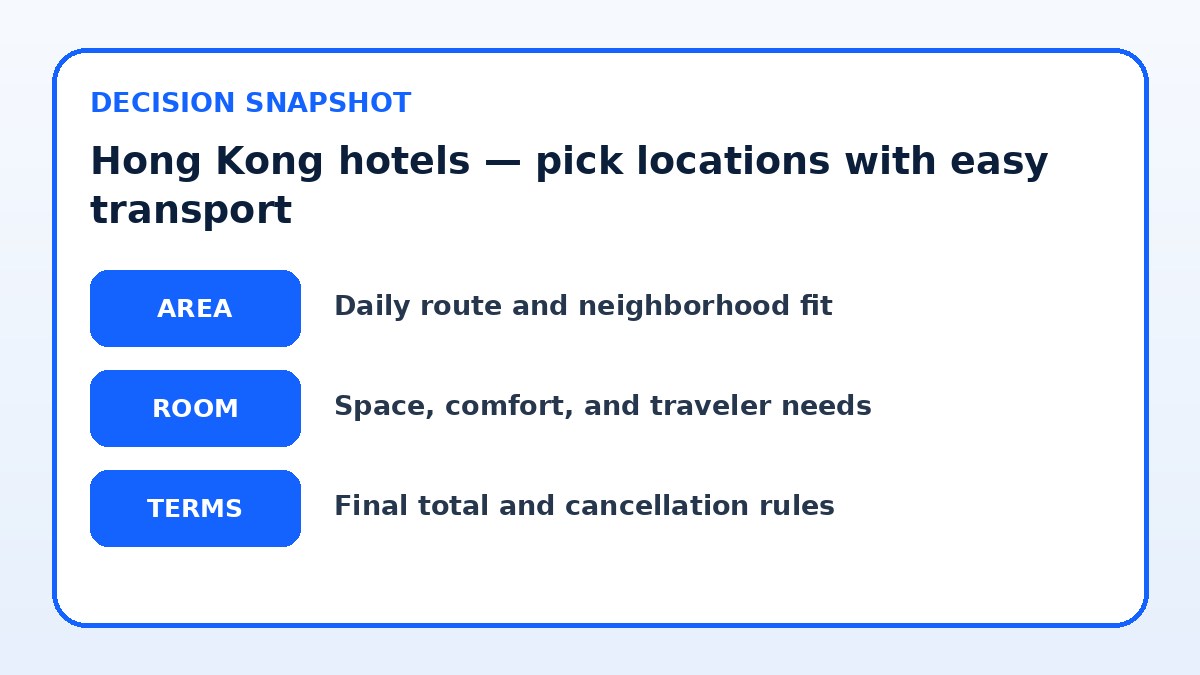
See current options before you compare the details
Availability and final conditions change. Open Trip.com now or keep reading for the practical comparison.
Which transport link matters most for heavy luggage
Not all transport links are equally useful when you have extra luggage. The MTR network is central and frequent, so an MTR-adjacent hotel usually gives the best city coverage. But not every station entrance is equal: some exits are long underground walks or stair-heavy; others have lifts and shorter surface routes. For airport arrivals, the Airport Express offers fast rides and luggage trolleys at stations, while taxis and prepaid airport shuttles avoid stairs and transfers entirely at higher cost. Ferries and cross-harbour services can be convenient if your destination is waterfront, but piers often require stairs down to boarding areas—check pier accessibility if stairs and gangways are an issue.
Decide which link you’ll use most before choosing a hotel. If you plan to move across Hong Kong Island and Kowloon frequently, an MTR hub like Admiralty, Tsim Sha Tsui, or Central reduces transfer time. If your trip centers on Lantau or the airport, a hotel near Tung Chung or Kowloon stations on the Airport Express line might be worth the premium. For mixed itineraries, prioritize a hotel that minimizes the number of transfers and the distance from the station entrance to the hotel door. When in doubt, map the walking route from station exit to hotel entrance and time a test walk with luggage if possible.
Neighborhood tradeoffs: convenience, noise, and price
Staying next to a major transport hub maximizes convenience but can increase noise, foot traffic, and slightly higher room rates. Areas around Central, Causeway Bay, and Tsim Sha Tsui concentrate MTR exits, taxi ranks, and transport links, making transfers quick. However, hotels one or two blocks back on quieter side streets often offer better sleep while still keeping luggage handling short. If you prefer a calmer base for large bags, look for hotels described as "near an exit" rather than "on top of the station," then confirm the exact walking route and whether it includes stairs or long ramps.
Budget and midrange hotels may trade off room size for location. In Hong Kong’s dense neighborhoods, a hotel with a modest premium in a transport-friendly spot often saves time and reduces stress when moving luggage. If you choose a cheaper property farther away, factor in repeated taxi fares or time spent carrying bags through crowded sidewalks and narrow stairways. Think about arrival and departure times too—late-night or early-morning transfers are easier from places with 24-hour taxi access or an Airport Express connection than from neighborhoods with fewer after-hours transport options.
| Approach | Best for | Tradeoff to check |
|---|---|---|
| Stay beside a major MTR hub | Maximum city access and short transfers | More noise, crowds and often higher room rates |
| Choose a quieter side-street near the station | Less noise while staying close to transport | A slightly longer walk and potentially fewer taxi options |
| Book near Airport Express or ferry piers | Easier long-haul arrivals and departures | May be farther from inner-city attractions and dining |
| Pick a street-level or low-floor hotel | Lowest effort moving heavy or oversized luggage | Fewer high-floor views and sometimes smaller rooms |
Ready to check the option that fits your plan?
Use your exact dates and traveler details so the provider page can show the current total and conditions.

Hotel features to prioritize when luggage is the limiting factor
Focus on concrete hotel features rather than advertising claims. Look for a clear statement about lift access from the street to lobby and to guest-room floors; some older buildings have narrow or slow lifts that complicate moving multiple pieces of luggage. A staffed 24-hour front desk helps if you want assistance moving bags or short-term luggage storage. Ground-floor or low-floor rooms, suites with a foyer or more open hallway space, and hotels with wide corridors and doorframes simplify wheeling suitcases through the room.
Check if the hotel describes curbside drop-off, an accessible entrance level with no steps, or an on-site porter service. If you’ll use taxis frequently, confirm there is a practical space for a taxi to stop near the entrance—some streets in Hong Kong are busy and double-parked, forcing longer walks. Always verify these details on the hotel’s own booking page or by calling them; third-party descriptions may be outdated. If you use Trip.com to compare options, use it only to check current availability and then confirm specifics directly with the hotel.
Before you book
- Map the walking route from the nearest station exit to the hotel entrance and note stairs, ramps or long underground passages.
- Confirm on the hotel’s official page whether lifts serve the entrance-to-lobby and lobby-to-room floors.
- Ask the hotel about curbside drop-off, porter service, and short-term luggage storage availability and fees.
- Check whether local streets near the hotel allow taxis to stop safely for loading and unloading.
- Compare room layouts or request a low-floor or larger room if you’ll be storing bags inside the room.
- If arriving late or early, verify 24-hour reception or night arrival procedures to avoid long waits with heavy luggage.
How to compare options and what to verify before booking
When you’re down to two or three hotels, compare them by mapping the exact route from major station exits, ferry piers or taxi drop-offs to the entrance. Measure walking time and note stairs, escalators, or long ramps. Read recent guest photos and reviews that mention arrival and luggage handling—pay special attention to comments about lifts, staircases, and the distance from the closest station exit. If a property advertises a shuttle, confirm schedule, capacity, and whether it has space for oversized bags on the hotel’s page.
Before you finalize a booking, verify these provider-specific facts on the hotel’s official page or by phone: whether the station exits nearest the hotel have lifts, whether curbside drop-off is possible, whether the property provides luggage storage and porter service, and any restrictions on vehicle access for drop-offs. Don’t rely solely on third-party listings for these operational details: policies and local road layouts can change. Keep screenshots or notes of confirmation in case you need to reference them on arrival.
Frequently asked questions
Is it better to prioritize MTR access or a taxi-friendly hotel when I have lots of luggage?
It depends on your itinerary. For frequent cross-city trips, MTR access with lift-equipped exits is usually faster and cheaper than repeated taxi rides. For door-to-door convenience on arrival or departure—especially with oversized bags or late-night transfers—a taxi-friendly hotel with curbside drop-off reduces walking and transfers. Compare the walking distance and number of transfers from the station to the hotel versus expected taxi times and costs. Verify whether the specific station exits have lifts and whether the hotel’s street allows easy taxi stops before booking.
Are hotels near ferries and the Airport Express usually better for luggage-heavy arrivals?
Hotels near the Airport Express and major ferry piers can be more convenient for arrivals because these terminals typically have luggage facilities and straightforward transfers. However, piers sometimes require vertical movement—stairs or gangways—that can complicate things. Airport Express stations often have luggage trolleys and faster customs/transit connections, but the hotel must still be walkable from the station. Confirm the last-mile route, whether lifts are available, and whether the hotel provides shuttle services or easy taxi access to avoid surprises on arrival.
How can I check whether a station exit has lifts or only stairs before I book a hotel?
Start with the transport operator’s official station map—MTR publishes exit layouts that show lift locations and interchange paths. Look for exit numbers in the hotel listing and match them to the station map to see if the exit has a lift. Recent guest photos and reviews often mention accessibility and can confirm how practical the route is with luggage. If in doubt, contact the hotel and ask which exit guests should use when arriving by train and whether that exit includes lift or escalator access; request that they describe the exact route.
Final planning note
For travelers carrying extra luggage in Hong Kong, the right hotel is the one that reduces repeated effort: short, lift-equipped walks from major stations, clear curbside drop-off, or direct Airport Express/ferry access. Small tradeoffs—paying a bit more for a slightly larger room or a hotel on a quieter side street—often repay themselves in less stress and faster transfers, especially on arrival and departure days. Before you book, map routes, check lift and entrance details on the hotel and transport pages, and confirm arrival logistics by phone if anything is unclear. Use comparison sites like Trip.com to check availability, then verify operational details directly with the hotel to ensure your luggage plans go smoothly.
Continue planning
Check current options and final conditions
Use the provider page to confirm live availability, the final total, cancellation terms, and every condition that matters to your trip.
This evergreen planning guide was created with AI-assisted drafting and a structured quality review. It does not display live prices, schedules, availability, visa guidance, or provider rankings. Verify current details before booking. Some links are affiliate links; we may earn a commission at no additional cost to you.