If your job sends you to Bangkok on short notice, price alerts can save money and time — but they also tempt quick, poorly thought-out purchases. The practical approach is to treat alerts as signals, not triggers: set focused alerts for specific travel windows and hotel zones, then follow a short decision checklist before you click book. That checklist should confirm schedule fit, cancellation flexibility, loyalty benefits, and total landed cost (taxes, baggage, and transfer options). Use alerts to learn typical price ranges and to narrow choices; do not let a single lower fare overwrite essential business needs like reliable arrival times or a hotel close to meetings. Below I explain the tradeoffs, decision criteria, and a repeatable workflow that keeps you in control of Bangkok travel deals while letting alerts do the monitoring work.
See current options before you compare the details
Availability and final conditions change. Open Trip.com now or keep reading for the practical comparison.
Pick alert parameters that match business priorities
The first decision is what you want alerts to monitor: specific dates, a flexible range, or a recurring weekday window. For business travel to Bangkok, prioritize arrival and departure times that align with meetings and local transport options; a low-cost red-eye that requires an extra taxi or a long layover can cost more in time and stress than it saves. Narrow geographic scope to the airports and hotel neighborhoods that matter — for most business trips that means Suvarnabhumi or Don Mueang and central business districts like Silom, Sathorn or Sukhumvit segments. Reducing noise from irrelevant alerts prevents impulse reactions to fares that are logistically poor despite looking cheap.
Set the flexibility parameters clearly when creating alerts. If your dates are fixed for a conference or client visit, use exact-date alerts; if you can shift by a day or two, use a +/- 1–3 day range to capture better options. For hotels, specify room type, refundable versus non-refundable, and whether breakfast or Wi-Fi must be included. Finally, add your highest-priority deal attributes as alert filters: direct flights only, maximum total travel time, or refundable rate. These filters help alerts surface offers that meet real business needs, not just headline prices.
Use a disciplined evaluation checklist before booking
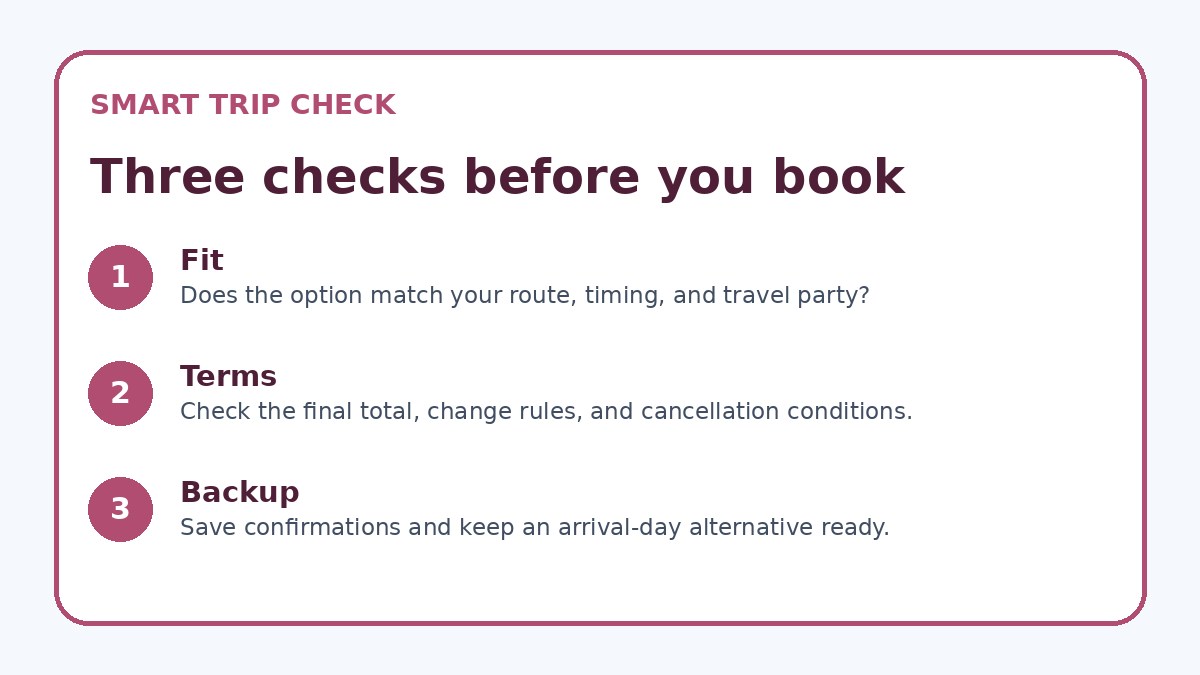
When an alert surfaces a tempting option, run it through a quick, consistent checklist rather than reacting to the moment. Confirm itinerary fit (arrival time, transfer options, total trip time), cancellation and change terms on the provider’s final booking page, and whether the fare or rate includes luggage and other essentials. Check loyalty program benefits or corporate rates that could be better even if the alert shows a lower headline price. If you rely on corporate expense rules, ensure the booking meets those rules before purchasing: an inexpensive rate that violates policy creates administrative work and potential reimbursement delays.
Assess the true total cost by adding expected extras: airport transfer, estimated taxi or train to downtown Bangkok, potential visa requirements for connecting countries, and whether the hotel charges extra for early check-in or Wi‑Fi. If the alert is for a fare with a long connection, compare it with slightly higher direct or shorter-connection options — the time cost and risk of missed connections matter for tightly scheduled business trips. Finally, give yourself a short cooling-off period: a 1–2 hour wait to review the checklist or to run one quick comparison prevents most impulse mistakes while keeping good deals realistically attainable.
| Approach | Best for | Tradeoff to check |
|---|---|---|
| Immediate booking on alert | Travelers with no schedule flexibility who must secure a seat or room quickly | High impulse risk; may miss policy checks or overlook total trip costs and change penalties |
| Short hold or refundable booking | Those who need time to confirm meetings, visas, or corporate approvals | May cost a small fee or slightly higher fare but reduces stress and rushed mistakes |
| Wait-and-watch using price history | Travelers with flexible dates who want to understand normal price ranges | Risk of missing genuinely good offers and possible last-minute price increases |
| Use corporate travel desk to validate alerts | Employees covered by company policies or with managed-travel programs | Slower process; may add approval steps but ensures compliance and duty-of-care support |
Ready to check the option that fits your plan?
Use your exact dates and traveler details so the provider page can show the current total and conditions.
Balance time savings against price savings and risk
Every business traveler makes tradeoffs between cost and time. Alerts that flag deeply discounted fares often come with longer travel times, tighter connections, or restrictive change policies. For Bangkok trips where meetings are tightly scheduled or client impressions matter, prioritize options that reduce travel-day unpredictability even if the fare is higher. Consider how a cheaper fare that requires an early departure or late arrival affects sleep, productivity, and the need for additional domestic transfers; those hidden productivity costs can wipe out ticket savings.
On the other hand, if your schedule has buffer time or you’re traveling to Bangkok during a non-peak meeting period, cost-focused alerts may be worth accepting modest inconvenience. Use alert data to judge whether a price dip is a short-term anomaly or part of a pattern; set comparative alerts for both lower-cost and “business-friendly” options so you can see the premium required for better timing and flexibility. This side-by-side view helps you make an explicit decision about how much time savings are worth on any particular trip.
Before you book
- Confirm arrival and departure times align with your meeting schedule and local transfer availability.
- Open the provider’s final booking page and verify cancellation, change fees, baggage rules, and total landed cost.
- Compare the alert fare or rate with corporate-negotiated fares or loyalty program redemption options.
- Estimate extra time and cost for transfers between the airport and your hotel or meeting venue.
- If uncertain, use a refundable hold or short paid hold to secure the option while you confirm details.
- Log the alert price and the decision reason so you can analyze patterns for future Bangkok trips.
Workflow and tools to prevent impulse booking
Adopt a simple workflow: set alerts, review matching offers against your checklist, compare two or three vetted options, then book from the provider page after verifying final terms. Limit alert endpoints to one flight aggregator and one direct airline or hotel loyalty channel so you don’t get overwhelmed by inconsistent information. Turn off push notifications; instead schedule two short review windows per day to inspect alerts. If a deal requires immediate action, use a pre-approved proxy plan: a brief internal approval from your travel manager or a preset corporate card authorization that allows booking after a one-hour confirmation window.
Use tools that show price history and hold options when available. Price-history graphs help you decide whether a dip is meaningful and whether to wait for potential further declines. When a provider offers a hold or refundable reservation for a small fee, that can buy time to confirm meetings or approvals without forfeiting a low rate. Always go to the provider’s final booking page to verify taxes, baggage, change fees, and cancellation rules; if you use Trip.com to compare availability, make the final verification on the actual seller’s page before completing the purchase.
Frequently asked questions
How many alert services should I use for Bangkok travel deals?
Limit yourself to two reliable services: one that scans multiple carriers and hotels and one direct channel like an airline or hotel loyalty program. Multiple services increase coverage but also notification noise that triggers impulse booking. Keep one aggregator for breadth and one direct source for policy clarity, then silence push alerts and review results in scheduled batches. If you use a corporate travel tool, add it as your second check so bookings remain compliant with company procedures.
What should I verify on the final booking page before I buy?
Always confirm the full total price including taxes and surcharges, baggage allowances, change and cancellation fees, and any required guest or travel documents. Check whether the fare is refundable or non‑refundable and whether modifications incur penalties. For hotels, verify check‑in/out times, included amenities, and any resort or local taxes. Do not rely on alert summaries — the provider’s final booking page is the authoritative source for commitments and should be your last check before purchase.
When is it reasonable to accept a cheaper option with a long connection?
Accept a long connection only if it fits your meeting timeline, you are comfortable with the added travel time, and the total landed cost still favors the option after accounting for transfers and potential overnight needs. Also consider the reliability of connecting airports and the minimum connection time; business trips with tight schedules typically demand shorter, more reliable itineraries. If the cheaper option brings meaningful savings and you can work or rest during the connection without risking missed commitments, it may be acceptable.
Final planning note
Price alerts are powerful for business travel to Bangkok when used with discipline: they reduce monitoring time and highlight opportunities, but you must convert signals into verified options using a short checklist. Narrow alert parameters to match meeting schedules and neighborhoods, limit the number of alert sources, and always verify the provider’s final booking page for fees, baggage, and change rules. Use holds or refundable options when you need confirmation time, and keep a simple record of decisions so you can learn what alert settings work best. With a repeatable workflow you’ll stop impulse booking and start using Bangkok travel deals to support reliable, low-stress business trips.
Continue planning
Check current options and final conditions
Use the provider page to confirm live availability, the final total, cancellation terms, and every condition that matters to your trip.
This evergreen planning guide was created with AI-assisted drafting and a structured quality review. It does not display live prices, schedules, availability, visa guidance, or provider rankings. Verify current details before booking. Some links are affiliate links; we may earn a commission at no additional cost to you.