If you’re landing in Busan for the first time, the practical choice is to pick the transfer that matches your priorities: saving money, minimizing walking, or getting door-to-door convenience. The city’s airports link to the center with several distinct options — public rail or bus, street taxis, and pre-booked private transfers. Each option has tradeoffs in terms of carrying luggage, language help, and how directly it drops you at your accommodation. This guide gives the immediate answer up front—how to decide on the right transfer—then breaks down what to check before you book, how to compare direct versus connecting services, and the small on-the-ground details that make arrival smoother. If you want a quick comparison of current availability, you can check a travel site such as Trip.com, but always verify details on the provider’s booking page before buying.
See current options before you compare the details
Availability and final conditions change. Open Trip.com now or keep reading for the practical comparison.
Quick decision guide: pick by priority
First decide what matters most on arrival: cost, speed, or convenience. If minimizing expense is the main goal and you’re comfortable with luggage, public rail or airport bus routes are the usual choice. They tend to have fixed stops and predictable paths into central areas, though you may need a short taxi or subway ride from the nearest stop to your hotel. For travelers prioritizing simplicity and minimal walking, street taxis or pre-arranged private transfers are better choices because they go from curb to your door.
Also think about arrival time and party size. Late-night arrivals or groups carrying bulky items change the balance toward taxis or private cars because public services may be less frequent and managing multiple bags on stairs or crowded platforms is harder. Families with young children or anyone who wants an escort through the terminal will find meet-and-greet transfers worth the extra cost. Once you know your priority, the rest of the planning is just verification: check pickup points, vehicle size, and how the driver identifies themselves.
Public transit: what to expect and how to plan
Public transit options are typically the most cost-effective and frequently run between airport terminals and major hubs. You’ll find routes that stop at central stations where you can switch to local metros or buses. To plan this leg, map your hotel against the main transit stops and note whether the final connection is a short walk or requires another paid ride. Have small bills or a local payment card ready; some lines accept contactless payment while others use an airport-specific ticketing system. Also check platform locations inside the terminal so you don’t waste time finding the right exit.
When comparing routes, focus on total effort: number of transfers, stairs or escalators you’ll need to use with luggage, and whether station signage has English. If you prefer fewer changes, look for options listed as ‘direct’ or ‘limited-stop’ to central areas. Before you step out of the arrivals hall, confirm live service information on the official operator’s site or on a transport app. If you’re using a national rail pass or a reloadable transit card, make sure it’s set up to work on the relevant lines before leaving the airport.
| Approach | Best for | Tradeoff to check |
|---|---|---|
| Public rail or airport bus | Budget-focused travelers comfortable with transfers and handling their own luggage | More walking and possible transfers; signage and English support may vary |
| Street taxi or ride-hailing | Travelers needing door-to-door service or arriving late at night | Subject to traffic delays and potential extra fees for luggage or tolls |
| Pre-booked private transfer | Groups, families, or anyone wanting a meet-and-greet and luggage help | Higher cost and requires booking ahead; check pickup and cancellation terms |
| Hybrid (express bus + short taxi) | Travelers balancing lower cost with reduced walking and fewer transfers | Still requires coordination between services and possible waiting at transfer points |
Ready to check the option that fits your plan?
Use your exact dates and traveler details so the provider page can show the current total and conditions.
Taxis and ride-hailing: practical tips
Taxis and ride-hailing give door-to-door convenience, which is especially useful for heavy luggage or hotels off the main transit grid. At the airport, go to the official taxi or ride-hail pickup area to avoid unofficial drivers and to benefit from regulated fares in metered services. If you use a ride-hailing app, check the vehicle type and that the pickup point in the app matches the airport’s designated zone. Have your destination written in the local language or saved in maps to show the driver; this avoids misunderstandings about routes and helps if you need assistance with directions.
Be aware of common tradeoffs: taxis reduce walking and waiting but can be affected by traffic; travel time can be unpredictable during rush hours or special events. Confirm whether tolls or extra luggage fees apply for long-distance rides. If you’re traveling late or with children, ask about car seats or boosters—options may be limited. Finally, keep all receipts or a screenshot of the trip confirmation if you need to report an issue, and verify the fare rules on the taxi company or ride-hail service’s booking page if you have concerns.
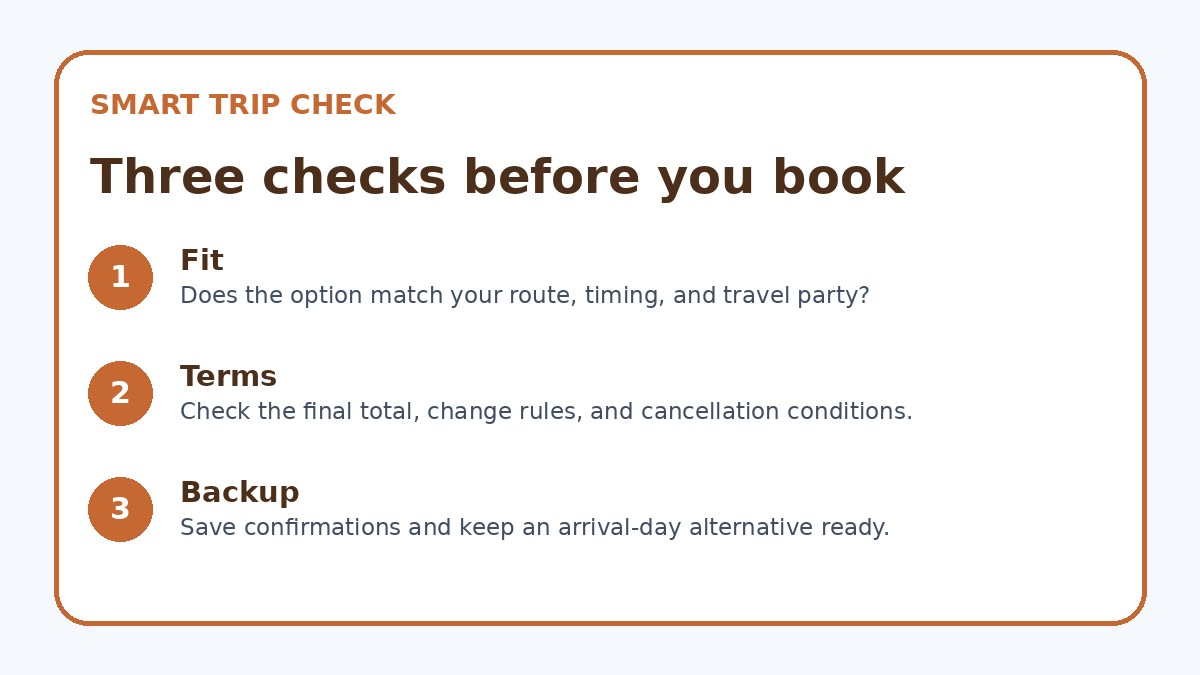
Before you book
- Locate the official airport arrivals map and note the designated pickup point for taxis, buses, and ride-hailing in your terminal.
- Confirm your flight’s arrival terminal and check provider pickup instructions for that specific terminal on the booking page.
- Compare door-to-door time including walking and waiting rather than only the in-vehicle travel time.
- If you book a private transfer, save the driver’s contact details, meet-up instructions, and a backup meeting point inside the terminal.
- Have your hotel address written in Korean and in English, and store it offline in case you don’t have mobile data.
- Verify baggage allowances or extra fees for oversized luggage with your chosen transfer provider before finalizing payment.
Private transfers and meet-and-greet services
A pre-booked private transfer provides the smoothest arrival experience for travelers valuing comfort and time savings. Providers typically offer a fixed pickup procedure: the driver waits in arrivals, holds a nameboard, and assists with luggage. This option is useful when your arrival time is uncertain due to connections or when you want to avoid language hurdles at the terminal. When you book, read the provider’s instructions carefully—look for details about the exact meeting point, driver contact methods, and how they handle flight delays or early arrivals.
Before confirming, check the vehicle size and whether the quoted rate covers extras like additional stops or wait time. Also look for clear cancellation and change policies on the booking page; these rules determine your flexibility if plans shift. If convenience and a predictable final drop-off are your priorities, a private car can be worth the extra cost, but weigh that against the option of a direct express transit route if available and convenient for your hotel location.
Frequently asked questions
Is public transit from the airport easy to use for first-time visitors?
Public transit can be straightforward if you plan your route before arrival. Map the nearest main transit stop to your hotel and check whether the final leg requires a short walk or an extra local ride. Make sure you know how to buy tickets or load a transit card, and confirm which exits to use when you leave the station so you don’t end up on the wrong side of a highway. Look up station names in both English and Korean and have the last-mile directions saved on your phone or paper.
Should I pre-book a private transfer or get a taxi at the airport?
Pre-booking gives certainty about vehicle size, pickup procedure, and often a meet-and-greet, which many travelers appreciate after a long trip. A metered taxi at the official airport stand can be quicker to arrange on arrival, but busier times may mean queues or fewer large-vehicle options. If your arrival time is late or uncertain, pre-booking can reduce stress; however, always read the private provider’s pickup instructions and delay policies on their booking page so you know how they handle changes.
How can I avoid problems with luggage and transfers?
Choose a transfer option that matches the amount and type of luggage you have. If you have oversized or many bags, a taxi or private car is usually simpler. For public transit, look for elevators/escalators on station maps and check whether the transfer requires stairs. Use luggage tags, keep essential items in a carry-on, and confirm whether your chosen service charges for extra bags. If language is a concern, prepare your destination written in the local script and screenshots of booking confirmations to show drivers or staff.
Final planning note
Choosing the right Busan airport transfer comes down to a few practical questions: how much you want to spend, how much walking and luggage handling you can tolerate, and how important a direct ride to your door is. Public transit saves money but demands more active planning and possibly shorter final-mile taxi rides. Taxis and ride-hailing reduce hassle but can be variable in time and cost. Private transfers add predictability and help with luggage, but you should verify pickup procedures and cancellation rules on the provider’s page before you pay. Decide on your top priority, compare total door-to-door time, and have a backup plan in case of delays or service changes.
Continue planning
Check current options and final conditions
Use the provider page to confirm live availability, the final total, cancellation terms, and every condition that matters to your trip.
This evergreen planning guide was created with AI-assisted drafting and a structured quality review. It does not display live prices, schedules, availability, visa guidance, or provider rankings. Verify current details before booking. Some links are affiliate links; we may earn a commission at no additional cost to you.