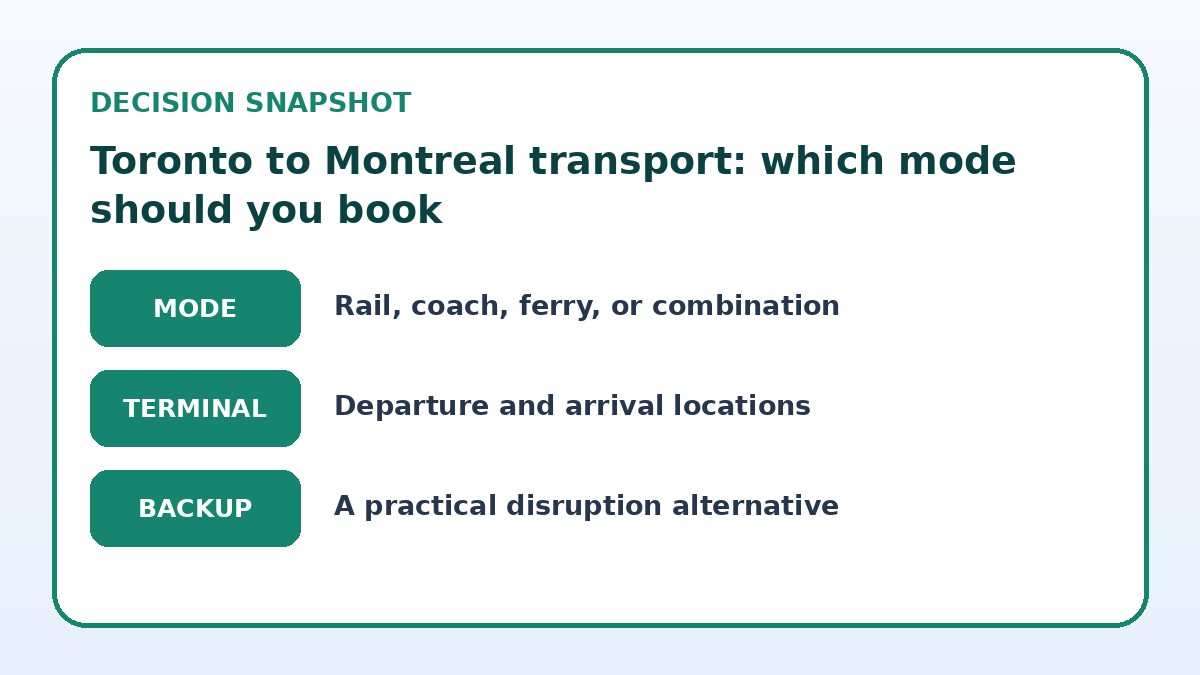
If you’re deciding how to travel from Toronto to Montreal, think first about what matters for this trip: travel time, comfort, luggage ease, flexibility, and cost control. For many visitors the comfortable inter-city train offers a relaxed ride and city-center stations; long-distance coaches (buses) usually mean lower fares and frequent departures but less legroom; driving gives full flexibility and route options; and multimodal choices—rail to bus transfers, or driving parts then taking a ferry where available—can balance time and scenic value. This article gives the practical answer up front: choose the mode that best matches your priorities, then use the tradeoffs and decision checklist below to finalize which booking to make. Verify current schedules, fares, baggage rules, and any transfer details on the provider’s booking page before you pay—Trip.com can be used once as a place to compare live availability.
See current options before you compare the details
Availability and final conditions change. Open Trip.com now or keep reading for the practical comparison.
Train: comfort, predictability, and city-center stations
Trains are a straightforward option when you prefer more personal space, the ability to move around, and stations located in the heart of city centres. For first-time visitors, this simplifies arrival logistics: you often step off at a major hub with public transit, taxis and rideshares readily available. Consider whether you need checked-baggage handling or extra seats; onboard services vary. When comparing train tickets, check whether the fare includes reserved seating, flexible exchange rules or onboard amenities so the total travel experience matches your expectations.
Tradeoffs are simple: trains can be slower than driving under some conditions but are typically more relaxing and less stressful. If your itinerary is tight, compare direct train options to ones with transfers — transfers add complexity and might erase the comfort advantage. Always confirm train schedules, platform details, and any station access rules on the operator’s final booking page before you buy. For travelers with mobility concerns, check accessibility features in advance and reserve accessible seating if required.
Coach (bus): low-cost flexibility and frequent departures
Coaches generally offer the most departure options each day and are often priced lower than rail, which makes them attractive for budget-conscious travellers or those with flexible timing. Coaches typically stop at central or well-connected terminals, though some services use suburban stops that require short onward transfers. Luggage policies can differ—carry-on sizes, extra-item charges, and underfloor luggage handling vary—so verify those rules on the provider’s booking page. Coaches can also offer overnight trips that save a night’s accommodation if schedules match your plans.
Be aware of tradeoffs: coach journeys usually have less legroom and fewer onboard facilities than trains, and travel times can be affected by traffic. For first-time visitors, coaches remain a practical choice when you prioritize cost and schedule frequency over onboard comfort. When comparing, look at total door-to-door time rather than only advertised duration, and check whether ticket types allow easy changes or refunds if your plans shift.
| Approach | Best for | Tradeoff to check |
|---|---|---|
| Train | Travelers valuing comfort, onboard space, and city-center arrival | Often slightly slower than driving and can be more costly than coaches |
| Coach | Budget-conscious travelers needing frequent departure choices | Less legroom and amenities; journey times affected by traffic |
| Driving | Visitors wanting flexible stops, side trips, or rural access | Adds navigation, parking and potential congestion responsibilities |
| Ferry or combined routes | Travelers prioritizing scenic experience over speed or frequency | Requires careful transfer planning and may have limited schedules |
Ready to check the option that fits your plan?
Use your exact dates and traveler details so the provider page can show the current total and conditions.
Driving: flexibility, detours, and provincial route planning
Driving between Toronto and Montreal puts you in control of timing, stops and side excursions—ideal if you want to explore towns, parks, or scenic shorelines along the way. A rental car is useful for multi-stop itineraries or reaching destinations outside city centres. Before committing to a drive, plan where you’ll park at each end, whether hotel parking is available, and how you’ll handle fuel, tolls, and insurance coverage. Also consider urban driving and parking challenges in both cities and the potential traffic at peak times.
The tradeoff is that driving adds responsibility: you’ll need to navigate, factor in rest stops, and accept possible congestion. For first-time visitors unfamiliar with local road rules or signs, build extra time into your plan and use up-to-date GPS navigation. If you’re comparing driving to public transport, calculate total door-to-door time and expenses, including parking and possible drop-off fees, rather than just petrol costs or rental base rates. Confirm rental terms and cross-province rules before booking.
Before you book
- Decide your top priority: shortest door-to-door time, comfort, cost savings, or sightseeing flexibility.
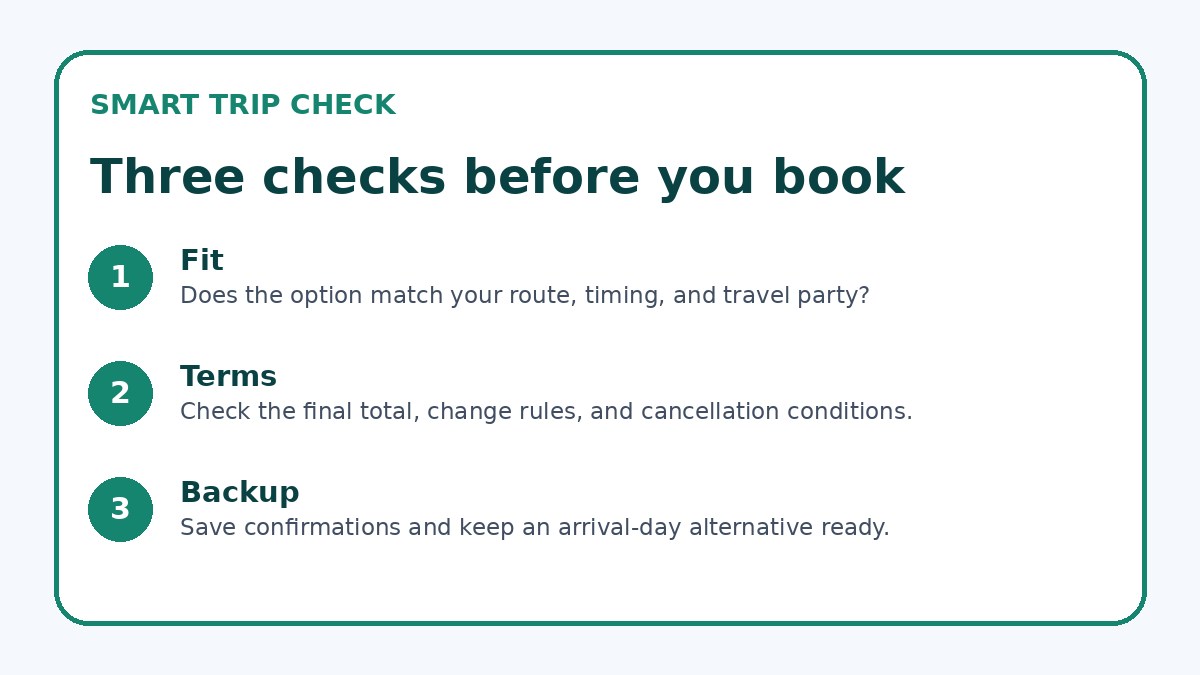
- Check the provider’s final booking page for schedules, direct versus connecting options, baggage rules and change/cancellation policies.
- Compare total door-to-door time, not only advertised transit time—include transfer waits, station access and urban travel.
- If driving, confirm rental terms, insurance coverage across provinces, parking options at your destination and any toll routes.
- If combining modes, build at least 45–90 minutes buffer for connections and verify that separate tickets allow missed-connection protection.
- Book with a payment card that provides travel protections you need and save a digital and paper copy of all tickets and confirmation numbers.
Ferries and combined routes: scenic alternatives and transfer logistics
Pure ferry service between Toronto and Montreal is not the main option, but ferries can be part of a combined route if you plan to include lakeside or river crossings as part of a scenic detour. Incorporating a ferry means coordinating schedules tightly with connecting trains or coaches and being very clear about ticket linking—many ferry operators sell standalone passages without transfer guarantees. If you choose a combined journey, build in buffer time for late connections and check baggage allowances, vehicle transport rules if you’re driving, and seasonal service variations.
When evaluating combined routes, treat them as bespoke itineraries: the scenic benefit may be high, but the convenience and frequency typically decline compared with direct trains or frequent coach services. For first-time visitors, combined routes suit those who prioritize experience over speed. Always confirm the ferry operator’s latest sailing schedules and vehicle policies on their booking page and ensure your onward transport will wait or provide alternatives if a connection is missed.
Frequently asked questions
How do I compare direct and connecting train or coach options between Toronto and Montreal?
Start by listing departures for your preferred day and mark which are direct and which require a transfer. Compare the total door-to-door duration including transfer times, station changes, and minimum connection windows. Look closely at the transfer station: is it inside the same complex or a separate terminal that needs a taxi? Check fare restrictions—some discounted tickets are non-refundable or fixed to a specific service. Finally, read the operator’s terms on their final booking page so you know whether missed connections due to delays are covered or if you’ll need to buy a new ticket.
Is renting a car better than public transport for a first-time visitor making this trip?
It depends on your itinerary. Rent a car if you plan multiple stops, rural detours, or need flexible departure times; driving gives control over pace and route. If you’ll stay mainly in the two city centres and want to avoid parking and urban driving, public transport—train or coach—usually simplifies logistics and can be more relaxing. Before booking a rental, check insurance rules, drop-off options, and expected parking costs near your accommodation; those details typically appear on the rental company’s booking page and influence the final cost comparison.
Can I mix modes to balance cost and comfort, and how should I plan transfers?
Yes—mixing modes is a practical approach. Common combos are train for the longest stretch and a short coach, rideshare or local transit for last-mile travel, or driving to a nearby town then taking rail for the remainder. When planning, allow generous buffer time for each transfer and verify whether tickets are linked or sold separately; separate tickets rarely include missed-connection protection. Confirm exact pickup and drop-off points, luggage limits, and whether services run late in the day. Use provider booking pages to check connection windows and cancellation rules before paying.
Final planning note
Choosing the best way to travel from Toronto to Montreal for a first-time visit comes down to priorities. If relaxation and downtown arrivals matter most, lean toward train travel; if budget and departure frequency are key, coaches are practical; if exploration and timing control top your list, driving makes sense; combined routes add scenic novelty but require careful connection planning. Use the checklist above to compare total door-to-door time, baggage and fare rules, and booking terms on each provider’s final page—Trip.com is a useful place to compare live options but always verify details with the operator before completing payment. With clear priorities and a buffer for transfers, you’ll pick the route that fits your trip and avoid last-minute surprises.
Continue planning
Check current options and final conditions
Use the provider page to confirm live availability, the final total, cancellation terms, and every condition that matters to your trip.
This evergreen planning guide was created with AI-assisted drafting and a structured quality review. It does not display live prices, schedules, availability, visa guidance, or provider rankings. Verify current details before booking. Some links are affiliate links; we may earn a commission at no additional cost to you.