Practical answer first: if you want a comfortable Seoul to Bangkok trip, prioritize a single sensible connection with a minimum 90–120 minute international layover (longer if you need immigration), pick an airline with a seat and service level you find restful, and time flights to match your sleep cycle. Book a fare that clearly includes checked baggage and seat selection so you avoid surprises, and check the transit/entry requirements for your connection airport before finalizing. Tradeoffs are time versus convenience and price versus comfort: shorter total travel time often means tighter connections and more stress; cheaper fares frequently exclude the extras that make long international travel easier. Below you'll find step‑by‑step decision criteria, what to check on booking pages, and a short checklist to leave the airport calmer and ready to explore Bangkok.
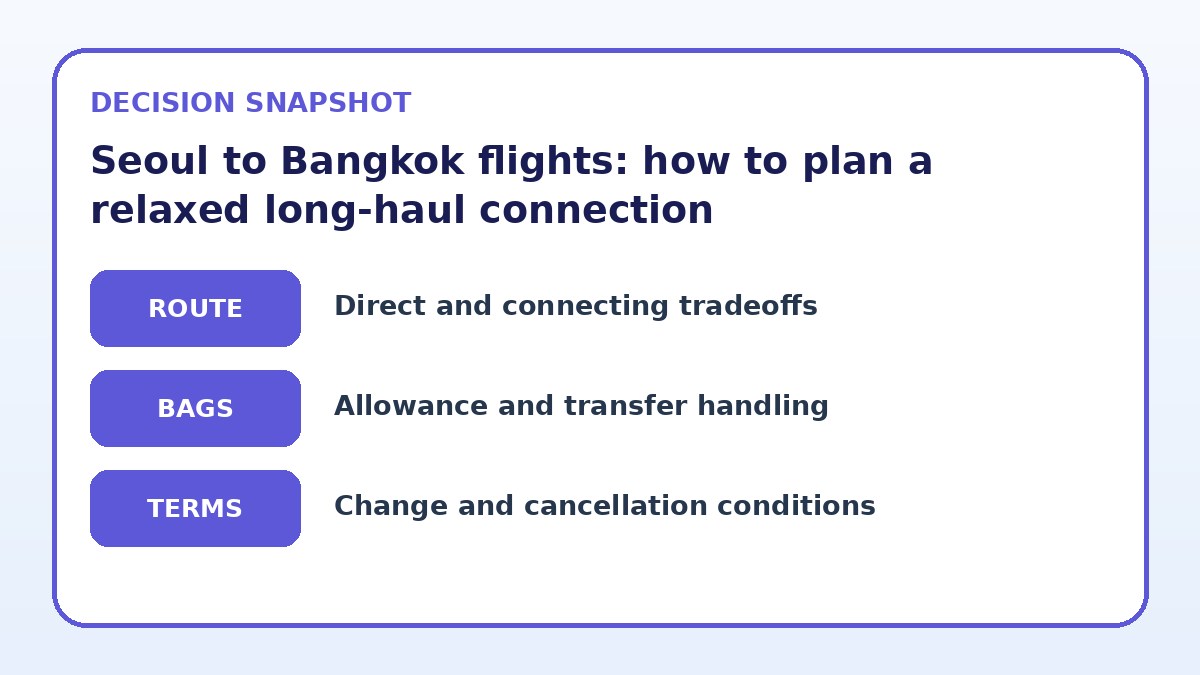
See current options before you compare the details
Availability and final conditions change. Open Trip.com now or keep reading for the practical comparison.
Picking the right connection: time, airport, and transfer type
Start by deciding whether you want a nonstop or connecting option. If direct flights are available, they remove transfer uncertainty and usually provide the quickest travel time, but they can be more costly or run at inconvenient times. For many first‑time travelers from Seoul to Bangkok, a single connection that keeps total travel time under 12 hours but includes a comfortable layover works well. Aim for at least a 90–120 minute international connection if you don’t have to clear immigration, and add more buffer if you do.
Next, compare transfer airports and terminal layouts. Some hubs have compact transfer procedures and interterminal shuttles that make connections simple; others force you to change terminals with longer walks or shuttles. Check whether a connection requires going through immigration and baggage recheck — that changes how much time you should allow. Use airport maps and official airline transfer pages to understand steps between arriving and departing gates before you book.
Seat selection, cabin class, and when to spend more
Comfort on long flights often comes down to where you sit. Economy seats vary widely by airline and aircraft; paying for a premium economy or an economy plus type seat can be the most cost‑effective way to arrive in Bangkok less exhausted. If buying a higher cabin is out of budget, prioritize a seat with extra legroom, a quiet location away from lavatories and galleys, and a window if you plan to sleep.
Decide whether to pay for extras like advanced seat selection, an upgraded meal, or lounge access during a long layover. These purchases can be more valuable than a slightly lower fare because they directly reduce stress and improve rest. On the booking page, verify exactly what the fare includes — especially checked baggage and seat assignment — because many low fares exclude both and add fees later.
| Approach | Best for | Tradeoff to check |
|---|---|---|
| Shortest total travel time | Travelers who value arriving quickly with minimal time in the air and transfers | Often involves tighter layovers with higher risk during delays and fewer comfort options |
| Longest layover with amenities | Those who prefer to rest, use lounges, or split the journey with an overnight hotel stay | Longer door‑to‑door time and potential extra accommodation or lounge costs |
| Single ticket with one carrier | Travelers wanting protected connections and simpler baggage handling | May cost more than building separate low‑cost segments or mixing carriers |
| Mixing budget carriers for lower fare | Price‑sensitive travelers willing to manage their own transfers and take more risk | You may need to recheck baggage, clear immigration, and absorb missed‑connection risk yourself |
Ready to check the option that fits your plan?
Use your exact dates and traveler details so the provider page can show the current total and conditions.
Managing layovers: lounges, sleep, and transit logistics
A long layover can be restful if planned. Look into airport lounges (purchase options often available at the door) for comfortable seating, showers, and quiet zones; these are especially worth it on overnight connections. If your layover includes overnighting inside the airport, verify whether the terminal has rest zones or pay‑to‑use sleep pods, and consider booking a nearby airport hotel when your schedule allows.
Transit logistics matter: know whether you must collect and recheck bags, whether visas are required to exit the sterile area, and how long the immigration and security lines typically are. Check the airline’s transfer guidelines and the airport’s official site. If immigration is required, add at least 60–90 minutes to your connection time more than you would for a sterile transfer; busy hubs during peak hours can add significant queueing time.
Before you book
- Choose an itinerary that lists both flight legs on the same ticket to simplify rebooking if a delay occurs.
- Verify the explicit checked baggage allowance for each leg and add baggage during booking if needed to avoid higher airport fees.
- Select your preferred seat at booking—prioritize window for sleep or aisle for frequent movement—and check seat maps carefully for exit rows or extra legroom.
- Confirm whether your connection requires passing immigration and rechecking bags; if so, increase layover time and prepare required documents.
- Download airline apps and save electronic boarding passes; add flight alerts for gate and time changes on the day of travel.
- Pack a travel comfort kit (eye mask, earplugs, inflatable neck support, medications, and spare toiletries) in your carry‑on to handle long flights and layovers.
Practical booking checks and what to verify before you pay
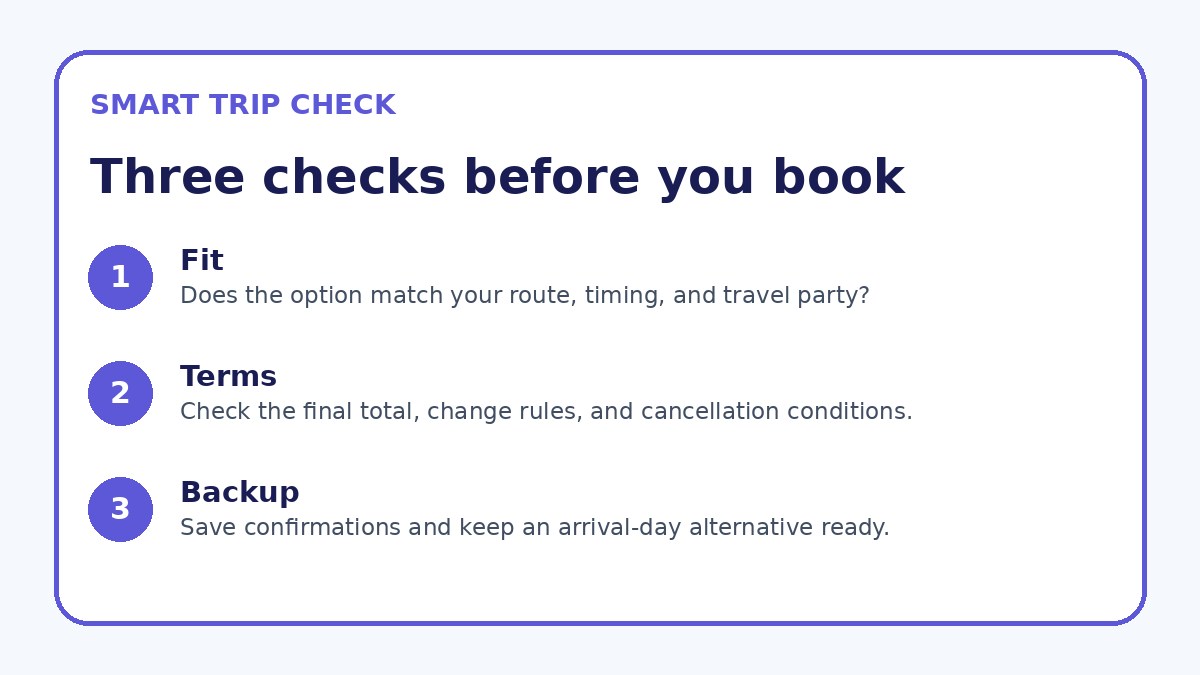
On the booking page, confirm three things: baggage allowance (number and weight of checked bags), whether you’re booked on a single ticket (which typically protects you if the airline re‑routes you), and exact change/cancellation rules. Single‑ticket itineraries normally let the airline handle missed connections; separate tickets can leave you responsible for missed flights and rebooking costs. If the fare mixes carriers, verify whether the transfer is protected and whether you need to collect baggage between carriers.
Also verify seat assignments and whether food service is included on each flight leg. Check the aircraft type if seat pitch is important to you — airline pages list equipment for each flight. Finally, confirm the connection airport and terminal on both legs; it is common for codeshares to show the same city but operate from different terminals. If in doubt, call the operating carrier to confirm transfer procedures or use Trip.com to compare current itineraries and conditions before finalizing.
Frequently asked questions
How much layover time should I allow between Seoul and Bangkok flights?
Aim for at least 90–120 minutes for an international transfer that stays airside; if your connection requires passing immigration or collecting and rechecking baggage, add 60–90 minutes as buffer. Busy airports or overnight flights can create slow security and immigration lines, so lengthen your layover during peak hours. If you prefer low stress, choose a 3–5 hour window that gives time for a lounge visit or a short nap. Always check the airline’s minimum connection time and airport transfer guidance on the booking page before confirming.
Should I book a direct flight or a one‑stop connection from Seoul to Bangkok?
If direct flights are available at times that suit you, they eliminate transfer uncertainty and are the simplest option for first‑time visitors. However, a well‑timed single connection often offers more flight choices and sometimes better departure times, which can help you sleep or avoid arriving in Bangkok too late. Weigh the comfort of a nonstop against potential cost and schedule constraints: if you choose a connection, prioritize the connection airport’s transfer efficiency and a protected single‑ticket booking so the airline manages missed connections.
What seating and cabin choices matter most for arrival comfort?
For long flights, an economy seat with extra legroom or a premium economy cabin often provides the best balance of cost and comfort. Window seats reduce disturbances during sleep; aisle seats let you stretch and move more easily. If you’re prone to jet lag, consider flight times that match your sleep schedule and select bulkhead or exit‑row seats for more space when allowed. Always confirm seat features on the carrier’s official booking page and consider paying for a seat you’ll actually use rather than relying on random allocation.
Final planning note
Planning a comfortable Seoul to Bangkok connection is about choices, not luck: pick an itinerary with a realistic layover, prioritize seat and baggage options that reduce stress, and verify the transfer logistics before you pay. Trade some extra time or a modest fare premium for tangible comfort gains—lounges, a better seat, and a single‑ticket protected connection are the most practical upgrades for first‑time travelers. Check the airline’s official booking page for baggage, seat, and transfer rules, and consider using a comparison site like Trip.com to view current options before finalizing. With a few intentional decisions you’ll arrive in Bangkok more rested and ready to enjoy the city.
Continue planning
Check current options and final conditions
Use the provider page to confirm live availability, the final total, cancellation terms, and every condition that matters to your trip.
This evergreen planning guide was created with AI-assisted drafting and a structured quality review. It does not display live prices, schedules, availability, visa guidance, or provider rankings. Verify current details before booking. Some links are affiliate links; we may earn a commission at no additional cost to you.