
Practical answer up front: for most first-time visitors, a Bangkok car rental is unnecessary and often more hassle than help — unless your plan centers on day trips outside the city, you have mobility needs, or you’re carrying bulky gear. Bangkok’s core neighborhoods are served by fast transit (BTS/MRT), affordable taxis and app-based rides, plus walkable zones where driving can slow you more than it helps. That said, a rental can make sense if you’re heading to regional destinations (Ayutthaya, Kanchanaburi, beach towns) on your own schedule, traveling with small children, or need a private, lockable cargo area. Read on to weigh tradeoffs — congestion, parking, driver rules, insurance and the real alternatives — so you can choose the right approach for your trip and avoid last-minute surprises at booking or pickup.
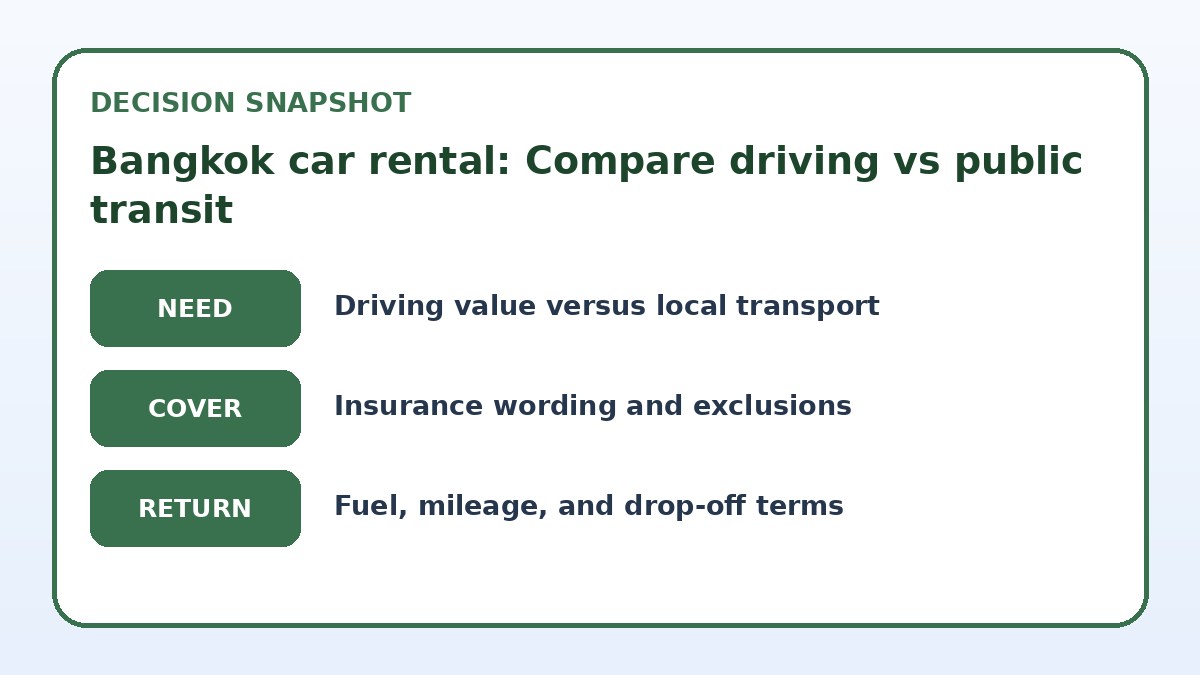
See current options before you compare the details
Availability and final conditions change. Open Trip.com now or keep reading for the practical comparison.
How Bangkok’s transport and layout affect the decision
Bangkok is a dense, traffic-prone city with multiple transport layers: elevated rail (BTS), underground metro (MRT), river ferries and a large pool of taxis and app-based ride services. These systems concentrate around tourist and business hubs, making many common attractions — temples, markets, malls and riverside sites — more accessible without a car. For first-time visitors staying within central neighborhoods, transit links and short taxi rides usually shorten door-to-door travel time compared with negotiating congested surface streets and parking.
At the same time, Bangkok sprawls across a wide area and traffic flows can be unpredictable. If your daily plan includes trips outside the urban core — historical parks, provincial attractions or multiple stops across town — the car’s flexibility can be beneficial. The tipping point is frequency and distance: a single airport pick-up or a one-way day trip rarely justifies a multi-day rental, but multi-stop itineraries that begin early and end late may justify the time you save by driving yourself.
Practical tradeoffs: time, cost, parking and stress
Time savings from driving depend heavily on route and hour. Peak rush hours compress speeds on major roads and ring roads; navigational delays and congestion can eat into any perceived convenience. Parking is another frequent friction point: central hotels may offer limited spaces, streetside parking enforcement is common, and public parking near attractions can be scarce or require walking from your car. Factor in time to find parking, pay attendant fees where required, and walk or catch a shuttle to the exact site you want to visit.
Cost comparisons aren’t straightforward: day rental rates, fuel, tolls, parking, and potential fines add up. When you add in the stress of local driving conditions — motorbikes weaving between lanes, complex intersections, and unfamiliar signage — some travelers find rideshares or private drivers cheaper in time and effort. However, for families with children, groups splitting costs, or visitors carrying equipment, the car can provide tangible value despite these tradeoffs. Think about how much you value privacy, control over stops, and the ability to carry luggage versus the convenience of letting a driver handle Bangkok’s streets.
| Approach | Best for | Tradeoff to check |
|---|---|---|
| Full-trip rental (car all days) | Travelers doing many out-of-city drives or needing full mobility and storage. | Higher total costs and more time spent driving and parking in Bangkok. |
| One-day rental for specific excursions | Visitors who mainly use transit in Bangkok but want a private day trip. | Extra pick-up/drop logistics and variable value depending on travel time saved. |
| Private transfer or driver-for-day | Groups preferring no local driving stress but wanting a private schedule. | Can be pricier than self-drive for multiple long days, though less stressful. |
| Public transit plus rideshares | First-time visitors staying centrally with short-distance plans. | Less privacy and flexibility, but often faster and cheaper for inner-city travel. |
Ready to check the option that fits your plan?
Use your exact dates and traveler details so the provider page can show the current total and conditions.

When a rental car makes sense for first-time visitors
Choose a rental if your itinerary features multiple out-of-city day trips, a road-focused route across Thailand, or if you require a private vehicle for mobility reasons. Examples include early starts to reach historical parks before crowds, visits to national parks or waterfalls with limited public transport, or coastal transfers where train and bus schedules don’t match your timing. Driving gives you the flexibility to set your own pace, stop at viewpoints and handle luggage without the logistical layers that come with public transfers.
Also consider the composition of your party. Families with young children, travelers with disabilities who need door-to-door access, or groups that split the cost often find the rental option more comfortable and economical. If you do rent, pick vehicle size for comfort and luggage space, and confirm child-seat availability and installation rules. Always be realistic about how much time you’ll spend behind the wheel in Bangkok itself and whether local driving will improve the overall travel experience.
Before you book
- List each day’s major stops and mark which require off-city driving versus those reachable by BTS/MRT or taxi.
- Check the rental contract’s insurance excess, what it covers, and whether you need supplemental coverage or a credit card waiver.
- Confirm whether your driver’s license is accepted locally and if an international driving permit is required for pickup.
- Estimate parking availability and cost at each hotel or attraction on your itinerary before deciding on a car.
- Compare door-to-door time and price for rental versus private transfer or organized tour for every out-of-town day.
- Read the rental company’s fuel policy, late return rules and cross-border restrictions on the final booking page.
How to compare options and what to verify before booking
Compare a short list of approaches: rent a car for the whole trip, rent only for specific day trips, hire private transfers, or rely on public transit and rideshares. For each, map total door-to-door time, approximate cost components (rental, fuel, tolls, parking), and the number of times you’ll need a vehicle. Use a single itinerary day as a case study — for example, a morning departure to an out-of-town site, mid-afternoon return and evening activity — to see which option is cleanest logistically.
Before you book, verify details on the provider’s final page: the rental company’s fuel policy, insurance coverage and excess, requirements for an international driving permit, additional driver fees, roadside assistance terms, and any geographic restrictions (some rentals forbid cross-border travel). Also check pick-up/drop-off locations, opening hours, and how late returns are handled. You can compare current availability and conditions on providers’ sites or services such as Trip.com, but treat those listings as a starting point and confirm the contract terms at checkout.
Frequently asked questions
Is driving in Bangkok safe for visitors who don’t usually drive in heavy traffic?
Bangkok driving involves busy multi-lane roads, frequent motorcycle traffic, and sometimes rapid lane changes. If you’re not confident driving in dense urban traffic, hiring a driver or using taxis and rideshares reduces stress and risk. For calmer driving experiences, plan early-morning departures to avoid peak congestion, stick to major highways outside the city, and avoid driving at night in unfamiliar neighborhoods. Consider whether the benefit of full control outweighs the safety and comfort of letting a local driver handle city traffic.
How should I decide between renting for the whole trip versus just a day or two?
Compare the number of days you actually need a car to the rental minimums and logistics. If only one or two days require a car, renting for those specific dates usually saves money and avoids parking hassles. However, if you have multiple day trips spread across your stay, a continuous rental may be more convenient despite higher cost. Use a sample calendar to total vehicle days, factor in pickup/drop fees, and weigh convenience against extra time spent handling rental logistics in the city.
What specific booking details must I verify before I confirm a Bangkok car rental?
On the provider’s final booking page verify: accepted driver licenses and any ID requirements, full insurance terms including excess amounts, roadside assistance coverage and contact process, fuel policy (full-to-full versus other), additional driver fees, mileage limits, and geographic restrictions. Also check pickup/drop-off locations and hours, late-return penalties, and whether parking damage is treated under normal insurance. If cross-border travel is planned, confirm explicit permission and any paperwork required. Treat the contract language as definitive rather than promotional copy.
Final planning note
For most first-time visitors, skip a full-trip Bangkok car rental and rely on transit, taxis and occasional private transfers unless your plans demand frequent off-city driving or specific accessibility needs. The city’s transport network and rideshare economy reduce time and stress for inner-city travel, while a car shines for flexible day trips, family travel, or bulky gear. Decide by mapping your itinerary, tallying how many days truly require a vehicle, and comparing door-to-door time and total cost for each option. If you do rent, read the rental terms carefully—insurance, driving permits, fuel policy and parking logistics make the difference between a smooth experience and avoidable headaches.
Continue planning
Check current options and final conditions
Use the provider page to confirm live availability, the final total, cancellation terms, and every condition that matters to your trip.
This evergreen planning guide was created with AI-assisted drafting and a structured quality review. It does not display live prices, schedules, availability, visa guidance, or provider rankings. Verify current details before booking. Some links are affiliate links; we may earn a commission at no additional cost to you.