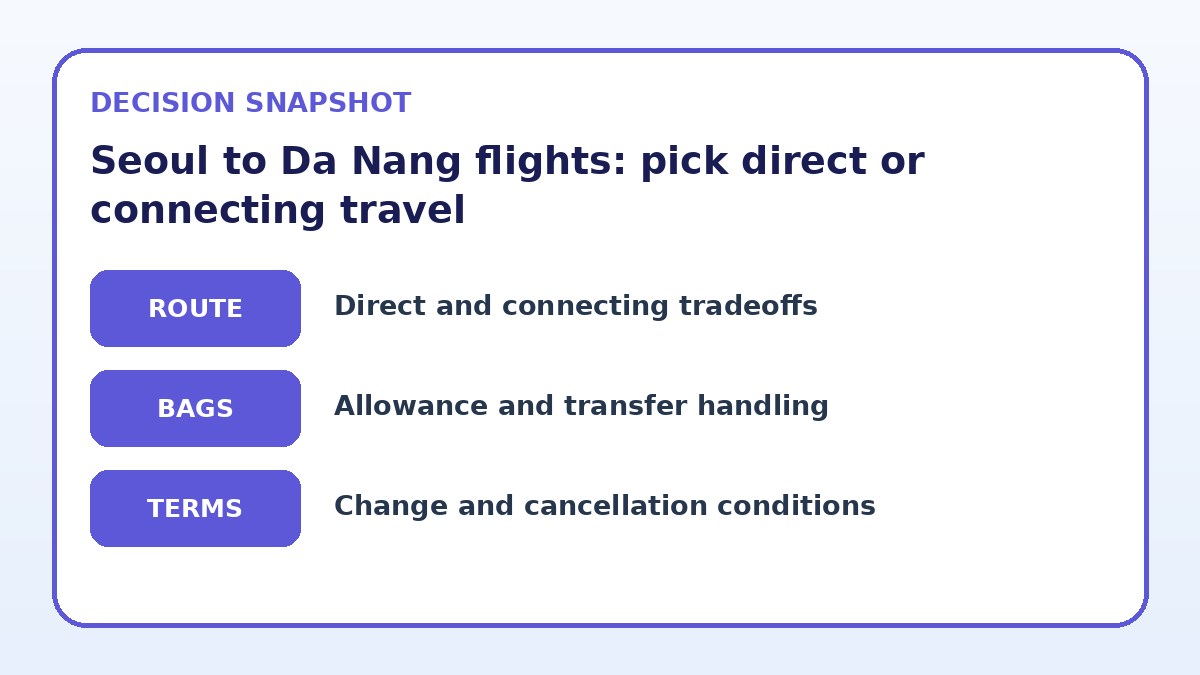
If you’re traveling from Seoul to Da Nang for the first time, the practical choice is simple: weigh how much you value time and convenience against cost and flexibility. Direct flights (when available) minimize time and transit hassle, while connecting itineraries can save money, open more schedule options, or let you add a short stopover in another city. Before you book, compare total travel time, the length and location of layovers, baggage transfer rules, and how cancellations or delays are handled. Use the booking page of each airline or an aggregator like Trip.com to confirm current schedules and baggage policies, and always verify connection minimums and recheck requirements on the airline’s final booking page.
How to compare total travel time and convenience
Start by calculating door-to-door time rather than just airborne time. Add travel time to the Seoul airport you’ll use, the recommended arrival buffer for international check-in and security, the advertised flight time, plus time from Da Nang airport to your first accommodation. When looking at connecting itineraries, include scheduled layover length and whether you must change terminals or re-clear security. Real-world delays and lane congestion at airports can add time, so plan some padding. If you have a late flight into Da Nang, consider whether transport or shuttle services run at your arrival hour.
Convenience also includes the number of times you handle baggage and passports. Nonstops mean you check baggage once and move straight through arrival formalities in Da Nang. Connections may require you to recheck bags, pass through immigration, or pick up transit visas depending on the routing and whether the itinerary is on a single ticket. Read the airline’s baggage transfer policy on the booking page and confirm whether the connection will be an airport transfer or require an independent recheck; this affects both time and stress levels, especially on a first trip.
Cost, flexibility and fare rules to watch
Ticket price is a major factor but not the only one. Cheaper connecting flights sometimes come with stricter change and cancellation rules, limited or no seat selection, and extra fees for carry-on or checked baggage. A slightly higher fare on a direct ticket may include more flexible change options, or at least reduce your chance of missed connections that force costly rebooking. Always open the fare rules on the carrier’s final booking page before you pay so you understand change fees, refundability, and how award or loyalty credits are handled.
For connecting itineraries, check whether the segments are sold on a single ticket or separate bookings. Single tickets typically protect you if an earlier leg is delayed, allowing the airline to rebook you onto the next available flight. Separate tickets carry more risk: if you miss the second flight because the first was late, the second airline may treat you as a no-show. If you’re comparing options across carriers, factor in whether the airlines have partnerships or interline agreements that simplify rebooking and baggage transfer.
| Approach | Best for | Tradeoff to check |
|---|---|---|
| Direct flights | Travelers prioritizing speed, simplicity, and fewer moving parts | May offer fewer schedule options and sometimes higher base fares |
| Connecting flights on a single ticket | Those who want lower fares with protected connections | Longer total travel time but better rebooking and baggage transfer protections |
| Separate-ticket connections | Flexible itinerary builders seeking the lowest possible fare | Higher risk of disruption and no automatic protection if you miss the next flight |
| Intentional stopover connections | Travelers who want to add a short visit en route without rushing | Requires extra planning for lodging and entry formalities at the stopover |
Comfort, onboard experience, and sleep considerations
Onboard comfort can tip the balance for many travelers. Direct flights remove an extra takeoff and landing, reduce time spent seated in cramped gates or narrow-body cabins during connections, and let you settle into a single rhythm for eating and rest. If the nonstop option uses a larger aircraft with more recline or better seat pitch, that can make a meaningful difference on a mid-length regional flight. For those who need uninterrupted rest to arrive refreshed, a direct routing often delivers better sleep and fewer disruptions.
However, a connecting itinerary can offer benefits like daytime travel to avoid red-eye discomfort or the chance to split a long journey with a planned overnight stop. If you plan to use a connection city as a mini-stopover, choose a longer layover and book flexible lodging. Also consider meal service, cabin type, and whether you can reserve specific seats when comparing options—these details are on the airline’s booking page and affect your comfort more than advertised flight time alone.
Before you book
- Confirm which Seoul airport your flight departs from and plan transit time to that airport plus recommended check-in buffer.
- Verify on the airline booking page whether your baggage is checked through to Da Nang or must be rechecked at the connection.
- Compare total door-to-door travel time, not just airborne time, including layovers and on-the-ground transfers.
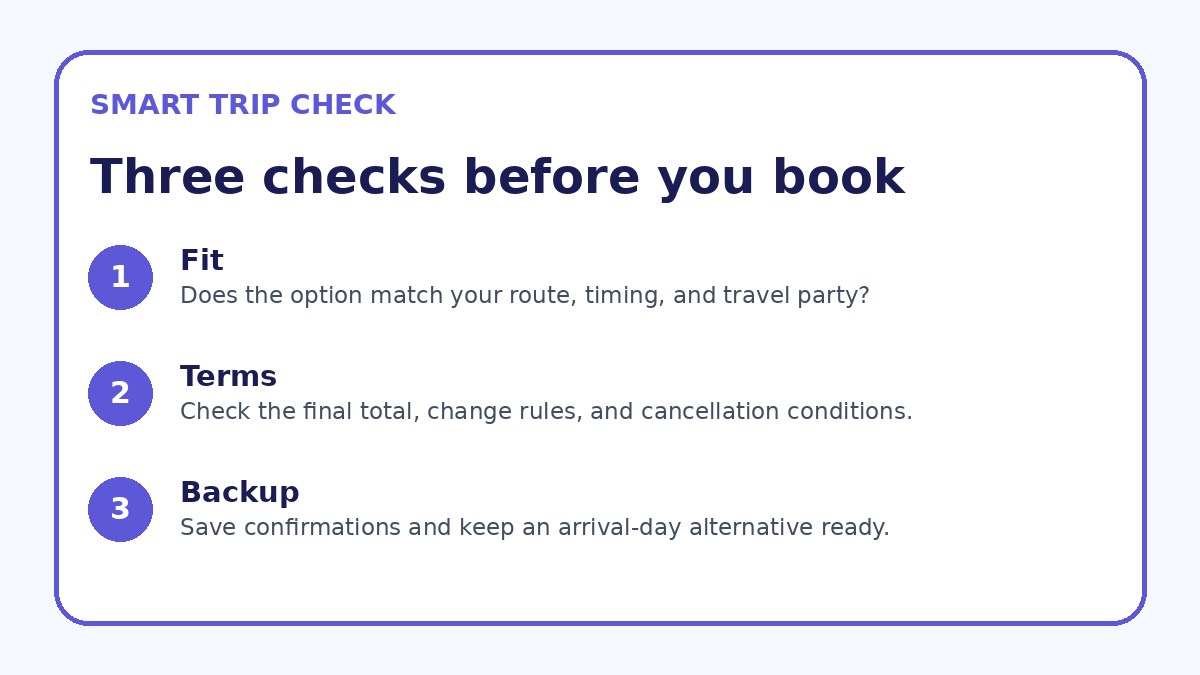
- Open and read the fare rules before purchase to understand change fees, refundability, and missed-connection policies.
- If booking separate tickets, allow at least several hours for staggered arrival and factor in visa or transit requirements.
- Sign up for airline flight alerts and save the airline’s customer service contact and your booking reference before travel.
Practical risks and how to reduce them
Connections add operational risks: missed flights due to delays, luggage that doesn’t transfer, or unexpected terminal changes. Reduce those risks by building in generous connection time—especially if you must change terminals or pass immigration. Check arrival and departure terminal information and whether the connection is within the same airline alliance. If you have a tight schedule for a must-attend event in Da Nang, favor direct service or a single-ticket connection with minimum connection times well above the published minimum.
Also prepare documents and contingency plans. Carry essential items (medication, chargers, travel documents) in your carry-on in case checked baggage is delayed. Note how the airline handles missed connections on its fare rules page, and consider travel insurance that covers missed connections and delay expenses. Finally, track the day-of-flight status and sign up for airline notifications so you can react quickly if the plan changes.
Frequently asked questions
Should I always choose a nonstop Seoul to Da Nang flight if one exists?
Not always. A nonstop flight reduces transit complexity and total travel time, which is ideal for first-time visitors who prefer simplicity. But if the nonstop schedule is inconvenient, very costly, or departs from an airport that’s hard to reach from your accommodation, a well-planned connecting option might be better. Compare the time saved versus the extra cost, and check fare rules for flexibility. If you need to be in Da Nang at a specific time, prioritize itineraries with reliable connection protection or direct service.
How much layover time is safe when connecting between flights?
There’s no single answer because safe connection time depends on airports, whether you change terminals, and whether you clear immigration. For single-ticket connections within the same airport, airlines publish minimum connection times but adding 60–120 minutes extra can reduce stress. If you must change terminals or pick up and recheck baggage, allow several hours. When in doubt, check the airport layout and the airline’s recommended connection times on its booking page, and plan additional buffer if your itinerary involves different carriers or separate tickets.
What should I verify on the airline’s final booking page before I pay?
Before completing payment, confirm departure and arrival airports, total door-to-door travel times, exact layover durations, baggage allowances and transfer rules, seat selection options, and the full fare rules for changes or cancellations. Also check whether segments are on one ticket and whether there are partner agreements for protected connections. If you plan a stopover, verify visa or entry requirements for that country. Use the airline’s booking page as the final authority because schedules, aircraft types, and policies can change after initial search results.
Final planning note
Choosing between direct and connecting Seoul to Da Nang flights comes down to your priorities: time and simplicity versus cost and flexibility. For first-time visitors who want a stress-minimized arrival, direct service or single-ticket connections with generous layovers are the safest choices. If you prefer lower fares or a chance to briefly visit another city, connecting itineraries can be attractive—just confirm baggage transfer, connection protection, and fare rules before you buy. Use the airline’s final booking page and an aggregator like Trip.com to compare current options, then pick the routing that balances your schedule, comfort, and tolerance for complexity.
Continue planning
Check current options and final conditions
Use the provider page to confirm live availability, the final total, cancellation terms, and every condition that matters to your trip.
This evergreen planning guide was created with AI-assisted drafting and a structured quality review. It does not display live prices, schedules, availability, visa guidance, or provider rankings. Verify current details before booking. Some links are affiliate links; we may earn a commission at no additional cost to you.