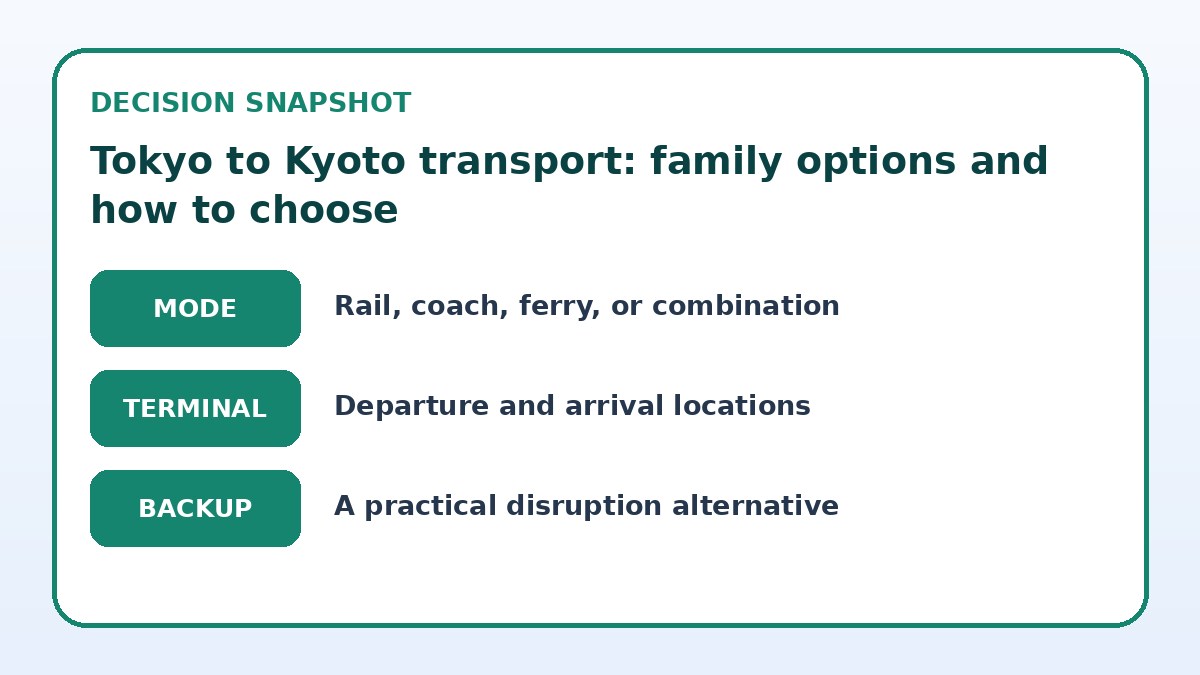
Practical choice first: for most families, a direct Shinkansen (bullet train) or highway coach gives the best mix of speed, comfort, and simplicity; renting a car suits families who need flexibility or plan stops; ferries form one leg of longer island-hopping itineraries. This article helps you weigh those high-level options, then pin down the right one for your family by age of children, luggage, budget flexibility, mobility needs, and how much sightseeing en route you want to do. Read the quick comparison, then use the checklists and FAQ to verify seat availability, luggage rules, transfer requirements, and ticket-purchase options before you book. If you want current schedules and live availability, verify times and fares on official operator sites or a booking service such as Trip.com, and always confirm final details on the provider’s booking page.
See current options before you compare the details
Availability and final conditions change. Open Trip.com now or keep reading for the practical comparison.
Train: speed, simplicity, and what families should confirm
Trains—especially high-speed options—are the default pick for families who want predictable travel times and minimal handling of luggage and children. For Tokyo to Kyoto, intercity trains typically run often, with comfortable seating, onboard restrooms, and space for small luggage. When considering a train, check whether services are direct or require a transfer; multiple-seat reservations versus free seating can affect how easily your group sits together. For families with infants or toddlers, look for priority seating, wheelchair spaces that can sometimes accommodate a stroller in folded form, and the availability of onboard toilets with baby changing areas where provided.
Before you book train tickets, confirm the baggage rules, seat reservation policies, and any child fare rules with the operator or the booking page. If your family carries a lot of luggage, verify storage space on the specific train model—some high-speed trains have overhead racks plus limited luggage areas at car ends. Also verify how transfers at busy stations are handled: a short platform transfer with stairs is a different challenge from a same-platform change. On-site station facilities, stroller-friendly routes between platforms, and the ease of collecting reserved seats all change the real-world convenience for families.
Coach: economical comfort versus travel time and traffic
Highway coaches (long-distance buses) are often the most economical way to move a family between major cities. Buses typically offer reclining seats, sometimes onboard Wi-Fi, and seats that recline more than commuter rail. For families with older children who can nap, a coach’s longer journey time may be acceptable in exchange for lower outlay and fewer transfers to handle at either end. Coaches can also offer late-night or early-morning departures that free up daytime sightseeing on both ends of the route.
However, coaches are sensitive to road traffic and highway incidents; travel times are less predictable than rail. For families with small children or those sensitive to long coach rides, the added time can be tiring. Check whether the coach has onboard toilets and seatbelts, and whether luggage allowances let you stow strollers or car seats without extra fees. Also verify pickup and drop-off points: a coach that stops at peripheral terminals may require an additional local transfer or taxi, which changes total door-to-door convenience.
| Approach | Best for | Tradeoff to check |
|---|---|---|
| Direct high-speed train | Families prioritizing speed, fewer transfers, and predictable arrival times | Less flexibility for sightseeing en route and potential limits on luggage size |
| Highway coach | Budget-conscious families comfortable with longer travel times | More affected by traffic and typically longer door-to-door duration |
| Rental car / self-drive | Families needing flexibility, multiple stops, or transporting bulky items | Adds driving stress, tolls, parking constraints, and possible one-way fees |
| Mixed train + ferry | Families building scenic or island-inclusive itineraries who enjoy the journey | More connections to coordinate and greater luggage handling complexity |
Ready to check the option that fits your plan?
Use your exact dates and traveler details so the provider page can show the current total and conditions.
Car and self-drive: flexibility, stops, and practical constraints
Driving gives families freedom to stop for rest, sightseeing, or meal breaks on your own timetable. If your trip includes rural detours, hidden temples, or multiple day-stops, a car often wins for logistics because you control luggage placement and have room for bulky items like car seats, strollers, and picnic gear. Driving also eases late departures or arrivals, and can be cost-effective for larger groups when you split rental and fuel costs across several people.
On the other hand, factor in tolls, parking fees, and the stress of driving unfamiliar roads. Urban parking in Kyoto can be costly and time-consuming to find, and some family attractions require walking from parking to entrance. Make sure your rental includes appropriate child seats or that you can bring or rent them locally, and verify insurance coverages and cross-prefecture restrictions on the provider page. If you plan one-way travel, confirm whether rentals allow drop-off in a different city and what fees might apply.
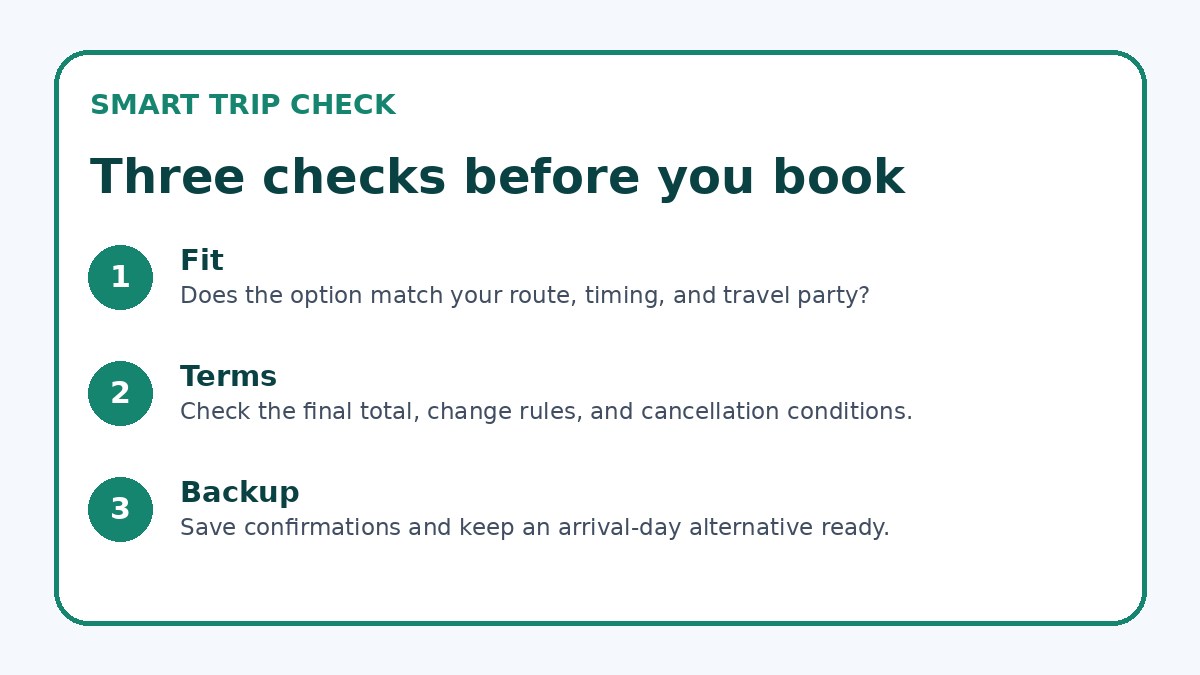
Before you book
- Confirm direct versus connecting service options and how many transfers each choice requires for your planned departure times.
- Verify baggage size and quantity rules, stroller/carseat policies, and reserved seating availability on the provider’s booking page.
- Check whether child or infant fares apply and whether documentation is needed to secure children’s tickets or seat reservations.
- If driving, confirm rental drop-off terms, child-seat availability, insurance coverage, toll payments, and parking near your Kyoto accommodation.
- For mixed trips, allow at least 45–90 minutes buffer between modes to absorb delays, boarding time, and luggage transfers.
- Compare total door-to-door time—including transfers, local transit to terminals, and expected traffic—rather than relying on headline travel times.
Ferry and mixed-mode routes: when adding a sea leg makes sense
A direct ferry between Tokyo and Kyoto does not exist as a simple point-to-point alternative, but ferries become relevant for families building an island-rich itinerary or combining rail with sea travel. If you plan stops on coastal areas or nearby islands, a train or car to a ferry port plus a ferry crossing adds an experiential layer—children often enjoy the novelty of sea travel. Ferries usually offer cabins or ample seating, easier luggage handling onto the ship, and the chance to stretch legs during a longer transit.
Mixed-mode travel increases planning requirements: you must coordinate arrival times at ports with ferry schedules, allow extra buffer for boarding, and handle luggage transfers between train, car, and ship. Confirm whether the ferry operator requires vehicle reservations, how child fares are handled, and whether cabins are available for overnight legs. For families, the extra time and transfer steps can be rewarding, but the logistics require careful alignment of connections and realistic allowances for delays.
Frequently asked questions
Should our family prioritize speed or cost when choosing between train and coach?
Balance depends on priorities: choose speed if you value more sightseeing time at your destination, shorter fatigue for young children, and fewer transfers. Choose a coach if keeping costs down is essential and your children handle longer stretches of sitting without frequent stops. Also consider indirect costs—taxis to peripheral coach terminals or extra overnight stays if travel takes longer. Run rough door-to-door comparisons including local transfers so you can weigh saved fare against time and convenience for your family.
Can we bring strollers and car seats on trains and coaches between Tokyo and Kyoto?
Most trains and coaches accept folded strollers stored in luggage areas or overhead racks; larger items may need to be consolidated. Car seats typically must be brought by the family for use in rental cars—check rental agencies for availability and fitting requirements. Always verify each operator’s specific rules on strollers and car seats on their booking or information pages before departure, and confirm whether priority boarding or assistance is available at major stations for families with bulky gear.
Is it worth mixing modes to include an island stop or a scenic ferry crossing?
Mixing modes can turn the transfer itself into part of the holiday, especially if children enjoy ferry crossings and you plan coastal attractions. It’s worth it when the extra travel time serves a clear family purpose—unique sights, relaxed pacing, or a destination only reachable by sea. If your schedule is tight or you prefer predictability, a direct train may be simpler. When mixing modes, create realistic buffers, double-check ferry timetables and vehicle booking rules where applicable, and consolidate luggage handling to minimize stress.
Final planning note
Choosing the right Tokyo to Kyoto transport for a family comes down to three practical questions: how much speed and predictability you need, how much flexibility and stopping power you want, and how much handling of luggage and transfers your group tolerates. Direct trains offer the simplest, most predictable experience; coaches save money but add travel time; driving lets you tailor the route and stops; mixed routes add novelty but require careful timing. Use the checklist to verify bookings, baggage rules, and child-seat needs on operator pages. If you need a quick way to compare current schedules and availability, consider checking a booking aggregator such as Trip.com, then finalize details directly on the operator’s site.
Continue planning
Check current options and final conditions
Use the provider page to confirm live availability, the final total, cancellation terms, and every condition that matters to your trip.
This evergreen planning guide was created with AI-assisted drafting and a structured quality review. It does not display live prices, schedules, availability, visa guidance, or provider rankings. Verify current details before booking. Some links are affiliate links; we may earn a commission at no additional cost to you.