If you’re a solo traveler deciding how to get from Seoul to Gyeongju, the practical answer is: start by weighing comfort and convenience against flexibility. For most solo travelers aiming to maximize time in Gyeongju while minimizing stress, a fast intercity train or express bus that requires no transfers will usually be the best single-hop option. If you prioritize door-to-door flexibility or want to visit smaller stops en route, renting a car or combining train and local bus rides can make sense. Before you book, check current schedules, whether a service is direct or requires a transfer, luggage rules, and cancellation or change policies. Use provider booking pages (or Trip.com to compare availability) to confirm final departure times, seat types, and any conditions that affect refunds or changes.
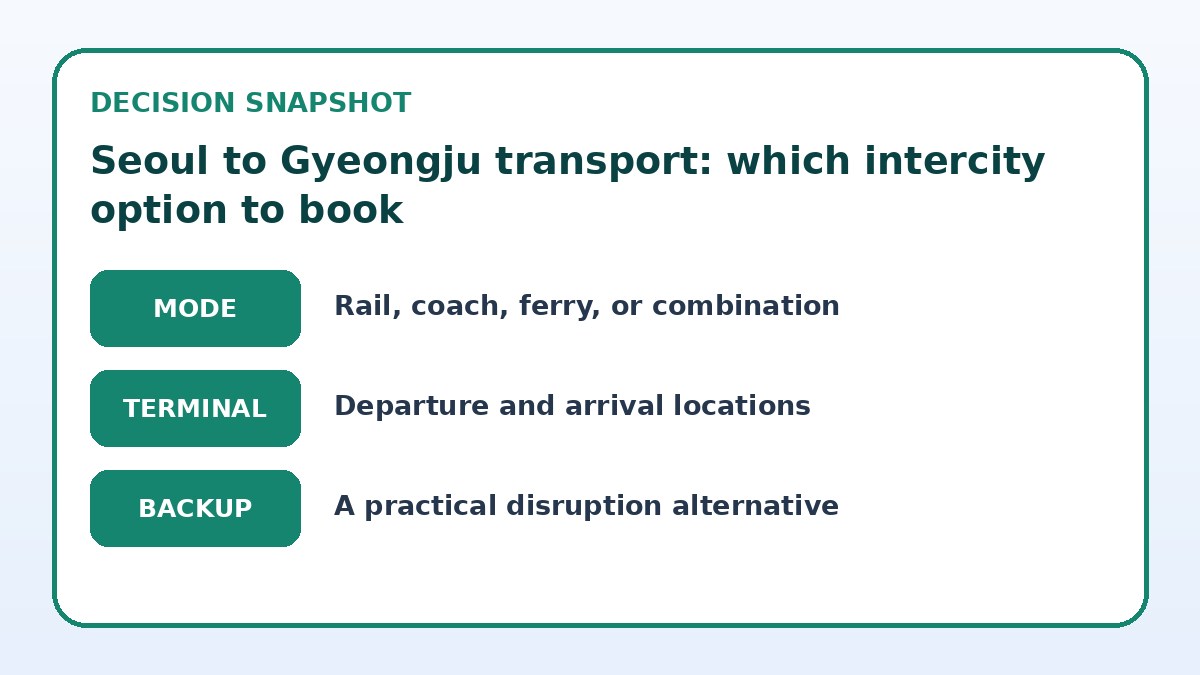
See current options before you compare the details
Availability and final conditions change. Open Trip.com now or keep reading for the practical comparison.
Deciding your priority: speed, cost, or flexibility
Start by deciding what matters most to you on this trip: speed, price, or the flexibility to stop along the way. If your schedule is tight and your main goal is to arrive in Gyeongju quickly, prioritize direct intercity options that minimize transfers. If you’re watching your budget, the cheapest choice might involve slower services or a connection—but factor in the value of your time and any added transfer stress. For solo travelers concerned about safety and simplicity, straightforward itineraries with clear departure points and recognizable terminals will reduce uncertainty, especially if you arrive to large stations in Seoul unfamiliar with local layouts.
Flexibility matters if you want to see smaller towns between Seoul and Gyeongju or if your plans in Gyeongju depend on flexible arrival times. Renting a car gives you that flexibility but brings driving responsibilities—navigation, parking, and fuel—which add mental load for a solo traveler. A mix-and-match approach can work well: take a fast train for the long haul, then rent a car or use local buses once in the wider Gyeongju area. Whatever you choose, make a prioritized checklist of what you won’t compromise on—direct routing, luggage limits, or ability to change the booking without heavy penalties.
Trains: what to check and when they’re the practical choice
Trains are often the go-to for predictable travel between major Korean cities when a direct service is available. For Seoul to Gyeongju transport, compare journey patterns and whether services require a transfer at a hub station. When evaluating trains, check seat types (reserved versus unreserved), luggage allowance, and whether a change is necessary—each factor affects solo travelers differently. Also verify boarding procedures and platform entry times on the operator’s final booking page, because platform assignments and check-in rules can differ and change on short notice.
Choose a train if you value consistent travel time, a comfortable seat, and the ability to work or rest en route. Trains usually have clear schedules and station signage, reducing the mental overhead of navigating transfers. However, if the rail option available to you involves a transfer or long layover, calculate total door-to-door time and the potential hassle of moving luggage between platforms. Use train operator pages or a comparison site like Trip.com only to confirm live schedules and seat availability; then decide if the speed and predictability justify any extra cost compared with buses or driving.
| Approach | Best for | Tradeoff to check |
|---|---|---|
| Direct fast train | Solo travelers prioritizing predictable, comfortable travel with minimal transfers | May be pricier than slower buses and subject to seat availability—verify seat type and transfer needs |
| Express bus | Budget-conscious travelers who want direct services without navigating rail stations | Longer travel time and greater susceptibility to road traffic—check baggage rules and boarding points |
| Rent a car | Travelers wanting flexible stops and rural access around Gyeongju | Adds driving, parking, and navigation responsibilities—confirm rental terms, insurance, and drop-off rules |
| Hybrid: train plus local transport | Those who want fast mainline travel combined with local flexibility for final miles | Requires coordination of arrival times and local transport schedules—allow extra connection time |
Ready to check the option that fits your plan?
Use your exact dates and traveler details so the provider page can show the current total and conditions.
Buses and coaches: practicality for budget-minded solo travelers
Express buses can be a strong practical choice when they offer direct services between Seoul and Gyeongju without station changes. Buses often depart from major terminals with clear pickup points and can be cheaper than premium train services—though this varies. If you plan to travel overnight to save daytime hours or lodging costs, check whether the bus provides reclining seats and adequate restroom access. For solo travelers, pick reputable operators and review boarding instructions on the final booking page so you know exactly where to wait and how early to arrive.
The tradeoffs with buses include longer travel time on average and a greater sensitivity to road traffic. If you value predictable arrival time, look at typical traffic patterns for your intended travel window and consider buffer time before any onward connections in Gyeongju. Buses are often better when your accommodation is near the bus terminal or when direct routes reduce the need for local transfers. Confirm baggage rules and seat assignment options—if you carry oversized luggage, some coaches may have limits or require advance notice.
Before you book
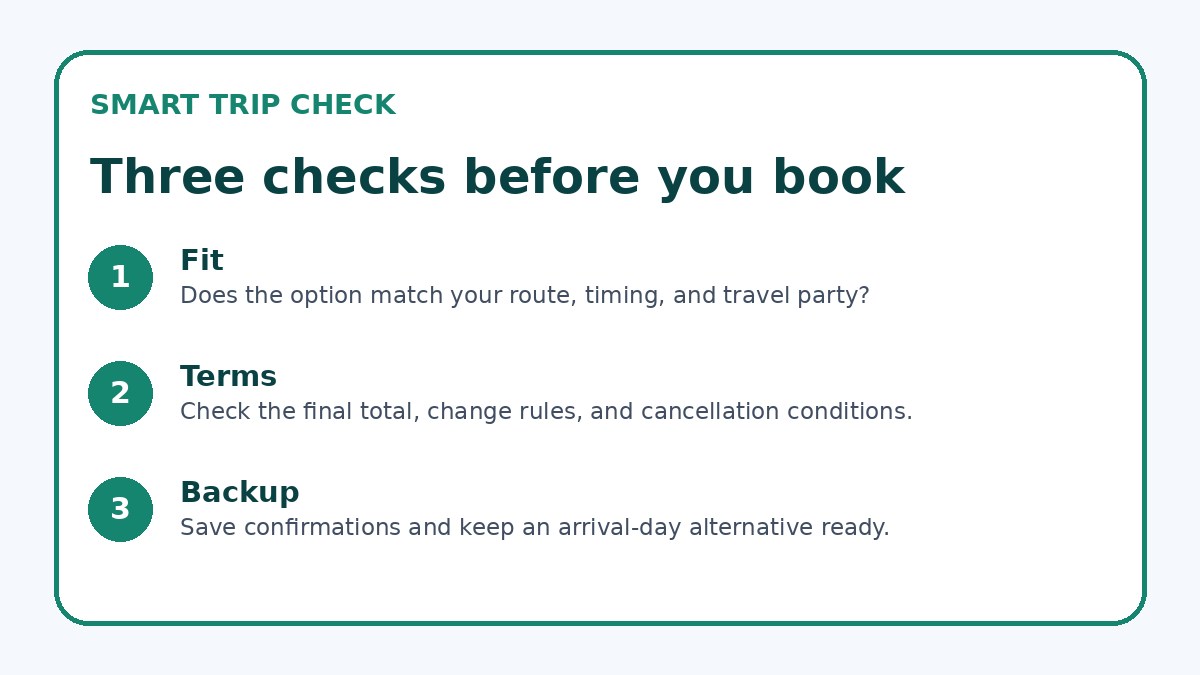
- Confirm whether your chosen service is direct or requires a transfer and factor transfer time into your schedule.
- Compare total door-to-door travel time, not just in-vehicle time, including station walks and local transfers.
- Check provider booking pages for seating options, luggage rules, and exact boarding procedures before buying a ticket.
- If renting a car, verify rental insurance coverage, driver age rules, and pick-up/drop-off hours on the agency’s final booking page.
- Plan how you’ll get from your arrival point in Gyeongju to your accommodation—pre-book a taxi or check local bus timetables where needed.
- Allow buffer time on arrival for unexpected delays, and avoid tight same-day connections for onward trips or tours.
Driving or mixed transport: when to rent a car or combine modes
Renting a car can unlock off-the-beaten-path sites around Gyeongju and suit solo travelers who want total control over timing and stops. Before committing, consider whether you are comfortable driving in South Korea’s traffic environment and whether parking and road signage at both ends of the trip are manageable for you. Verify rental terms on the provider’s page, including insurance coverage and fuel policy. Also plan where you’ll park in Gyeongju—some attractions are best reached by car while others are easiest on foot or with short local buses or taxis.
A mixed approach—train to a nearby hub, then car rental or local bus for the final miles—can combine speed with local flexibility. This hybrid is worth considering if direct long-distance services are limited or if train stations are closer to city centers while rental agencies have better pickup options. If you opt for mixing modes, leave generous connection time between services, and confirm that your train arrival aligns with rental agency hours. Finally, read the rental provider’s final booking page for all conditions that affect solo travelers, including driver age limits and cross-region drop-off rules.
Frequently asked questions
Should I choose a train or bus from Seoul to Gyeongju as a solo traveler?
Choose trains if you want predictable journey times, a comfortable seat to work or rest, and fewer traffic-related delays. Buses can be a good alternative when they offer direct routes at lower cost or more convenient terminals for your accommodation. For solo travelers, weigh the simplicity of boarding and platform navigation on trains against potential savings and terminal locations for buses. Ultimately compare door-to-door time, luggage handling, and how comfortable you feel managing any required transfers.
Is renting a car in Korea practical for a solo traveler visiting Gyeongju?
Renting a car is practical if you plan to visit dispersed sites around Gyeongju or nearby rural locations where public transport is sparse. It gives flexibility but also places the responsibilities of navigation, parking, and road rules on you. Before booking, confirm insurance options, any driver age restrictions, and pick-up/drop-off policies on the rental company’s booking page. If you’re unfamiliar with local driving conditions, consider pairing public transport with short local rentals or taxis in Gyeongju instead.
How should I check schedules and availability before booking?
Always verify real-time schedules, seat availability, and booking conditions on the operator’s official booking page before purchasing. If you want a quick comparison of options, you can consult Trip.com to see current availability and conditions, but rely on the provider’s final page for cancellations, refunds, exact departure times, and platform information. For hybrid trips, confirm that arrival times align with local transport or rental agency hours to avoid long waits or missed connections.
Final planning note
For solo travelers deciding Seoul to Gyeongju transport, the most practical choice balances your priorities: take a direct train or express bus if you want simplicity and predictable travel time; rent a car if you need flexibility to explore beyond the city; choose a hybrid approach when you want both speed and local access. Before booking, verify whether services are direct, examine seat and luggage rules, and confirm cancellation or change policies on the provider’s booking page. A clear checklist, buffer time for connections, and a confirmation of the final boarding details will make the trip smoother and let you focus on enjoying Gyeongju.
Continue planning
Check current options and final conditions
Use the provider page to confirm live availability, the final total, cancellation terms, and every condition that matters to your trip.
This evergreen planning guide was created with AI-assisted drafting and a structured quality review. It does not display live prices, schedules, availability, visa guidance, or provider rankings. Verify current details before booking. Some links are affiliate links; we may earn a commission at no additional cost to you.