If you’re traveling from Melbourne to Adelaide with more luggage than usual, the first decision is whether to prioritise fewer handoffs or simpler terminal access. The practical pick for most people is to book a single through-ticket or a direct rail service (if available) and plan transfers so your bags move as few times as possible between modes. That reduces heavy lifting and the risk of a missed connection when a bulky suitcase or oversized case is in play. If you must mix trains, coaches, or flights, map every station and terminal entrance, check luggage handling rules with each operator, and build at least 30–60 minutes of buffer for each transfer—longer if you have very heavy or awkward items. Below I’ll walk through how to compare direct versus connecting options, how to move luggage between specific Melbourne and Adelaide departure and arrival points, and what to check on the provider’s booking page before you commit.
See current options before you compare the details
Availability and final conditions change. Open Trip.com now or keep reading for the practical comparison.
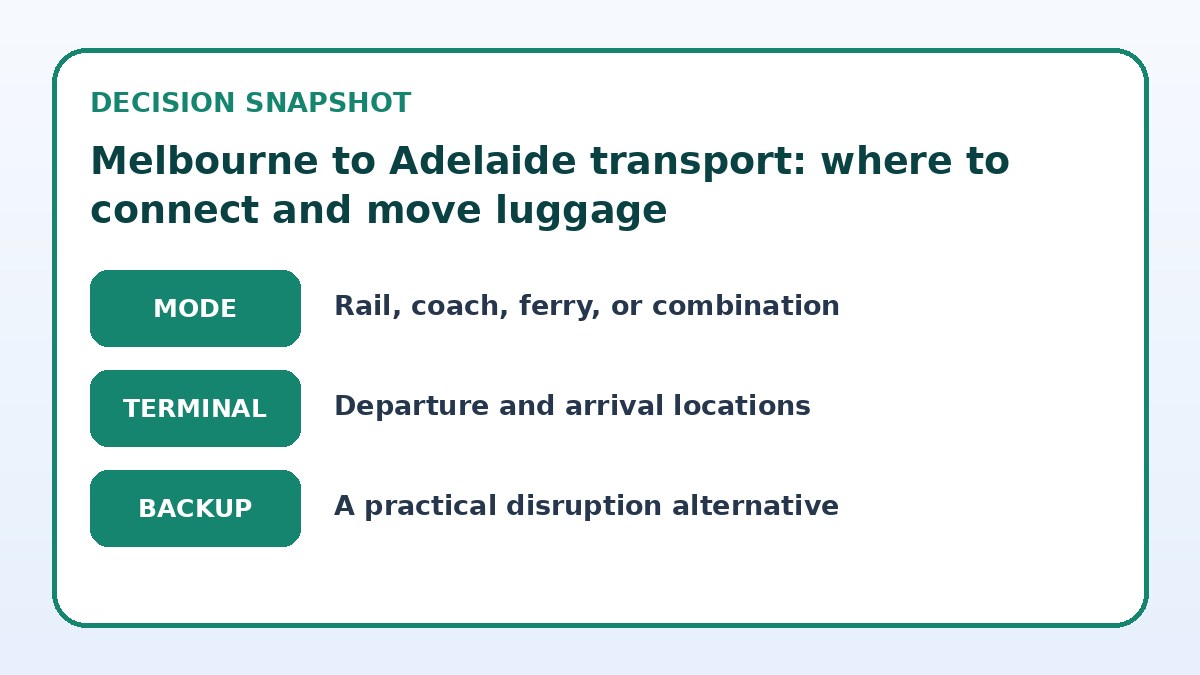
Choosing between direct services and mixed-mode itineraries
The simplest luggage strategy is to identify travel options that minimise transfers: a direct train or a single through-ticket that covers transfers often lets baggage remain checked or be moved by one operator. For travellers with extra luggage, a direct train that accepts large suitcases without complicated carry-on rules typically reduces effort and anxiety. However, direct services may have limited schedules or different boarding procedures compared with flights or coach services, so check seating, storage location on the train, and whether your luggage will stay in your carriage or be placed in a communal baggage area.
If no direct service suits your times or needs, layering modes—such as a train to an airport, then a flight, or a coach plus a connecting rail segment—can still work well if you plan transfers carefully. The trade-off is that each handoff increases the chance of delays and heavy lifting: you may need to move luggage between platforms, terminals, or vehicles. Factor in the physical layout of connecting points, whether elevators and ramps are available, and whether you can pre-book assistance or luggage transfer services at either end to reduce manual handling.
Practical station and terminal transfer planning in Melbourne
Melbourne’s train stations and airport terminals have varied layouts, and some common-sense checks will save time when you travel with extra bags. Before you leave, study station maps to locate the nearest accessible entrance, elevator, or ramp and note where regional train platforms and coach bays sit relative to long-distance platforms or the airport shuttle. If your itinerary starts at Southern Cross, Flinders Street, or another major hub, identify the most direct path between platforms and exits—this helps avoid long detours with heavy luggage and reduces the number of stairs or escalators you must tackle.
Decide how you will move luggage to the station: private drop-offs, a taxi or rideshare, or public transit each have pros and cons. A private car or taxi usually means door-to-platform drop-off and less walking; a rideshare may have similar convenience but watch for local pick-up points that might not be curbside. If you rely on public transport to reach your departure station, choose off-peak times to avoid busy trains and secure a luggage-friendly entrance at your destination. Always verify on the operator’s booking page or customer service channel whether they permit oversized bags and where such items are stored on board.
| Approach | Best for | Tradeoff to check |
|---|---|---|
| Direct train or single through-ticket | Travellers with heavy luggage who want fewer handoffs and simpler logistics | May offer fewer schedule choices or require booking early to secure the ideal time |
| Train plus flight or coach connection | Those prioritising travel time or specific departure/arrival times over luggage simplicity | More transfers increase handling, time buffers, and potential for missed connections |
| Pre-booked taxi or private transfer between points | Passengers with very large or awkward items needing door-to-door convenience | Higher cost but significantly less physical handling and minimal walking with bags |
| Luggage courier or separate baggage transfer service | Families or travellers wanting to travel light between stations and terminals | Adds cost and requires advance scheduling; items travel separately from you |
Ready to check the option that fits your plan?
Use your exact dates and traveler details so the provider page can show the current total and conditions.
Arriving in Adelaide: terminals, stations and onward transfers
Adelaide’s arrival options vary depending on whether you arrive by rail, plane, or coach. When planning, locate the station or terminal exit closest to taxi ranks, bus stops, or car rental desks to reduce the distance you’ll wheel or carry heavy bags. Some arrival stations have lifts and ramps but limited platform-side shelter; if weather is a concern, factor in covered walkways or arrange a vehicle to meet you at the most convenient exit. If you need a short-term hold for excess luggage, check whether the arrival terminal provides left-luggage or luggage assistance, and confirm availability on the provider’s site before travel.
If you plan onward travel from Adelaide (another train, regional coach, or a transfer to accommodation), line up the next segment before arrival and build cushion time into your schedule. Pre-booked taxis or private transfers often allow curbside pick-up and can be worth the extra cost when moving bulky suitcases. For public transit connections, identify the nearest stop to your arrival exit and check real-time options on local transit apps; otherwise, be prepared to use a luggage trolley or porter where available, and verify in advance whether the connecting operator accepts large or multiple bags.
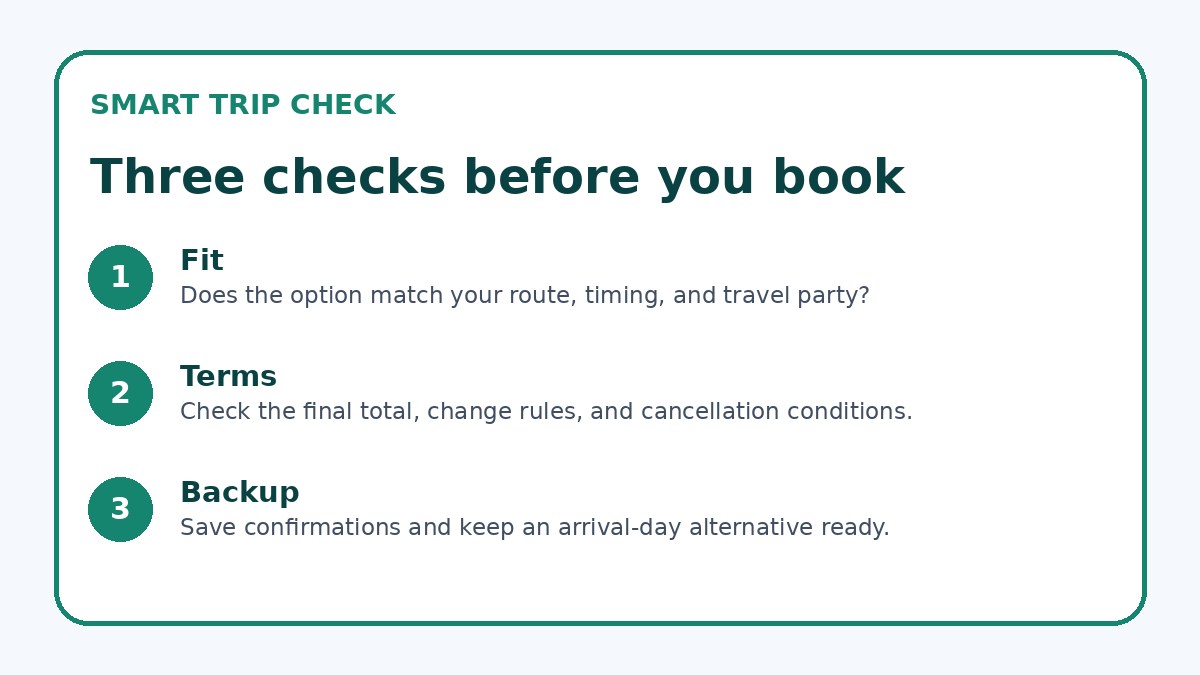
Before you book
- Locate and bookmark station and terminal maps for your Melbourne departure point and Adelaide arrival before you book any tickets.
- Check each operator’s baggage rules and storage location on their final booking page; note size, weight, and advance-notice requirements.
- Reserve assistance (porter, meet-and-greet, or mobility service) directly with the carrier if you cannot manage stairs or long transfers easily.
- Plan ground transport that matches your luggage needs—book a taxi, rideshare, or private transfer with a clear pick-up/drop-off point.
- Allow robust transfer buffers in your itinerary—add at least 30–60 minutes per handoff and more for very large or awkward items.
- Pack for transfers: use wheeled luggage, secure locks, visible tags, and a small day bag with essentials that stays with you during handoffs.
Luggage management: packing, equipment and assistance options
How you pack and what you carry matters as much as which route you choose. Use sturdy wheeled suitcases with smooth-rolling wheels and secure zips, and consider using compression bags or packing cubes to keep items compact and easy to lift. If you have bulky sports gear, musical instruments, or items that exceed usual luggage dimensions, contact carriers ahead of booking to enquire about special handling—some operators require advance notification or may only accept oversized items on certain services. A luggage scale at home helps avoid surprises at check-in, and clear labelling reduces confusion during transfers.
Think through the physical acts of moving luggage at each transfer point: can you manage steps, long platform gaps, or baggage trolleys yourself, or should you arrange porter assistance or a meet-and-greet service? Many large stations and terminals offer staff assistance or mobility services when booked in advance; ask the operator what they provide and how to reserve it. For door-to-door ease, you might arrange a luggage courier or trackable transfer service that collects and delivers bags separately—this adds cost and time but can remove heavy lifting from your own agenda, so weigh convenience against expense.
Frequently asked questions
Can I take oversized or extra luggage on trains between Melbourne and Adelaide?
Policies for oversized or extra luggage vary by operator and can change, so always read the carrier’s baggage rules on the booking page before you buy tickets. Some services permit large suitcases in designated storage areas, while others limit the number or size of items you may bring without advance notice. If you have items that exceed standard dimensions—sports equipment, instruments, or multiple large suitcases—contact the operator’s customer service to confirm whether special handling, advance reservation, or a surcharge is required. Trip.com is one place to compare current availability and terms, but verify final conditions on the provider’s own site.
How much transfer time should I allow when changing stations or terminals with heavy bags?
A comfortable rule is to allow at least 30–60 minutes for a simple transfer between platforms or adjacent terminals, and more if the route involves airport terminals, long walks, or public transport. If you must move luggage between separate stations, negotiate stairs, or wait for a shuttle, add extra time for elevator queues, ticket lines, and security checks. For very bulky or fragile items, or when arranging assistance, plan more padding and confirm pick-up instructions with the service provider. Always check the connection points’ walking distances and whether there are accessible routes or lifts available.
Is it worth paying for a taxi or luggage courier for the Melbourne to Adelaide journey?
Paying for a taxi or luggage courier can be worth it when the value is reduced physical strain, guaranteed curbside service, and minimal platform walking. For travellers with multiple heavy suitcases, large sports equipment, or mobility constraints, a private transfer often offers the most reliable door-to-door experience. A luggage courier that picks up and delivers bags separately may allow you to travel lighter, but it requires scheduling in advance and means your luggage is transported independently. Compare the cost and convenience for your priorities, then confirm service terms and insurance on the provider’s booking page.
Final planning note
Traveling from Melbourne to Adelaide with extra luggage is mainly about limiting handoffs and matching transport choices to your physical capacity. If you can book a single through-ticket or direct service that handles large bags, that will usually make the trip easier. When connections are unavoidable, map every transfer, reserve assistance where needed, and choose ground transport options that cut walking and stairs. Verify baggage policies and transfer rules on each carrier’s final booking page, and consider paying for a taxi or courier when convenience outweighs cost. With planning, a bit of buffer time, and the right equipment, you can minimise heavy lifting and arrive in Adelaide with your luggage intact and stress reduced.
Continue planning
Check current options and final conditions
Use the provider page to confirm live availability, the final total, cancellation terms, and every condition that matters to your trip.
This evergreen planning guide was created with AI-assisted drafting and a structured quality review. It does not display live prices, schedules, availability, visa guidance, or provider rankings. Verify current details before booking. Some links are affiliate links; we may earn a commission at no additional cost to you.