Practical answer up front: for most families, a nonstop Los Angeles to Honolulu flight is worth the extra cost when you prioritize simplicity, fewer disruptions and less time in airports. A connecting itinerary can make sense if you want a lower base fare, are planning a break for sightseeing, or need more flexible schedule options—but it usually adds complexity: extra check-ins, potential luggage transfers and more opportunities for delays. When choosing, weigh total door-to-door travel time, how young children handle longer days, and whether an overnight connection would become a rest stop or a stressor. This guide compares the main tradeoffs and gives clear booking checks so you can pick the right option for your family's comfort and schedule.
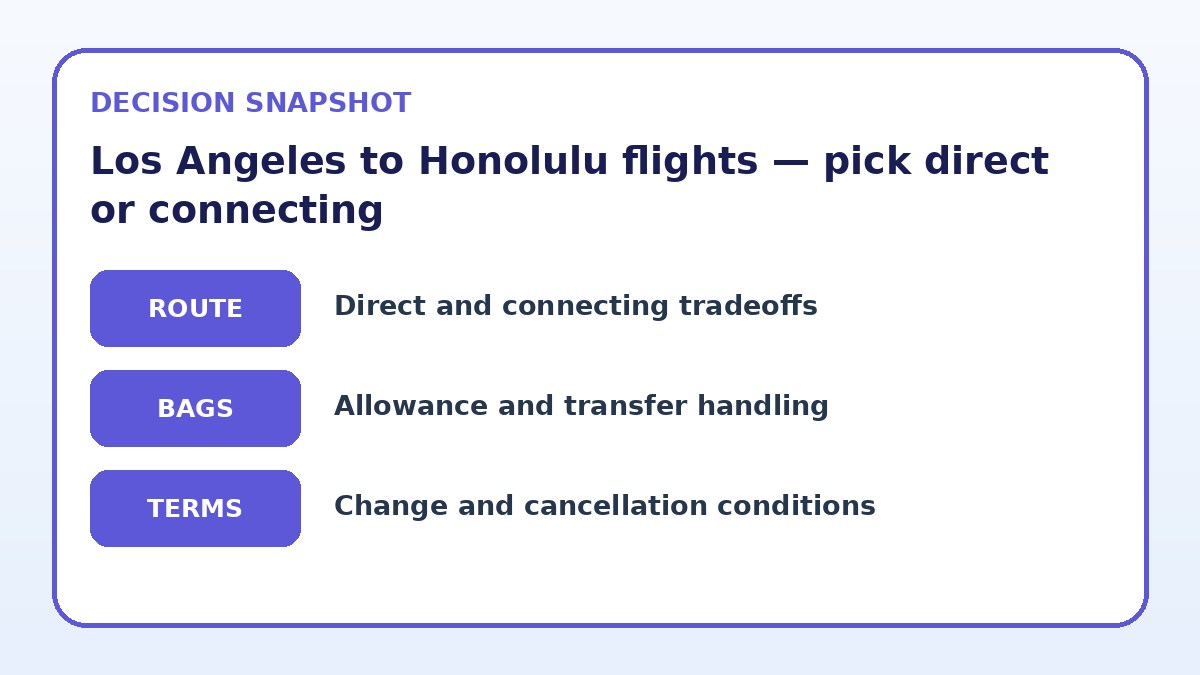
See current options before you compare the details
Availability and final conditions change. Open Trip.com now or keep reading for the practical comparison.
Time and stress: nonstop vs. connection for families
Nonstop flights cut out the middleman: you board once in Los Angeles and deplane in Honolulu. That simplicity benefits families in predictable ways—shorter total travel time, fewer security lines repeated, and less juggling of snacks, diapers, car seats and carry-on entertainment. A single flight also means you only need to plan one nap or sleep block, which helps young children adjust and keeps routine disruption to a minimum. For parents, the fewer handoffs between airport staff, the lower the cognitive load, especially when managing gate changes, stroller gates or last-minute gate-side diaper or feeding needs.
Connecting itineraries introduce more variables and often more waiting. Layovers can be short and stressful if flights are tight, or long and tiring if you have several hours to fill. For some families a planned connection in a city you want to briefly visit can be an advantage, offering a chance to stretch, see a new place, or split the trip into manageable chunks. But each extra leg increases the chance of delay, missed connections, and multiple security screenings—factors that can quickly turn a long travel day into exhaustion for everyone.
Cost, seats and luggage: what to compare
A lower headline fare for a connecting ticket can be tempting, but it’s important to compare total costs: checked bag fees (per segment), seat selection fees for each airline or cabin, and any charges for gate-checked items like strollers. Also check whether a single booking covers all legs under one ticket—if not, separate tickets can leave you responsible for rechecking luggage and making tight connections without assistance. For families, paying a bit more for seats together on a nonstop flight may be worth the reduced hassle, even if the base fare is higher.
Seats matter more with kids than they do alone. On longer flights, having a row where an adult can sit next to a child, an empty middle seat, or bulkhead room for bassinets can make the difference between a tolerable trip and a miserable one. Verify seat maps on the airline’s booking page before you buy and consider paid seat selection if the free options don’t keep your family together. Confirm baggage rules for each airline and each leg—some connections combine different carriers with different allowance policies, so check the final itinerary page and the carrier pages linked from it.
| Approach | Best for | Tradeoff to check |
|---|---|---|
| Nonstop flight | Families who value simplicity, shorter door-to-door time and fewer transfer hassles | Often higher base fares and fewer flexible routing options |
| One-stop connection with same-ticket carriers | Families seeking lower fares or specific schedule times with protection for missed connections | Longer total travel time and potential terminal transfer complexity |
| Separate tickets with a planned long layover | Families planning an intentional stopover to rest or sightsee en route | Greater risk of rechecking luggage and no guaranteed protection if the first flight delays |
| Overnight connection with a hotel stay | Families preferring to split travel into two days to reduce on-plane fatigue | Extra logistical steps and accommodation costs, plus longer trip calendar time |
Ready to check the option that fits your plan?
Use your exact dates and traveler details so the provider page can show the current total and conditions.
Scheduling, connections and practical layout
When reviewing connecting options, pay attention to minimum connection time (MCT) at the transfer airport and whether you need to change terminals or re-clear security. Families often need extra time to navigate terminals with strollers, bathroom breaks, and snack changes. If a connection requires an overnight hotel, factor in transfer time to and from the airport and whether the airline provides assistance for missed connections. If the itinerary is on one ticket the carrier typically helps rebook in case of missed flights; with separate tickets you may have no recourse.
Think about timing relative to your kids’ sleep and meal schedules. Early morning nonstops can catch younger children while they’re still sleepy and more cooperative, while evening flights might overlap with bedtime routines. Long daytime connections can give kids space to run around in airport play areas or family lounges, but they also extend the travel day. Balance the total elapsed travel time against the quality of those hours—an extra two hours on the ground might be preferable to an extra two hours cramped on a plane, depending on ages and temperament.
Before you book
- Compare total door-to-door time (including transfers and ground travel) not just airborne time for each itinerary.
- Confirm baggage allowance and whether bags transfer automatically between segments or must be rechecked.
- Verify seat assignments for all passengers on every leg and pay for adjacent seats if necessary.
- Check minimum connection times and terminal transfer requirements on the airline’s itinerary page.
- Plan child-specific needs: stroller gate-check rules, bassinet eligibility and in-flight meal options.
- Review change and cancellation policies for the full itinerary, especially when multiple carriers are involved.
Safety, contingencies and booking nuts-and-bolts
Assess your risk tolerance for missed connections and delays. Nonstop itineraries reduce exposure to early- or mid-journey disruptions. When booking a connecting itinerary, look for reasonable connection buffers—avoid aggressively tight layovers unless both flights are on the same ticket and operated by the same alliance with good on-time records. For families, a 60–90 minute minimum in the same terminal is a safer baseline, and 2+ hours is often more comfortable if gates are distant or a terminal transfer is required.
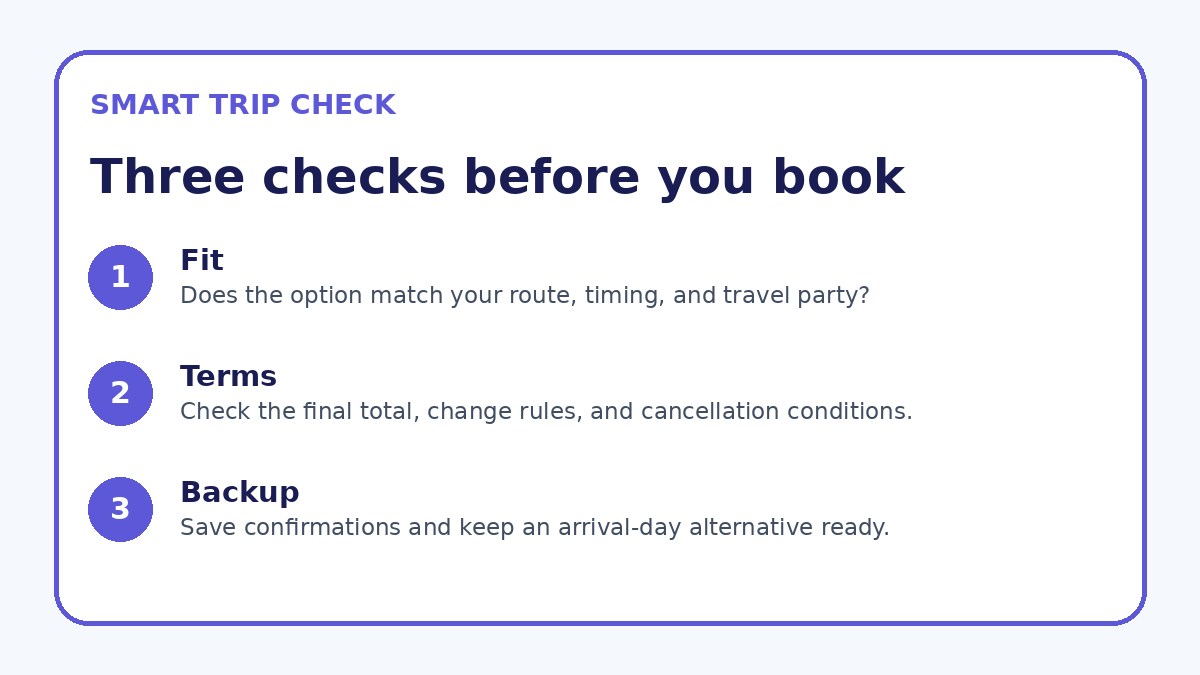
Before you finalize any booking, verify three critical items on the provider’s final page: the total itinerary (all flight numbers and times), baggage transfer policy across segments, and whether seats are confirmed together. If different carriers are involved, check whether the connection is protected by through-ticketing. Trip.com is a helpful optional place to compare current availability and conditions, but always confirm the exact fare rules, change/cancellation terms and baggage policy on the airline(s)’ official booking pages before purchase.
Frequently asked questions
Is a nonstop flight always better than a connecting one for families?
Not always. Nonstops minimize transitions and generally reduce stress, but they can come at a higher fare. A connecting flight can be better if it shortens a costly overnight stay, provides a preferred schedule, or offers a child-friendly stopover. Consider your child’s age, nap schedule, and tolerance for long days: infants and toddlers often do best on nonstops, while older children who can move around during layovers may handle connections more easily. Compare total travel time, seat arrangements, and baggage rules before deciding.
How much layover time should I allow with kids between Los Angeles and Honolulu flights?
For same-terminal connections 60–90 minutes can be workable for most families when flights are on a single ticket; 2 hours or more is more comfortable if you need to change terminals, collect and recheck luggage, or navigate security again. If you’re traveling with very young children, strollers, or extra gear, plan extra buffer time. Longer layovers give space for meals and bathroom breaks but lengthen the overall trip, so choose based on how your family copes with waiting versus being airborne.
What should I verify on the airline booking page before I finalize a family itinerary?
On the carrier’s final booking page confirm: complete flight times and flight numbers for every leg; baggage rules and fees for each segment; whether luggage transfers automatically on connections; seat assignments for the whole group; and change/cancellation terms. If multiple carriers are in the itinerary, check if the ticket is a single through-ticket or separate bookings, and whether protection is provided for missed connections. If in doubt, call the airline to confirm stroller and bassinet policies and any special assistance options.
Final planning note
Choosing between nonstop and connecting Los Angeles to Honolulu flights comes down to balancing simplicity against savings and flexibility. Nonstop flights reduce transfers, minimize risk and often ease the logistics of traveling with children, while connecting itineraries can open cheaper or differently timed options and allow planned stopovers. Use the checklist above to compare total travel time, seat logistics and baggage handling on the airline’s final booking page before you buy. With a clear picture of your family’s tolerance for longer days, and confirmation of seats and baggage policies, you’ll be able to pick the option that keeps the trip smooth, restful and enjoyable for everyone.
Continue planning
Check current options and final conditions
Use the provider page to confirm live availability, the final total, cancellation terms, and every condition that matters to your trip.
This evergreen planning guide was created with AI-assisted drafting and a structured quality review. It does not display live prices, schedules, availability, visa guidance, or provider rankings. Verify current details before booking. Some links are affiliate links; we may earn a commission at no additional cost to you.