If you're traveling alone to Kyoto, the practical first step is to add every likely cost into a single comparison before you click Book. Flights or rail fares, local transport from the arrival point, the nightly rate plus taxes and city surcharges, luggage and seat-selection fees, meals, attraction tickets, and any rail passes or IC card top-ups all change the effective price. Solo travelers often miss per-person minimums (private transfers, capsule hotel single rooms versus double rooms priced per room) and refundable-versus-nonrefundable tradeoffs that matter when plans shift. This article tells you exactly which line items to check, how to compare direct and connecting routes, when a longer train might beat a cheaper flight, and what to verify on booking pages so the number you see is the number you’ll pay.
See current options before you compare the details
Availability and final conditions change. Open Trip.com now or keep reading for the practical comparison.
Build a single 'true cost' number
Start by assembling all likely expenses into one table so you can compare apples to apples. Include round-trip transport to Kyoto, transportation from your arrival airport or station to your accommodations, and the expected number of days of local transit. Add the nightly room rate multiplied by nights, then tack on taxes, mandatory hotel or lodging fees, cleaning charges, and any per-room minimums that affect solo travelers. Don’t forget prepaid attraction tickets, insurance, and a buffer for meals and incidental spending — this total is what really determines whether a deal is worth booking.
Make at least two full-cost scenarios: one using the cheapest available nonrefundable options and one with refundable or flexible options. That exposes the premium you pay for flexibility, which matters more when travel plans are uncertain. For train-heavy itineraries, include luggage handling or locker fees and the cost of reserved seats if you anticipate peak-season travel. For flights, add seat selection, carry-on or checked baggage fees, and any airport-to-city transfer costs; the booking page should show these fees before payment, so verify them there.
Compare direct versus connecting options properly
Direct transport can save time and airport transfers but is sometimes more expensive; connecting options might appear cheaper until you add overnight stays, extra transfers, or long layovers. For flights, compare total door-to-door travel time and include transfer costs between terminals or airports. For rail, check whether routes require shuttles or long urban transfers and whether a change forces you to move luggage between platforms. When providers list a connection, examine the minimum connection time and the provider’s rebooking policy if a missed connection could lead to extra expense.
When both direct and connecting services are offered, compute the full cost of each option for your schedule: base fare plus expected ancillary fees, plus a realistic valuation of your time and convenience. If the connection requires an overnight stop, add a hotel night, meal costs, and possible additional transit. For trains and long-distance buses, verify seat reservation requirements on the booking page and whether seat selection, limited refunds, or luggage limits apply; that verification will reveal hidden differences that influence the best choice for a solo traveler.
| Approach | Best for | Tradeoff to check |
|---|---|---|
| Book cheapest nonrefundable fares and rooms | Travelers sure of fixed plans who prioritize lowest upfront cost | Higher change or cancellation risk; savings can disappear if plans adjust |
| Choose refundable or flexible options | Solo travelers with uncertain dates or who value peace of mind | Larger initial outlay; might be unnecessary if plans are firm |
| Prioritize direct transport options | Those who value shorter door-to-door time and fewer transfers | Often higher fare; sometimes saves money when transfer costs are included |
| Optimize by location and low ancillary fees | Travelers minimizing daily logistics costs and local transit spending | May pay more per night for a better location, though overall trip cost can be lower |
Ready to check the option that fits your plan?
Use your exact dates and traveler details so the provider page can show the current total and conditions.
Choose and evaluate accommodations for solo needs
Solo travelers have different priorities: single rooms, location near transport, and safety can outweigh headline nightly rates. Compare hotel and guesthouse listings by total price per night including mandatory fees, then check cancellation policies and whether breakfast is included — a modestly higher rate with breakfast can lower daily food costs and logistics. Consider location relative to Kyoto Station, main subway lines, or bus routes you’ll use most; a slightly higher nightly rate close to transport hubs often saves time and local taxi expenses and reduces evening transit worries.
Check what the booking page shows about room occupancy and layout so you don’t accidentally book a larger, more expensive room when a single bed option exists. Verify whether any properties charge extra for late check-in, luggage storage, or city occupancy taxes, and ask about laundry facilities versus off-site laundromats if you plan a longer stay. If you’re considering a guesthouse or shared accommodation, confirm rules about security, quiet hours, and whether lockers or private storage are available — these small details affect comfort and ancillary spending.
Before you book
- Calculate a complete door-to-door estimate including arrival-transfer costs and local transit passes before comparing headline fares.
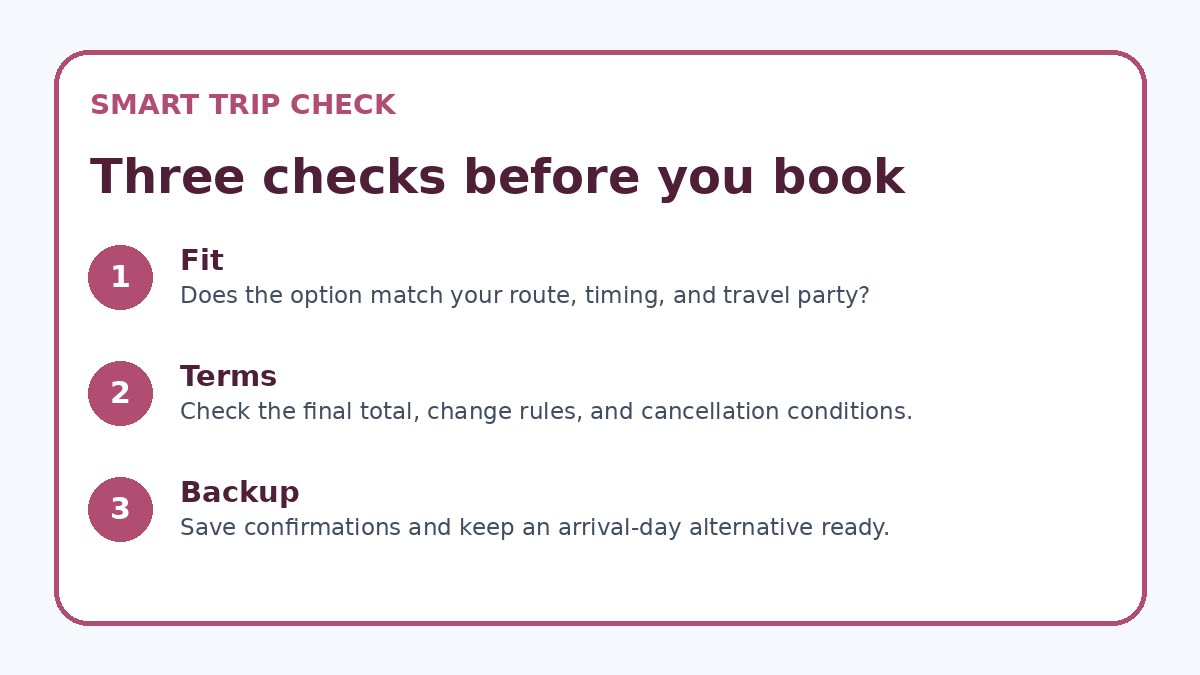
- Confirm baggage allowances, seat selection fees, and any connection rebooking rules on the provider’s final booking page.
- Add all nightly accommodation fees, mandatory taxes, and cleaning or service surcharges before choosing a room.
- Compare total travel time and the cost of overnight layovers when considering connecting flights or longer train routes.
- Test whether a rail or attraction pass saves money by mapping your planned trips against pass inclusions and prices.
- Save screenshots of final checkout pages that show refund and cancellation terms in case you need to dispute charges later.
Sensible strategies to lock in a good solo deal
Keep flexibility in mind: refundable or semi-flexible fares cost more upfront but can be worth it if your plans might change. When the price difference between refundable and nonrefundable options is small relative to your total outlay, the safer choice often reduces stress and potential change fees. Use fare alerts or a short comparison window to watch flights and trains, but avoid waiting past a reasonable decision point; availability and cancellation terms are what ultimately matter, so confirm those on the provider’s final booking screen before committing.
For savings, bundle logically: a rail pass makes sense only if your planned travel uses enough long-distance trips to offset its price, and attraction passes help only if you’ll visit included sites. For solo travelers, look for single-room discounts, weekday rates, or last-minute hotel deals that don’t add fees. You can compare current availability on sites including Trip.com, but always verify final baggage allowances, seat reservation fees, refund policy language, and exact itinerary details on the provider’s checkout page — that’s the authoritative source for what you will actually be charged.
Frequently asked questions
How do I estimate transport from Kyoto Station or the airport to my hotel?
Start by identifying your arrival point — Kansai or Itami airports and Kyoto Station imply different onward options. Check provider pages for official shuttle, bus, or rail links and their stated transfer times and suggested routes. Add taxi or ride-hailing fares if you prefer a direct transfer and include luggage-handling costs. When a booking mentions a shuttle or train connection, verify on the provider’s final booking page whether that transfer is included, requires a separate reservation, or has limited hours so you can budget accurately.
Should I buy a Kyoto transit pass before arrival or pay as I go?
Decide by mapping your itinerary: list the sights and neighborhoods you’ll visit and count likely bus, subway, and train rides. If your plan includes frequent single journeys each day, a multi-day pass can reduce per-ride costs and simplify travel; if you’ll stay mostly near one neighborhood or take a few trips, pay-as-you-go with an IC card may be cheaper. Confirm pass coverage, activation rules, and refund conditions on the official pass provider or the booking page before purchasing, and compare the pass cost against the summed single-ride fares for your exact plan.
What should solo travelers verify about accommodations before booking?
Look beyond the nightly rate: confirm whether taxes, cleaning fees, or occupancy surcharges apply and whether they’re added at checkout. Check room type details to ensure single-occupancy pricing and bed configuration match your needs, and read the cancellation policy on the property’s final booking page so you understand deadlines and penalties. Also confirm check-in hours, luggage storage availability, and proximity to public transport to avoid extra taxi costs or late-night inconvenience that raises your effective trip cost.
Final planning note
For solo travelers planning Kyoto, the smartest move is to compare full trip costs, not just headline fares. Build a door-to-door tally that includes arrival transfers, baggage and seat fees, nightly total room charges, and the local transit or attraction costs you expect. Compare direct and connecting options by adding the hidden time and money costs of connections or overnight layovers, and verify all ancillary fees and refund rules on the provider’s final booking page before you pay. That disciplined approach clarifies real value, reduces unwelcome surprises, and helps you pick the travel combination that fits your budget and risk tolerance.
Continue planning
Check current options and final conditions
Use the provider page to confirm live availability, the final total, cancellation terms, and every condition that matters to your trip.
This evergreen planning guide was created with AI-assisted drafting and a structured quality review. It does not display live prices, schedules, availability, visa guidance, or provider rankings. Verify current details before booking. Some links are affiliate links; we may earn a commission at no additional cost to you.