If you’re traveling from Seoul to Taipei with oversized or extra checked bags, the departure airport you choose can change the trip from manageable to stressful. Practically speaking, Incheon International (ICN) is usually the better option for passengers with heavy or bulky luggage because of wider check-in counters, more baggage-handling capacity, and clearer options for oversized-item processing. Gimpo International (GMP) can still be convenient when you’re based in western Seoul or prioritizing shorter surface transfers, but services and space for nonstandard baggage are typically more limited. This guide walks you through the tradeoffs—transport connections, check-in and baggage policies to confirm, transfer logistics, and how to compare direct versus connecting flights—so you can make a confident choice before you book. Always verify the airline’s exact baggage allowance, oversize/overweight fees, and any special handling requirements on the carrier’s booking page before finalizing a reservation.
See current options before you compare the details
Availability and final conditions change. Open Trip.com now or keep reading for the practical comparison.
Practical differences between Incheon and Gimpo for heavy luggage
Incheon is South Korea’s primary international gateway and was designed for high passenger and cargo throughput. For travelers with extra luggage this typically translates into more staffed check-in counters, larger baggage handling systems, and clearer procedures for things like oversized suitcases, sports equipment, or instruments. At larger airports you will often find dedicated desks for special-handling baggage, on-site cargo desks that can advise on how to ship items as air cargo instead of checked baggage, and more frequent ground-handling staff who can move heavy cases without long delays.
Gimpo is smaller and focused on short-haul international and domestic flights; it’s closer to central and western Seoul so it sometimes saves you surface travel time. However, smaller terminals mean less space and fewer dedicated counters, which can create bottlenecks if several passengers arrive with excess or oversized bags. If you plan to use Gimpo, check whether your airline lists specialized baggage services there and whether you need to arrive earlier than standard check-in recommendations. For very large items or unusual packing needs, Gimpo may offer fewer on-site options than Incheon.
How transfer time and ground logistics affect airport choice
Think about the total door-to-door journey, not just flight time. If you live in western Seoul or have arranged a car service, Gimpo’s proximity can lower transfer time and stress—especially useful when you have many bags to haul through public transit. Conversely, if you are coming from south or east Seoul, Incheon’s higher frequency of dedicated airport buses, comfortable long-term parking, and smoother curbside loading for taxis and private vans can be worth the longer drive. Factor in typical traffic patterns for your departure time: long surface transfers can erase any terminal convenience.
Also account for how you’ll move bulky luggage at both ends. If you plan to use public transit to reach the airport, confirm whether elevators and escalators align with the terminal entrance you’ll use and whether luggage trolleys are plentiful. For private transfers, ask the driver or service whether their vehicle can accommodate all your bags together. If you intend to ship items ahead as air cargo or express freight, Incheon’s cargo facilities are more likely to handle straightforward drop-offs and advice on paperwork.
| Approach | Best for | Tradeoff to check |
|---|---|---|
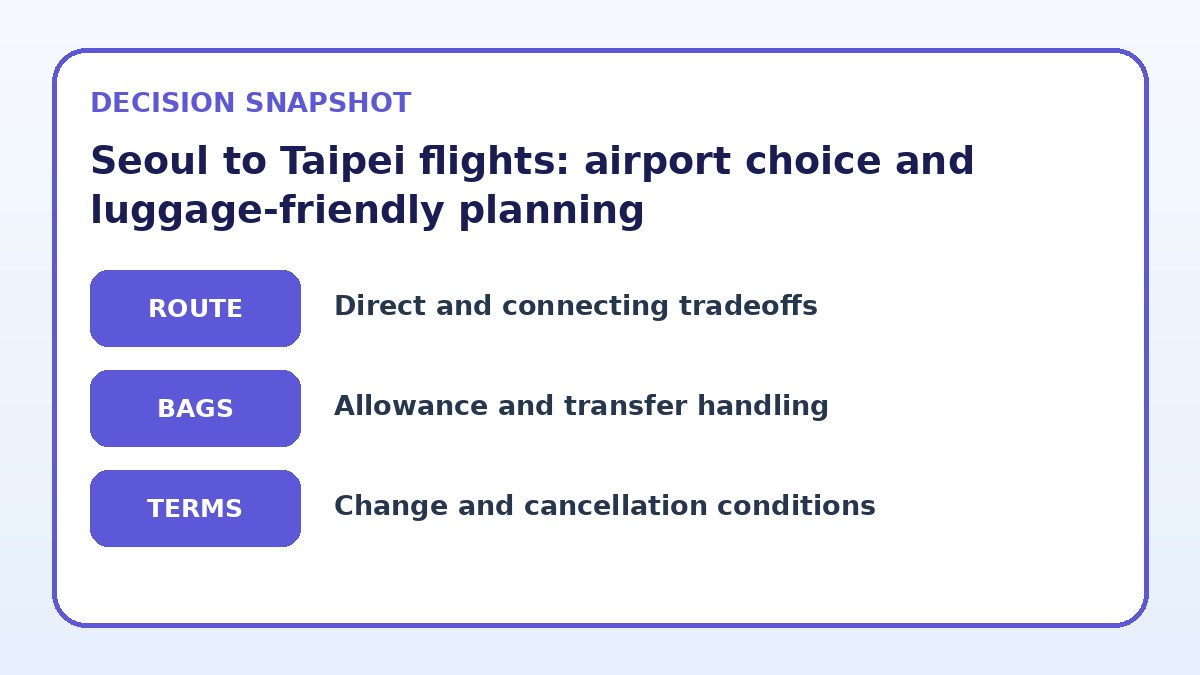
| Depart from Incheon (ICN) | Travelers with multiple or oversized pieces and anyone needing cargo/porter services | Longer surface travel for some parts of Seoul but more baggage-handling capacity |
| Depart from Gimpo (GMP) | Passengers based in western Seoul or those prioritizing shorter transfer time | Fewer dedicated oversize-handling desks and limited cargo options |
| Choose a direct flight | Reducing bag handling and minimizing risk of missed connections or rechecks | May be less flexible on schedule; check which airport operates the direct service |
| Choose a connecting itinerary | Route flexibility or lower aircraft-availability windows | Higher transfer risk for baggage, possibly requiring reclaim and recheck |
Ready to check the option that fits your plan?
Use your exact dates and traveler details so the provider page can show the current total and conditions.

Comparing direct and connecting flights when you have extra baggage
Direct flights reduce the number of times your bags are handled and the likelihood of missed connections or recheck requirements. If direct Seoul to Taipei flights are available from either airport, they are often the simplest option when you have multiple or overweight pieces because you can check them through to the final destination at one counter. When comparing direct options, verify which Seoul airport the carrier uses and how many pieces and kilo limits are allowed for your fare class—these vary by airline and fare type and should be checked on the carrier’s booking page.
Connecting flights require extra attention: transit airports may enforce their own check-in or reboarding deadlines for oversized items, and some routings require you to claim and recheck bags. If a connection is necessary, choose itineraries with longer minimum connection times and avoid tight transfer windows. Also consider baggage transfer agreements between airlines; partners or single-ticket connections usually simplify through-checked baggage, while separate tickets can force you to reclaim and resubmit luggage at your connection.
Before you book
- Confirm the airline’s exact baggage allowance, including piece and kilo limits, on the carrier’s official booking page.
- Call the airline if you have oversized or special items to ask about required advance declarations or packing rules.
- Estimate total door-to-door time from your accommodation to each airport and compare against required early check-in times.
- If using public transit, verify elevator access and luggage trolley availability for the terminal entrance you plan to use.
- Ask your transfer provider whether their vehicle can carry all bags in a single trip or whether multiple trips are needed.
- If you plan to ship items as air cargo, contact the airport cargo desk in advance to confirm procedures and required documentation.
How to plan and verify baggage-friendly services before booking
Start with the airline’s baggage policy page and look for details on piece limits, weight allowances, and fees for oversize or overweight items—do not rely on third-party summaries. If your bags exceed standard checked limits, search the airline site for information about special items (sports equipment, musical instruments, fragile cargo) and whether an advance request or reservation is required. If the policy language is unclear, call the airline’s baggage or reservations desk and get explicit guidance about timelines for check-in and any required packaging or labels.
Check the airport websites for baggage services available at each terminal: oversized-baggage desks, cargo office hours, and cart or porter services. If you want help with loading or unloading, pre-book an assistance service or an airport porter when offered. When comparing fares and departure airports, verify final booking details on the airline’s checkout page and on any booking platform you use—Trip.com can be a quick place to compare availability, but always confirm bag allowances and fees on the airline’s site before paying.
Frequently asked questions
Is Incheon always the better option for travelers with bulky suitcases?
Not always. Incheon generally has more staff and facilities to handle bulky or excess baggage, making it a better fit for many travelers with large loads. However, if you live very close to Gimpo, or your airline only serves Gimpo with the routing you want, the shorter transfer time may outweigh Incheon’s baggage advantages. Evaluate your specific needs—number and size of items, travel time to each airport, and whether you need cargo or porter services—then check the carrier’s baggage policy and the airports’ on-site services before deciding.
How early should I arrive at the airport when I have extra luggage for a Seoul to Taipei flight?
Arrival time depends on the airline’s check-in and oversize baggage procedures; some carriers ask passengers with oversized or heavy items to arrive earlier than the standard recommendation. Aim to add at least 30–60 minutes to the usual international check-in window if you have special handling needs, and verify the carrier’s stated cutoff times. If you must process cargo paperwork or visit a cargo desk, build in more time. Always rely on the airline’s official guidance on their booking page rather than generic advice.
Can I ship excess bags from Seoul instead of checking them on my flight to Taipei?
Yes, shipping as air cargo or via courier is an option, and it can be cheaper or more convenient for very heavy or numerous items. Airports like Incheon typically have clearer cargo desks and more options for freight and courier drop-off. Before choosing this route, compare the total cost, delivery timing, and customs paperwork required for your destination. If you opt to ship, confirm pickup and drop-off hours, required documentation, and timing to ensure your goods arrive when you need them.
Final planning note
When traveling from Seoul to Taipei with extra luggage, choose the departure airport that minimizes stress for your specific situation. If you have many pieces, oversized items, or need cargo/porter services, Incheon’s larger facilities usually make processing smoother. If you value a shorter surface transfer and are based in western Seoul, Gimpo can still be practical—just verify limited special-handling availability and arrive with extra buffer time. Always compare direct and connecting flight options for baggage-handling implications, and confirm final baggage allowances and any special-item requirements on the airline’s booking page before you commit. Use resources like airport service pages and, if helpful, Trip.com to compare current schedules, but trust the carrier’s official baggage rules as final.
Continue planning
Check current options and final conditions
Use the provider page to confirm live availability, the final total, cancellation terms, and every condition that matters to your trip.
This evergreen planning guide was created with AI-assisted drafting and a structured quality review. It does not display live prices, schedules, availability, visa guidance, or provider rankings. Verify current details before booking. Some links are affiliate links; we may earn a commission at no additional cost to you.