
If you need a car in Bali for meetings, site visits, or flexible city-to-resort travel, the practical question is simple: pick a pickup and return arrangement that fits your meeting schedule, minimizes downtime, and protects you from unexpected fees. For business travelers that usually means prioritizing reliable airport or hotel handovers, clear contract language about fuel and damage, and a return window that fits flights or evening meetings. Before confirming a booking, check the supplier’s exact pickup location options, the grace period for returns and overdue charges, fuel rules, and who signs the damage record. Verify on the supplier’s final booking page or confirmation email: pickup time flexibility, whether an out-of-hours handover costs extra, the required ID and documentation, and the method used to record pre-existing vehicle damage.
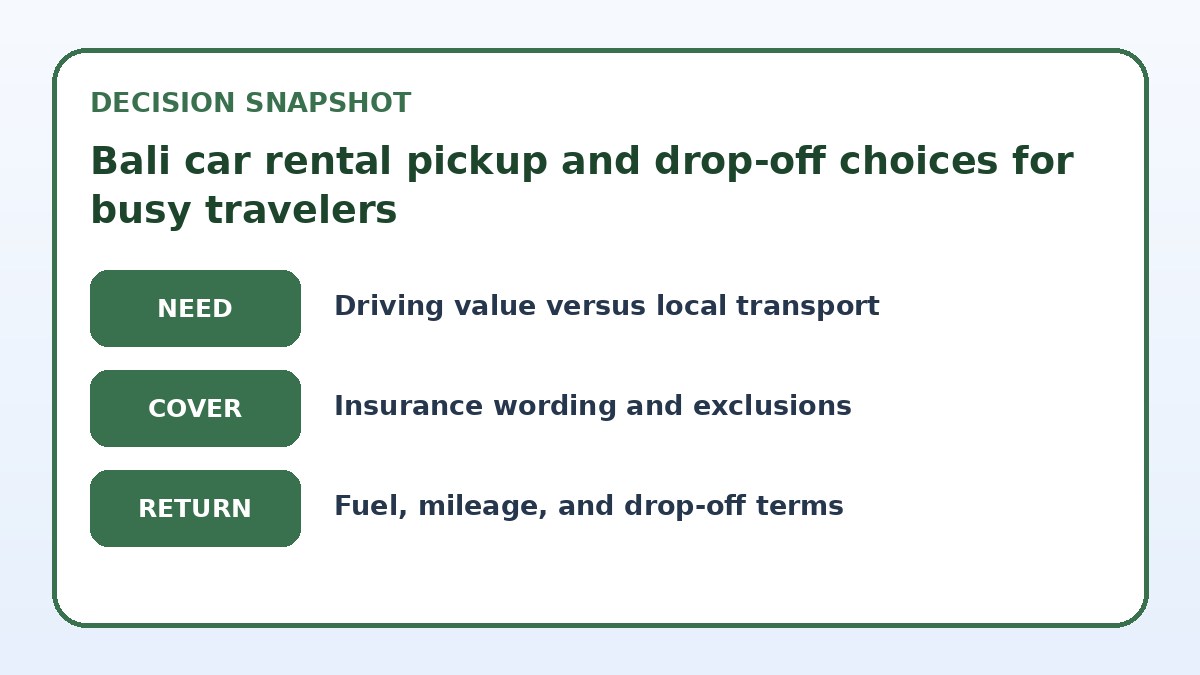
See current options before you compare the details
Availability and final conditions change. Open Trip.com now or keep reading for the practical comparison.
Choose your pickup location carefully
Pickup options in Bali commonly include Ngurah Rai (Denpasar) Airport meet-and-greet, hotel delivery, or a provider’s local office. For business trips, airport or hotel handovers reduce transit time and simplify logistics, but confirm exactly where the agent will meet you—arrivals hall, curbside, or an off-airport shuttle point. If you need a quick departure for a client visit, prioritize pickups that explicitly state they meet inside the terminal or at a named hotel entrance. Ask for the agent’s contact details on confirmation so you can coordinate delays or early arrivals without uncertainty.
If you plan to start travel outside main centers—say a remote hotel or a conference center—verify whether the provider charges an off-site pickup fee or requires a minimum booking duration. Some companies list multiple pickup addresses but only staff certain locations during business hours. For after-hours or weekend pickups, request the exact handover procedure and any additional staffing fees. On the supplier’s booking page, check the fine print for pickup window times and the escalation process if the agent is late or fails to appear.
Understand return windows and late penalties
Return terms determine how flexible you can be with end-of-day meetings or evening flights. Providers may state a free return window (for example, a 29–59 minute grace period) before late fees apply; others charge by the hour, part-day, or full-day increments. For business travelers with unpredictable schedules, seek a clear description of how late returns are calculated and whether fees are capped. Also confirm where the return must take place—office, airport lot, or a staffed desk—since returning to an unmanned lot after hours can trigger administrative charges.
If you expect to switch flights or extend meetings, ask whether the rental agreement allows extensions by phone or online and how quickly the extension takes effect. Verify whether receipts for late fees are itemized for corporate expense reporting. If you plan to drop the car at the airport, confirm the vehicle drop-off point relative to the terminal and whether an on-site agent will inspect the car immediately. The supplier’s final booking page should show the exact return instructions and any after-hours drop policies to avoid surprises.
| Approach | Best for | Tradeoff to check |
|---|---|---|
| Airport or hotel meet-and-greet pickup | Minimizing transit time and immediate departures | May include higher pickup fees or limited 24/7 availability |
| Provider office pickup (central location) | Lower base fees and easier paperwork handling | Requires transfer time and possible taxi/shuttle costs |
| After-hours self-service pickup/drop | Arrivals or returns outside normal business hours | Less immediate support and potential inspection timing issues |
| Extended booking with flexible return | Unpredictable meeting schedules and multi-day site visits | Higher overall rental cost compared with strict fixed returns |
Ready to check the option that fits your plan?
Use your exact dates and traveler details so the provider page can show the current total and conditions.
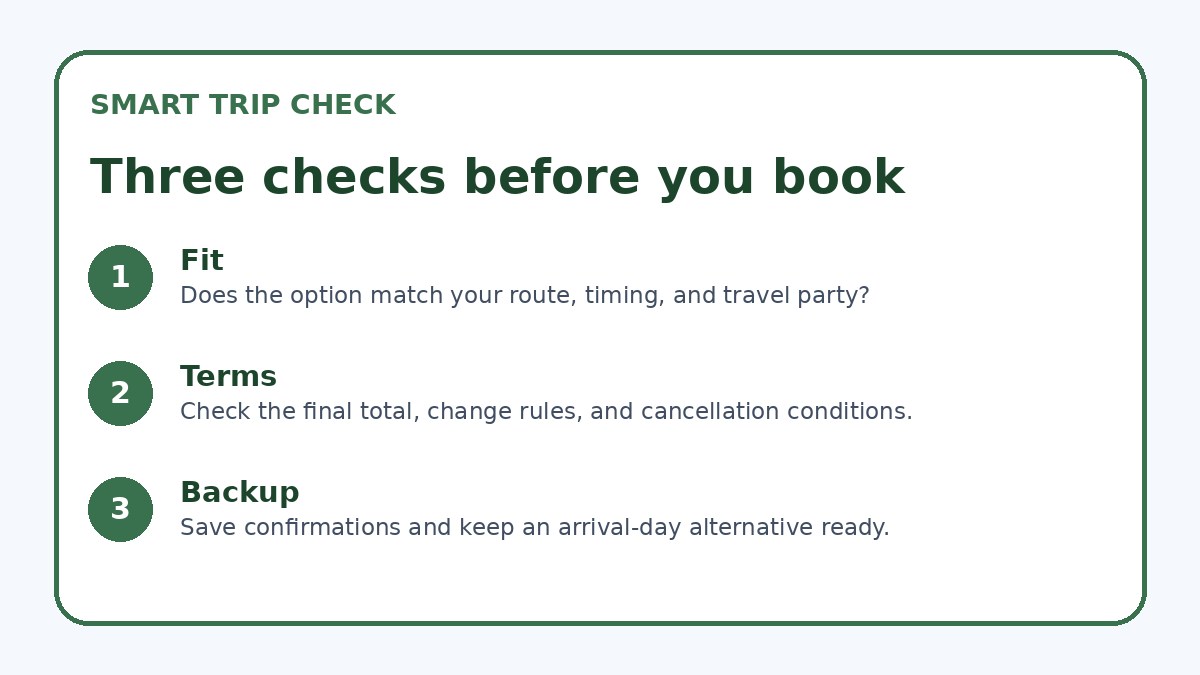
Fuel and mileage rules that affect billing clarity
Fuel policies vary and often create the most billing confusion. Full-to-full is easiest to document: you pick up a full tank and return it full, with a fuel receipt if you refuel near return. Some rentals use pre-purchase or charge-at-return models that can add a refueling service charge and administrative fees. For business accounting, insist on a fuel policy that provides an itemized fuel charge on your final invoice or allows you to provide receipts for reimbursement.
Mileage limits matter for island-wide itineraries that include the Bukit Peninsula, Ubud, or east Bali activities. Verify whether the booking includes daily mileage caps or unlimited mileage, and if caps exist, check the per-kilometre charge. If you anticipate extended day trips, ask how the supplier documents odometer readings at pickup and return so your finance team can reconcile travel logs with the final bill. The booking confirmation should include the fuel and mileage sections you need to keep expense reporting straightforward.
Before you book
- Ask for a screenshot or PDF of the pickup and return address shown on the provider’s booking page and save the agent’s contact number.
- Document the vehicle with photos and timestamped notes before driving off; insist the agent signs the inspection form and keeps a copy.
- Confirm the exact free return grace period and the formula for calculating late fees on the supplier’s confirmation email.
- Verify the fuel policy wording (full-to-full vs prepaid) and how fuel charges will appear on the final invoice.
- Request written clarification of insurance excess amounts and the procedure for charging holds or deposits on corporate cards.
- Confirm extension procedures—phone, app, or web—with the expected time it takes to register an extension before the original return time.
Damage, insurance, and documentation to avoid disputes
Pre-existing damage documentation is crucial. Before you drive away, walk around the car with the agent and photograph any scratches, dents, or interior stains. Insist that the rental company records these in the contract or an inspection form and provides you a copy or an accessible online record. For corporate chargebacks, request that damage charges be accompanied by time-stamped photos and an itemized repair estimate; verify how disputes are handled and what evidence you need to submit.
Insurance and excess (collision damage waiver or CDW) options change liability levels and reporting routines. Confirm what the supplier’s insurance covers, whether a deductible applies, and whether additional corporate insurance or credit-card coverage reduces or removes the deductible. Ask the supplier how claims are processed and how long hold funds might remain on your card if a damage claim is opened. Always check the exact policy language and claim process on the provider’s final booking page before authorizing payment.
Frequently asked questions
Can I have the car delivered to my Bali hotel at a specific time for a meeting?
Many providers offer hotel delivery, but availability and fees vary. When booking, check the supplier’s final page for confirmed pickup locations and any host responsibilities (meeting at a particular entrance, providing ID at a concierge desk). Ask how the provider documents the agreed delivery time and whether there is a charge for tight delivery windows or meeting at concierge instead of the driveway. Make the agent’s mobile number and a backup contact method part of the confirmation to coordinate if your meeting schedule shifts.
What should I verify on the booking page to avoid surprise return charges?
Look for the exact return address, the stated free return grace period, late fee calculation method, and after-hours drop-off procedure. Check the fuel policy section for whether you pay for fuel on return or refill yourself. Verify whether the provider charges administrative or cleaning fees for late returns and where those fees appear on the final invoice. Finally, confirm how they record odometer readings and damage so you can reconcile the provider’s record with your expense submission if a charge appears later.
How do insurance and damage holds affect corporate cards and expense claims?
Suppliers may place a hold on the card used for rental to cover the excess or potential damage; the hold amount and release timing vary. Confirm the hold size, whether it’s a pre-authorization or an actual charge, and how long the hold typically remains after return. Ask what documentation the supplier provides if a damage claim is raised—time-stamped photos, repair estimates, and itemized invoices—and how to dispute a charge. Save all inspection documents and the final rental invoice for your finance team to speed reimbursement.
Final planning note
For business travelers, the pickup and return terms of a Bali car rental are as important as the vehicle class. Prioritize a pickup option that suits your arrival logistics, confirm the return window and late-fee rules, and choose fuel and insurance arrangements that make corporate expense reporting predictable. Before you finalize a booking, verify the exact pickup/drop addresses, after-hours procedures, inspection documentation methods, and the supplier’s extension policy on the final booking page. These checks reduce the chance of surprise charges and save time during busy trips—handle them before you travel and add the agent’s contact details to your itinerary for quick coordination.
Continue planning
Check current options and final conditions
Use the provider page to confirm live availability, the final total, cancellation terms, and every condition that matters to your trip.
This evergreen planning guide was created with AI-assisted drafting and a structured quality review. It does not display live prices, schedules, availability, visa guidance, or provider rankings. Verify current details before booking. Some links are affiliate links; we may earn a commission at no additional cost to you.