If you’re traveling from Seoul to Osaka with extra luggage, the most practical departure choice usually hinges on whether you prioritize fewer handling steps or shorter ground transfers. For travelers wanting the smoothest airport experience and easiest luggage processing, departing from a major international airport in Seoul typically reduces the chance of lost bags, gives clearer baggage allowance options, and offers fuller-service airline counters. If your priority is minimizing time in transit from central Seoul to the airport or avoiding long surface transfers while still handling extra bags, a closer domestic-focused airport can be appealing—especially if the carrier provides generous checked-bag allowances or paid-upgrade options. The rest of this guide explains tradeoffs—ground time versus airport services, checked-bag policies versus low-cost fares, and practical checks to confirm on airline and airport pages before you book.
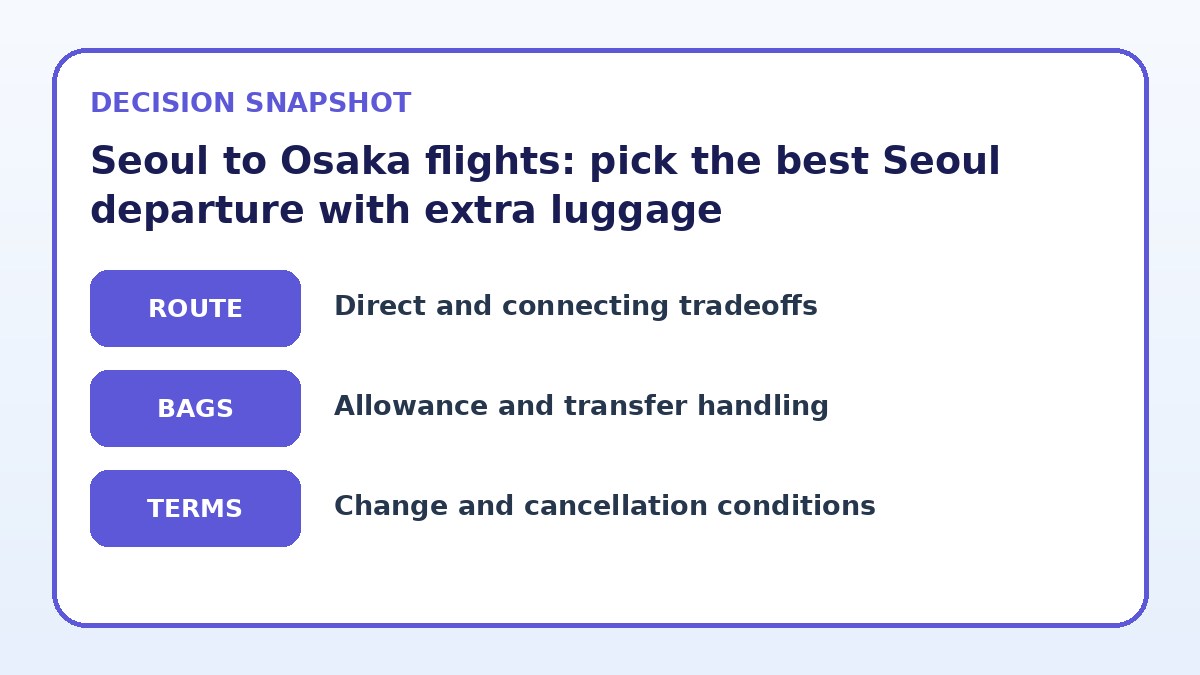
See current options before you compare the details
Availability and final conditions change. Open Trip.com now or keep reading for the practical comparison.
Compare departure airports by luggage handling and services
Different Seoul airports offer distinct service mixes that matter when you have extra luggage. Larger international airports generally operate more extensive baggage systems, dedicated oversized-baggage counters, and staffed lost-and-found services. Those facilities usually make processing irregularities—delayed, damaged, or oversized items—less stressful, because more staff and established procedures are available to help. If you carry sports equipment, multiple large suitcases, or unusually shaped items, check whether the airport has dedicated cargo or oversized-baggage windows, and confirm any special handling requirements with your carrier before arrival.
Smaller or more centrally located airports can still be practical but may have limited counters, fewer size-specific handling options, and tighter processing windows during peak hours. For suburban or domestic-focused airports, the key is to verify whether the airline operating your Seoul–Osaka flight treats the airport like an international departure or routes baggage through partner handling services. Always review the airline’s baggage dimensions, weight rules, and oversize/overweight fee structure on the final booking page, and contact the airport’s information desk if you need confirmation about where to drop oversized items.
Balance transfer time against luggage convenience
Ground transfer time from central Seoul to different airports is an important practical consideration when you have extra baggage. A longer drive or public transfer with multiple transfers raises the effort required to move suitcases and can add stress—especially if you rely on trains or buses with luggage restrictions. Conversely, choosing an airport closer to the city center reduces door-to-door time but may force you to trade off on in-airport services like oversized-bag counters or 24-hour lost-and-found.
To decide, estimate door-to-door travel time including handling heavy bags, not just in-vehicle time. Factor in walking distances between transport modes, elevator availability, and whether the transfer method allows luggage loading onto trolleys. If you need curb-to-gate convenience, consider hiring a private transfer or a taxi with adequate trunk space; if budget is critical, plan extra padding in your schedule to accommodate slower transfers and potential carrier check-in queues.
| Approach | Best for | Tradeoff to check |
|---|---|---|
| Depart from the larger international airport | Travelers wanting robust baggage services and clearer oversize handling | Longer city transfer time and possibly higher ground transport costs |
| Depart from the nearer domestic-focused airport | Those prioritizing shorter door-to-door transit and less city commuting | Fewer baggage-service options and narrower airline choice |
| Choose a low-cost carrier with prepaid baggage | Budget-focused travelers who plan and pre-purchase exact bag allowances | Strict size/weight limits and potential high fees for last-minute changes |
| Ship extra items ahead or consolidate with a companion | Travelers with bulky nonessential items who want lighter transfers | Added cost and lead time; need to verify delivery timing and tracking |
Ready to check the option that fits your plan?
Use your exact dates and traveler details so the provider page can show the current total and conditions.
Weigh airline baggage policies and fare structures
Airline checked-bag allowances and fee structures have the biggest direct impact on travelers with extra luggage. Full-service international carriers often include one or more checked bags in their base fares or offer standardized paid upgrades at booking, which can simplify budgeting and handling at the airport. Low-cost airlines commonly unbundle baggage, meaning you must purchase allowances in advance and strictly adhere to size and weight limits; excess fees at the airport can be costly and time-consuming to resolve.
Before booking, compare total door-to-door costs—fare plus checked-bag charges and transfer expenses—rather than ticket price alone. Use the carrier’s final booking page to confirm size and weight rules, the cost of additional or oversized bags, and whether pre-purchased baggage can be added online up to a set deadline. If multiple carriers serve the route, check for multi-carrier luggage transfer policies on connecting itineraries, since mixed-ticket trips may require you to recheck bags between flights.
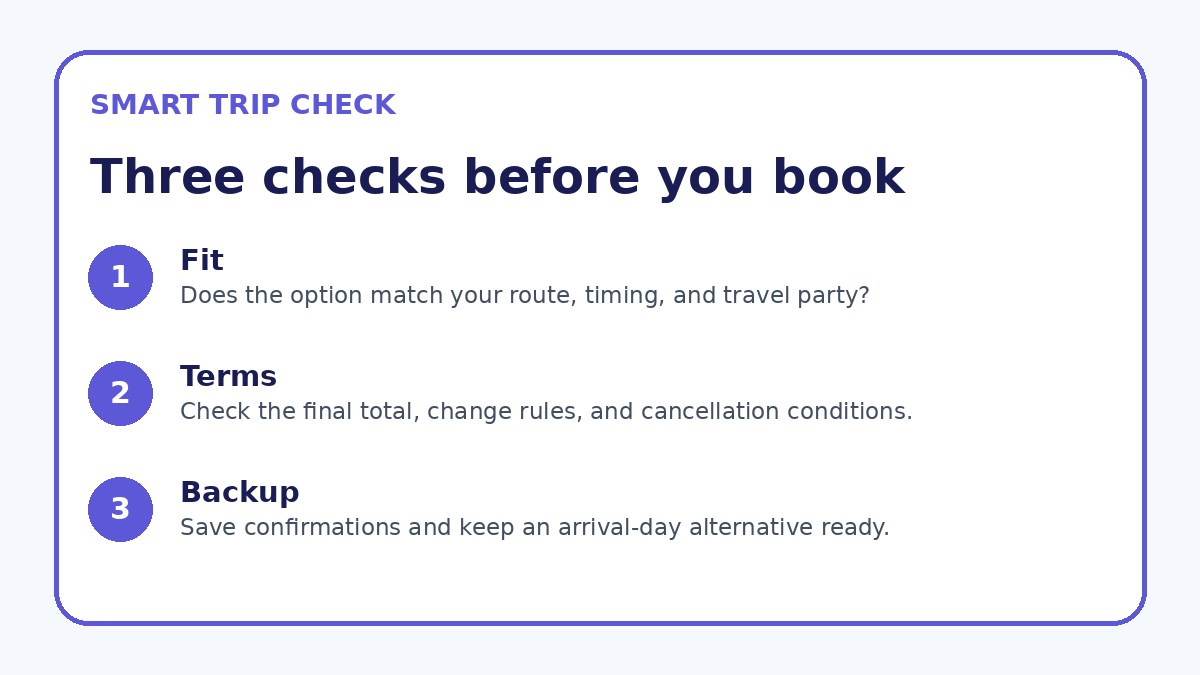
Before you book
- Check the airline’s final booking page for exact checked-bag dimensions, weight limits, and fees before selecting departure airport or fare.
- Estimate door-to-door transfer time from your accommodation to each Seoul airport and add extra buffer for moving heavy suitcases.
- Confirm elevator, escalator, and trolley availability on your planned transfer route and inside the terminal if mobility is a concern.
- Compare total trip cost: ticket price plus pre-purchased baggage fees, taxi or rail fares, and any oversized-item handling charges.
- If carrying irregular or oversize items, call the airline’s baggage or special-handling desk and the airport information line at both ends.
- Plan to arrive earlier than standard check-in times when you have multiple or oversized bags, and keep claim photos and receipts for all checked items.
Practical packing, shipping, and day-of strategies
Smart preparation can reduce airport friction. Pack heavier items in checked luggage and keep essentials in a carry-on. Use durable suitcase locks and external tags, and photograph contents and serial numbers for quick claims if required. Consider redistributing items among travel companions, or reserving one unlocked bag as a consolidated checked item to simplify transfer and retrieval in Osaka.
When excess luggage still creates a burden, evaluate shipping nonessential items ahead by international courier or airport-based cargo services. Shipping can be cost-effective for items you won’t need during transit, but compare delivery windows and tracking options before deciding. On travel day, arrive earlier than the airline’s minimum recommended check-in time if you need oversized-item processing, and verify on the airline’s final booking page whether you must declare special items or present specific packing requirements.
Frequently asked questions
Is it cheaper to fly from the closer airport when I have extra luggage?
Not necessarily. A nearer departure can save ground time and cheaper local transport, but airlines operating from that airport may have stricter baggage fees or smaller free allowances. To know which is cheaper overall, add the base ticket price to the cost of all checked and oversized-bag fees you expect to pay, plus transfer costs to the airport. Use the airline’s final booking page to calculate baggage charges and compare that total against tickets from the larger international airport.
Can I check oversized or sports equipment on Seoul to Osaka flights?
Many carriers accept oversized or sports equipment, but rules vary by airline and departure airport. Some require advance declaration, special packing, or arrival at a separate handling counter. Before you book, check the airline’s baggage policy details on its booking page and, if necessary, call the airline’s special-baggage desk to confirm whether the airport you plan to use offers the specific handling service and any associated charges.
When should I consider shipping items instead of checking them on the plane?
Shipping is worth considering when items are bulky but not needed during transit, when airline oversize fees are high, or when your planned transfer is difficult with many suitcases. Compare the courier’s delivery time, reliability, and tracking against the cost of extra checked-bag fees and the hassle of moving items through transfers. If you choose shipping, schedule it so the items arrive after you do, and retain documentation and tracking numbers for claims and customs if applicable.
Final planning note
Choosing the most practical Seoul departure airport for Seoul to Osaka flights when you have extra luggage comes down to balancing airport services, ground transfer effort, and airline baggage rules. If ease of handling, dedicated counters, and clearer lost-and-found procedures matter most, a larger international airport is usually the safer bet. If minimizing door-to-door time is your priority, a closer airport may be better, provided you verify baggage allowances and handling options. Always add baggage fees and transfer costs into your decision, confirm rules on the airline’s final booking page, and consider shipping or consolidating items if moving many large pieces would slow or complicate your trip.
Continue planning
Check current options and final conditions
Use the provider page to confirm live availability, the final total, cancellation terms, and every condition that matters to your trip.
This evergreen planning guide was created with AI-assisted drafting and a structured quality review. It does not display live prices, schedules, availability, visa guidance, or provider rankings. Verify current details before booking. Some links are affiliate links; we may earn a commission at no additional cost to you.