If you’re traveling to Las Vegas with extra luggage, the practical move is to set targeted price alerts while also creating pre-set rules that stop you from booking on impulse. Use alerts to monitor flights and hotels, but always compare the total door-to-door cost—ticket plus checked-bag fees, carry-on restrictions, transfers, and any hotel luggage surcharges—before you click buy. Establish a calendar checkpoint (for example, 10–14 days before departure) where you act on alerts only if your total cost meets a threshold you set. That keeps alerts doing the work without emotional overspending. Below I’ll explain how to set those alerts, what decision criteria to use for travelers with extra baggage, the tradeoffs to expect, and the exact checks to run on provider booking pages before finalizing a purchase.
See current options before you compare the details
Availability and final conditions change. Open Trip.com now or keep reading for the practical comparison.
Why alerts help—and why they can lead to impulse buys
Price alerts are a simple way to track changes without refreshing screens all day. For Las Vegas travel deals they reveal fare dips and hotel rate drops that might align with your travel dates. Alerts can catch limited-time promotions, sudden inventory changes, or lower weekday rates. For travelers carrying more luggage, alerts have extra value: a modest fare drop can be enough to offset an additional baggage fee or justify a different routing that reduces carry-on hassles.
However, alerts are designed to prompt action and can encourage rushed decisions. A low headline fare that looks like a bargain may exclude checked bags, seat selection, or airport transfers that your trip actually needs. Emotional pressure from receiving multiple alerts—especially close to travel dates—can override careful cost comparisons. To avoid impulse booking, pair alerts with pre-defined decision rules so you evaluate alerts against total landed cost and logistical convenience, not just the base fare.
How to set alerts when you have extra luggage
Start by creating multiple alert types: one for base fares, one for fares that include a checked piece (or for bundle fares that clearly list luggage), and one for hotel rates that include or exclude luggage-related services like early check-in or bell service. Use flexible-date settings (±2–3 days) and multiple origin/destination pairs if you can fly cheaper into nearby airports. For hotels, set alerts for room types that explicitly mention luggage-friendly amenities or free baggage hold so you’re comparing like with like.
Next, automate the math: when an alert fires, immediately calculate the total price including the checked-bag fee for each fare option, transfer costs from the airport (ride-share or shuttle), and any hotel baggage fees. If you use a spreadsheet or a simple note template, record the alert price, the baggage add-on cost, and the total. That simple habit will make headlines less seductive and ensure you only act when the overall package works for your luggage needs.
| Approach | Best for | Tradeoff to check |
|---|---|---|
| Act immediately on any low headline fare | travelers prioritizing lowest base ticket price | often ignores baggage fees and logistics, increasing total trip cost or hassle |
| Use alerts plus a fixed total-cost threshold | travelers who want controlled savings with luggage included | may miss the occasional narrow bargain that requires flexible decision timing |
| Monitor only bundled fares that include checked luggage | travelers who want one upfront price and fewer surprises | typically higher headline fares and fewer alert triggers |
| Wait for a calendar checkpoint before acting on alerts | travelers who avoid impulse purchases and need planning certainty | risk of fares rising after the checkpoint if demand increases |
Ready to check the option that fits your plan?
Use your exact dates and traveler details so the provider page can show the current total and conditions.
Decision criteria: what matters more than the alert price
For travelers with extra luggage, prioritize fare bundles or fare classes that include at least one checked bag or offer inexpensive bundled baggage. Also factor in routing: a cheaper flight with a long layover might be worthwhile if it avoids a second checked bag charge on a connecting carrier, but it may cost more in time and effort. Consider airport transfers and where your bags will be handled—nonstop flights reduce the risk of mishandled luggage even if marginally more expensive, which can be worth the premium on tight itineraries.
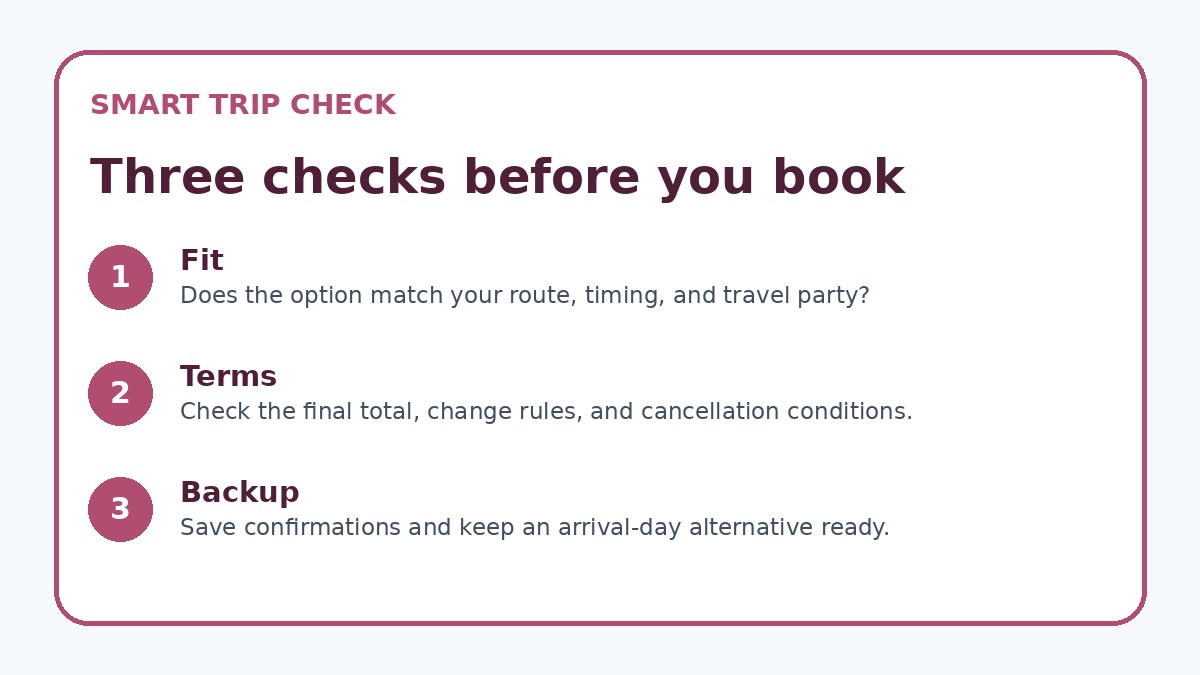
Balance flexibility and savings: refundable or changeable tickets are often pricier, but they avoid last-minute rebooking that can be costly when dealing with oversized or extra pieces. Evaluate cancellation and change fees on the provider’s final booking page—verify which tickets allow same-day changes and whether baggage rules change across fare classes. Don’t assume baggage rules shown in an alert are final: always confirm the exact baggage allowance, fees, and refundability on the airline or hotel booking page before purchase.
Before you book
- Create separate price alerts for base fares, bundled fares that include checked baggage, and relevant hotel room types.
- Set a maximum total landed-cost threshold that includes ticket price, checked-bag fees, transfers, and estimated tips before you consider booking.
- When an alert arrives, immediately open the provider’s booking page and confirm baggage allowances, exact fees, and cancellation/change terms.
- Compare nonstop versus connecting itineraries for luggage handling risk and transfer costs before choosing the cheaper headline fare.
- Record alert details and final booking screenshots showing baggage inclusion and refund rules in case of disputes.
- If unsure, delay booking until your predetermined calendar checkpoint and adjust alerts to lower price triggers during that waiting period.
Practical booking checks to stop an impulse buy
When an alert looks tempting, open the airline or hotel provider’s final booking page right away and verify these specifics: exact baggage allowance and fees, whether baggage is included or a paid add-on, carry-on size limits, any weight or dimension surcharges, and how refunds apply if you cancel. Also check transfer options and whether the fare requires separate tickets for connections. If your luggage exceeds standard allowances, search for oversized/extra-piece rules and how they’re charged on the booking page—these fees are essential to calculating the true cost.
Before confirming payment, compare the final total against your pre-set threshold and your scheduled decision checkpoint. If the total is above your threshold, set a follow-up alert for a slightly lower threshold or another date. If it meets your criteria, proceed—still double-check seating availability (for stretches or bulkhead seats if you need extra space), and save screenshots or confirmation emails that clearly show what baggage was included and the cancellation policy. These small steps prevent frustration later and keep alerts a tool rather than a trigger.
Frequently asked questions
Can I rely on an alert’s baggage information or should I always confirm on the airline site?
Always confirm baggage rules on the airline’s final booking page. Alerts often display a headline fare and may summarize baggage policies, but the booking page shows the precise allowance, fees for additional or oversized pieces, and conditions for refunds or changes. If an alert references a bundle or fare class that includes luggage, verify that the same fare class is still available at checkout and double-check whether connecting carriers honor the same baggage allowance on the full itinerary. Treat alerts as prompts to verify, not as final guarantees.
How far in advance should I set alerts for Las Vegas travel deals when I have extra luggage?
Set alerts as soon as your travel window is fixed; for flights, start monitoring 6–12 weeks out if you can, with flexible-date alerts to catch weekday or midweek dips. For hotels, begin earlier for weekends in Las Vegas since rates can fluctuate with events. Maintain rolling alerts and add a tighter alert window 10–14 days before departure as your decision checkpoint. The idea is to gather pricing context early without committing until your pre-set threshold and timing rules are met.
If an alert shows a cheaper fare but baggage is extra, how do I quickly decide whether to book?
Calculate the total landed cost immediately: add the base fare, the checked-bag fee per piece, any seat selection fees you need, and estimated transfer costs. Compare that sum to the cheapest bundled fare and to your maximum threshold. Also weigh non-financial factors like a nonstop flight’s lower luggage-handling risk versus a connecting itinerary’s potential delay exposure. If the alert fare’s total is lower and meets your stop-loss rules, proceed; if it’s close to or above your threshold, hold out for a bundled option or wait for another alert.
Final planning note
Price alerts are a powerful ally for finding Las Vegas travel deals, but they require discipline if you travel with extra luggage. Use multiple, targeted alerts and automate or pre-calculate total landed costs so you’re comparing real options, not just headlines. Create clear decision rules—a cost threshold and a calendar checkpoint—so alerts trigger evaluation rather than impulsive booking. Always verify baggage allowances, add-on fees, and cancellation terms on the provider’s booking page before you finalize payment. With a little planning and the right checks, alerts will save you money without increasing stress over your heavier-than-average luggage.
Continue planning
Check current options and final conditions
Use the provider page to confirm live availability, the final total, cancellation terms, and every condition that matters to your trip.
This evergreen planning guide was created with AI-assisted drafting and a structured quality review. It does not display live prices, schedules, availability, visa guidance, or provider rankings. Verify current details before booking. Some links are affiliate links; we may earn a commission at no additional cost to you.