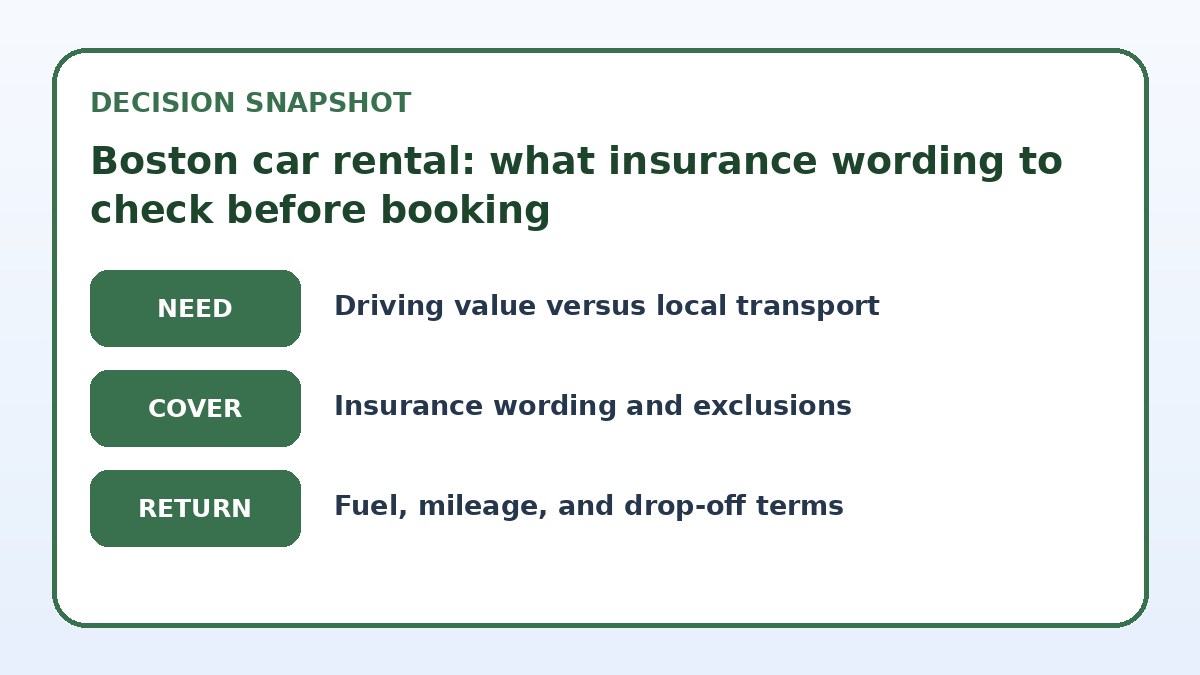
If you’re renting a car in Boston with kids, the practical first step is to read the rental contract and the insurance wording before you commit. Focus on four things: who is covered (the named drivers and family members), whether damage to the rental and third-party liability are included, how deductibles or loss-of-use charges apply, and whether your personal auto or credit card insurance coordinates with the rental coverage. Families have different priorities — child-seat needs, weekend errands, sightseeing routes into Cape Cod or the North Shore — so your best pick depends on whether you want low out-of-pocket risk or a lower upfront rate. Read provider pages carefully and confirm key terms on the booking page: driver age limits, additional-driver fees, deductible amounts, and how to report and document an accident.
See current options before you compare the details
Availability and final conditions change. Open Trip.com now or keep reading for the practical comparison.
Who is covered and how to read named-driver language
Rental contracts often hinge on the phrase "named drivers" or "additional drivers." For families, that matters because some groups assume anyone driving the van for a school pickup is covered; they may not be unless specifically added. Look for explicit wording about permitted drivers, whether adding a spouse or domestic partner is free, and any age-based restrictions or young-driver surcharges. If grandparents or a teen might drive, add them while booking or at pickup and get that confirmation in writing—it’s the simplest way to avoid a refusal of coverage after an incident.
Also note how the contract defines authorized use: commuting, errands, or driving outside state lines. Certain agreements exclude remote-road use, off-road driving, or commercial activity (ride-sharing, deliveries), which could void coverage. Families planning day trips beyond Boston—Cape Cod, the Merrimack Valley, or rural New England—should confirm territory limits and permit statements. When in doubt, ask for the exact clause on the provider’s booking page, save screenshots or a PDF of the final rental terms, and carry them in the car.
Collision Damage Waiver (CDW) and deductibles explained
A Collision Damage Waiver (also called CDW, Loss Damage Waiver or LDW in some contracts) often appears as optional but is worded in ways that vary widely. Some waivers state they "waive" financial responsibility for damage, while others reduce it to a stated deductible. Families who prefer to avoid post-accident disputes should look for wording that explicitly removes your liability for physical damage and clarifies whether loss-of-use (income lost to the company while the car is being repaired) is covered. If the waiver still leaves a deductible, confirm the exact dollar amount and whether additional fees or administrative charges apply after a claim.
Deciding whether to buy the CDW depends on how much risk you can tolerate and what other coverages you have. If your personal auto policy or credit card provides primary rental coverage, the CDW may be redundant; if they are secondary or exclude certain vehicle classes, buying the waiver could reduce hassle and out-of-pocket exposure. Families should compare the potential deductible plus loss-of-use against the extra daily cost of the waiver and think about the stress of handling a claim while on vacation—sometimes paying a bit more upfront prevents a much larger billing headache later. Always verify the final language on the rental provider’s booking page before declining or buying coverage.
| Approach | Best for | Tradeoff to check |
|---|---|---|
| Buy the rental company’s CDW/LDW | Families wanting minimal out-of-pocket risk and a simpler claim process after an incident. | Higher upfront daily cost and possible duplication if personal or card coverage already applies. |
| Use personal auto insurance as primary | Households with comprehensive policies and low deductibles who want to avoid rental-surcharge costs. | A claim may raise premiums and some rental fees (loss-of-use) might not be covered. |
| Rely on credit card rental coverage | Short family trips where the card offers primary coverage and you prefer no extra rental fees. | Coverage limits, exclusions for vehicle type, and reimbursements can be slow or incomplete. |
| Add supplemental liability or medical protection | Families concerned about injury costs or low rental liability limits in the base rate. | Extra daily charges increase the bill and may overlap with existing health or auto policies. |
Ready to check the option that fits your plan?
Use your exact dates and traveler details so the provider page can show the current total and conditions.
Liability, third-party claims, and Massachusetts specifics to check
Third-party liability coverage protects you if you injure someone or damage another person’s property. Rental contracts will list minimum liability limits; in many places, the state-required minimum is only the baseline. For family travel in Boston and surrounding areas, ensure the rental’s liability wording offers limits that would cover medical expenses and property damage in a worst-case scenario. If the rental’s basic liability is low or unclear, consider adding supplemental liability insurance or confirming that your personal auto policy extends coverage to rentals. Get the exact dollar amounts and policy numbers from the booking page so you can present them if a claim arises.
Also check for wording about uninsured/underinsured motorist coverage and legal defense. Some contracts include or offer added protection for injuries when the at-fault driver has insufficient insurance. For families with children, coverage for medical payments or personal accident protection can matter for ambulance or immediate care costs after a crash. Because policy names and legal obligations can vary, read the provider’s page where you book and, if needed, call your auto insurer or credit card company to confirm how they coordinate with rental liability coverage in Massachusetts.
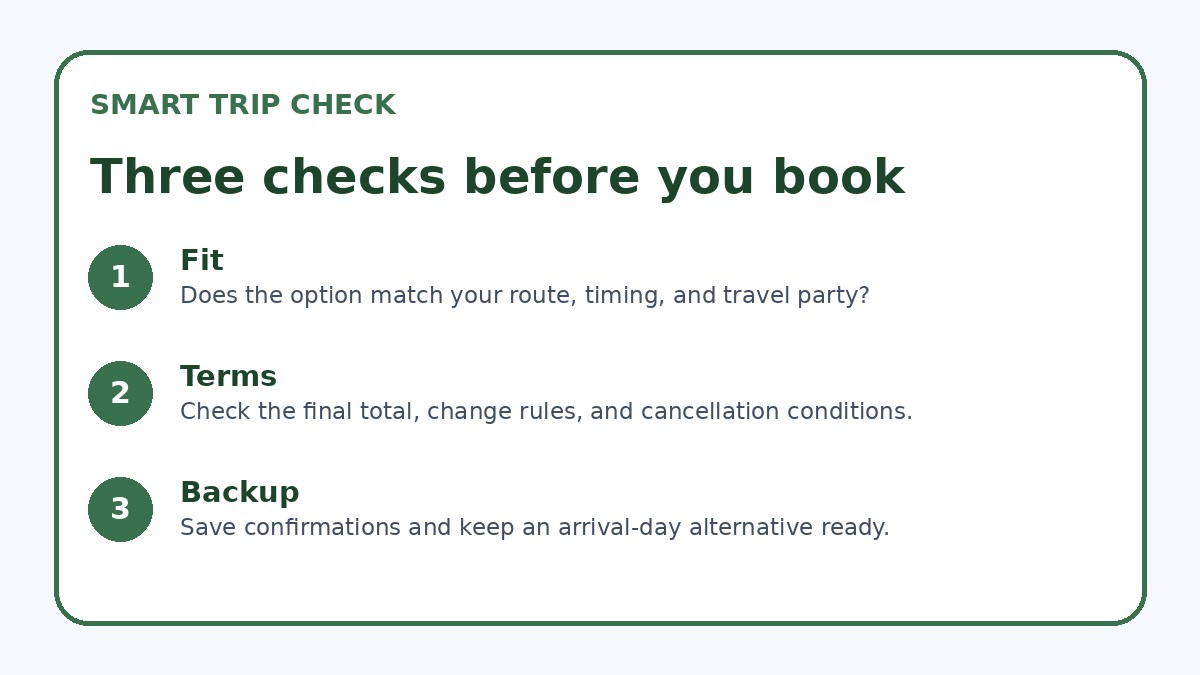
Before you book
- Save and print or screenshot the rental provider’s final insurance wording shown on the booking page before pickup.
- Confirm which drivers are covered and add any family members who may drive at pickup, securing written confirmation.
- Verify the exact deductible amount, loss-of-use and administrative fee language, and how those charges are calculated.
- Call your auto insurer and credit card company to get written confirmation of what they cover for Boston rentals.
- Decide whether to buy CDW/LDW after comparing the rental waiver cost to your potential deductible and hassle of reimbursement.
- Keep emergency claim steps and insurer contact numbers in the glovebox along with proof of coverage and the rental agreement.
Credit cards, personal policies, and what to verify before declining coverage
Many travelers rely on their credit card’s rental insurance or their personal auto policy as the primary protection. If you plan to use either, verify three things on the provider and issuer pages: whether the card offers primary or secondary coverage, any vehicle-class exclusions (luxury cars, large vans), and how claims are handled—especially whether you must pay the rental company first and file for reimbursement. For families, the reimbursement route can be inconvenient after an accident; confirm timelines and whether a lost rental day or administrative fee is reimbursable.
Before refusing rental-provided coverage, call your auto insurer and credit card company and get confirmation in writing or email about coverage specifics for rentals in Boston. Ask about driver eligibility (household members? teenagers?), deductible responsibility, and whether child-seat damage or theft is covered. The rental booking page and the card’s benefits guide should match what the issuer tells you; if there’s a conflict, rely on the issuer’s written statement and bring both the card and contact details when you pick up the car. If you use Trip.com or another broker to compare rentals, verify the final insurance wording on the supplier’s booking page before you finalize.
Frequently asked questions
Does my personal auto insurance cover a rental in Boston for my family?
Many personal auto policies extend coverage to rental vehicles, but details differ: some provide primary coverage, others act as secondary to the rental company’s CDW. Call your insurer and ask specifically about rental use in Massachusetts, coverage for additional drivers (spouse, teenagers, grandparents), and whether there are exclusions for vehicle types or rental purposes. Request written confirmation or an email and compare those details against the rental provider’s booking page before you refuse the company’s waiver.
Will my credit card cover damage to the rental car or liability in Massachusetts?
Some credit cards include rental car insurance as a benefit, but coverage levels, primary vs. secondary status, and exclusions (large vans, certain SUVs) vary. Contact the card issuer to confirm whether its protection applies in Boston, whether it covers loss-of-use and administrative fees, and the documentation required for a claim. Keep the card used for the booking with you at pickup and carry the issuer’s benefit guide or confirmation email to speed claims if needed.
If an accident happens, what documentation should families collect at the scene?
Immediately ensure safety, then document the scene: photos of vehicle damage and positions, license plates, driver names and contact information, insurance and rental agreement details, witness names, and a police report if required. Note the rental agreement number and record any statements from the rental company about repairs or towing. Afterward, notify the rental company and your insurer promptly and save receipts for medical visits, towing, or child-seat replacement. Having this documentation simplifies claims and reduces disputes over responsibility.
Final planning note
Families renting in Boston can reduce stress by reading insurance wording carefully and confirming what’s in force before driving away. Prioritize understanding who the contract names as drivers, the exact effect of a CDW or LDW on your liability, and whether third-party and medical protections are sufficient for your needs. Balance the convenience of rental-provided waivers against the potential overlap and claims hassle of personal auto or credit card coverage. Always verify restrictive clauses, deductibles, and loss-of-use language on the final booking page, get any insurer promises in writing, and keep documentation handy—those steps prevent most billing surprises and let you focus on your family trip instead of paperwork.
Continue planning
Check current options and final conditions
Use the provider page to confirm live availability, the final total, cancellation terms, and every condition that matters to your trip.
This evergreen planning guide was created with AI-assisted drafting and a structured quality review. It does not display live prices, schedules, availability, visa guidance, or provider rankings. Verify current details before booking. Some links are affiliate links; we may earn a commission at no additional cost to you.