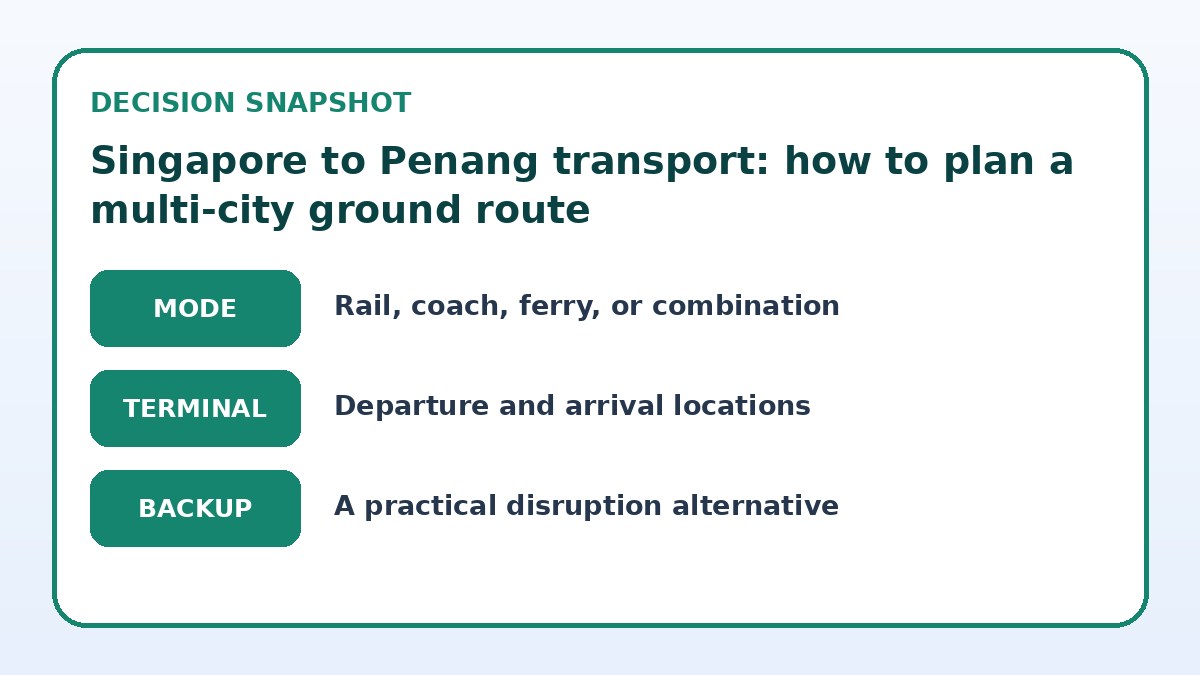
Practical answer first: build a multi-city ground-transport plan from Singapore to Penang by choosing a main corridor (bus-only, mixed coach + train, or train-first then coach), mapping reliable transfer hubs (Johor Bahru, Kuala Lumpur area or Butterworth), and booking legs so you have at least one spare hour for immigration and unexpected delays at the Malaysia–Singapore land border. For first-time visitors, the core decisions are: comfort versus cost, number of stops you want to visit en route, and how much time you allow for border crossing. Start by deciding whether you want a single through-coach or prefer breaking the journey into city hops to visit places like Malacca or Kuala Lumpur. Once you pick that approach, check up-to-date timetables and entry requirements on the provider’s official pages (and optionally compare availability on Trip.com), then lock in accommodations around your chosen hubs.
See current options before you compare the details
Availability and final conditions change. Open Trip.com now or keep reading for the practical comparison.
Pick your multi-city approach: direct coach vs staged stops
A single through-coach from Singapore to Penang is the simplest ground option for travellers prioritizing door-to-door ease: one booking, fewer transfers, and no need to change stations. That said, direct coaches are less flexible for sightseeing; they typically follow the fastest land corridor and won’t let you linger in mid-route cities. If you want to see places en route, a staged plan with city stops gives you flexibility and the chance to split the long haul into manageable days.
Staged travel is ideal if your goal is to experience multiple Malaysian cities or to break the journey with overnight stays. For example, you can plan Singapore to Malacca, then Malacca to Kuala Lumpur, and finally Kuala Lumpur to Penang. Each leg becomes shorter and easier to handle but increases the number of bookings, transfers, and times you must clear immigration. A staged itinerary also requires coordinating local arrivals with the next leg’s departure points to avoid long waits or rushed connections.
How to combine trains and coaches for comfort and scenery
Trains offer a more spacious ride for longer legs and can be especially pleasant on the northbound stretches of Peninsular Malaysia. Since direct rail from Singapore’s central area is limited, most train-inclusive plans start by crossing into Johor and connecting with Malaysia’s rail network. Combining a short bus or shuttle crossing with a train for the longer interior leg gives you the comfort of rail for overnight or daytime segments while keeping the initial cross-border movement straightforward.
When you mix operators, pay careful attention to station names and whether a coach drops you at a central bus terminal or a dedicated rail interchange. Also check luggage allowances on both modes — train services sometimes allow larger bags without extra fees, while some coaches enforce tighter rules. Always verify the final boarding point and any required local transfers on the operator’s booking page so you can plan taxis or short shuttle rides between terminals if necessary.
| Approach | Best for | Tradeoff to check |
|---|---|---|
| Direct long-haul coach | Travelers who want the fewest transfers and simplest bookings | Less sightseeing opportunity en route and potential fatigue on a single long ride |
| Train-first then coach | Passengers who value rail comfort on longer interior legs | Requires an initial cross-border transfer and careful station coordination |
| Staged multi-city hops | Visitors who want to stop and explore cities along the way | More bookings, extra transfers, and higher risk of timeline disruption |
| Hybrid with overnight stays | Those who prefer leisurely travel and recovery time between long legs | Longer total trip duration and additional lodging logistics |
Ready to check the option that fits your plan?
Use your exact dates and traveler details so the provider page can show the current total and conditions.
Border crossings, immigration, and practical timing strategies
Crossing the Singapore–Malaysia land border can add unpredictable delays; immigration processing time varies by day and hour. Build buffer time into any connection that requires you to re-enter a bus or train on the Malaysian side. If your plan includes multiple short hops on the same travel day, leave at least 60–90 minutes between scheduled arrivals and departures to accommodate walking between terminals, luggage handling, and immigration lines.
If you prefer to minimize border stress, plan multi-city legs where you clear immigration once and then travel inside Malaysia for several segments before returning to Singapore. For example, enter Malaysia and stay two nights in a hub city before continuing north. Wherever possible, choose departures that avoid peak commuting hours at the border and confirm whether the provider offers assistance for cross-border transfers on their final booking page.
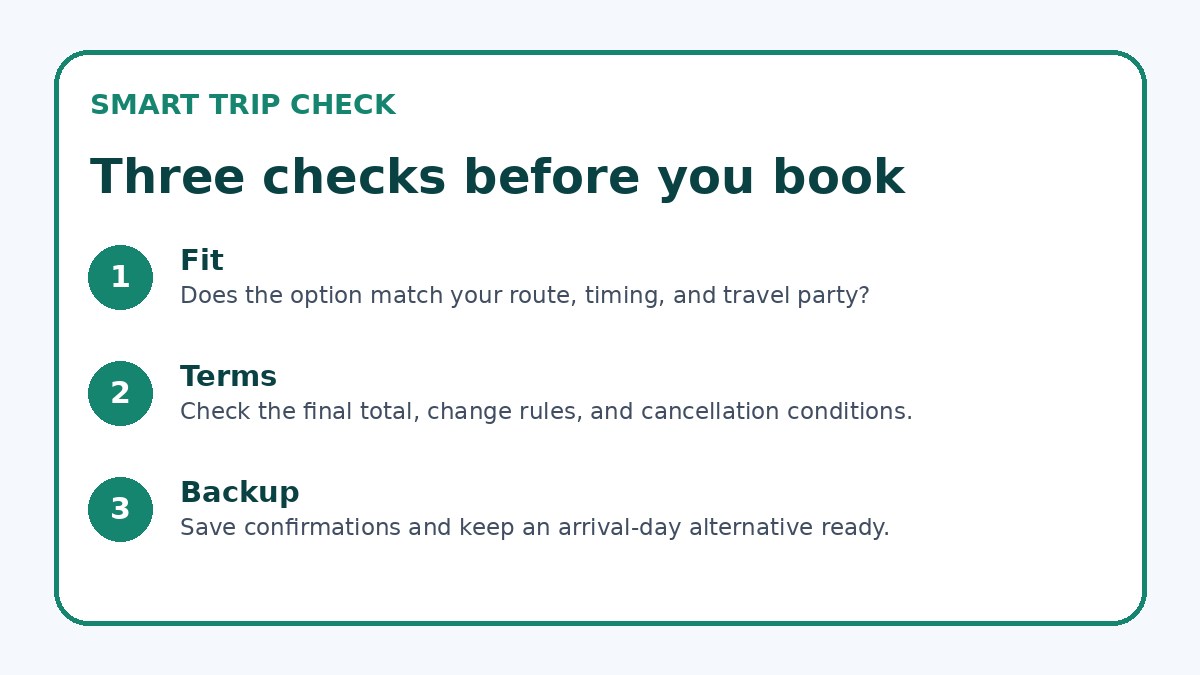
Before you book
- Decide whether you prefer a single through-coach or staged multi-city route and sketch your ideal stopover cities.
- Check up-to-date timetables and boarding locations on each operator’s official booking page before purchasing tickets.
- Allow at least 60–90 minutes between arrival and departure for legs that involve immigration or terminal transfers.
- Confirm luggage allowances and whether transfers require you to collect and re-check bags between legs.
- Choose accommodations close to the station or terminal you’ll use for the next leg to reduce transfer stress.
- Save electronic and printed copies of bookings, and download offline maps of terminals and connecting transport options.
Booking, verifying details, and on-the-ground tips
When you’re ready to book, compare options by total door-to-door time, number of transfers, and the arrival station’s proximity to your accommodation. Look for provider pages that list precise pickup/drop-off locations, luggage policies, and whether you need printed or mobile tickets. Use provider websites for authoritative schedule and boarding details; Trip.com can be used once as an optional comparison tool to check current availability, but always verify final terms directly with the operator before you commit.
Pack a small day bag with essentials for border waits, and keep travel documents—passport, any required entry paperwork, and your booking confirmations—easily accessible. Download offline maps of arrival cities and the locations of stations or bus terminals. Finally, build flexible time windows into your itinerary so you can handle delays without missing pre-booked accommodations or onward travel.
Frequently asked questions
Is it practical to travel from Singapore to Penang entirely by land on a first trip?
Yes—travelling entirely by land is practical for first-time visitors if you plan carefully. Decide early whether you want a single through-coach for simplicity or staged stops for sightseeing. Bear in mind border processing can add time, so factor buffers between connections. Choose hubs where accommodations are close to stations and verify final boarding points on operator pages. If you prefer fewer unknowns, book one longer overnight segment by train or coach to reduce the number of same-day transfers.
How do I handle immigration and customs when moving overland between Singapore and Penang?
Overland travel requires clearing immigration when you leave Singapore and when you enter Malaysia, usually at the land checkpoint you use. Accounts of timing vary, so always allow extra time between scheduled connections. Keep passports and any required documents handy during the whole transfer. If your itinerary breaks across several operators, check whether your next boarding point is before or after immigration so you know when to show documents. Confirm detailed crossing procedures on the operator’s official information page before departure.
What should I verify on providers’ pages before booking multi-leg ground travel?
Before booking, verify exact pickup and drop-off addresses, terminal names, luggage rules, ticket and boarding requirements (print vs. mobile), refund and change policies, and whether the operator assists with cross-border transfers. Also check whether there are recommended transfer times and what happens if one leg runs late. Use provider pages as the authoritative source for these facts; Trip.com can be used to compare current availability but always confirm critical details directly with the operator.
Final planning note
Building a multi-city ground-transport plan from Singapore to Penang is a matter of choosing the travel philosophy that matters most to you: simplicity, comfort, or exploring en route. Start by deciding whether a single through-coach or a staged, multi-stop itinerary fits your priorities. Then map sensible hubs, allow buffers for border procedures, and verify station locations and luggage rules on operator booking pages. With those checks done—plus a backup plan for delayed legs—you’ll turn a long overland route into a manageable, rewarding travel experience.
Continue planning
Check current options and final conditions
Use the provider page to confirm live availability, the final total, cancellation terms, and every condition that matters to your trip.
This evergreen planning guide was created with AI-assisted drafting and a structured quality review. It does not display live prices, schedules, availability, visa guidance, or provider rankings. Verify current details before booking. Some links are affiliate links; we may earn a commission at no additional cost to you.