If you're traveling alone from Tokyo to Fukuoka, make decisions about luggage and airport time first—those two variables shape stress, cost, and how smoothly your day runs. The practical answer: travel light enough to use carry-on only when possible, check the airline's checked-bag cost and size limits before booking, and give yourself a margin for Tokyo airport transfers, security lines, and last-minute changes. Choose an arrival buffer at your destination based on whether you need public transport, a rental car, or baggage pick-up. This article walks you through the tradeoffs of carry-on versus checked bags, how to set arrival and check-in windows, what to check on the airline page before paying, and how to adapt when you face tight connections or heavy luggage needs.
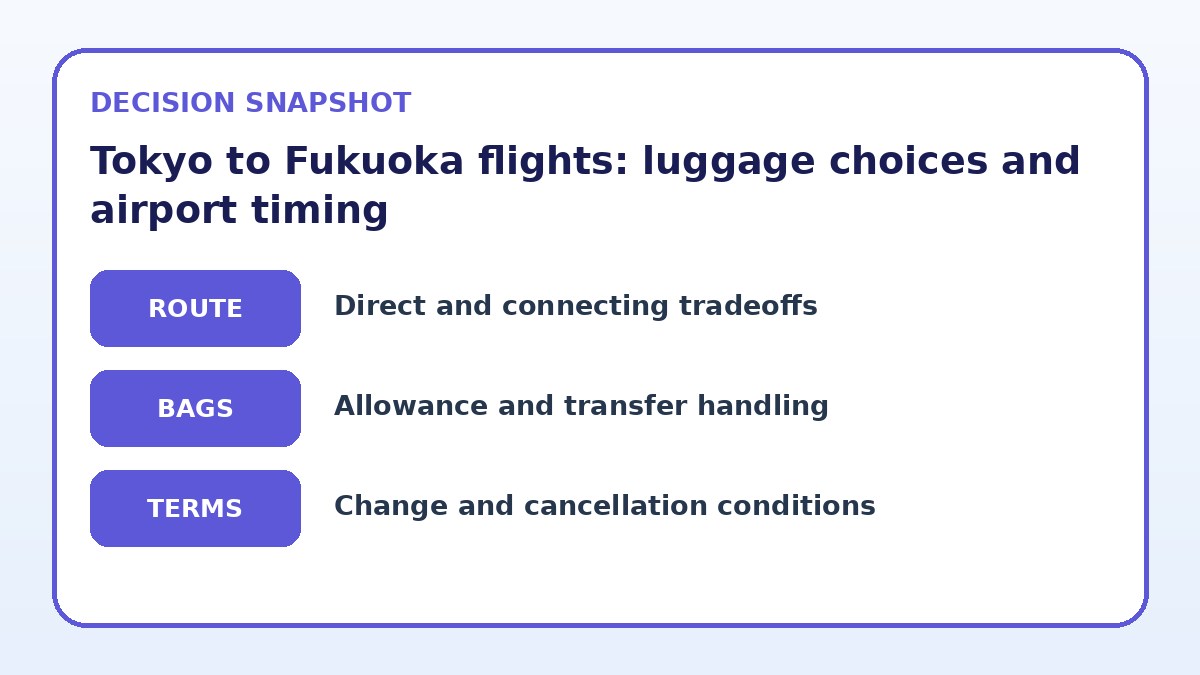
See current options before you compare the details
Availability and final conditions change. Open Trip.com now or keep reading for the practical comparison.
Choosing carry-on versus checked baggage
For a solo traveler on Tokyo to Fukuoka flights, the biggest daily tradeoff is speed versus capacity. Carry-on-only travel gets you through the airport faster—no waiting at baggage claim and fewer steps at check-in—so it suits short stays, trips with simple itineraries, or travelers who want to keep mobility after arrival. Remember that carry-on limits vary by airline: some carriers count a single roll-aboard, others allow a personal item plus a small roller. If your possessions fit within those stated limits, carry-on saves time and eliminates one point of failure: lost or delayed luggage.
Checked baggage makes sense when you need more than a compact wardrobe, are carrying bulky items (sports gear, instruments), or are staying long enough that laundry or outfit rotation justifies the hassle. The tradeoffs are waiting at baggage claim, potential fees, and earlier arrival requirements at the airport for check-in. When you plan to check a bag, pack to minimize claim time—use a recognizable tag, lock items as allowed, and keep essentials (meds, documents, electronics) in your carry-on so a delayed checked bag doesn’t derail the first day in Fukuoka.
Timing your arrival at Tokyo airports
Tokyo serves multiple airports with different transfer needs, and solo travelers must account for how they’ll get to the departure terminal. Aim to work backwards from your airline’s recommended check-in window, but add contingency for Tokyo traffic, train transfers, or unexpected queueing at security. If you’re using a shuttle or taxi, allow extra time in the evening or morning peak. If you’re coming from a city hotel using public transport, check train schedules and last-mile walking time to the terminal entrance. Remember to verify the airline’s published check-in and boarding times on the provider’s booking page.
For domestic flights between Tokyo and Fukuoka, allow time for document checks and boarding gates that may be more crowded during holidays or early morning business windows. If you’re checking a bag, factor in extra minutes at drop-off counters; if you’re only carrying on, you can often skip early counter lines but still must pass security and reach the gate in time. Always carry a buffer—arriving 30–60 minutes earlier than the minimum recommended window reduces stress and gives you leeway to buy water or a snack without cutting it close.
| Approach | Best for | Tradeoff to check |
|---|---|---|
| Carry-on only | Short trips, quick turnarounds, and avoiding claim waits | Limited clothing and no bulky items; strict size rules to verify |
| Checked bag | Longer stays or when you must transport larger items | Extra time at check-in and baggage claim, and potential fees |
| Early arrival buffer | Reducing stress and handling unexpected transfer delays | More waiting time in the terminal and less flexible morning schedule |
| Minimal buffer (tight timing) | Maximizing time in the city and efficient solo travelers | Higher risk if transfers, traffic, or lines run long |
Ready to check the option that fits your plan?
Use your exact dates and traveler details so the provider page can show the current total and conditions.
Packing strategies for speed and flexibility
Organize your bag around two zones: essentials and checked items. Essentials—passport or ID, wallet, medication, a charged phone and power bank, headphones, and an easily removable layer—should be in your carry-on for instant access. Use packing cubes to compress clothing and keep outfits visible; this helps with security checks and speeds up boarding and arrival. If you need items like umbrellas or travel adapters, place them in an outer pocket for quick retrieval. Solo travelers often value one-bag systems that balance compactness with enough space for a second outfit or emergency toiletry kit.
If you will check luggage, aim to make baggage retrieval fast: attach a colorful ribbon or bright strap to the handle and keep a copy of your itinerary or receipt in an outer pocket. Place fragile or time-sensitive items in your carry-on. Think about how you’ll move from Fukuoka Airport to your first stop—if you must carry luggage on public transport, lighter and narrower bags are easier to manage on buses and trains. Finally, pack a small daypack or tote inside your main bag for sightseeing on arrival so you don’t need to open the larger piece frequently.
Before you book
- Confirm on the airline’s booking page the exact carry-on dimensions, personal item policy, and weight limits for your fare class.
- Decide if you need a checked bag and pre-pay any baggage fees when booking to compare true travel costs.
- Set calendar reminders for when to leave your Tokyo accommodation to reach the chosen terminal with a comfortable buffer.
- Pack essentials—ID, wallet, meds, phone charger, and a change of clothes—in your carry-on for immediate access at arrival.
- Label checked luggage externally with a bright strap and place a copy of your itinerary inside the bag in case the tag is lost.
- Check gate and terminal assignments on the airline’s live page before leaving for the airport and again upon arrival.
What to verify before booking and day-of checks
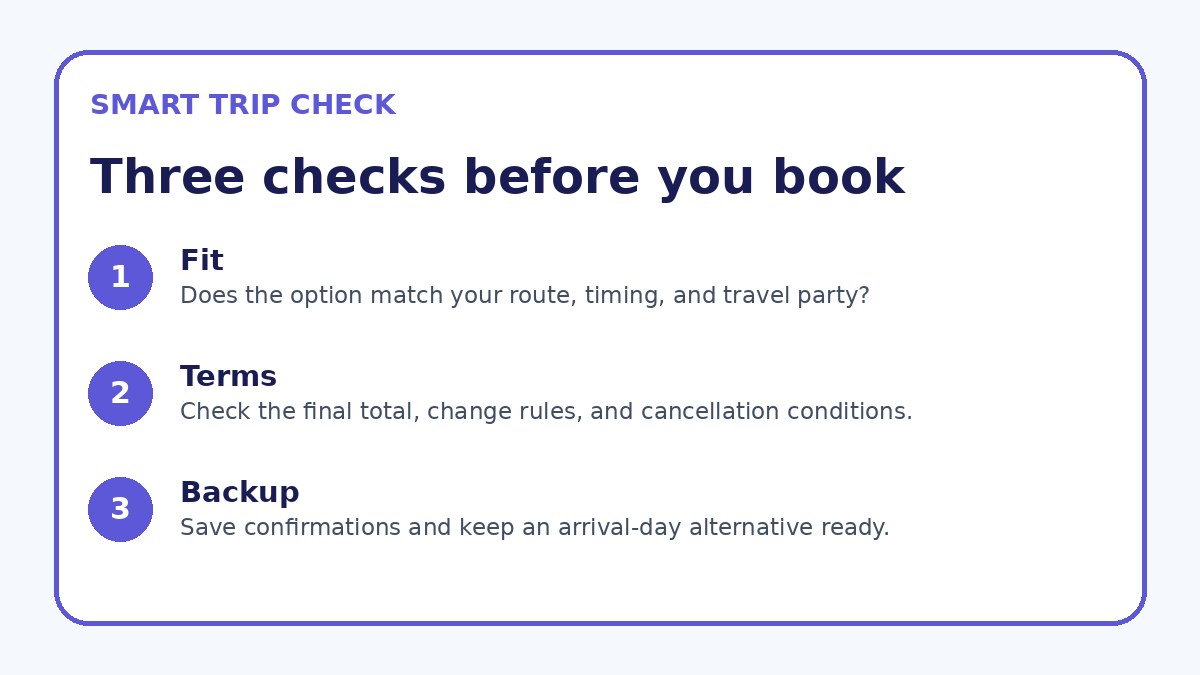
Before you hit buy, check the airline’s final booking page for exact baggage allowances, size and weight limits, and any fees for checked or oversized items. Confirm the allowed number of carry-ons and whether a personal item is separate from a suitcase size. If you are comparing direct and connecting options, scrutinize minimum connection times and whether you will need to re-check bags on a layover. If the flight page is unclear, contact the airline’s support line or check a secondary booking platform such as Trip.com to compare how each fare class handles baggage.
On travel day, re-check terminal assignments, boarding gate updates, and the status of your flight. Keep digital copies of any booking confirmations and a printed page of key details if you prefer a fallback. For solo travelers, set phone alarms for time-based checkpoints—when to leave the hotel, when to check in, and when to head to security. If your airport has bag-drop kiosks or online check-in, use them to shorten on-site time, but verify the cutoff times on the airline page because kiosk availability and cutoffs can vary.
Frequently asked questions
How early should a solo traveler arrive at Tokyo airport for a domestic flight to Fukuoka?
Aim to arrive earlier than the airline’s minimum recommendation if you prefer a stress buffer. For domestic routes like Tokyo to Fukuoka, allow extra time for transfers to the correct terminal, security lines, and any ticketing counters you need to visit. If you’re checking bags, add time for drop-off queues. If you use a kiosk or online check-in and are carry-on only, you can be more flexible—but still check the airline’s posted boarding and baggage cutoff times on its booking page before you leave.
What should I pack in my carry-on to stay prepared in Fukuoka if my checked bag is delayed?
Keep essentials in your carry-on: travel documents or government ID, prescription medications, basic toiletries in compliant containers, one outfit or layering pieces, phone and charger, travel adaptor if needed, and any fragile or valuable items. Also include a small daypack for immediate use in Fukuoka. Packing these items ensures you can proceed with arrival plans—public transport, hotel check-in, or meetings—even if your checked bag is delayed. Verify liquid rules and carry-on size on the airline’s booking page beforehand.
How do I compare direct and connecting Tokyo to Fukuoka flight options when planning baggage and time?
When comparing options, check whether the service is direct or requires a connection and whether you must re-check bags during a connection. Direct flights reduce the risk of missed connections and simplify baggage handling. Connecting itineraries might be cheaper but require longer minimum connection times and could complicate baggage retrieval. Always review the connection policy and minimum connection times on the airline’s final booking page and factor in your tolerance for risk, the value of saved time, and potential baggage fees when making a choice.
Final planning note
For solo travelers on Tokyo to Fukuoka flights, the two most impactful choices are how much you bring and how much time you allow at the airport. Traveling carry-on only speeds your journey and reduces dependence on baggage systems, while checked luggage expands what you can bring but requires more time and planning. Before booking, verify baggage allowances, cut-off times, and connection rules on the airline’s official booking page; use that information to weigh convenience against cost. With a clear packing strategy, timed departures, and a small buffer for Tokyo’s transfers and security, you’ll arrive in Fukuoka ready to move without unnecessary hassle.
Continue planning
Check current options and final conditions
Use the provider page to confirm live availability, the final total, cancellation terms, and every condition that matters to your trip.
This evergreen planning guide was created with AI-assisted drafting and a structured quality review. It does not display live prices, schedules, availability, visa guidance, or provider rankings. Verify current details before booking. Some links are affiliate links; we may earn a commission at no additional cost to you.