If you need a practical multi-city ground-transport plan from Tokyo to Osaka, start by deciding whether speed, budget, or flexibility is your priority. Most first-time visitors choose a high-speed train for the convenience of city-center to city-center travel; others combine overnight buses or a rental car if they want lower costs or to visit smaller towns en route. Your plan should list each city stop, the primary mode between them, where you’ll overnight, and transfer time buffers at stations. Before booking, compare travel time, station-to-accommodation connections, luggage rules, and cancellation terms. This article explains the main transport choices, how to build a realistic multi-stop itinerary, what tradeoffs to expect, and the concrete checks to make on provider pages so you don’t assume details that can change.
See current options before you compare the details
Availability and final conditions change. Open Trip.com now or keep reading for the practical comparison.
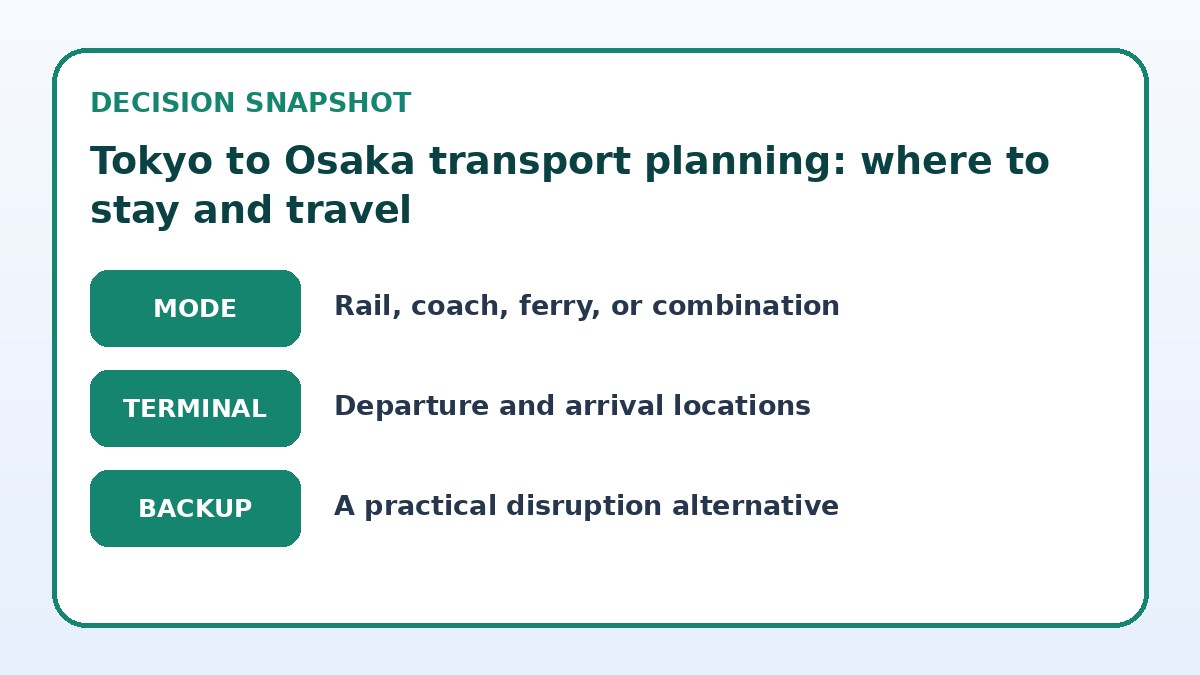
Choose a backbone mode and why it matters
Picking a primary mode—shinkansen (bullet train), daytime express or overnight bus, or rental car—shapes the entire multi-city plan. The shinkansen offers frequent departures between central Tokyo and central Osaka, which simplifies scheduling and reduces the need to factor in long transfers to airports. Buses generally cost less and can run overnight, allowing you to save on one night’s accommodation, but they require tolerance for longer travel durations and limited legroom. A rental car gives freedom to visit rural stops and handle flexible sightseeing schedules, but you’ll need to account for toll roads, parking, and navigating busy urban centers where public transit may be faster.
Think of the backbone as the spine of your route: once chosen, plan secondary legs—regional trains, local buses, taxis—so they align with backbone arrival times. For example, if the backbone arrives late afternoon, avoid planning an immediately timed onward regional train without a buffer for delays, luggage handling, and station navigation. Also consider how your chosen backbone affects luggage: if you’ll have large suitcases, trains with ample storage or luggage-forwarding services will be more comfortable than crowded buses or small rental cars packed with gear.
Building a multi-stop itinerary between Tokyo and Osaka
Start by mapping must-see stops along the corridor and grouping them logically by geography and time. Common intermediate stops might include Hakone, Nagoya, Kyoto, or smaller towns, but the order should minimize backtracking. For each stop, note the station you’ll arrive at, the nearest likely hotel or neighborhood, and transit between station and accommodation. Allocate at least one realistic transfer buffer (30–90 minutes, depending on station complexity and whether you carry luggage) to absorb minor delays and avoid missed connections that can cascade through your plan.
When assembling legs, mix long and short hops to avoid travel fatigue; for instance, pair a long shinkansen segment with a short regional or bus hop later in the day. Keep your daily schedule flexible by having a primary and a backup option for the key leg—an earlier train or an alternative bus—so you can rebook if needed. If you plan sightseeing immediately after arrival, book arrival times that leave several hours to settle in before sightseeing, and check public-transport schedules for evenings and Sundays which can differ from weekday frequency.
| Approach | Best for | Tradeoff to check |
|---|---|---|
| Shinkansen backbone with local train connectors | Travelers prioritizing speed, reliability, and city-center-to-city-center transfers | Higher fare than buses and limited flexibility for rural detours |
| Overnight or daytime highway buses | Budget-sensitive travelers willing to trade time for lower direct costs | Longer travel time and less comfort, plus potential distance from city centers |
| Rental car itinerary | Visitors wanting maximum flexibility and access to rural stops or hidden towns | Parking, tolls, urban traffic, and navigating unfamiliar road rules |
| Hybrid plan (train backbone + one-day car rental) | Travelers who need speed between major cities but flexibility at specific stops | More complex logistics and multiple booking sources to coordinate |
Ready to check the option that fits your plan?
Use your exact dates and traveler details so the provider page can show the current total and conditions.
How to compare cost, time, and convenience
Don’t compare just headline fares; compare door-to-door costs and time. For each option, calculate total travel time including transfers, first/last-mile transit, and waiting. Add explicit costs for luggage transfers, station-to-hotel taxis, tolls or parking, and any seat-reservation fees. For travelers prioritizing time, a higher fare might be worthwhile; if budget is the priority, an overnight bus or a mix of local trains can reduce cash outlay but add fatigue. Consider also intangible convenience: the ability to work on a train with stable Wi‑Fi versus the sleep you might get on an overnight coach.
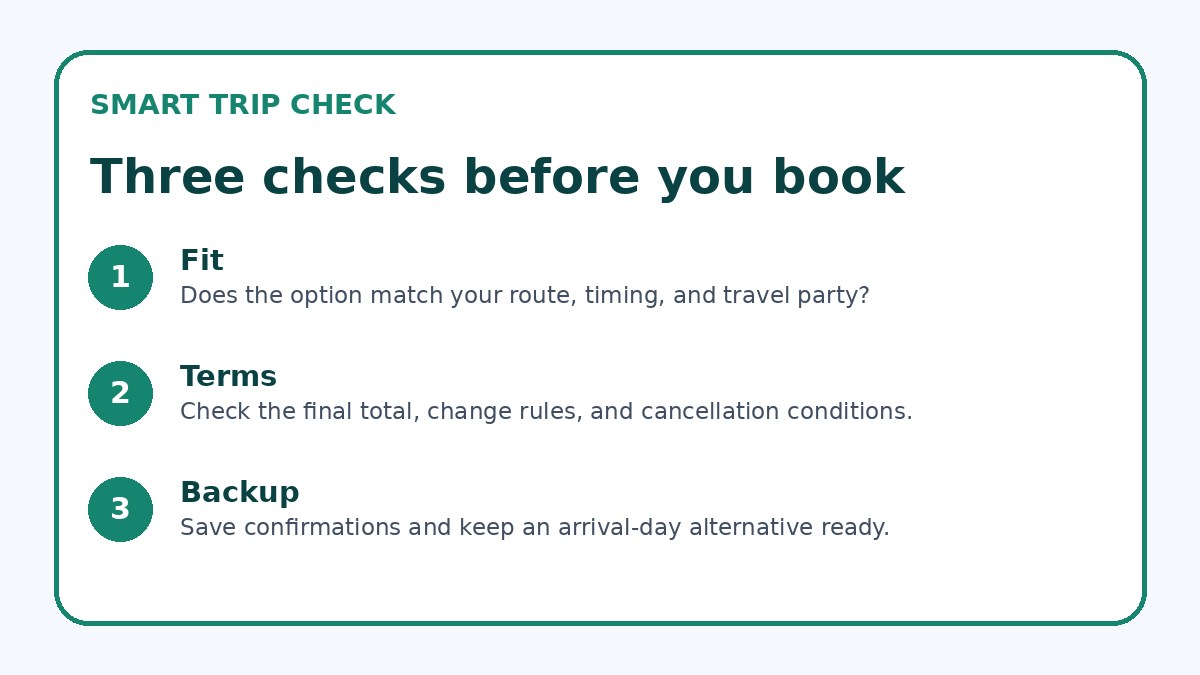
When reviewing provider pages, verify whether seat reservations are required, how luggage is handled, and refund/change penalties before committing. Schedules and rules for baggage or timed-entry tickets change often, so jot down exact train/bus numbers and the provider’s cancellation policy link. Trip.com can be a place to compare current availability, but always confirm operational details—like final boarding points, luggage dimensions allowed, and platform changes—on the operator’s official booking page before you finalize plans.
Before you book
- Pick your backbone transport mode (shinkansen, bus, or car) and list the primary departure and arrival stations or terminals for each long leg.
- For each booked leg, note exact departure platform/terminal, journey duration, and a realistic transfer buffer between connections.
- Confirm luggage rules (size, number, and extra-fee policies) on the operator’s final booking page and arrange forwarding if needed.
- If renting a car, verify pick-up/drop-off locations, fuel and toll expectations, and one-way rental rules before booking.
- Reserve seats for long or peak-time legs when possible, then save confirmation numbers and screenshots of ticket terms.
- Check cancellation and change policies, and store emergency contacts for each operator in case you need to rebook while traveling.
Packing your timeline: practical checks before booking
Before you hit purchase, run a checklist: verify connection times between platforms and stations, confirm whether reservations are mandatory or recommended, and check luggage and bicycle policies if relevant. For rental cars, confirm pick-up/drop-off locations and whether one-way rentals are permitted on your desired dates. If your itinerary includes overnight buses, check departure and arrival points carefully—low-cost bus terminals may be farther from the city center and incur extra taxi time. Don’t forget to review language support options at stations and whether your accommodation can hold luggage for early arrivals or late departures.
Finally, cross-check cancellations and rebooking rules in case plans change. Flexible tickets can be worth the premium if you expect schedule adjustments. Also check peak travel periods that could affect seat availability around holidays; when in doubt, reserve seats for long legs and keep shorter transfers loosely scheduled. Save screenshots of confirmation pages and the specific terms that matter—refund windows, change fees, and the provider phone number—so you can act quickly if connections need to be altered while you travel.
Frequently asked questions
Is the shinkansen the fastest way to get from Tokyo to Osaka for first-time visitors?
Generally, high-speed trains are the fastest reliable city-center to city-center option and minimize transfers compared with airport flights. They leave from major stations, which can cut total travel time because you avoid airport commutes and check-in windows. However, speed is only one factor: if you have a strict budget or plan overnight travel to save a night’s hotel, buses or mixed train-bus routes might fit better. For multi-stop itineraries, balance the shinkansen’s speed against the extra cost and how it integrates with your chosen local connections.
How much transfer time should I allow between major stations when building a multi-city plan?
Allow at least 30 minutes for simple transfers when you travel light, but budget 60–90 minutes for large stations, heavy luggage, or unfamiliar station layouts. If you must transfer between distant terminals (for example, different rail companies or bus terminals), add more time. Consider the time needed for ticket gates, platform changes, and possibly buying or validating tickets. It’s better to arrive early and relax than to miss a connection that disrupts later legs of a multi-city plan.
Can I combine a rental car with trains on the same trip and still keep logistics simple?
Yes—many travelers use trains for long city-to-city hops and rent a car for day trips or rural detours. To keep logistics manageable, plan the car rental for a single segment and pick it up and drop it off at convenient stations or airport locations. Check one-way rental rules and extra fees before booking; also verify parking options at your planned stops. Coordinating pick-up times with train arrivals and keeping transfer buffers will reduce stress when switching between rail and road.
Final planning note
Building a practical Tokyo-to-Osaka ground-transport plan starts with a clear priority: speed, budget, or flexibility. Choose a backbone mode that reflects that priority, then assemble secondary legs so arrival times, transfer buffers, and luggage rules align. Compare door-to-door times and total costs rather than only headline fares, and verify crucial details—seat reservations, luggage policies, pickup/drop-off points, and cancellation terms—on each operator’s booking page before you buy. For mixed-mode itineraries, plan one logical car segment or reserve seats for long legs to reduce stress. With modest buffers and the right checks, a multi-city route between Tokyo and Osaka can be efficient, comfortable, and adaptable to changing travel needs.
Continue planning
Check current options and final conditions
Use the provider page to confirm live availability, the final total, cancellation terms, and every condition that matters to your trip.
This evergreen planning guide was created with AI-assisted drafting and a structured quality review. It does not display live prices, schedules, availability, visa guidance, or provider rankings. Verify current details before booking. Some links are affiliate links; we may earn a commission at no additional cost to you.