
If you’re flying from Seoul to Jeju and travelling with more or bulkier bags than usual, the most useful thing you can do before hitting the booking button is compare how carriers treat extra luggage and how that affects total trip time and cost. Start by identifying the realistic weight and size of every piece you plan to bring, then run side-by-side checks on the airline’s included allowances, per-bag fees, and how those fees change between booking stages. Also map out how baggage handling at Seoul’s departure airport and Jeju’s arrival logistics add time: check check-in desk locations, whether curbside or self-drop is available, and the easiest transfer route to your final stop. This guide gives a tight pre-booking checklist, explains tradeoffs, and highlights the specific provider details you must verify on the airline’s final booking page.
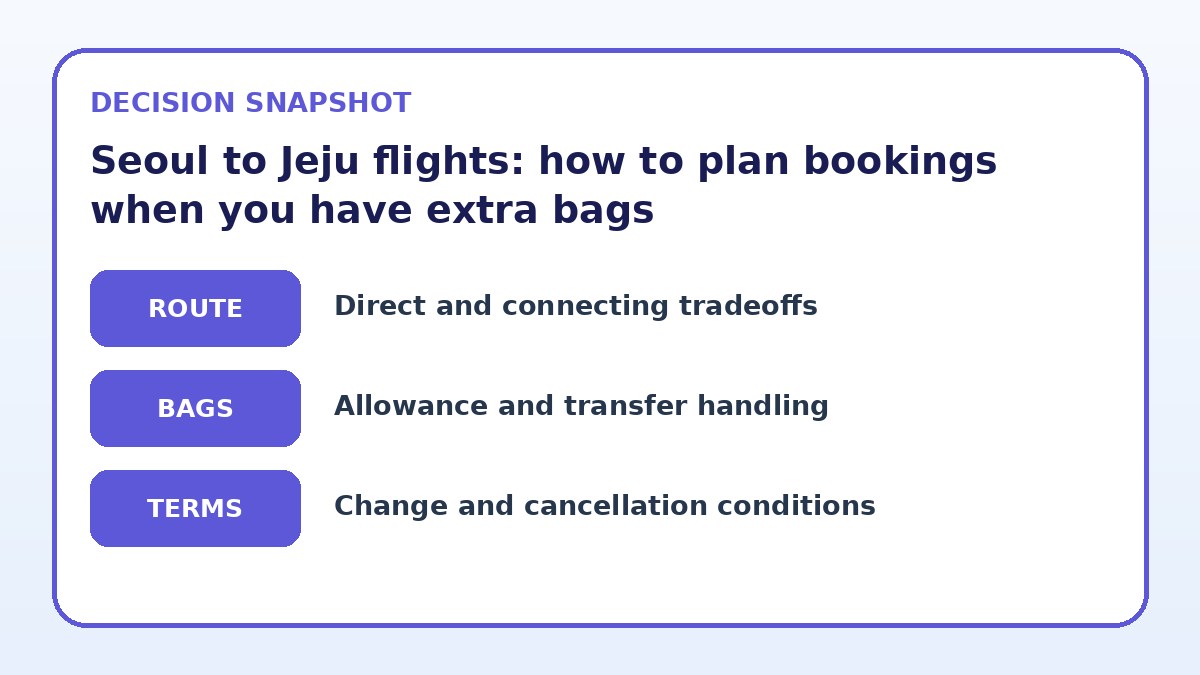
See current options before you compare the details
Availability and final conditions change. Open Trip.com now or keep reading for the practical comparison.
Inventory your baggage realistically
Start the booking process by physically weighing and measuring every bag you intend to travel with. Use a luggage scale or a reliable bathroom scale; include any items inside the bag like organizers or built-in wheels. Record the largest dimension for each checked bag and note any unusually shaped items such as musical instruments, surfboards, or golf bags. Remember to include hand luggage and personal items; some airlines count a personal bag and a carry-on separately while others combine allowances.
This inventory step stops costly surprises at the airport. When you know each bag’s exact size and weight, you can immediately filter airline options by which ones accept your baggage within their free allowance and which will charge hefty oversize or overweight fees. If some pieces exceed typical limits, consider repacking, splitting contents across other items, or using a door-to-door courier for bulky gear. Doing this before you search fares saves time and lets you estimate the true cost of each booking option.
Compare allowances, fees, and booking-stage differences
Airlines vary in what they include and when fees apply. Look at the stated free checked bags, carry-on size and weight, and any separate personal item rules. Crucially, check the fee schedule for booking online, adding a bag during check-in, and paying at the airport—fees sometimes rise as you approach departure. Also review whether the airline sells weight-based baggage pricing or per-piece pricing; the cheaper ticket class may exclude checked bags entirely, while a slightly more expensive class may include one or more checked pieces.
When comparing options, calculate the total cost you’ll actually pay: base fare plus the exact bag fees for the number and size of pieces you’re carrying, plus seat selection if that matters. If you’re considering connecting itineraries, confirm baggage transfer rules—do bags transfer automatically or must you collect and re-check them? Finally, verify refund and change policies for purchased baggage so you understand your options if plans shift after booking. Always confirm these specifics on the airline’s final booking page before you commit.
| Approach | Best for | Tradeoff to check |
|---|---|---|
| Pay airline-per-piece fees at booking | Travelers who want certainty on cost and to avoid airport queues | Higher upfront cost but usually cheaper than airport rates; depends on carrier’s online pricing |
| Buy weight-based allowance instead of per-piece | Those with unevenly weighted items or many medium-weight pieces | Flexible billing by total weight but requires careful packing to avoid overweight charges |
| Use a door-to-door courier for bulky or irregular items | Oversized gear like surfboards or multiple heavy boxes | Avoids airline handling but adds lead time and requires reliable pickup/drop coordination |
| Rent or buy items on Jeju | Short stays where gear is costly to transport | Eliminates baggage fees but risks availability and may be more expensive overall |
Ready to check the option that fits your plan?
Use your exact dates and traveler details so the provider page can show the current total and conditions.
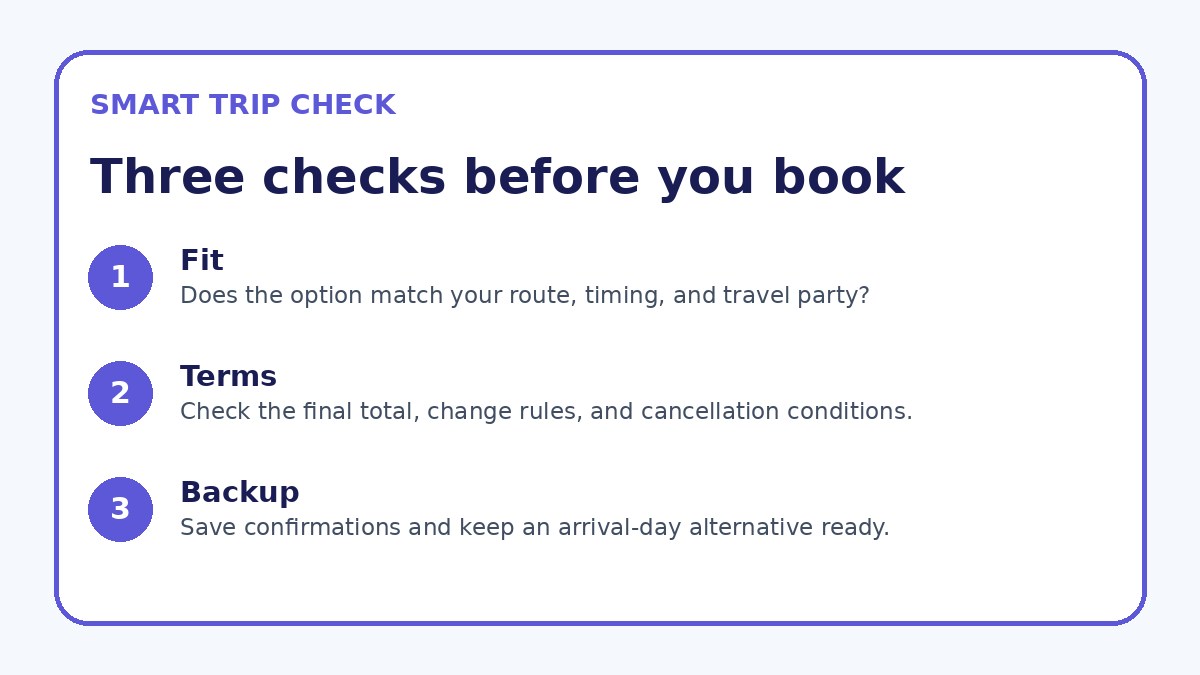
Account for airport logistics and transfer time
Seoul has multiple major airports and transport hubs; which one you use affects how luggage is handled. For departures, find the check-in counters for the airline and whether self-service bag drop is available for prepaid bags. If you plan to arrive at the airport by bus or train, check how easy it is to get from the station to the airline counter with multiple pieces. On the Jeju side, learn whether baggage reclaim is quick or can be congested during peak arrivals and whether there are porters or trolleys available for heavy items.
Build extra time into your schedule for both ends of the route if you have large or multiple bags: allowance checking, oversized-item processing, or security rechecks can add 20–60 minutes. If you have a tight transfer—say a coordinated ferry ride or rental car pickup—consider earlier flights or services that streamline handling. Also evaluate ground-transport options that accommodate large luggage: some airport shuttles, taxis, or rental vans provide more space and easier loading than standard public buses.
Before you book
- Weigh and measure every bag; record dimensions and weight to match against airline size and weight limits.
- Check the airline’s baggage allowance and fee table on its final booking page for online, check-in, and airport rates.
- Compare total trip cost by adding base fare, all baggage fees, seat fees, and expected ground-transfer charges.
- Confirm whether baggage transfers automatically on connecting itineraries or needs re-checking at each stop.
- Estimate extra time needed for check-in and reclaim with heavy or multiple bags and adjust transfers accordingly.
- Consider alternatives—prepaid courier, weight-based allowance, or renting locally—and verify pickup, insurance, and cancellation terms.
Decide between airline baggage, prepaid courier, or renting locally
There are tradeoffs between paying airline fees, sending bulky items by courier, or renting or buying necessities on Jeju. Airline baggage keeps your items with you and is often simplest if you have a few heavy suitcases; however, fees and handling delays can be costly. Couriers or cargo services can be cheaper for oversized gear and remove the hassle of carrying bulky items through airports, but require arranging pick-up and drop-off times and verifying insurance and tracking.
Renting or buying on the island may be attractive for items you only need briefly—sports gear, baby equipment, or beach items. This avoids baggage fees and airport handling entirely but requires confidence that suitable rental options exist at your destination. Weigh cost, convenience, timing, and the risk of damage or loss when choosing. Regardless of your choice, list the provider-specific details you must verify on their booking pages: dimensions allowed, pickup/drop windows, insurance coverage, and cancellation terms.
Frequently asked questions
How do I decide whether to pay for an extra checked bag or to ship it to Jeju?
Start by comparing the airline’s per-piece or weight fees to the courier quote for delivery to your Jeju address or hotel. Factor in timing—couriers often require a day or more for door-to-door delivery—plus the convenience of having your items on arrival versus possible delays in courier pickup or delivery. Also assess fragility and insurance: airlines have limited liability for lost/damaged checked luggage while reputable couriers usually offer declared-value coverage for higher-cost items. Finally, double-check both provider pages for exact dimensions, weight limits, and pickup/drop-off windows before booking.
If my bags are slightly overweight, is it better to remove items or pay the overweight fee?
If transferring a small number of items to your carry-on or another checked bag reduces overweight charges significantly, repacking may be cheapest. But remember carry-on size and weight rules could block that option. Compare the overweight fee with the cost and practicality of buying replacements or renting similar items on Jeju. Also consider time: repacking at the airport can be stressful and may add delay. Always verify the airline’s precise overweight fee amounts and permitted repacking procedures on the airline’s booking page before you decide.
What should I check about baggage handling at Seoul departure airports and Jeju arrival?
Look up the airline’s check-in counter location and whether they offer self-service bag drop for prepaid bags; self-drop can be faster if available. Check whether the terminal has trolleys or porters and if there are dedicated oversized-item counters which can speed processing. On Jeju, investigate typical reclaim areas and whether carriers handle oversize items through special channels. Also check ground-transport options that suit multiple bags—taxis, rental vans, or shuttles—and their luggage policies. Verify these operational details on the airline and airport pages prior to booking.
Final planning note
When booking Seoul to Jeju flights with extra luggage, a short, disciplined pre-booking routine saves both money and anxiety. Inventory and measure your bags, then compare the full cost of each booking option including the variety of baggage fees and any time or transfer impacts. Consider non-airline alternatives for oversized items and verify all critical details—dimensions, fees by booking stage, transfer handling, and insurance—on the airline’s or courier’s final booking page. With accurate data and a clear plan for ground logistics, you’ll choose the route and baggage approach that balances cost, convenience, and peace of mind.
Continue planning
Check current options and final conditions
Use the provider page to confirm live availability, the final total, cancellation terms, and every condition that matters to your trip.
This evergreen planning guide was created with AI-assisted drafting and a structured quality review. It does not display live prices, schedules, availability, visa guidance, or provider rankings. Verify current details before booking. Some links are affiliate links; we may earn a commission at no additional cost to you.