Practical answer first: for most families traveling between Seoul and Gyeongju, a high-speed or intercity train gives the best mix of comfort, predictability, and minimal transfers, while coach and self-drive win on budget control and flexible stops. Ferry options are only relevant if you’re combining the trip with a southern island itinerary; they aren’t a direct Seoul–Gyeongju shortcut. Choose by balancing travel time, luggage and stroller needs, number of passengers, and how much you want to stop and explore en route. This article compares each mode on those family-friendly criteria, explains tradeoffs parents should expect, and lists the checks you must make before booking. Use this to pick the option that keeps kids comfortable and lets grown-ups relax on the road.
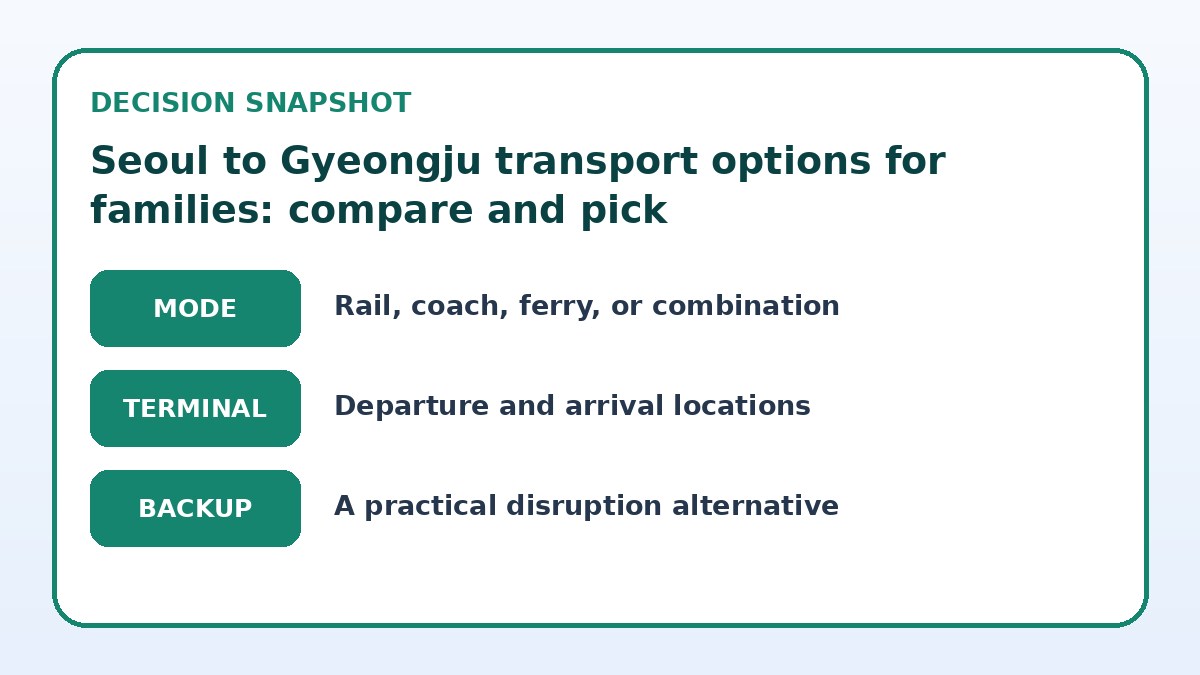
See current options before you compare the details
Availability and final conditions change. Open Trip.com now or keep reading for the practical comparison.
Train travel: why it’s often the family default
Trains between Seoul and the southeast are typically the clear choice when families want a predictable, low-stress transfer. Modern intercity and high-speed services usually offer more space than buses and let children move around a little without exposing them to highway motion or congestion. For parents, trains simplify luggage handling: you can keep backpacks and valuables beside you while larger suitcases go in dedicated racks or luggage areas. If you plan a day trip to Gyeongju’s historical sites, catching a train that aligns with museum opening times or local tour departures helps you maximize visiting hours.
Decide between direct and connecting train options by balancing total door-to-door time and convenience. A direct train with a slightly longer schedule might be easier with young children than a faster service that requires a tight transfer. When comparing itineraries, check seat configurations, onboard restroom access, and whether snacks or family compartments are available. Always verify final availability, exact seat options, and baggage rules on the rail operator’s booking page or a comparison service such as Trip.com before you commit to tickets.
Coaches and buses: budget-minded and direct
Coaches often offer direct Seoul–Gyeongju runs that arrive at city coach terminals close to attractions, which can be handy for families without car access. Buses generally allow more flexible booking windows and sometimes have family fares or child discounts; they’re a sensible choice when you want to save on transport and don’t mind longer journey times. Expect fewer opportunities to stretch legs compared with trains: check whether the coach offers onboard toilets and planned rest stops and whether luggage compartments are accessible during the trip.
When weighing coach options, factor in departure and arrival terminal locations relative to your lodging or itinerary in both Seoul and Gyeongju. A cheaper ticket that lands you far from your hotel can erase any savings with taxi or last-mile transport costs. If children are easily bored on longer road trips, bring a kit of activities, snacks, and a lightweight blanket. Always verify the exact boarding point, phone contact, and baggage allowance on the carrier’s booking page before finalizing, and note the refund or change policy for family plans.
| Approach | Best for | Tradeoff to check |
|---|---|---|
| Train | Families wanting speed, comfort, and low transfer hassle | Potentially higher cost than coach and less flexibility for roadside stops |
| Coach | Budget-conscious families who accept longer journey times | Fewer onboard facilities and less room to move during the trip |
| Self-drive | Families needing flexibility, multiple stops, or lots of luggage | Driver must navigate, manage parking, and handle local road rules |
| Ferry (mixed-mode) | Families combining island visits or seeking a scenic coastal leg | Adds transfer complexity and depends on precise schedule connections |
Ready to check the option that fits your plan?
Use your exact dates and traveler details so the provider page can show the current total and conditions.
Self-drive: control, stops, and practical needs
Renting a car gives families absolute control over timing and the ability to stop for meals, rest breaks, and unexpected detours to scenic sites. For parents traveling with strollers, car seats, or bulkier luggage, driving reduces handling and lets you climb or descend at your own pace. Driving also opens the door to visiting nearby rural attractions on the way to Gyeongju that public transport doesn’t serve conveniently. However, road navigation, tolls, and parking—especially at popular Gyeongju sites—require planning and local awareness.
Before you reserve a rental, confirm what child-seat options are available and whether drivers need any additional local permits or documentation. Compare vehicle size against the amount of luggage and family members to avoid cramming. Decide in advance who will handle driving shifts, and plan realistic daily distances; fatigue affects safety and mood on family trips. Check the rental agreement for cross-region rules, fuel policies, and where to return the vehicle in Gyeongju to avoid unexpected fees.
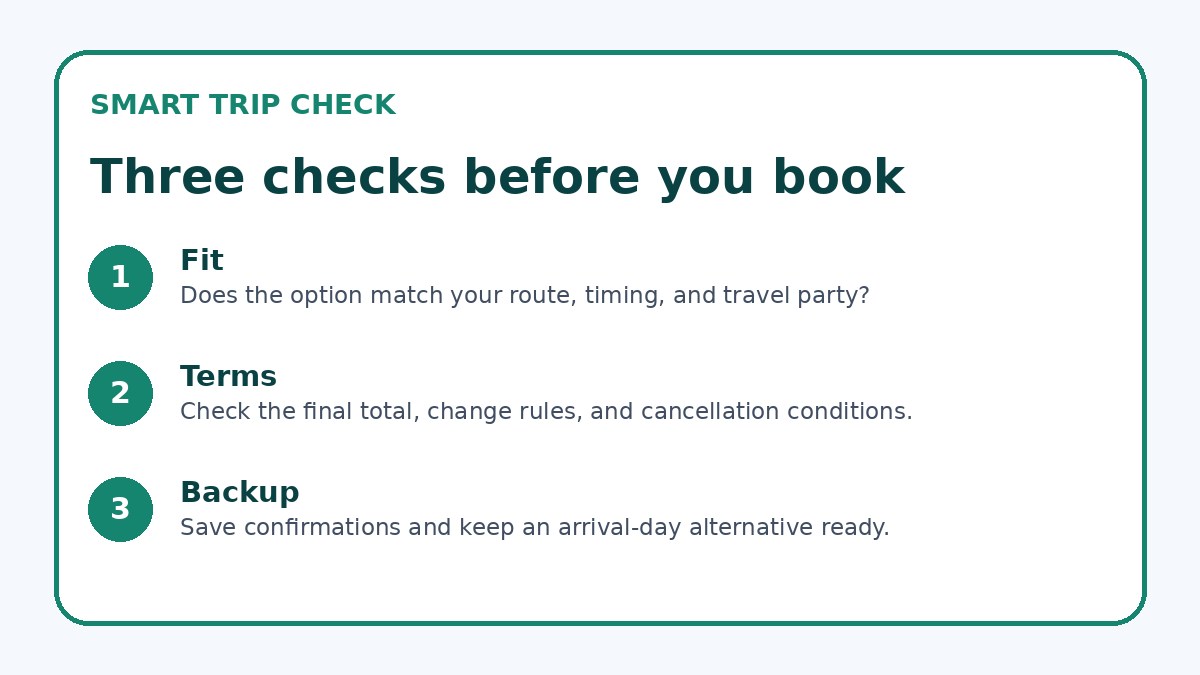
Before you book
- Compare total door-to-door travel time, not just in-vehicle duration, for each option you consider.
- Confirm seat availability, seat type, and exact baggage rules on the provider’s official booking page before buying.
- Bring at least one certified child seat if your rental agency can’t supply an appropriate model and verify installation rules.
- Pack a carry-on bag with snacks, entertainment, medicines, and a change of clothes for each child.
- Note boarding points and arrival terminals versus your accommodation to avoid last-mile surprises.
- Check the carrier’s change and cancellation policy so you can adjust plans if a child falls ill or plans shift.
Ferry and mixed-mode journeys: when they make sense
A ferry isn’t a direct answer for most Seoul–Gyeongju trips, but it becomes relevant if your family wants to include an island stop or a scenic coastal route. Ferries add a different travel experience—fresh air, deck time, and sometimes wildlife sightings—that can break up long travel days for children. Mixed-mode itineraries (train or coach to a port, ferry crossing, then regional transport to Gyeongju) require careful syncing of schedules so you don’t miss connections, and may add complexity for families with many pieces of luggage.
If considering a ferry segment, map each transfer precisely: how you’ll get from port to the nearest rail or bus link, where luggage is stored on the ferry, and whether you’ll need onward taxi or bus services. Verify the ferry’s size and facilities, as smaller vessels offer fewer child-friendly amenities. For reliability and current schedules, use official provider pages and comparison platforms such as Trip.com as a starting point, then recheck carrier pages for the final booking conditions and boarding requirements.
Frequently asked questions
Is a train faster than a coach for families traveling from Seoul to Gyeongju?
Generally, intercity and high-speed trains are faster than coaches because they avoid highway congestion and have higher top speeds. For families, that speed often translates into less time confined, fewer stops, and clearer timetables—useful when coordinating naps or museum opening hours. However, the difference in real door-to-door time depends on how far each terminal is from your accommodation, transfer times, and whether a direct train option is available. Always compare complete itineraries and the ease of getting on and off with children when choosing.
Should families rent a car or rely on public transport to reach Gyeongju?
Renting a car gives families flexibility to make unscheduled stops, handle lots of luggage, and visit rural sites around Gyeongju. Public transport—trains or coaches—removes driving stress and can be more relaxing, especially on busy roads. Choose a car if you value flexibility and are comfortable driving; choose trains or coaches if you prefer predictable timetables and less logistical coordination. Consider the distance, who will drive, parking availability at your destinations, and whether your itinerary benefits from the freedom a car provides.
Can ferries be a practical part of a Seoul to Gyeongju family trip?
Ferries are practical when your route intentionally includes southern islands or a coastal detour that appeals to children and adults alike. They are not a direct shortcut between Seoul and Gyeongju, so treat a ferry as an add-on rather than a main transport choice. Plan transfers carefully: check port accessibility, luggage handling, and how you’ll continue from the arrival port to Gyeongju. For schedules and booking specifics, check the ferry operator’s site and confirm connections on rail or road legs before committing to a mixed-mode itinerary.
Final planning note
Choosing how to travel from Seoul to Gyeongju with family comes down to priorities: speed and ease (train), cost savings (coach), full control and side trips (car), or scenic detours (ferry with transfers). Start by deciding which factor—shorter journey time, fewer transfers, or flexible stops—matters most for your children’s routines. Then compare full door-to-door itineraries, check baggage, seat, and child-seat rules on provider pages, and verify cancellation terms. Use a comparison tool such as Trip.com to view options, but always finalize bookings with the operator’s official pages to confirm the latest availability and conditions.
Continue planning
Check current options and final conditions
Use the provider page to confirm live availability, the final total, cancellation terms, and every condition that matters to your trip.
This evergreen planning guide was created with AI-assisted drafting and a structured quality review. It does not display live prices, schedules, availability, visa guidance, or provider rankings. Verify current details before booking. Some links are affiliate links; we may earn a commission at no additional cost to you.